Wide Toe Box vs Wide Width Running Shoes: Which Fit Do You Need?
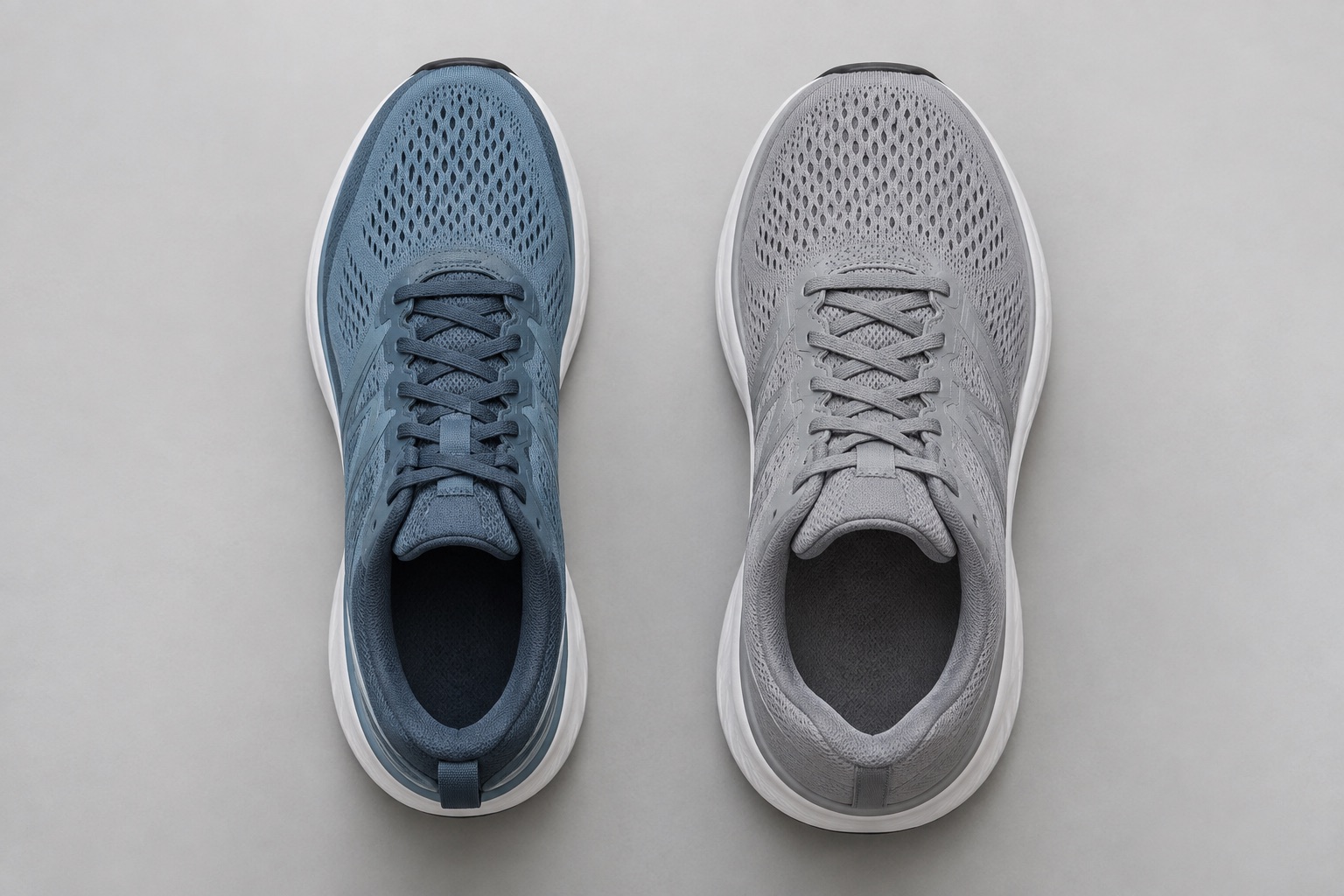
Choose a wide toe box when your toes feel crowded but your heel and midfoot already fit securely. Choose a wide or extra-wide width when pressure extends through the forefoot, midfoot, instep, or shoe opening. Those are starting points, not universal definitions: brands change width by altering upper volume, platform width, the last, or a combination of them.
A shoe marked wide is not automatically shaped like a foot, and a standard-width shoe with a broad toe shape is not automatically roomy through the midfoot. Compare the exact model on both feet rather than buying from one label.
Choose by Where the Shoe Feels Wrong
| What you feel | Better first comparison | Why |
|---|---|---|
| Toes overlap, rub, or cannot spread; heel and midfoot feel secure | Roomier toe-box shape in the same length | Adds space where the pressure occurs without automatically loosening the rear half |
| Pressure at the ball of the foot, both sidewalls, or across the instep | The same model in wide, then extra-wide if offered | The foot likely needs more width or volume than a toe-only change provides |
| Toe room improves in wide, but the heel begins to slip | A different last with a broad forefoot and narrower heel | More upper volume throughout can solve one pressure point while creating another |
| Longest toe touches the end | More length before more width | Width cannot correct a shoe that is too short |
| One foot fits and the other is squeezed | Fit the larger foot; adjust the smaller side with lacing if practical | Feet commonly differ, and the smaller shoe cannot safely stretch the larger foot |
| Numbness, persistent pain, or major asymmetry | Professional assessment before more shoe experiments | A fit guide cannot diagnose nerve, joint, swelling, or structural problems |
Toe-Box Shape and Shoe Width Are Different Variables
The toe box is the front interior around the toes. Its taper, height, and outline determine whether the toes can lie flat and spread. Width is a size option, commonly labeled narrow, standard, wide, or extra-wide in the United States.
Labels do not reveal the whole construction. Brooks says its narrow, medium, and wide versions within a model may use the same footbed with different amounts of upper material, while its extra-wide version adds both a wider footbed and more upper volume. Other brands and models use different lasts. That is why two shoes carrying the same 2E label can fit differently.
Run This Five-Minute Fit Test
- Confirm length first. Stand in your normal running socks and check clearance in front of the longest toe on both feet.
- Map the pressure. Notice the little-toe joint, big-toe joint, toe tips, top of the toes, instep, midfoot sidewalls, and heel separately.
- Check toe function. Every toe should lie flat and move without the upper pulling it inward.
- Lock the midfoot, not the toes. Lace snugly enough to hold the foot without numbness or a pressure ridge.
- Jog and turn. Reject side-to-side sliding, heel lift, toe contact, burning, numbness, or a forefoot hanging over the platform.
Repeat the test in the same model and length across width options when possible. Comparing different models and different widths at once makes it hard to identify what fixed the fit.
Read Width Letters as Brand-Specific Starting Points
| Common U.S. label | Often used for men's shoes | Often used for women's shoes |
|---|---|---|
| Narrow | B | 2A |
| Standard or medium | D | B |
| Wide | 2E | D |
| Extra-wide | 4E | 2E |
Bring These Facts to the Store or Checkout Page
- Both feet's standing length and width, measured late in the day if that is when you normally run.
- Your usual running socks and any prescribed orthotic or insole.
- The exact location of pressure in your current shoe.
- Your primary running surface and typical longest run.
- A return policy that permits the fit test you need.
Measure first with our running-shoe foot measurement guide, then use the broader running-shoe decision guide to compare cushioning, outsole, and intended use.
Sources and Manufacturer Guidance
Requirements can vary by product, model, and situation. These primary sources informed this guide; official instructions for your exact product and current authoritative guidance take priority.
- Brooks Running: How to choose a shoe width and how widths are constructed
- New Balance: Product sizing and signs that a wider width may be needed
- New Balance: Footwear size and width guide
- Brannock Device: Official standing foot measurement and fit instructions
- ASICS: Correct running-shoe fit and toe-room guidance
Frequently Asked Questions
-
No. A wide toe box describes space and shape at the front. A wide size may add volume through the forefoot, midfoot, instep, collar, or platform depending on the model.
-
Not when the length already fits. Sizing up can move the flex point, add heel slip, and leave excess space in front without fixing side pressure correctly.
-
It commonly denotes wide in men's U.S. sizing and extra-wide in women's U.S. sizing, but dimensions still vary by brand and model.
-
Lacing can redistribute mild upper pressure or improve heel hold. It cannot enlarge a narrow platform or create enough room for compressed toes.
-
The foot slides sideways, the upper folds deeply when laced, or the heel lifts even after sensible lacing. Toe freedom should not require losing control of the rest of the foot.