What Size Foam Roller Should I Get? A Practical Fit Guide
The short answer: a full-length roller around 36 inches long and 6 inches in diameter is the easiest all-purpose choice for home use, especially if you want enough width for both legs or supported upper-back work. Choose an 18-inch roller if you mainly roll one leg at a time and need easier storage. A compact 12-inch roller is portable, but it demands more precise positioning.
Length controls how much of your body the roller can support; density controls how intense it feels. Do not buy the firmest model simply because it sounds more effective. A roller you can use with slow, controlled pressure is more useful than one that makes you tense up or produces sharp pain.
Foam Roller Size Selector
Start with the movement you actually plan to perform. Product catalogs commonly offer full-round rollers in roughly 12-, 18-, and 36-inch lengths, so these are useful shopping categories rather than strict medical prescriptions.
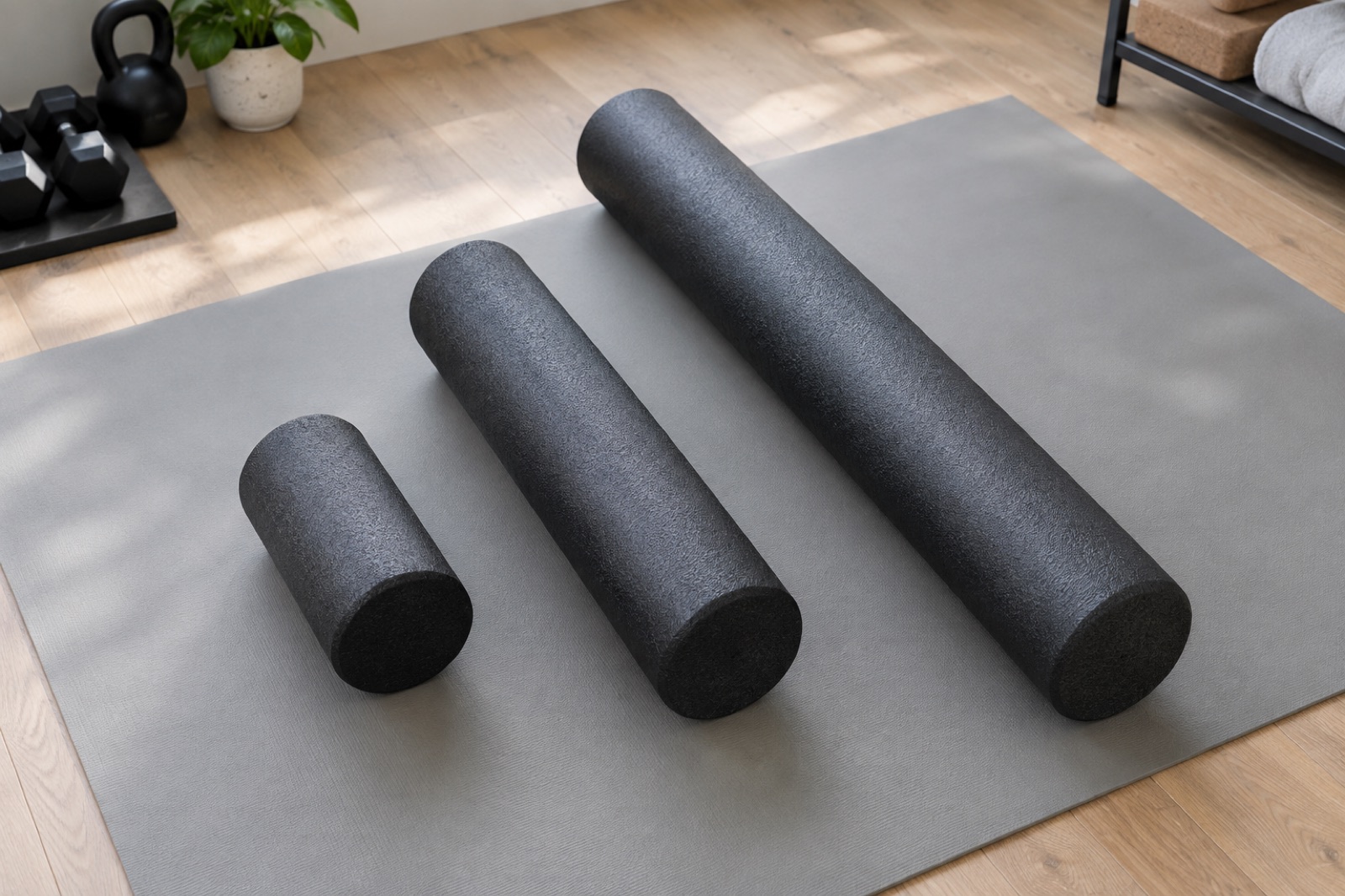
| Approximate length | Best fit | Tradeoff |
|---|---|---|
| 36 in / 90 cm | One do-everything roller; both legs; broad upper-back positioning; beginners who want more margin for error | Bulky to store or travel with |
| 18 in / 45 cm | Calves, quadriceps, hamstrings, glutes, and one side at a time | Less room for two-sided or cross-body positions |
| 12 in / 30 cm | Travel, small rooms, feet, calves, and targeted single-limb work | Easier to roll off the end; not ideal for broad support |
| Half-round roller | A stable prop for balance, ankle work, or a gentler fixed support | Does not roll like a full cylinder |
What Diameter Should You Choose?
A diameter near 6 inches is the conventional all-purpose format. It gives enough height to roll smoothly without putting the body extremely close to the floor. A 4-inch roller sits lower and can feel easier to control for smaller users, balance-limited positions, or anyone who dislikes the height of a standard roller.
Diameter is not an intensity rating. Foam firmness, surface texture, body position, and how much weight you place on the roller all change the sensation. If you are unsure, prioritize a stable body position and moderate density over a smaller, aggressively textured product.
Choose Density After Size
- Soft: more forgiving for first-time users, sensitive areas, and low-pressure sessions, but it may deform sooner.
- Medium: the safest all-purpose starting point for most healthy adults.
- Firm: resists compression and can work well for larger users or those who already know how much pressure they tolerate.
- Deep ridges or knobs: concentrate force into smaller contact points. They are not automatically more effective and are a poor choice if they cause guarding, bruising, or sharp pain.
ACE advises keeping the roller on soft tissue, moving slowly in small areas, and avoiding joints and unbearable or sharp pain. Those technique rules matter more than marketing names such as “professional” or “high intensity.”
A Five-Minute Fit Test Before You Keep It
- Set up next to a wall or sturdy support. You should be able to get down and back up without relying on the roller.
- Try a calf or quadriceps position. Confirm that the target limb fits without constantly slipping off either end.
- Reduce pressure with your hands or opposite leg. If the roller still causes sharp pain at the lightest controllable load, choose a softer surface or stop.
- Check stability. The cylinder should roll predictably rather than skidding across the floor.
- Clean and store it. Make sure its surface can be wiped according to the manufacturer’s instructions and that it fits your planned storage space.
The Simple Decision Tree
- Want one roller for a home gym? Start with a 36-by-6-inch smooth or lightly textured, medium-density roller.
- Mainly rolling legs and short on space? Choose about 18 inches long.
- Travel is the priority? Choose about 12 inches, accepting that positioning will be less forgiving.
- Need a stable prop rather than massage pressure? Consider a half-round roller.
- Unsure about firmness? Choose softer or medium density and create more pressure through body position only when comfortable.
When Not to Keep Rolling
Stop if rolling causes sharp, electrical, burning, or escalating pain; numbness; unusual swelling; loss of strength; or visible bruising. Do not roll directly over joints, open wounds, a suspected fracture, or an acutely injured area. If you have a bleeding disorder, take blood-thinning medication, have impaired sensation or circulation, are recovering from surgery, or are using a roller for a diagnosed condition, ask the clinician managing your care before applying pressure.
Sources and Manufacturer Guidance
Requirements can vary by product, model, and situation. These primary sources informed this guide; official instructions for your exact product and current authoritative guidance take priority.
Frequently Asked Questions
-
An 18-inch roller is more forgiving for most single-leg work. A 12-inch roller packs more easily but gives you less room to position the limb and is easier to roll off.
-
Not for home use if you have room to store it. The extra width is useful for broad or two-sided positions, but it adds little value if you only roll calves and need portability.
-
A soft or medium-density roller is usually easier to control. Firm pressure is not a requirement for benefit, and pain that makes you brace or hold your breath is a sign to reduce the load.
-
They create more localized pressure, but that does not make them universally better. A smooth roller provides more predictable contact and is often the more practical first purchase.
-
Avoid placing uncontrolled direct pressure across the lumbar spine. If back pain is the reason you are considering a roller, get individualized guidance from a qualified clinician or physical therapist.