How to Use a Massage Gun Safely: Pressure, Movement, and Stop Signs
Use a massage gun on healthy muscle tissue, not on bone, joints, the spine, the head, or the front and sides of the neck. Start with a broad soft attachment and the lowest comfortable setting, hold the device with a relaxed grip, and keep it moving. More pressure is not automatically more effective.
This is general education, not treatment for an injury. Read the exact manual and its contraindications first. Seek medical clearance when you have altered sensation, bleeding or clotting concerns, vascular disease, osteoporosis, pregnancy, a recent injury or surgery, implanted hardware or electronics, or any condition named by the manufacturer.
Do Not Use It Until These Questions Are Clear
| Question | Proceed only when |
|---|---|
| Is the tissue healthy? | No open wound, rash, infection, active bruise, unexplained swelling, acute injury, or suspected fracture |
| Can you feel pressure normally? | No numbness, altered sensation, neuropathy, or medication effect that prevents reliable feedback |
| Is there a clotting or vascular concern? | No suspected DVT, uncontrolled bleeding issue, or unapproved use over varicose or compromised vessels |
| Is hardware involved? | The maker and clinician permit use around any surgical site, joint replacement, plate, pin, pacemaker, or implanted device |
| Is the location appropriate? | It is broad soft tissue and the manual does not prohibit it |
| Does the device pass inspection? | Attachment locks correctly, shaft and housing are intact, battery is normal, and vents are clear |
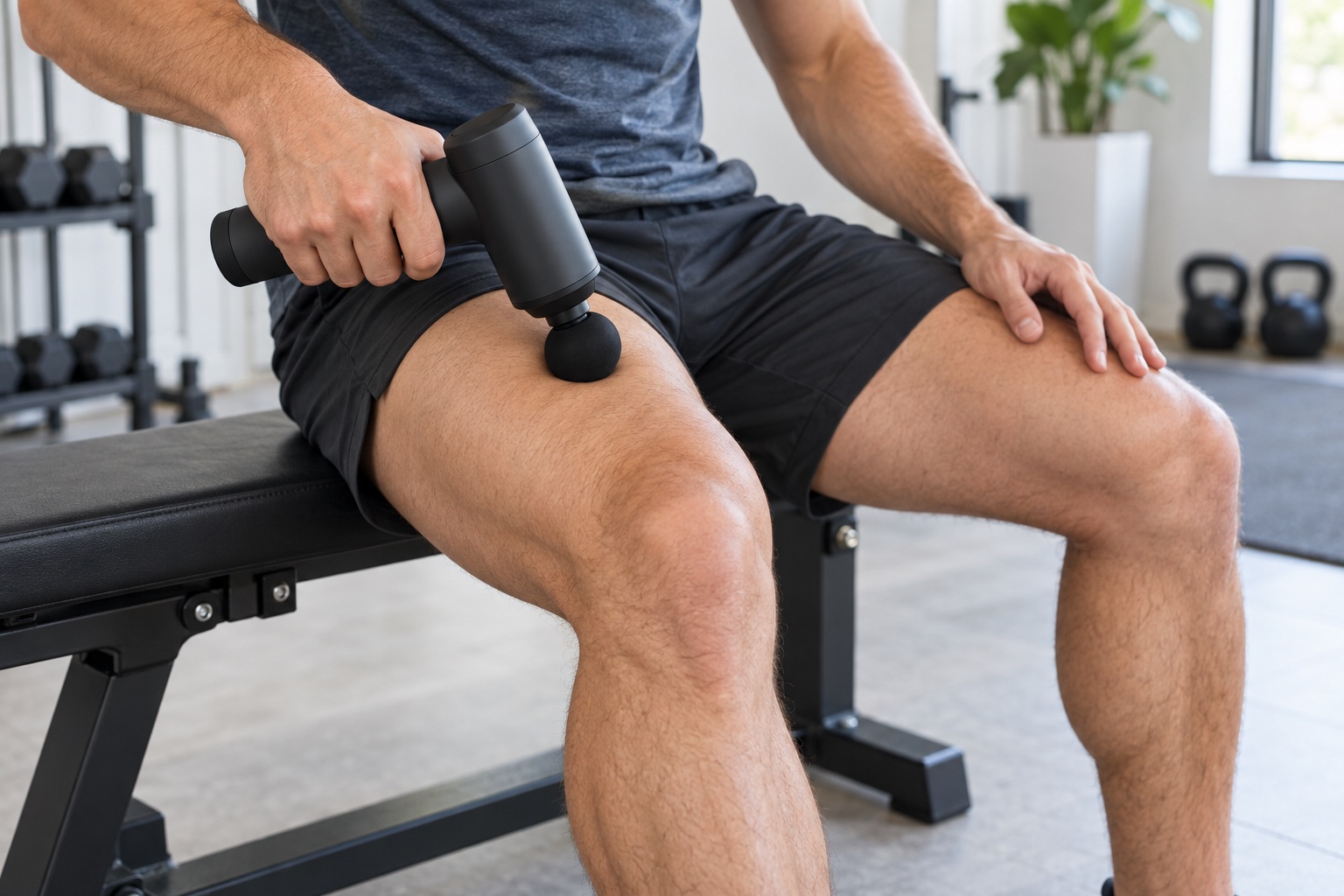
Use This Low-Risk Sequence on a Large Muscle
- Choose a comfortable position that lets the target muscle relax.
- Install a broad soft or round attachment with the device powered off, following the manual.
- Select the lowest setting. Bring the moving head to the middle of the muscle only if that start sequence matches the device manual.
- Let the attachment float with light pressure, then move slowly along the muscle. Do not pin it on one spot.
- Reduce pressure around sensitive areas and stop before reaching a joint, bone, superficial vessel, or nerve.
- Use the model's guided routine or timing. Hyperice gives about 60 seconds per region as model-specific guidance; other devices and attachments differ.
- Power off before changing the attachment. Inspect the skin and how the area feels afterward.
Areas to Avoid Unless Your Exact Clinical Plan Says Otherwise
- Head, face, front and sides of the neck, throat, and genitals.
- Directly over the spine, joints, kneecap, shin, ankle bones, and other bony points.
- Open wounds, rashes, infection, sunburn, active bruises, or unexplained swelling.
- Varicose veins, suspected blood clots, and obvious superficial vessels.
- Recent surgery, fractures, acute injuries, tumors, or implanted hardware without medical approval.
- Any area with numbness, altered sensation, radiating pain, or electric-shock symptoms.
Manufacturer lists differ. Use the more restrictive instruction when the article and your model manual do not match.
Match Expectations to the Evidence
| Goal | Reasonable use | Do not promise |
|---|---|---|
| Warm-up | A brief light pass before dynamic movement if it feels comfortable | That percussion replaces a progressive warm-up |
| Short-term mobility | Some studies report an immediate range-of-motion increase | Permanent flexibility change from one session |
| Post-exercise comfort | Gentle use may change perceived soreness or recovery experience | Faster tissue healing or removal of metabolic waste |
| Pain or injury | Pause and determine whether assessment is needed | Diagnosis, rehabilitation, or treatment of the cause |
Official Product-Specific Quick Start Example
The video below is from Therabody and demonstrates one model. Use it for motion and grip context only; the manual for your exact device controls attachment, timing, charging, and contraindications.
Stop Immediately for These Signs
Stop for sharp or increasing pain, numbness, tingling, electric sensations, dizziness, skin color change, rapid swelling, new weakness, bruising, bleeding, or a device that stalls, overheats, smells unusual, or sounds abnormal. Symptoms that persist or are severe need appropriate medical or product support.
Use our massage gun attachment guide for head selection.
Sources and Manufacturer Guidance
Requirements can vary by product, model, and situation. These primary sources informed this guide; official instructions for your exact product and current authoritative guidance take priority.
Frequently Asked Questions
-
Begin with the device's own weight or light pressure. Increase only within the manual and only while the sensation remains comfortable and normal.
-
Follow the model's routine. Manufacturer examples often use short passes around a minute per region, but protocols, attachments, and health conditions differ.
-
Do not apply it to the front or sides of the neck or throat. Some manufacturers also prohibit direct application to the neck entirely; follow your exact safety guidance.
-
Do not assume so. Percussion devices are not a substitute for diagnosis or rehabilitation, and recent scars, surgery, fractures, and acute injuries appear on manufacturer precaution lists.
-
Bruising is a stop sign, not a target. Discontinue use, monitor the area, and seek care if bruising is severe, unexplained, expanding, or associated with other symptoms.