How Accurate Are Wearable Calorie Estimates?
Wearable calorie estimates are not precise enough to treat as an exact amount of food earned. Systematic reviews consistently find energy expenditure to be one of the weakest common wearable metrics. A recent review reported errors of roughly 10%–40% even among newer wrist devices, with results changing by brand, activity, intensity, and participant.
The number can still provide rough context when you use the same device consistently. It is most defensible as an activity trend—not as a direct measurement, a nutrition prescription, or a universal comparison between people.
How a Wearable Calculates Calories
The watch does not measure calories leaving the body. It combines several inputs in a proprietary model:
- age, sex, height, weight, and sometimes estimated fitness;
- accelerometer and gyroscope movement;
- optical heart rate and time in intensity zones;
- GPS speed, grade, and distance for supported outdoor activities;
- the selected exercise mode and assumptions about its metabolic cost;
- an estimate of resting energy use.
If heart rate is wrong, the activity is misclassified, profile data are outdated, or the exercise has high force with little wrist movement, calorie error can grow quickly.
What Researchers Compare the Watch Against
A second watch, treadmill console, or cardio machine is not a ground truth. Good validation uses a method appropriate to the time scale.
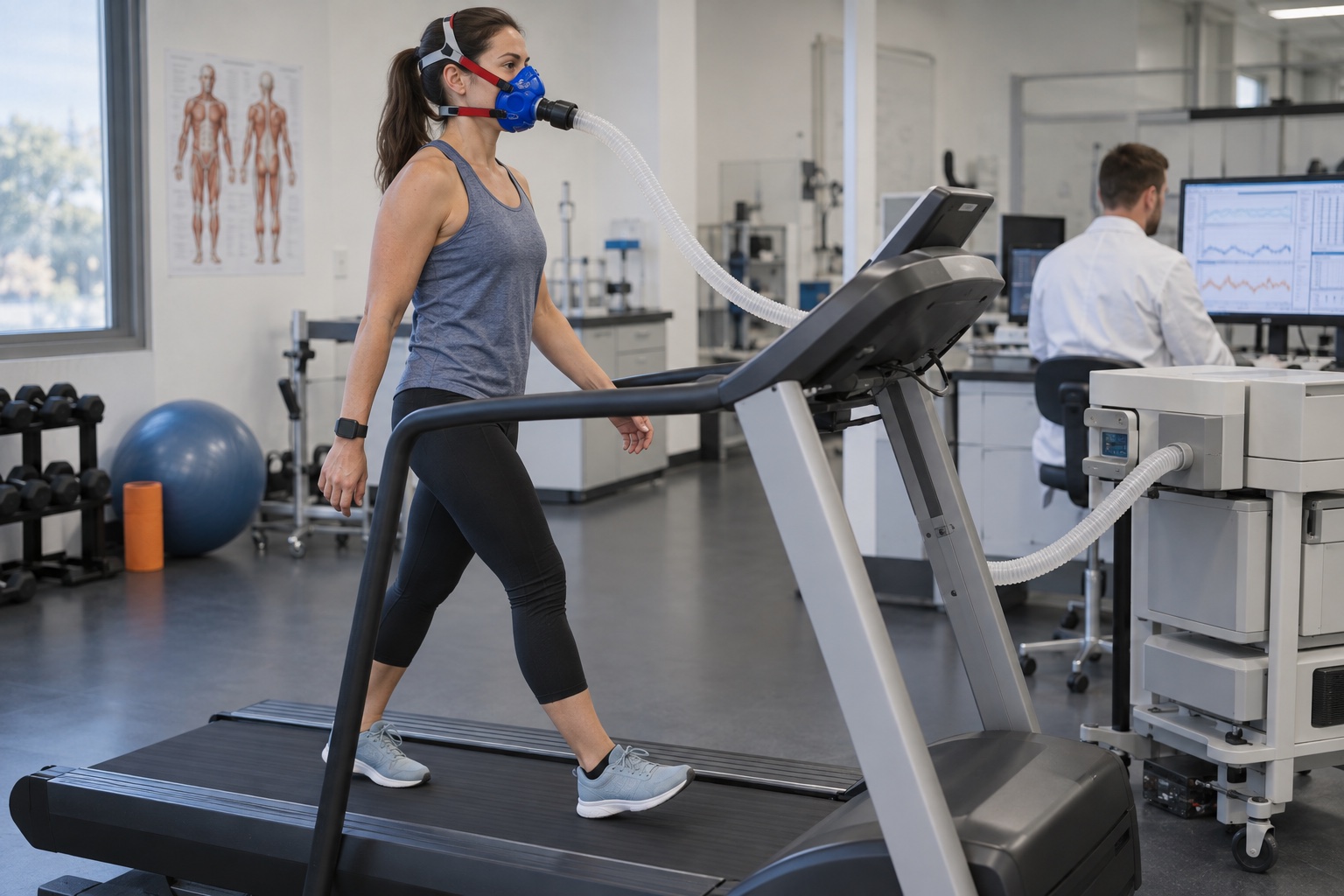
| Method | Useful for | Important limitation |
|---|---|---|
| Indirect calorimetry | Resting or exercise energy expenditure over a controlled session | Requires a mask or hood and calibrated gas-analysis equipment |
| Direct calorimetry | Heat produced in a specialized chamber | Rare, expensive, and impractical for most device studies |
| Doubly labeled water | Total free-living energy expenditure over days | Does not show minute-by-minute activity cost and is expensive |
| Metabolic equations | A standardized estimate when direct testing is unavailable | Still a model, so it should not be treated as validation ground truth |
| Another consumer device | Convenience comparison only | Agreement can mean both devices share the same error |
The Error Is Not a Single Percentage
A 2020 systematic review covering 158 publications found that no consumer brand was consistently accurate for energy expenditure. A 2026 review of 47 wrist-tracker studies found energy expenditure improved less than heart rate and steps, with recent-device errors commonly around 10%–40% compared with indirect calorimetry. A living umbrella review likewise found substantial variation and a tendency toward underestimation across pooled evidence.
Do not ‘fix’ your tracker by applying one internet correction such as subtracting 20%. A device may overestimate one activity, underestimate another, and change with intensity or the wearer. A global correction can make some sessions worse.
Why the Same Watch Changes Accuracy by Exercise
- Steady walking and running: rhythmic movement and relatively stable heart rate give the algorithm familiar inputs, though incline and efficiency still matter.
- Cycling: limited wrist motion and changing mechanical efficiency can weaken movement-based estimates.
- Strength training: high muscular force, rest periods, gripping, and small wrist displacement are difficult to translate into energy cost.
- Intervals: optical heart-rate lag and rapid changes create timing error.
- Housework and mixed activity: movement patterns may be misclassified or missed.
- Swimming: water, stroke detection, temperature, and heart-rate availability add device-specific uncertainty.
What You Can—and Cannot—Audit at Home
You can test consistency, not calorie accuracy, without a valid metabolic reference.
- Update your height, weight, age, and device fit.
- Use the correct activity mode and repeat the same route or machine workout three times.
- Keep duration, pace or power, incline, and environmental conditions similar.
- Compare the device with itself: total calories, heart-rate completeness, distance, and missing segments.
- Repeat after a firmware update or major weight change.
If the calorie total changes widely while pace, power, duration, and heart-rate data remain similar, it is not stable enough for fine decisions. If it is stable, it may still be biased; repeatability does not establish accuracy.
How to Use the Number Without Letting It Mislead You
- Use weekly activity minutes, distance, pace, power, steps, or workout completion as the primary training metrics.
- Use wearable calories only as broad within-device context.
- Do not automatically eat back all reported exercise calories.
- Evaluate nutrition with multi-week body-weight trend, intake records, hunger, recovery, and performance.
- Do not compare your calorie number with another person’s as a measure of effort or fitness.
If weight is changing faster or slower than intended for several weeks, adjust the plan from observed results rather than the watch’s daily calorie output. The fitness tracker accuracy guide shows which other wearable metrics deserve more confidence.
Sources and Manufacturer Guidance
Requirements can vary by product, model, and situation. These primary sources informed this guide; official instructions for your exact product and current authoritative guidance take priority.
- 2026 Systematic Review: Wrist-Tracker Technology and Accuracy
- Systematic Review: Wearable Steps, Heart Rate, and Energy Expenditure
- Living Umbrella Review: Consumer Wearable Accuracy
- INTERLIVE Expert Statement: Validating Wearable Energy Expenditure
- Systematic Review and Meta-Analysis: Fitbit Energy Expenditure, Heart Rate, and Steps
Frequently Asked Questions
-
Error varies by device, activity, intensity, and person. Recent reviews still report common errors in the tens of percent, and the direction can switch between activities, so there is no universal correction factor.
-
Do not automatically match food intake to the full watch estimate. Use a conservative plan based on your longer-term weight, performance, recovery, and intake trends, with professional guidance when appropriate.
-
Not necessarily. A treadmill uses its own equation and may not know your physiology or actual mechanical efficiency. Agreement between a treadmill and watch does not prove either is correct.
-
It can improve the heart-rate input, especially during intervals, but the calorie algorithm still relies on population models and assumptions. Better heart rate does not turn the estimate into calorimetry.
-
Steady rhythmic activities such as walking or running are usually easier to model than strength training or mixed intervals, but accuracy still varies and should not be assumed for an individual device.