Yoga & Mobility

Best Wobble Boards of 2026

A wobble board is the rare piece of fitness gear that's supposed to be bad at its job: it won't sit still. A dome or pivot under the deck tips you in every direction at once, so your ankles and core spend the session negotiating which way is up. Some boards spin so freely you never find the balance point; others barely move and might as well be a floor tile. What you're really buying is a controlled amount of instability, and grip, size, and construction decide whether it trains you or dumps you.

I keep one under my desk and step on during long calls, and my kids have claimed another for the living room. Over eight months, my team and I rode 12 boards of every shape, and the ones that stuck around got the basics right: a surface that holds a bare or socked foot, a deck wide enough for a real stance, and enough sturdiness that it doesn't flex under a two-footed rock. The picks below cover desk fidgeters, rehabbing ankles, and kids with indoor energy to burn.

Best for Board-Sport Training

Our Score 9.8/10
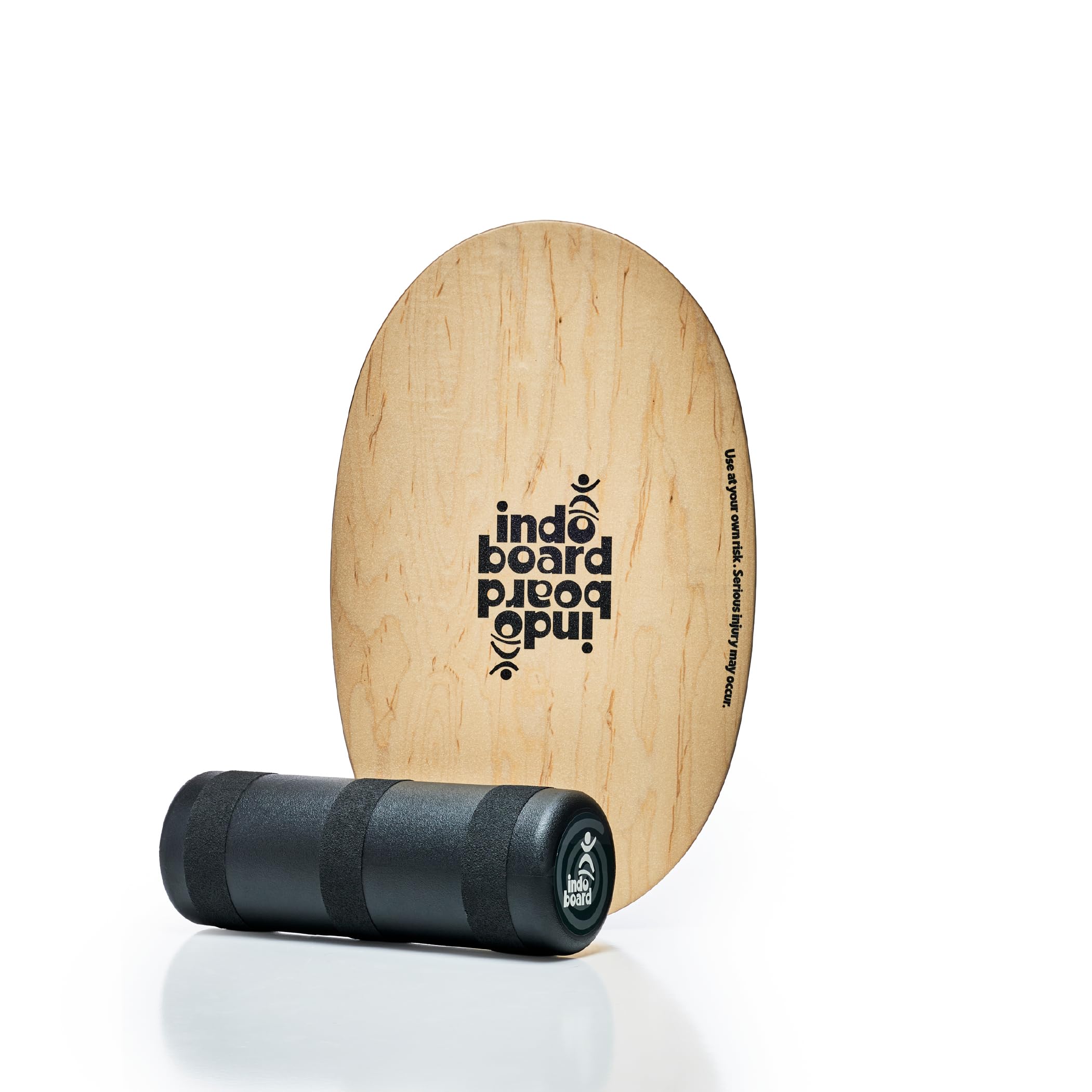
Indo Board Original Balance Trainer

Indo

Indo Board Original Balance Trainer

  • Material Maple wood
  • Board Size 30 x 18 in
  • In The Set Board and roller
  • Max Weight 350 lb
Check Price on Amazon

A wide maple deck on a free roller for surf, skate and snow crossover.

No stopper, no ball, no adjustment: the Indo Board is a 30-by-18-inch maple deck on a free roller, and it goes wherever you send it. The start is steep, and that's the point — nothing here dampens the roll for you.

We keep coming back to the deck size. Eighteen inches of width lets you set a real surf stance rather than perching with your feet together, and the maple has enough give that barefoot sessions don't beat up your arches. At 350 pounds it matches the Fitterfirst and the StrongTek, and it's the board here that feels most like equipment rather than a gadget.

Where you put it matters as much as how you stand on it. On carpet the roller turns slowly and forgives; on hardwood it accelerates and doesn't. If you're learning, start on a rug with a wall or a counter within arm's reach, and move to a hard floor once the roll stops surprising you.

The obvious objection is cost. This is the most expensive board here and it comes with nothing but a roller — no stoppers, no ball, no built-in progression. For a dedicated surfer or skater, skill is the progression, and the money goes into a deck and roller rather than parts you'll set aside. For a household that wants one board everyone can use, the Sportneer or the Yes4All does more for less.

Bottom Line

For anyone training for a board sport, this is the one we name: a wide maple deck on a free roller that demands real balance.

Check Latest Price

Best for Progression

Our Score 9.6/10
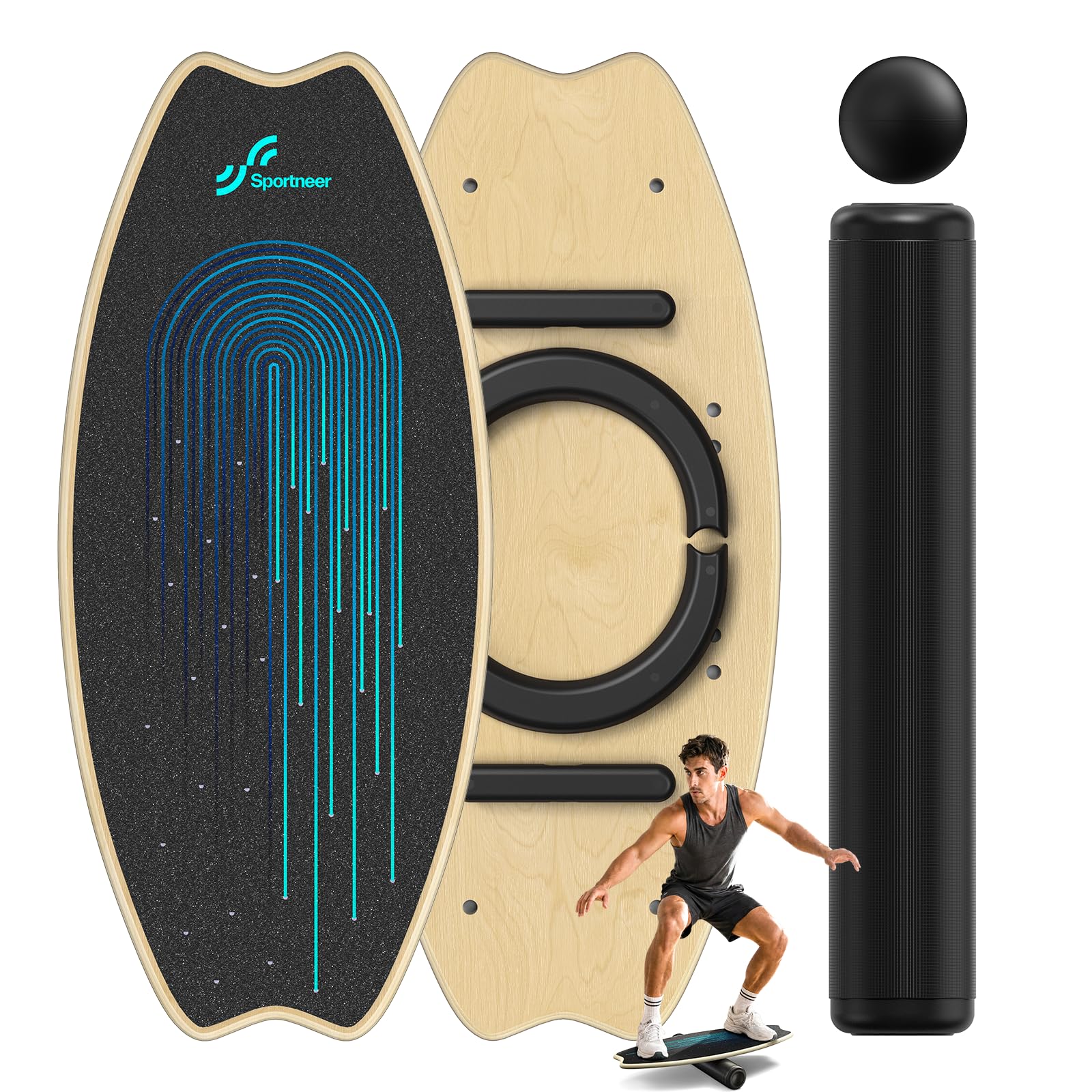
Sportneer 7-Mode Balance Board

Sportneer 7-Mode Balance

Sportneer 7-Mode Balance Board

  • Material Birch
  • Board Size 31.5 x 14.17 in
  • In The Set Board, roller, ball
  • Max Weight 450 lb
Check Price on Amazon

Roller, ball and adjustable stoppers let one board get harder as you do.

A box holding a board, a roller and a ball sounds like a way to charge more for the same thing. It isn't. The adjustable stoppers on the Sportneer's 31.5-inch birch deck change how far the board can travel over the roller, so a setup that is nearly locked in place for a nervous beginner can be opened into a fast, loose ride a few weeks later. We think that progression is the reason to spend more here, because a fixed wobble board can only ever be one difficulty.

The rest of it is built for a household. It's rated to 450 pounds, more than the Indo Board or the Yes4All roller, and the matte deck works in shoes as readily as bare feet. The seven setups come from pairing the deck with the roller, the ball, or neither, and it's one of the few boards here that a kid and a strong adult can use on the same afternoon without changing anything but the stoppers.

What it won't do is disappear. Thirty-one and a half inches of board needs a clear run of floor and won't tuck under a desk between meetings, so if desk standing is the main goal, a round board is the better shape. This one is for the corner of a room you're willing to give over to training.

Bottom Line

Buy it if you want one board that gets harder as you do — the roller, the ball and the adjustable stoppers cover beginner through advanced.

Check Latest Price

Best Adjustable for Rehab

Our Score 9.6/10
Fitterfirst Professional Rocker Board

Fitterfirst

Fitterfirst Professional Rocker Board

  • Material Baltic birch plywood
  • Board Size 20 x 20 in
  • Max Weight 350 lb
  • Tilt Settings 10, 12, 15 degrees
Check Price on Amazon

Three tilt angles let you progress single-plane work in measured steps.

Two hardwood spheres sit under the Fitterfirst's deck, and swapping their position sets the tilt at 10, 12 or 15 degrees. That's the whole design, and it's a good one: a fixed-angle rocker is either too gentle to matter or too much to trust, while this one lets you turn the difficulty a notch at a time.

The 20-inch deck is the widest single-plane board here, which gives a steady stance to someone who isn't confident on their feet, and the Baltic birch build is 7.5 pounds of solid — heavy enough that you set it down once and leave it there. Rated to 350 pounds.

Two things to accept. It rocks on one axis only, so a session trains the lower leg in one direction and you turn the board for the other. And the deck is smoother than the textured boards here — socks on hardwood is the combination that catches people out, so try it in the first week and wear shoes if it feels slick. Neither matters much if a physical therapist has you rocking in a single plane; this is the board for that reader, and it's the most you'll pay here for something that doesn't roll.

Bottom Line

For graded rehab at home, choose this one — three tilt angles in measured steps, on a deck wide enough to feel safe.

Check Latest Price

Best Value Roller

Our Score 9.4/10
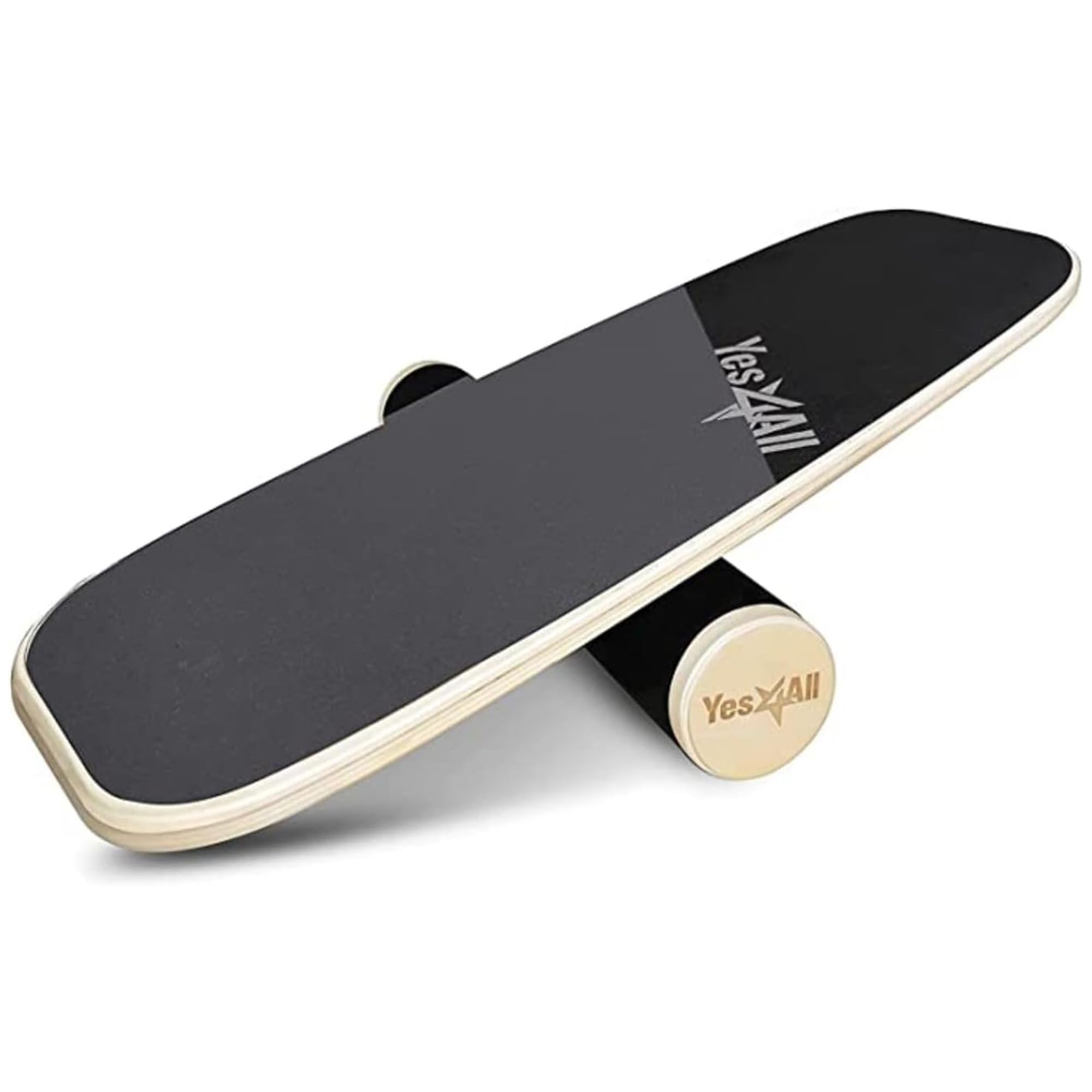
Yes4All 3-in-1 Balance Board Trainer

Yes4All 3-in-1 Balance

Yes4All 3-in-1 Balance Board Trainer

  • Board Size 29.53 x 11.22 in
  • Max Weight 300 lb
  • Construction 15-ply pressed wood
  • Stopper Spacing 11, 16, 22 in
Check Price on Amazon

The Indo-style roller ride with three stopper spacings for far less money.

Two stoppers, three spacings — 11, 16 and 22 inches apart — and that's the whole trick. Wide apart, the Yes4All's deck barely travels before it hits a stop; close them in and the board rolls further and faster. We noticed the difference the first time we moved them, and it's the same idea the Sportneer sells for a good deal more.

The trade-off is the deck. At 11.2 inches wide it's narrower than the Indo Board's 18, so the stance is more snowboard than surf, and the 15-ply wood has less give underfoot. It's rated to 300 pounds, the lightest roller here, which is fine for most adults and worth checking if two big people plan to share it. The roller's covering is also the first part to wear under daily use, so keep it off concrete and out of the garage.

Bottom Line

This is the roller board we hand to first-timers: three stopper positions let you start wide and tighten the track as you improve.

Check Latest Price

Best for Kids

Our Score 9.4/10
Gentle Monster Wooden Wobble Board

Gentle

Gentle Monster Wooden Wobble Board

  • Material Natural wood
  • Board Size 35 x 11.8 in
  • Max Weight 480 lb
  • Peak Height 6 in
Check Price on Amazon

A 35-inch plank children turn into a ramp, a bridge and a seat.

Thirty-five inches of bent plywood with a six-inch rise at the peak, the Gentle Monster isn't a training device with a pivot — it's a piece of furniture that happens to rock. In a playroom it becomes a ramp for toy cars, a bridge between cushions, a shop counter and, eventually, something to stand on and wobble.

That open-endedness is the appeal, and it's the reason this board earns a place in a guide about balance. A three-year-old can use it the way a three-year-old uses things, and it's rated to 480 pounds, so an adult can stand on it and rock without hearing a crack. The natural finish is attractive enough that we didn't mind it in the living room rather than the toy bin.

The finish is also the risk. Boards can arrive with chipped ends and rough edges, so run a hand along both ends and the full length before the return window closes — a splinter is the kind of thing a barefoot toddler finds before you do. Otherwise the build is solid, and the listed age range starts at three.

Bottom Line

For a playroom rather than a gym, this is our pick: a 35-inch plank that becomes a ramp, a bridge or a seat.

Check Latest Price

Best Overall

Our Score 9.2/10
Amazon Basics Wood Balance Board

Amazon Basics Wood

Amazon Basics Wood Balance Board

  • Height 3.15 in
  • Material Wood
  • Platform 15.75 x 15.75 in
  • Max Weight 265 lb
Check Price on Amazon

The least expensive board here that still handles desk standing and daily drills.

Round, wooden, 15.75 inches across and a little over three inches tall, the Amazon Basics board is the plainest thing in this guide and the easiest to fit into a room. It weighs under three pounds, so sliding it out from under a desk or a sofa takes a foot rather than a decision.

For most people this is the board we point to first. It's the least expensive of the eight, it carries up to 265 pounds, and the deck takes two bare feet with room to shift your stance mid-drill. The surface is closer to sandpaper than to foam, which is exactly what keeps a bare foot planted — and the same grit is unpleasant under your forearms when you set up for a plank. We noticed that on the second day and stopped putting our hands on it.

The board itself also travels. On carpet it stays where you put it; on hardwood it can skate, and on a soft rug the pivot can dig in. A thin mat or a folded towel under it ends both problems, and once we added one we stopped thinking about it.

What it isn't is a long-term challenge. Three inches of lift over a wide base makes the first week feel manageable, and anyone with decent balance will want a harder board within a month or two. That's the honest shape of the thing: a very good first board and a very good desk board, and not the last board a serious trainee buys.

Bottom Line

If you want one board for desk standing and daily balance drills without spending much, this is where we start.

Check Latest Price

Best Rocker for Desk and Rehab

Our Score 9.2/10
StrongTek Wooden Balance Board

StrongTek Wooden Balance

StrongTek Wooden Balance Board

  • Height 3 in
  • Surface Textured non-slip
  • Board Size 17.5 x 13.5 in
  • Max Weight 350 lb
Check Price on Amazon

A predictable single-plane rocker with a barefoot-friendly deck that fits beside a chair.

Take a round wobble board and stretch it into a rectangle and you get the StrongTek: 17.5 by 13.5 inches, rocking front to back or side to side, one axis at a time. That single plane is the point. A pivot board asks your ankles to correct in every direction at once, while a rocker asks them to do one thing well — which is why the shape shows up so often in rehab work.

What we liked most about it is how quickly the movement becomes readable: rock forward, catch, rock back. The textured top is comfortable under bare feet in a way the sandpaper decks aren't, and at 350 pounds it's rated for the same load as the Fitterfirst and the Indo Board. It's also the board most likely to end up beside a desk, because 13.5 inches of width leaves room for a chair.

Where this earns its place is the person who wants ten minutes of rocking at the kitchen counter, or a structured ankle routine after an injury — for that, it's the best-behaved board here. The limit is the same as the strength: one axis. If you want the diagonal corrections a surfboard or a single-leg reach demands, you need a pivot or a roller. And the 13.5-inch width is the one measurement worth checking, since a wide stance will hang over the edges.

Bottom Line

We recommend it for desk standing and careful ankle or knee rehab: a predictable one-axis rocker with a deck that's kind to bare feet.

Check Latest Price

Best For Standing-desk balance

Our Score 9.2/10
NALANDA Wobble Balance Board

NALANDA Wobble Balance

NALANDA Wobble Balance Board

  • Base Anti-slip TPE
  • Handles Two cut-in handles
  • Diameter 16.34 in
  • Max Weight 660 lb
Check Price on Amazon

The first thing your feet meet on the NALANDA is a field of firm rubber bumps. It's a massage surface, and it's the most divisive thing in this guide: pleasant for two minutes and hard going for thirty. If you plan to stand barefoot through a work session, that's the risk you're taking.

Everything around the bumps is well thought out. Two handles are cut into the deck, so stepping on and off is far less precarious than it sounds, and it's the easiest board here to carry between rooms. The base is a rubberized non-slip material, which is why it holds on tile where the wooden boards skate, and at 660 pounds it has the highest rating in this group by a wide margin.

It's also the biggest of the round boards at 16.34 inches across — good for a wide stance, less good if the space under your desk is tight.

Where it lands for us: this is the standing-desk board for someone who wants handles and a lot of capacity, and a poor choice for anyone who works barefoot and can't take texture. Try it in socks first; if the bumps are too much, the Amazon Basics gives you the same wobble on a flat, gritty deck for considerably less.

Bottom Line

For standing-desk duty, this is the round board we reach for: cut-in handles for stepping on and off, and a weight rating that clears the whole house.

Check Latest Price

How We Tested the Best Wobble Boards

We started with a shortlist of about 40 boards sold by retailers we trust, then cut anything without a published weight limit, anything with a deck under 13 inches across, and anything whose pivot looked like a screw-on ball that had already loosened in customer photos. That left 12 boards in wood, plastic, and cork-topped versions, which we rode for eight months.

Testing happened in living rooms and home offices rather than a lab. Each board got at least three weeks of daily use, ridden barefoot on hardwood, in socks on a rug, and in sneakers, in ten-minute sessions during calls, after school, and in front of the TV. We counted how many seconds we could hold a two-footed rock before an edge touched down and noted whether a board tipped smoothly or caught on a flat spot. Because a slick deck is the fastest way to lose the benefit, we watched whether feet slid once the tilt passed fifteen degrees or so, and logged how each surface felt underfoot — grip tape that chewed socks, cork that turned slick with sweat, plastic that squeaked.

We marked where our feet actually landed to see whether a heel hung off the edge, and capped sessions at ten minutes to find out what ached afterward: arches, ankles, or the outside of the knee. Kids and coworkers used them unsupervised so we could see which ones got picked up again without prompting. At the end we flexed every deck, pressed hard on each pivot, checked for cracks and crushed grip, and re-tested the base for wobble.

How to Choose

Start With the Underside

Three shapes cover this category. A round pivot board tilts in every direction at once, which makes it the generalist: it works under a desk, trains the ankle in all planes and is the most forgiving place to start. A single-plane rocker tilts front to back or side to side, one at a time, and asks for a slower, more controlled correction — the reason rehab work favors it. A roller adds speed, and speed is what a surfer or skater is actually training.

Buy the pivot for general balance and desk standing, the rocker if a clinician has given you single-plane work, the roller if a board sport is the goal. Two of the three will feel wrong for your purpose, which is why this is the first decision to settle.

Match the Footprint to the Room

Round boards run 15 to 16 inches across and slide out of the way, which is why they survive small apartments. Roller boards run 29 to 35 inches long and need a clear run of floor, plus a wall or counter within reach for the first few sessions. Weight matters as much as length: a 2.7-pound board gets moved around the house, a 7.5-pound board gets left where it lands. Measure the space before you fall for a 35-inch deck.

Grip, Feet and Floors

Non-slip in a listing almost always describes the top of the board, not the bottom, and those are two different problems. A gritty deck holds a bare foot best and feels abrasive under hands and arches; a smooth deck is kinder and gets slick in socks. The base matters separately — wooden boards can skate on hardwood and dig into soft carpet, and a thin mat under the board fixes both. On a roller, carpet slows the roll, which makes it the better place to learn.

Weight Ratings and Difficulty

Capacities here run from 265 to 660 pounds. For one adult, anything over 300 is plenty; if two adults share the board, or someone is well past 250 pounds, leave headroom. Difficulty is the other number worth checking: a fixed board is cheaper and simpler, while adjustable stoppers or tilt angles let you add challenge without buying twice. If you suspect you'll be bored in a month, pay for the adjustment up front.

Frequently Asked Questions

Final Verdict

For most people, the Amazon Basics Wood Balance Board is the one to buy. It costs the least of the eight, it does the two jobs most buyers actually have — standing at a desk and a few minutes of balance work — and the textured deck keeps a bare foot where you put it.

Spend more only when a specific requirement pulls you up the list. If your balance improves faster than the board's difficulty, the Sportneer's adjustable stoppers and roller will keep you working. If a board sport is the goal, the Indo Board's free roller and 30-inch deck are the more honest tool. And if a physical therapist has you rocking on a single axis, the Fitterfirst is the only board here that progresses in degrees.