Yoga & Mobility

Best Foldable Pilates Reformers of 2026

A foldable reformer has one job: feel like a real reformer first, then save space. I've done footwork on folding frames that clicked and shifted the moment I added spring tension, and that difference is the whole purchase. The right one gives you steady resistance and a carriage that tracks smoothly, then tucks behind a sofa or into a closet without turning setup into a workout of its own.

Over eight months, I tested six foldable reformers at home and in a small studio, assembling each one, folding and rolling it between rooms, and using it for footwork, lunges, and long-box work. Value mattered, but build quality and sturdiness mattered more: a low price is no bargain if the frame flexes or the hinge loosens. I listened for rattles and creaks, checked how well each machine fit different bodies, and noted whether the folded package was truly maneuverable. The best we tested earned their floor space; the rest are below.

Best Overall

Our Score 9.4/10
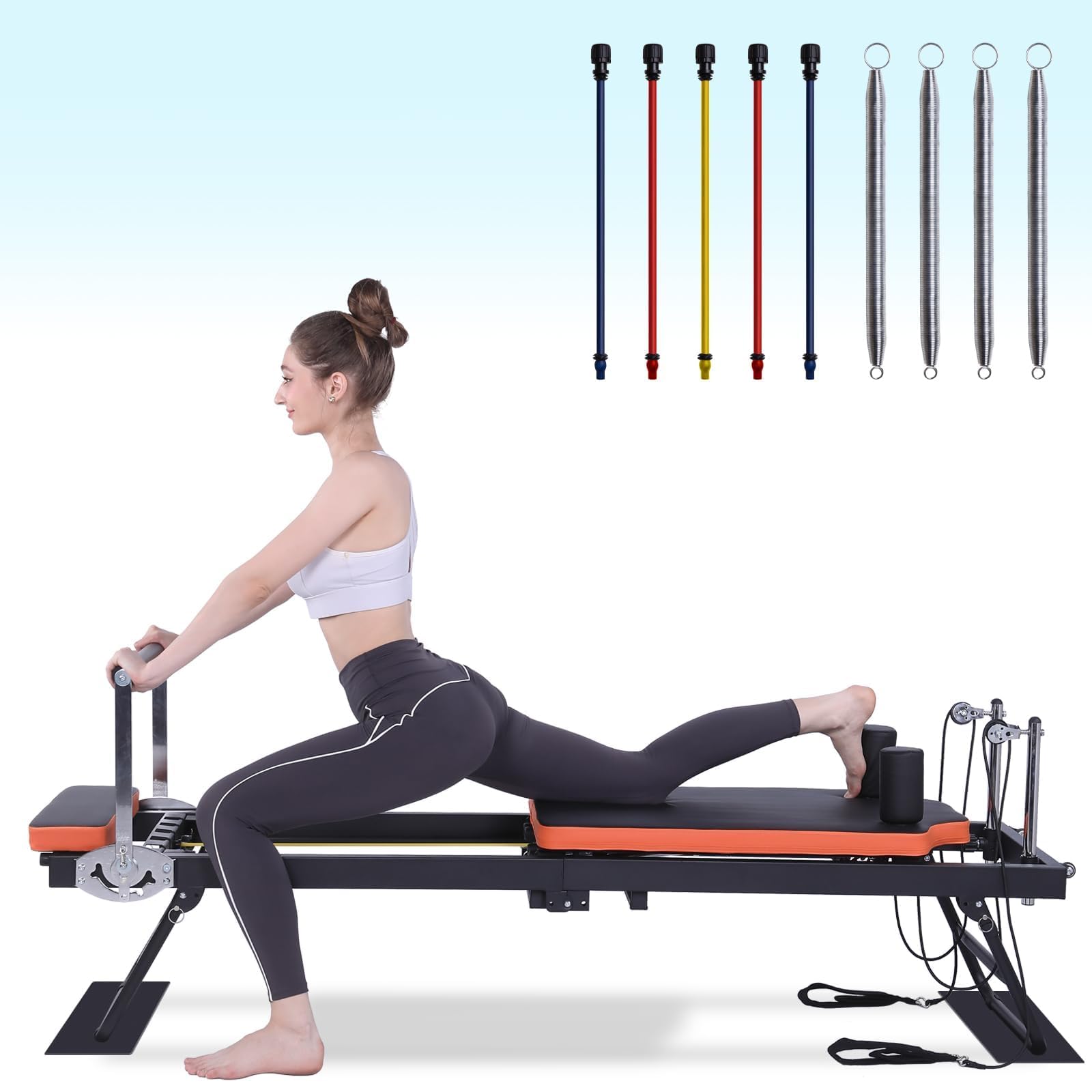
Dpiolrcag Foldable Reformer

Dpiolrcag

Dpiolrcag Foldable Reformer

  • Weight 70 lb
  • Dimensions 15"D x 74.6"W x 19.6"H
  • Resistance 4 springs at 22 lb, 5 cords from 15 to 27 lb
  • Weight Capacity 250 lb
Check Price on Amazon

Five resistance levels in a folding frame that fits a corner and most budgets.

Five resistance levels on a machine that folds is what earned this one the top slot. Four springs rated at 22 pounds plus five cords running from 15 to 27 pounds give you a spread a beginner can start on and a strong user won't outgrow in a month, and we prefer that range to a single heavy spring stack — you can fine-tune a movement instead of abandoning it.

Setup is the second reason. Most of the frame arrives assembled and what's left is genuinely a few steps; we were working out the same day it landed. The padded leather carriage is comfortable through a long set, the footbar and pulley risers adjust for different exercises, and the glide along the rails stays smooth and quiet.

At 74.6 inches the deck is shorter than the 86-inch machines here, and taller users will feel their stroke pinched at the ends of the carriage. If you're much past average height, the PAETA below fits better for a bit more money.

Where it earns its keep is the twenty minutes before dinner: unfold it, work through three or four exercises, fold it, and the room is a living room again. That's the whole case for a folding reformer, and this one makes the routine easy enough to keep.

Bottom Line

We recommend this to most people building a first home reformer: real spring and cord resistance, five levels to grow through, and a frame that folds into a corner.

Check Latest Price

Best Wood Frame

Our Score 9.4/10
nexace Wood Foldable Reformer

nexace

nexace Wood Foldable Reformer

  • Frame Solid oak
  • Weight 147.7 lb
  • Resistance 6 springs
  • Weight Capacity 400 lb
Check Price on Amazon

Solid oak, six springs, and a box included — a studio machine that folds.

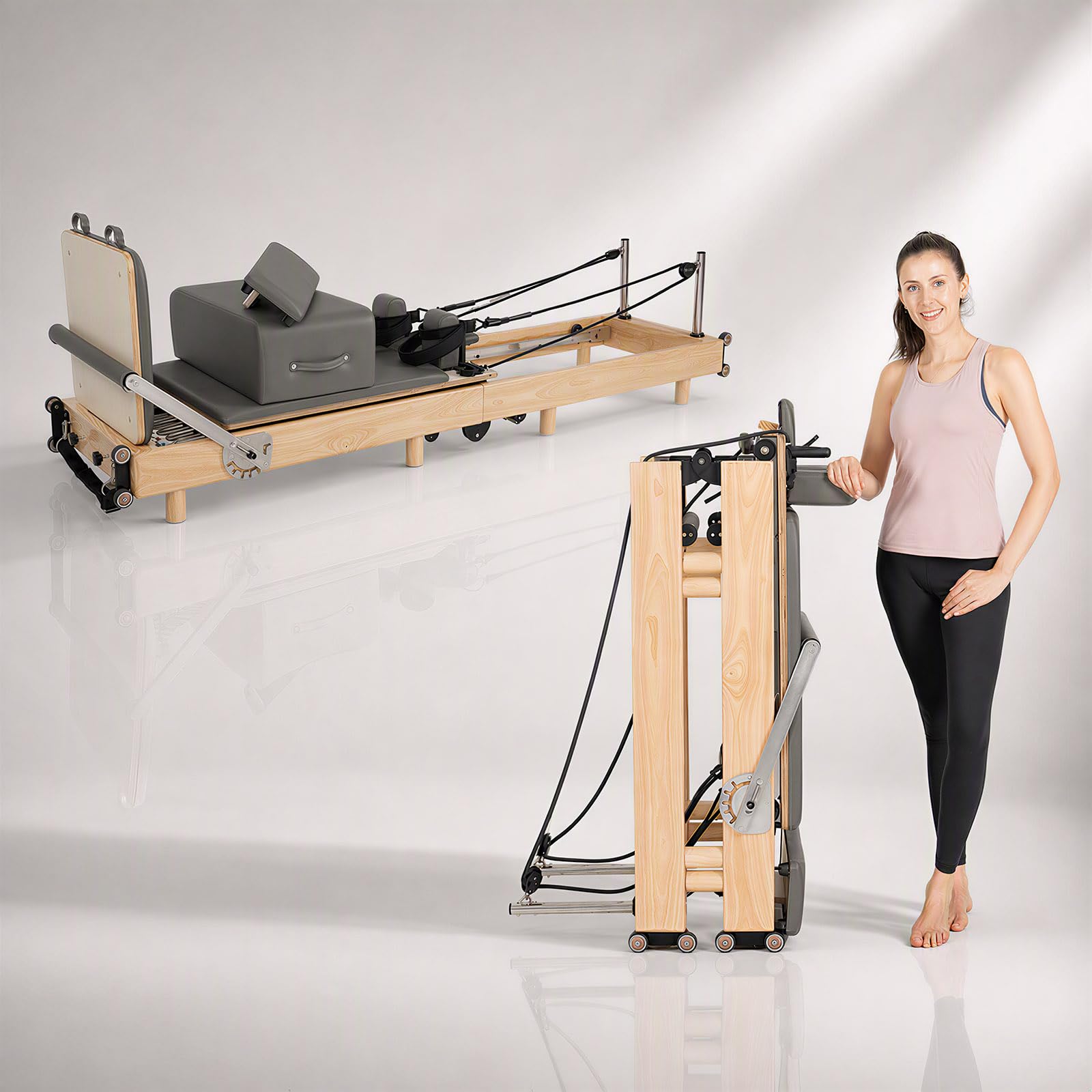
Solid oak, eight legs, and a low, wide stance: this is the reformer for someone who wants the machine to look like it belongs in the room. The frame is genuinely oak rather than a veneer over steel, and the finish is the sort of thing guests ask about rather than the thing you hide behind a door.

Six springs cover light through heavy work, and it's the most complete package here — a box, a taller jump board, a foot strap, and a padded platform extender all included. That's the difference between a machine that does reformer footwork and one that does the studio repertoire. It folds in half and rolls away when you need the floor.

What you're buying with the oak is the closest thing here to a studio machine that also happens to fold. The eight legs make it feel planted in a way the steel frames don't quite match, and we were struck by how quietly the carriage runs over the long rail.

The caveat is fit: the riding position suits shorter and mid-height users better than tall ones, and a long torso eats into the travel. If you're well over average height, the 86-inch PAETA is the safer call.

Bottom Line

Buy this one for the look and the studio feel — solid oak, six springs, and a box included make it the most complete machine here for shorter and mid-height riders.

Check Latest Price

Best for Cardio

Our Score 9.0/10
AeroPilates Premier 700

AeroPilates

AeroPilates Premier 700

  • Included Stand, cardio rebounder, neck pillow, DVDs
  • Dimensions 85"D x 23"W x 27"H
  • Resistance 4 elastic bungee cords
  • Weight Capacity 300 lb
Check Price on Amazon

A cardio rebounder and a stand turn a folding reformer into a full gym.

If you want your heart rate up as well as your core working, this is the one. The cardio rebounder swaps in at the footbar end and turns a reformer session into intervals, and it's the only machine here that ships with a stand. What we noticed first was the height — standing the frame on its stand changes the whole feel of a footwork series, and it's far kinder on knees and hips than a floor-level machine.

Four elastic cords supply the resistance. It's adequate rather than generous, and there are no springs, so a strong user runs out of headroom before they run out of exercises. The pull is smooth, the frame is steady at 300 pounds, and the workouts that come with it mean you can start without a subscription.

The frame runs 85 inches and stands about 27 inches tall with the stand fitted, so this is furniture rather than something you tuck away nightly. The stand does come apart if you need the floor back, though taking it down is a job rather than a fold.

One thing to sort on day one: all four cords are the same black, with nothing printed to tell you which is which, so your setup disappears between sessions. A wrap of tape on one end fixes it. The pulley blocks are the part that can feel less than studio-grade over time, and neither issue touches the workout itself.

Bottom Line

Our choice for anyone who wants cardio and Pilates from one machine: the rebounder and the included stand make this the most versatile frame in the group.

Check Latest Price

Best For Heavier users

Our Score 9.0/10
PAETA PR06 Reformer

PAETA

PAETA PR06 Reformer

  • Stands Removable
  • Weight 109.3 lb
  • Resistance Piano wire springs with jump board
  • Weight Capacity 500 lb
Check Price on Amazon

Five hundred pounds is the highest rating in this group, and it sits on six legs rather than four. If you've been told a home reformer won't hold you, this is the machine that answers it.

The stands unbolt, which drops the frame closer to the floor and makes it feel more planted for fast or heavy work; put them back on when you want a taller setup for footwork. We worked out with the stands off and the difference is real. Piano-wire springs give a firmer, more studio-like pull than the elastic cords on several picks here, and a jump board is included.

What it asks in return is patience at the end of a session. At 109.3 pounds it's a heavy frame, and folding it means lifting the carriage off the base first, which is a two-person job on a good day.

So this is the machine for a room where it stays out. If you have a spare bedroom or a basement corner and want the most capacity and the firmest pull here, it's the obvious buy; if you need to fold a reformer every week, the weight will wear you down first.

Bottom Line

The pick for heavier or taller users who want studio-firm springs and a 500-pound frame, provided it can live out rather than fold away weekly.

Check Latest Price

Best for Taller Users

Our Score 8.8/10
PAETA 86-Inch Foldable Reformer

PAETA

PAETA 86-Inch Foldable Reformer

  • Length 86 inches
  • Weight 80 lb
  • Resistance Springs plus cords
  • Weight Capacity 400 lb
Check Price on Amazon

Long 86-inch deck, 400-pound capacity, and a 10-inch fold for under-bed storage.

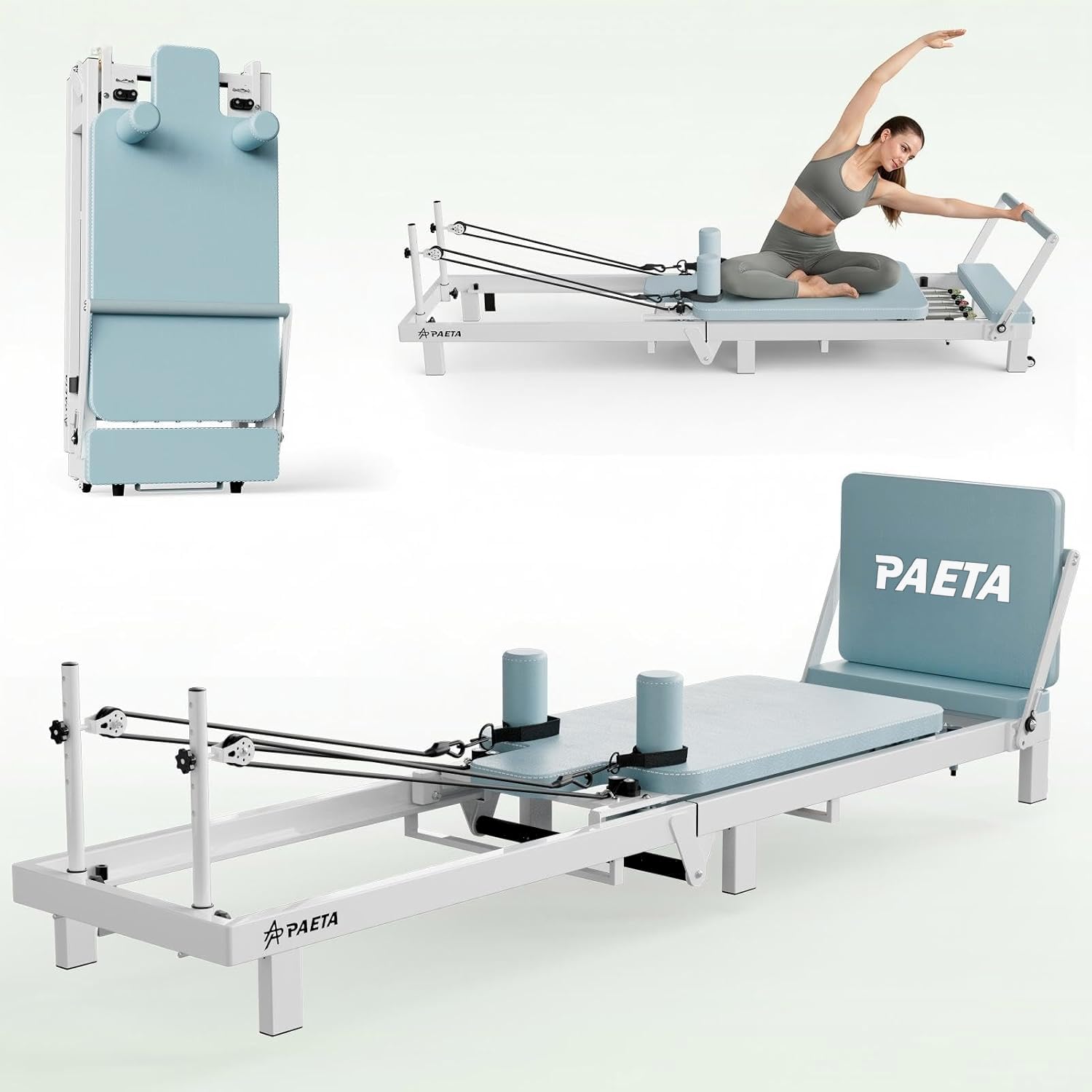
Ten inches is the number that separates this PAETA from most of the field. Folded, the deck sits low enough to slide under a bed that's already on risers, and at 80 pounds one person can do the sliding without rearranging the room.

Length is the other half of the pitch: 86 inches of rail against the 74 on our top pick, rated to 400 pounds, with adjustable shoulder rests so a shorter second user can share it. We picked it for taller riders for exactly that reason — you get full travel on the carriage instead of cutting your stroke short at the footbar.

Resistance comes two ways, springs for reformer work and cords for lighter accessory moves, and the jump board adds a plyometric option. It arrives almost entirely assembled, with an installation video if the last few fittings puzzle you.

The headrest is the weak point: soft memory foam that gives under the neck rather than supporting it. A small, firm pillow under the neck fixes it, but it's an odd choice on an otherwise comfortable carriage.

Bottom Line

For taller riders and anyone short on under-bed storage, this is the pick: an 86-inch deck, a 400-pound limit, and a 10-inch folded height.

Check Latest Price

Best Lightweight

Our Score 8.6/10
AeroPilates 287

AeroPilates

AeroPilates 287

  • Weight 56 lb
  • Dimensions 85.25"D x 17.5"W x 9"H
  • Resistance 3 elastic bungee cords
  • Weight Capacity 300 lb
Check Price on Amazon

The lightest here at 56 pounds, with wheels for rolling it out of sight.

Fifty-six pounds, a folding frame, and wheels. That combination is the whole reason this machine is in the guide: it's the lightest reformer here, and it's the one that can disappear under a bed or behind a sofa between sessions rather than becoming permanent furniture.

What you give up is range. There are no pulley risers, so the straps pull from low and the studio moves that need a high pulley simply aren't available; a taller user also runs out of carriage travel sooner than on the 86-inch machines. We noticed it most in arm work, where the pull never quite feels like a studio reformer.

Within that ceiling it's an honest, stable machine. The carriage glides, the frame holds 300 pounds, assembly is straightforward, and it ships with a wall chart and workout DVDs so you're not hunting for a routine on day one.

For a beginner, or anyone whose real constraint is a small apartment, it's a sensible buy. If you're tall, strong, or planning to work up to advanced repertoire, springs and risers will serve you far longer.

Bottom Line

The lightest reformer here and the easiest to put away, which makes it our pick for small apartments and first-time buyers.

Check Latest Price

Best For Long deck, light frame

Our Score 8.6/10
DWKWE Foldable Reformer

DWKWE

DWKWE Foldable Reformer

  • Frame Wood-grain metal
  • Weight 63.9 lb
  • Resistance 4 springs plus 5 latex cords
  • Weight Capacity 242.5 lb
Check Price on Amazon

The description is upfront about it: a wood-grain finish on a metal frame, not solid wood. We appreciate the honesty, and the payoff is a machine that looks warmer than black steel without the heft of oak behind it.

At 29 kilograms — about 64 pounds — it's one of the lighter frames here, and it still gives you 88 inches of rail, an adjustable footbar, a jump board, and dual resistance from four steel springs and five latex cords. That length-to-weight ratio is why it moves between rooms more easily than the oak nexace or the big PAETA.

Where it gives ground is the resistance menu. Four springs is a smaller stack than our top pick carries, and the steps between settings are coarser, so a strong user runs out of fine adjustment before they run out of springs. For a beginner or a home intermediate, though, it's plenty.

Sturdy, quiet, and quick to assemble, and it folds without the wrestling match the heavier frames put up. For a light-to-moderate user who wants a long deck and doesn't want to move 150 pounds to get one, this is a genuine option.

Bottom Line

A long deck on a light frame with a wood look — our choice if you want the studio aesthetic without the weight or the cost of oak.

Check Latest Price

Best For First-time buyers

Our Score 8.4/10
WINDFOOT Foldable Reformer

WINDFOOT

WINDFOOT Foldable Reformer

  • Weight 77 lb
  • Assembly 90% pre-assembled
  • Resistance 4 springs at 22 lb, 5 cords at 11 lb
  • Weight Capacity 300 lb
Check Price on Amazon

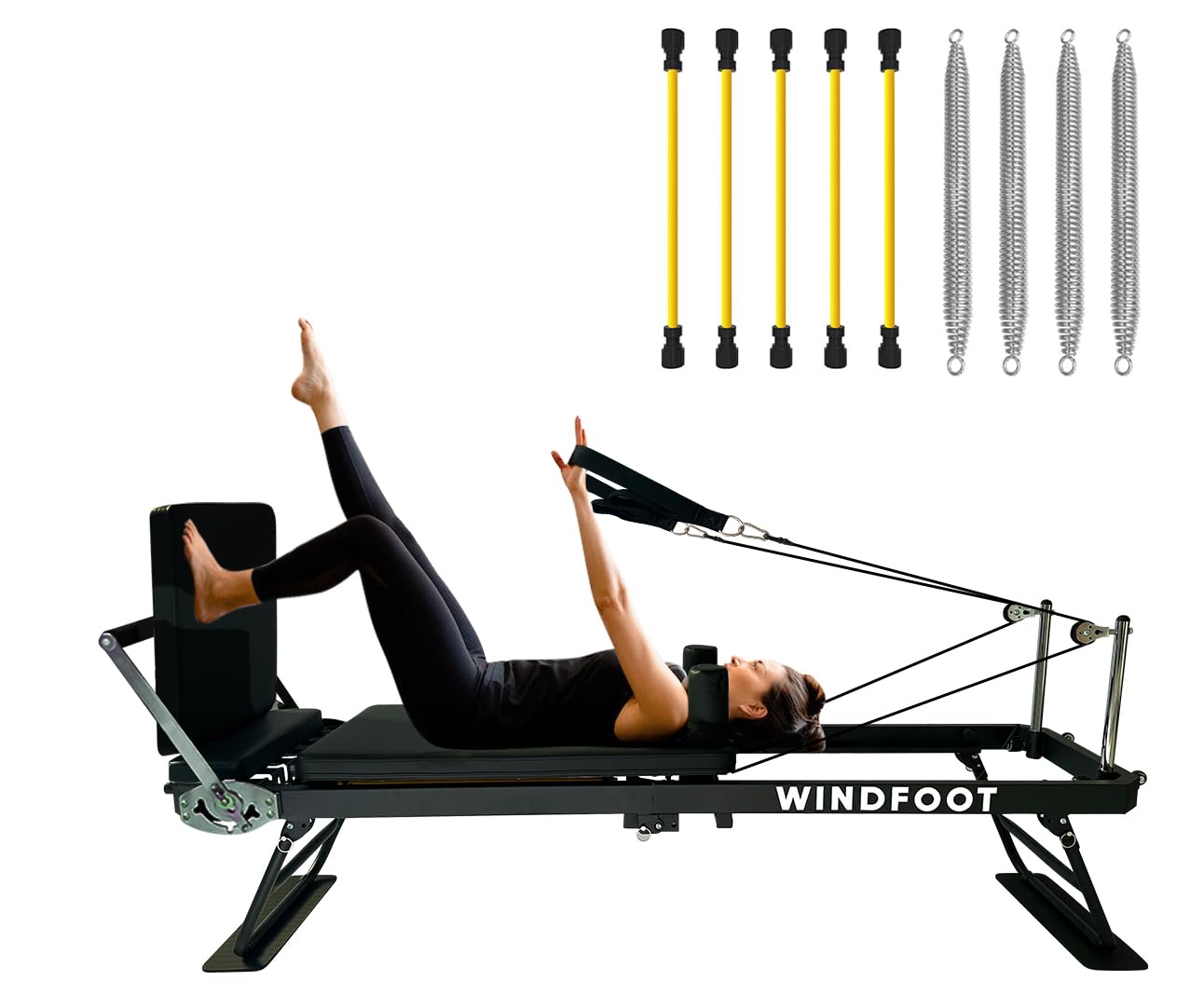
This is the least expensive way into real springs in this guide. Four 22-pound springs and five 11-pound cords on a folding frame with a padded rebounder is a lot of machine for the outlay, and it's why a beginner on a tight budget should start looking here.

What it doesn't give you is refinement. The straps run long for shorter users, and shortening them means working underneath the carriage to re-thread the cords — doable, and permanent once you've done it, but fiddly enough that most people will set it once and leave it alone.

Folding is the other chore: it takes noticeably longer than the flat-folding machines here, so this is a reformer you leave set up in a garage or spare room rather than collapse after every session.

None of that undid what we found in use. The frame is stable at 300 pounds, the carriage runs smoothly, and almost everything arrives pre-built, so a first-time buyer can be working out quickly. If you're strong or experienced the coarser resistance will frustrate you; if you're starting out, it won't.

Bottom Line

The budget entry, and a good one for beginners: real springs, a jump board, and a stable frame, as long as you can leave it set up.

Check Latest Price

How We Chose and Tested Six Foldable Reformers

We started by narrowing the field to reformers that fold or collapse into a footprint small enough for a living room or closet, then compared folded dimensions, weight, spring systems, adjustment range, and what came included versus sold separately. I assembled each myself with the tools provided and timed it, noting whether the instructions were clear and whether one person could manage the frame without help. From there, the six finalists lived in my living room and a small studio for eight months, where they were unfolded for morning footwork, used for side splits and long-box work, and folded back up before guests arrived or the next class started.

Sturdiness got checked under load, not by shaking the frame in a showroom. I did single-leg presses and slow eccentric reps while watching for carriage wobble, frame flex, latch play, and whether resistance felt even through the range, then listened for clicks, creaks, and rattles during transitions and spring changes—the noises that tend to show up after the first few weeks. I also rolled each folded unit across hardwood and rug, lifted it into a closet, and checked whether the folded length actually cleared a hallway and doorway. Fit mattered too: taller and shorter testers tried the shoulder rests and footbar positions, and I noted whether adjustments moved smoothly or required two hands and patience.

To judge value and durability, I tracked what each reformer included—springs, straps, box, mat—and whether those pieces felt solid or like add-ons I would need to replace. After eight months, I checked hinge tightness, upholstery wear, strap fraying, and whether the folding mechanism still locked with the same confidence as day one. The models that stayed quiet, stable, and quick to set up are the ones that made the cut.

How to Choose

Measure the Storage Spot Before the Machine

Folding only helps if there's somewhere for the machine to end up. The flat-folding models here stand between 9 and 11 inches tall when collapsed, which is what lets them slide under a bed on risers or stand on end in a closet. Frames that fold at the middle but stay tall need a wall and a couple of feet of depth. Measure the gap itself, not the room.

Then measure the floor when it's open. These run from roughly 74 to 94 inches of rail, and you need clear space at the footbar end to get on and off. A reformer that opens into a doorway stops being used by the second week, however good it is.

Deck Length Is a Fit Question

A longer deck isn't a size flex — it changes how much travel you get on the carriage and how much room your shoulders have at the straps. The 86-inch PAETA here lists a rider ceiling of 5 feet 9 inches, and the shorter decks exist for shorter bodies. If you're tall, put length ahead of price, weight, and accessories.

The corollary is that length costs you floor space permanently. Two people of different heights can share one machine when the shoulder rests and footbar adjust, which is worth checking before a household buys two.

Springs, Elastic Cords, or Both

Springs are what make a reformer feel like a reformer: steel gives a firm, even pull that holds its tension, and stacking springs changes resistance in clear steps. Elastic bungee cords are lighter, quieter, and cheaper, but they stretch with age and they cap out lower. The two AeroPilates machines here run on cords, and their ceiling is the trade-off you accept for the weight you save.

A dual system — springs plus cords, as on our top pick and the 86-inch PAETA — lets you fine-tune with cords while the springs do the heavy work. If you've done studio Pilates, buy springs. If you're starting from nothing, cords alone can carry you a year, not much further.

Weight Decides Who Does the Folding

The machines here run from 56 pounds to around 148, and that number predicts how often the fold actually happens. Under about 80 pounds, one person can fold, wheel, and stow a reformer as part of a workout. Past 100 pounds, folding becomes a two-person job, and most people simply leave the machine out.

If it lives out, weight buys stability and you should spend it. If it has to disappear, buy the lightest frame that still has the resistance you need — a heavy reformer in a closet is worse than a light one in the corner.

Frequently Asked Questions

Final Verdict

Our default remains the Dpiolrcag: five resistance levels, a smooth carriage, and a fold that turns the living room back into a living room. For most people building a first home reformer, it's the right buy — provided they're within its 250-pound limit and not especially tall.

If you're tall or heavy, the 86-inch PAETA is the better purchase: a longer deck, a 400-pound rating, and a 10-inch folded height that still slides under a bed. And if cardio intervals are the reason you want a reformer at all, the AeroPilates Premier 700 and its rebounder are the only machine here built for that.