Yoga & Mobility

Best Pilates Balls of 2026

A pilates ball has to be soft enough to press your lower back into and firm enough not to squish flat under a single-leg bridge. Get the size wrong or overinflate it and a gentle core exercise becomes a wobble you spend the whole set fighting. What a good one fixes is simpler than that: it makes a mat routine you've done a hundred times ask something of muscles a crunch never reaches, for about the price of lunch.

I kept a half-deflated one at the bottom of a closet for two years, which tells you how easy it is to buy the wrong ball and quit. Here's what nobody tells a first-time buyer: most people size up when they should size down — the small 7-to-9-inch ball is the one that makes the exercises work. Over four months, my team and I inflated and re-inflated 14 of them at home, in a weekly class, and under a desk or two, and the differences showed up within a week. The ones that held air and held their shape are below.

Best for Physical Therapy

Our Score 9.2/10
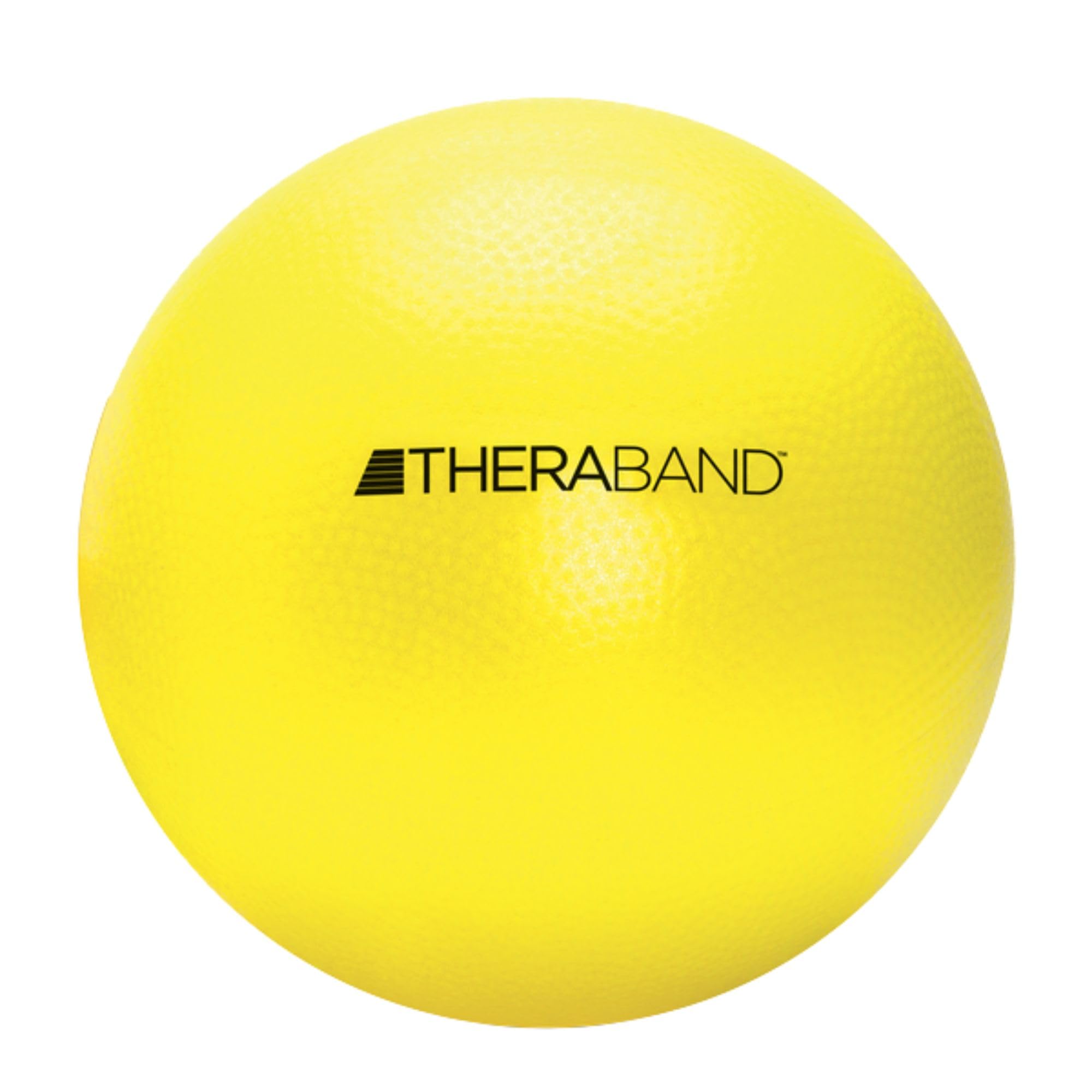
THERABAND Mini Ball 9-Inch

THERABAND

THERABAND Mini Ball 9-Inch

  • Surface Slightly textured
  • Diameter 9 inches
  • Included Printed exercise booklet
  • Inflation Tube and breath, no pump required
Check Price on Amazon

Stays soft under the back and knees, with a printed exercise booklet included.

THERABAND is the name printed on a lot of the equipment in physical therapy clinics, and the Mini Ball is the home version: a 9-inch PVC ball with a light texture and a fill tube, sold with a printed booklet covering abdominal, upper-body and shoulder exercises.

The reason we reach for it is the feel. THERABAND builds this one to stay elastic and a little squishy even at full inflation, so it gives under your lower back during crunches instead of fighting back, and it is the ball we hand to anyone who finds a firmer ball uncomfortable against the spine or the knees. The texture does real work too, staying where you put it on a mat or a carpet.

What you trade for that softness is resistance. This is not the ball for someone who wants a drum-tight surface to push against, or for heavy squeezes held at maximum pressure, because the give that makes it comfortable under the spine also makes it less useful as a resistance tool. For rehab-style sessions and gentle core work, soft is the whole point.

Bottom Line

For rehab-style work, or anyone who finds a firm ball uncomfortable against the spine, this soft, textured 9-inch ball is the one we choose.

Check Latest Price

Best for Small-Target Work

Our Score 9.2/10
CIZEBO Pilates Ball 6-Inch

CIZEBO

CIZEBO Pilates Ball 6-Inch

  • Valve No plug needed
  • Diameter 6 inches
  • Inflation Needle air pump
Check Price on Amazon

A hand-sized ball with a needle pump, so there is no plug to fight.

CIZEBO solves the most annoying thing about small balls by removing the plug entirely. A needle pump pushes air through a self-sealing valve, so there is no scrambling to stopper the hole while the ball deflates in your hands. That alone makes it the one we pick up for a quick session, and at 6 inches it is built for a different job from the 9-inch balls here: behind the knee, in one hand, under a heel, or in the palm of someone with smaller hands.

If your routine is between-the-knees squeezes and lower-back support, this is the wrong size and you want a 9-inch ball instead. If it is ankle and knee rehab, grip work, or a barre class that calls for a hand-held ball, the small size is the whole advantage: easier to hold, easier to wedge, and it stays out of the way in a way a bigger ball never does. Inflating to the pressure you want takes seconds because nothing is lost at the valve.

Bottom Line

The one to buy if you want a small, hand-sized ball for knee, ankle or grip work. The needle pump means you never fight a plug again.

Check Latest Price

Best Overall

Our Score 9.0/10
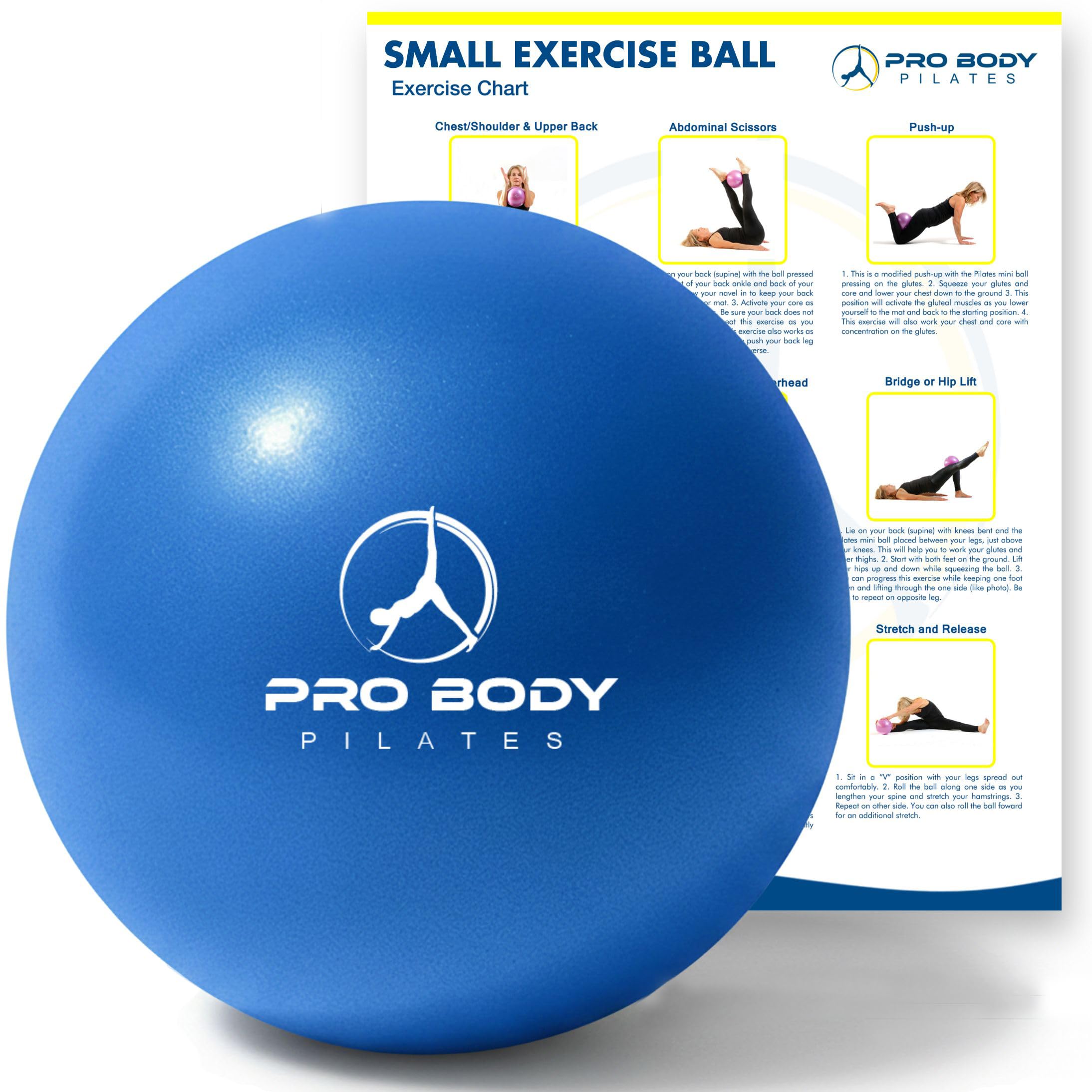
ProBody Pilates Ball 9-Inch

ProBody

ProBody Pilates Ball 9-Inch

  • Weight 3.2 oz
  • Diameter 9 inches
  • Warranty 1 year
  • Inflation Two straws and a spare plug
Check Price on Amazon

Standard 9-inch ball that fills in a few breaths and ships with a spare plug.

Nine inches is the size a physical therapist hands you for between-the-knees work, and it is the size most of us picture when we hear Pilates ball at all. The ProBody is exactly that ball: plain blue PVC, 9 inches across, with two inflation straws, a spare plug and a printed sheet of exercises in the box.

Filling it is the part we keep coming back to. A handful of breaths through the straw gets it to a usable firmness, and the plug seats cleanly on the first or second try, which makes it the least fiddly fill of the 9-inch balls here. For a ball you might inflate and deflate once a week to take to class, that is the difference between a routine and a chore.

It does not stay at that firmness forever. Ours softened between sessions and wanted a few breaths before use, which is the one habit this category asks of you; build the top-off into setting up and you will never notice it. Otherwise the ball is unremarkable in the best way: it holds its shape under a squeeze and sits still on a mat instead of skating off mid-rep.

Where it earns the top spot is the combination: the size most adults actually need, a spare plug so a lost stopper does not end the ball, and a year of warranty behind it. There is nothing clever here, and that is the appeal. It does the ordinary job without drama, which is what you want from something you lean on every week.

Bottom Line

Buy this one if you want a standard 9-inch ball that fills in a few breaths and seals without a fight. We think it is the most dependable starting point for mat, barre and PT work.

Check Latest Price

Best Value

Our Score 9.0/10
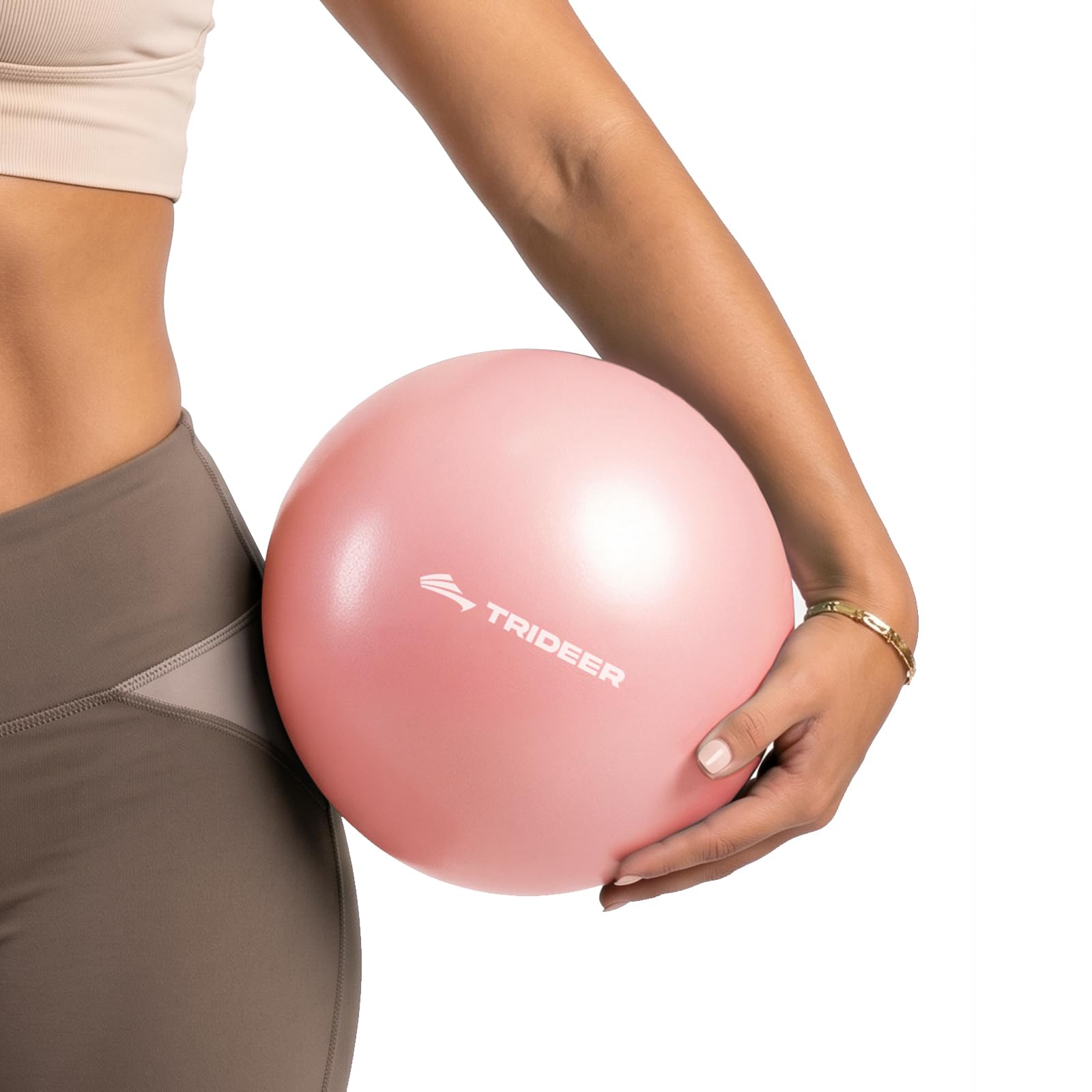
Trideer Pilates Ball 9-Inch

Trideer

Trideer Pilates Ball 9-Inch

  • Weight 5 oz
  • Diameter 9 inches (23 cm)
  • Warranty 12 months
  • Inflation Two straws, two plugs, plug remover
Check Price on Amazon

Grippy, light, and supplied with spares for the lowest outlay here.

Trideer's ball is the value pick here, and the one we point to when someone wants a second ball for the studio bag without spending much. You get the ball, two straws, two plugs and a plug remover in a 23-centimeter package that weighs about five ounces, so it disappears into a gym bag next to a water bottle.

Judge it after a week, not on day one. Trideer states outright that the PVC stretches in the first days and that the ball will feel softer than you filled it, so you top it off and it settles. That note saves a lot of pointless returns, and it is the kind of thing we wish every brand bothered to print.

The surface is the compromise. It is genuinely grippy between the knees and under a hand, but it is tacky enough to pick up lint and to leave a film on whatever hard surface it rests on, which shows up if the ball lives on a wooden floor or a bench rather than a mat. For a barre or PT routine that starts and ends on a mat, that is a non-issue.

Bottom Line

The cheapest way into a proper 9-inch ball: grippy, light and supplied with spares. Give it a week to settle and keep it off finished wood.

Check Latest Price

Best For Mat and barre

Our Score 9.0/10
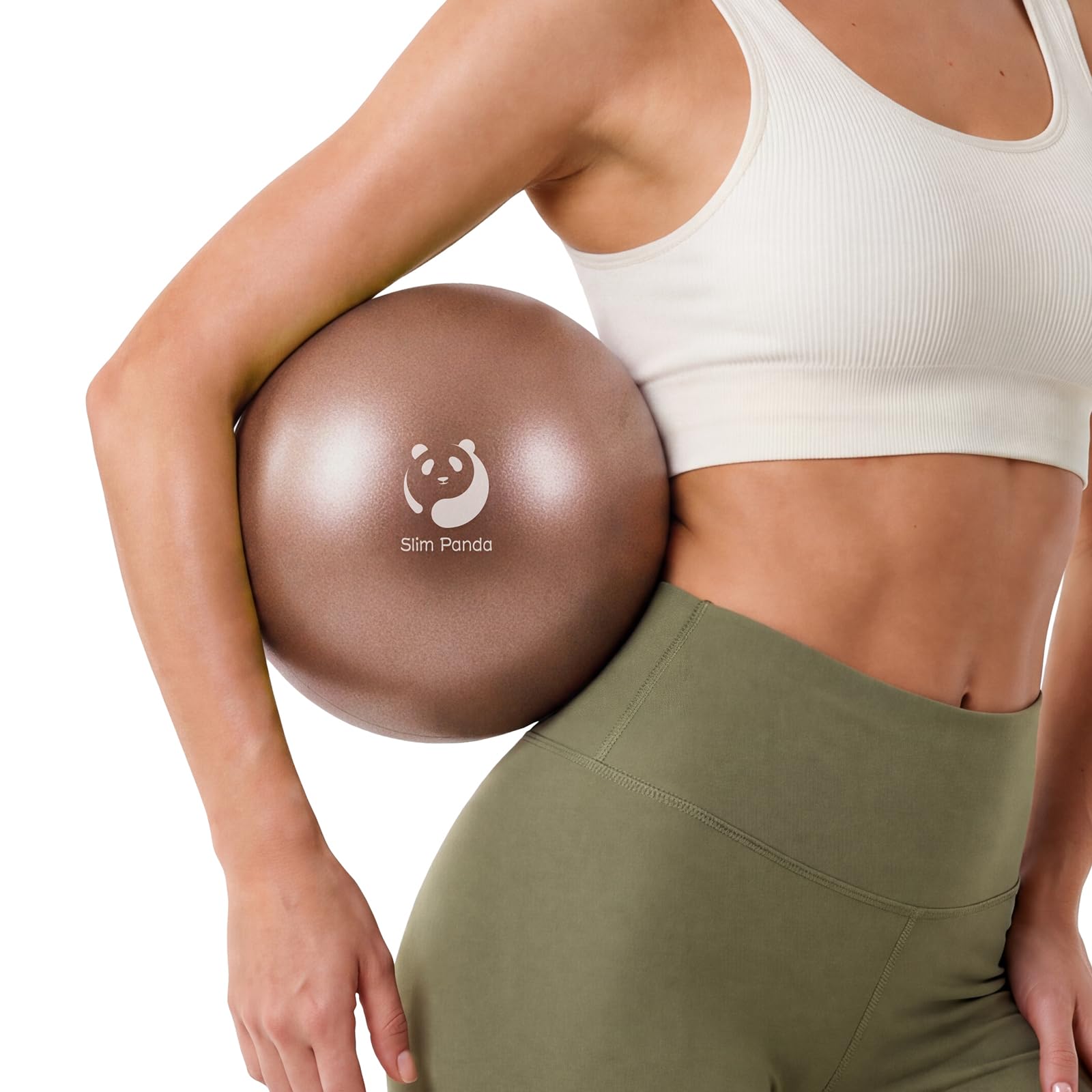
Slim Panda Pilates Ball 9-Inch

Slim

Slim Panda Pilates Ball 9-Inch

  • Diameter 9 inches
  • Included Printed guide
  • Warranty 1 year
  • Inflation Stainless steel straw and air plug
Check Price on Amazon

Slim Panda's kit is the one we point people to once they have already owned a Pilates ball and know the straw is the weak link. Instead of a plastic tube that kinks and splits, you get a stainless steel straw, plus a plug and a printed guide. The ball itself is standard 9-inch PVC in a champagne gold that looks better on a shelf than most of the colors in this category.

What separates it from the cheaper balls here is the finish and the metal straw, which is the difference between a kit you keep in the living room and one that migrates to the back of a cupboard. In use it behaves like a good 9-inch ball should: quick to fill, grippy enough on a mat, and soft enough between the knees to hold a squeeze for a slow count. For everyday mat and barre work, that is most of what matters.

Bottom Line

A tidy, good-looking 9-inch ball with a stainless straw that will not kink. Our pick if you want your kit to live on the mat, not in a drawer.

Check Latest Price

Best For Hard floors

Our Score 9.0/10
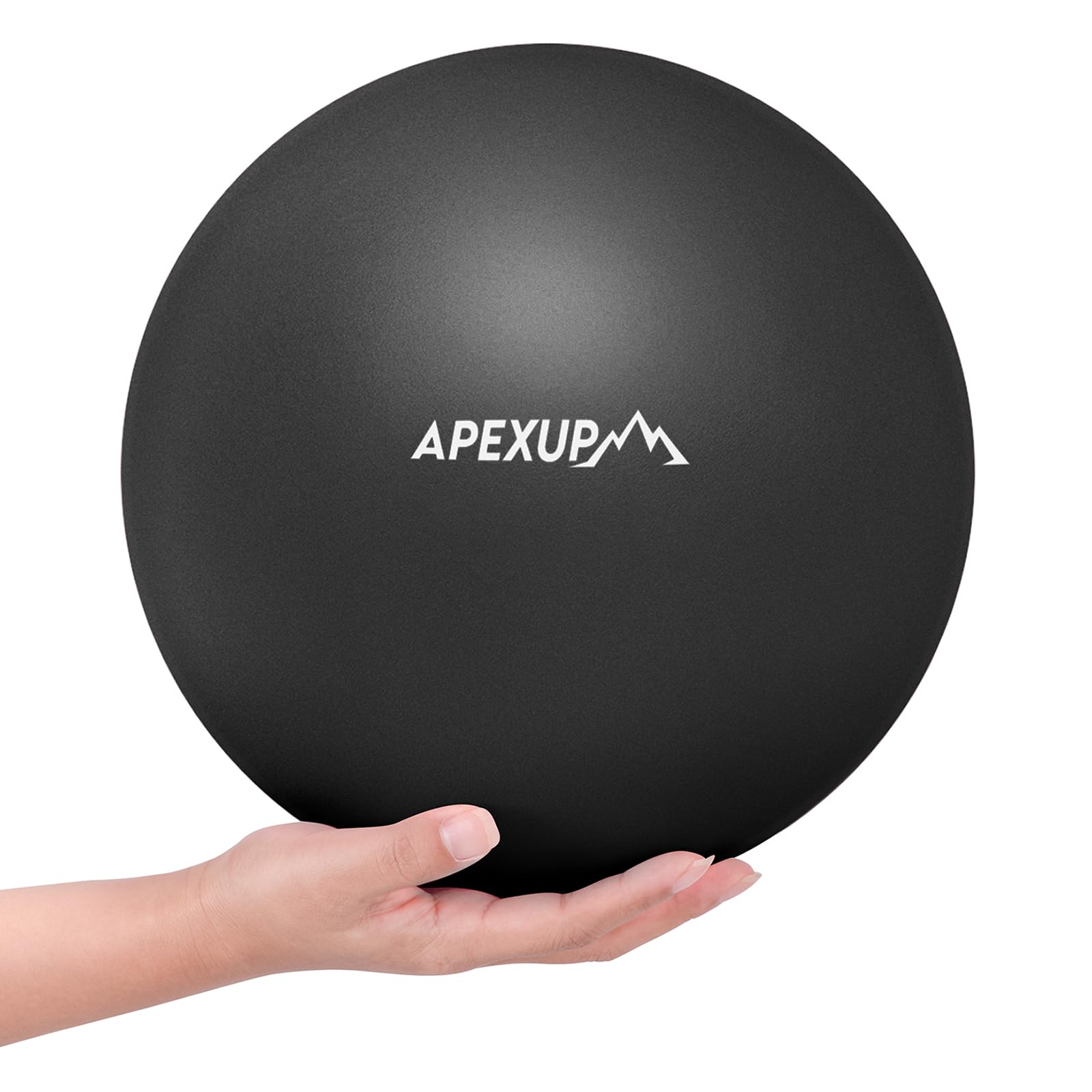
APEXUP Pilates Ball 9-Inch

APEXUP

APEXUP Pilates Ball 9-Inch

  • Surface Honeycomb grip
  • Diameter 9 inches
  • Inflation Two straws and a plug
Check Price on Amazon

The honeycomb texture on APEXUP's 9-inch ball is the reason it stays put. Against the smooth PVC on most of the balls here, the matte, dimpled surface grips a hardwood floor and a sweaty hand better, which matters most during bridges and any movement where the ball sits between you and the floor rather than between your knees.

Inflation is quick, with two straws in the box and a plug that seats without much drama. Otherwise it is a standard 9-inch PVC ball: a little tacky to the touch, comfortable against the back, and firm enough to hold a squeeze.

We came away thinking this is the sleeper of the group. It does the same job as our top pick for less, and the surface is the one thing about it we preferred, because a ball that does not shoot out from under a foot is a ball you will use more often. It is one of the cheapest ways to get a grippy 9-inch ball that behaves.

Bottom Line

A grippy, quick-to-fill 9-inch ball at the low end of the price range. Our pick if you work on a hard floor and want the ball to stay put.

Check Latest Price

Best For Two-ball households

Our Score 8.8/10
kisnbld Pilates Ball 9-Inch

kisnbld

kisnbld Pilates Ball 9-Inch

  • Diameter 9 inches
  • Included Two balls, four straws, four plugs, two pullers
  • Material PVC
Check Price on Amazon

Two balls, four straws, four plugs and two plug pullers. kisnbld's kit is the only one here that outfits two people or two locations at once, and it does it for about the same money as a single ball from most of the brands in this group.

The pullers are the detail we did not expect to care about. Getting a seated plug out of a small ball is usually a fingernail job, and having a little tool for it means you will actually deflate the thing and pack it. With two of everything, one ball lives in a gym bag and one stays by the mat, which is how these end up being used anyway.

Two balls for the price of one changes how you use them: no carrying, no repacking, one already where you need it. It is the pick if you are outfitting a household or splitting a kit with a training partner, and less compelling if you just need a single ball for your own routine, where the ProBody or the Trideer is the simpler purchase.

Bottom Line

Buy the kisnbld kit if two balls make more sense than one. The pullers and spare plugs are genuinely useful, if you have the patience for a fiddly fill.

Check Latest Price

Best For Taller users

Our Score 8.8/10
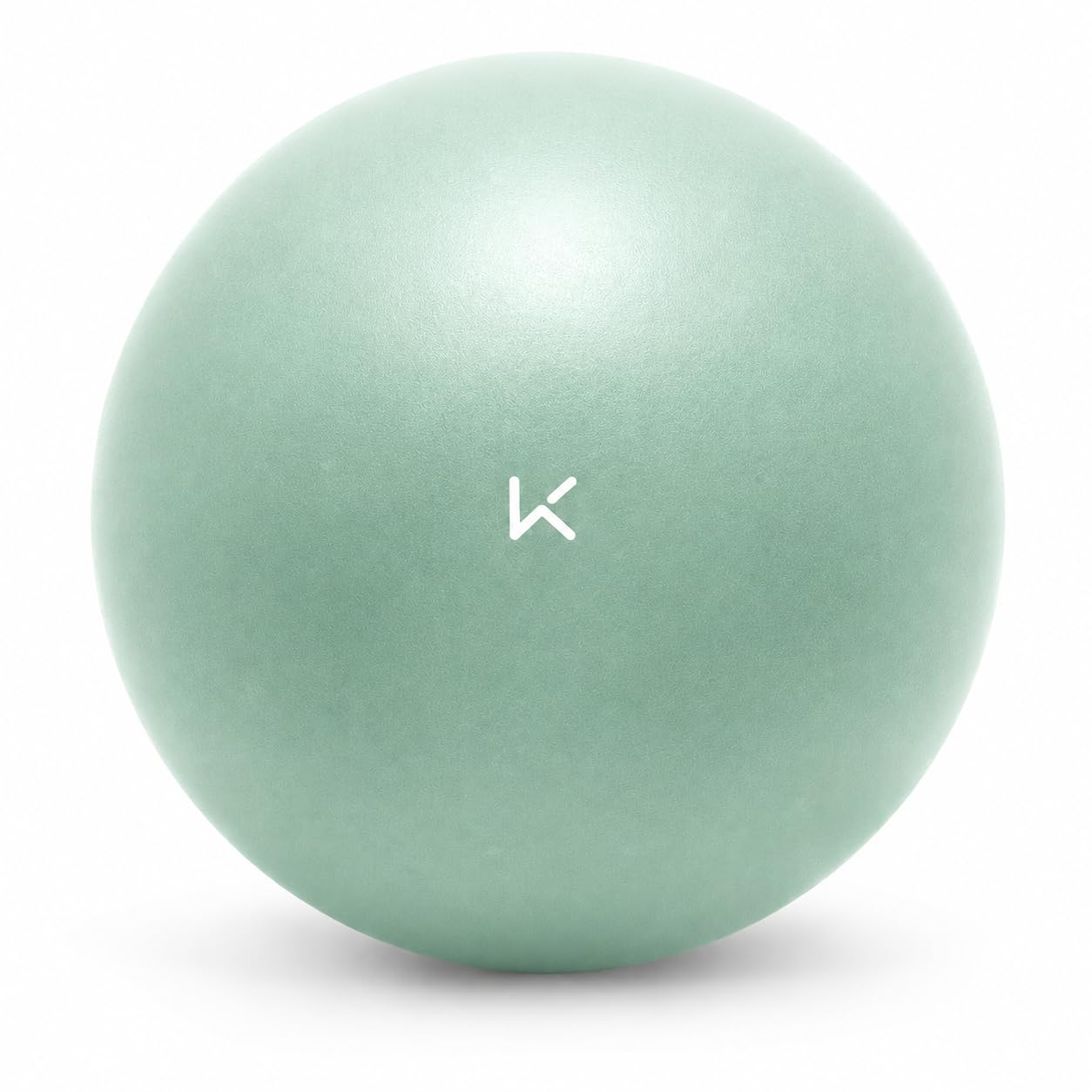
KEEP Exercise Ball 25 cm

KEEP

KEEP Exercise Ball 25 cm

  • Weight 9.52 oz
  • Diameter 9.8 inches (25 cm)
  • Construction Honeycomb foam PVC
Check Price on Amazon

KEEP's ball is not a 9-inch ball, and that is the point. It is listed at 9.8 inches (25 cm), and in practice it reads as closer to 10 inches, which is exactly what you want if a standard 9-inch model disappears between your knees or if you are longer-legged than the person the standard size was designed around.

The construction is different too: a honeycomb microporous foam structure behind a thick PVC wall with a matte finish. We found it feels denser and a bit more serious than the thin PVC balls here, and the matte surface does not slide across a wood floor the way a glossy one does.

Firmness is adjustable the same way as everything else in this category. Underfill it for a softer squeeze that is kinder on the knees, fill it further for resistance, and at 0.27 kilograms it is light enough to move around a room without thinking about it.

What it cannot do is the standard job. Under the lower back for crunches, a ball this size is too much: you feel it pushing you out of position rather than supporting you. So this is the pick for between-the-knees work, hip and glute squeezes, and anyone who has found 9 inches too small. That is a narrower brief than our top pick, and a real one.

Bottom Line

Choose this if a 9-inch ball feels too small between your knees. It is a bigger, denser ball with a grippy matte finish, and it is not meant for lower-back work.

Check Latest Price

How We Tested the Pilates Balls

We started with about 40 balls sold by big retailers, small fitness brands, and a physical therapy supplier, then cut anything that didn't list a diameter or came without a pump. That left us with soft balls in the 7-to-9-inch range — the size that actually makes the exercises work — spread across a range of prices.

Fourteen of them came home with us for four months. I used each one three mornings a week for a 20-minute mat session, a teammate sat on two as desk-chair lumbar support, and a third tester brought them to a weekly class where the instructor hands out balls at the door. Inflation was the first test: we filled each one with its own hand pump, counted strokes, and checked whether the plug sat flush after a top-off and whether the little removal tool was actually in the box.

Air retention came next. We wrapped a tailor's tape around each ball on day one and again two weeks later, and left a few in a hot car for an afternoon to see which came back soft or creased. For durability we dropped them from waist height onto tile, rolled them under a chair leg, and looked for scuffs and stressed seams. Grip got checked barefoot and in socks, on hardwood and on a mat, during footwork and glute bridges — we noted which ones slid out from under a heel. Finally, we measured every inflated ball against its stated size and ran it through back extensions, inner-thigh squeezes, and side-plank support to see how well it handled more than one job.

How to Choose

Match the Diameter to the Exercise

Nine inches is the working standard for adults, the size that fills the gap between bent knees and the size that supports the lower back during crunches. Go smaller, to 6 or 8 inches, when the ball is going in your hands, behind a knee or under a heel, or if you are small-framed. A bigger ball, like the KEEP at 25 cm, suits longer legs that swallow a standard one.

The trap is that every diameter is measured at full inflation, and these balls work best slightly underfilled, so a 9-inch ball in use often sits closer to 8. Inflate it, wedge it where you plan to use it, and check that it gives when you squeeze instead of feeling like a stone.

Judge Air Retention Before Anything Else

Pressure loss is the one problem that turns a useful ball into a drawer inhabitant, and it runs right through this category. Some of it is normal: PVC is slightly porous, plugs weep a little, and a ball folded in a warehouse stretches over its first days. Some of it is not normal at all.

Inflate a new ball, seat the plug firmly and leave it overnight. If it is noticeably softer by morning, that is a seal fault worth returning rather than topping off forever. And keep any of these balls off finished wood, because tacky PVC can leave a ring that does not wipe away.

Straw, Pump, or Needle Valve

Any of these inflates by mouth in well under a minute, so the method matters less than the seal. A straw works, but you are racing the leak while you seat the plug, which is where most of the frustration in this category comes from. A kit with a plug puller makes removal easier, and a needle pump on a self-sealing valve skips the race entirely.

Whichever you choose, buy a kit with at least one spare plug. It is the cheapest part in the box and the most likely reason a perfectly good ball stops being useful.

Firmness, Surface, and What's in the Box

You control the firmness, and that is the underrated part of owning one of these. A soft ball is gentler under the back and easier to hold a long squeeze against; a firm one gives more resistance for short, hard sets. Surface matters most on hard floors: matte and honeycomb textures stay put, smooth PVC slides, and the tackiest balls grip a mat but collect lint.

Spend the difference on spares, a printed routine and a warranty rather than on a nicer shade, though a ball you like looking at is one you will leave out where you can actually use it.

Frequently Asked Questions

Final Verdict

The ProBody is the ball we recommend to most people: the standard 9-inch size, a fill that takes a few breaths rather than a fight, a spare plug in the box and a year of cover behind it. Nothing about it is remarkable except that it works every time you pick it up.

Two situations change the answer. If you want the softer, clinic-style feel for back and knee work, the THERABAND is worth the premium. And if you need a ball for hands, heels or behind the knee rather than between them, the CIZEBO's 6-inch size and needle pump are the better fit, because a 9-inch ball is the wrong tool for that job.