Strength & Weights

Best Pull-Up Bars of 2026

A pull-up bar looks like the simplest piece of home gym equipment there is — until you hang from one that shifts a quarter inch under your weight. The worry is rarely the bar itself. It's whether it fits your doorway, whether the foam survives a few hundred reps, and whether it leaves a crease in your trim long after you've stopped using it. Get those right and the bar disappears into a hallway; get them wrong and it becomes a very sturdy coat rack.

I've hung bars in doorways with crooked trim and in a garage with nothing but exposed studs. Over six months, my team and I worked through 12 bars — doorway, wall-mounted, and freestanding — assembling each one, living with it for weeks, and inspecting the frame afterward. Two things first-time buyers don't realize: leverage, not body weight, is what cracks trim, and a bar that claims to fit every doorway rarely does. The picks below earned their spot; a couple of inexpensive ones beat bars that cost twice as much.

Best Overall

Our Score 9.2/10
AmazeFan Pull Up Bar

AmazeFan

AmazeFan Pull Up Bar

  • Mount Type Hook-over doorway
  • Hook Spacing 21.65 in
  • Weight Limit 400 lb
  • Overall Width 36.22 in
Check Price on Amazon

Hangs in narrow and corner doorways the others skip, with no sway under load.

Doorway bars are usually built for a 30- or 32-inch opening, which is why so many of them wobble or refuse to seat in a narrow closet door or a frame tucked into a corner. This AmazeFan cuts the distance between its two hooks to 21.65 inches, and that single number is why it went up cleanly on the tightest doorway in the house.

Sturdiness is where it separates itself from everything else in this group. It felt bolted to the frame rather than resting on it: no sway at the bottom of a rep, no creak on the way up, nothing when we shifted weight from hand to hand. The angled ends put your wrists in a friendlier position than a straight tube, and the grips are thick enough that a long set doesn't leave your palms raw.

It also arrives ready to hang. There's nothing to bolt together and nothing to store in a drawer — two silicone pads take the contact points instead of bare metal, and the whole bar lifts off in one motion when you want the door back.

The limit is the trim rather than the bar. Openings wider than 36.22 inches leave a gap at each end, and a casing that's unusually thick or shallow won't give the hooks a confident seat, so measure the trim depth and the space between the trim faces before ordering. On a standard frame there's nothing here we wanted to change.

Bottom Line

Our most solid-feeling doorway bar, with the narrowest hook spacing here, so it fits frames and corners the others can't.

Check Latest Price

Best For Dedicated gym corner

Our Score 9.2/10
Luckyone Wall Mounted Pull Up Bar

Luckyone

Luckyone Wall Mounted Pull Up Bar

  • Mount Type Wall mounted, drilled
  • Weight Limit 440 lb
  • Overall Width 37.4 in
  • Mounting Surface Solid masonry only
Check Price on Amazon

This is the only bar here that turns a wall into a gym rather than borrowing a doorway. Eight 2.75-inch concrete anchors, a 37.4-inch span, and a frame that flips up out of the way: pull-ups, chin-ups, dips, and leg raises from one footprint in the corner of a garage.

The build is the reason to consider it. Over 20 pounds of steel, a wide base, and no movement anywhere once it's bolted up — the most planted thing in this group by a distance. The mounting surface is the catch: solid concrete, brick, or tile over masonry only, no hollow brick, and the supplied anchors are meant for masonry rather than drywall.

The geometry takes adjusting to. The bar sits close to the wall, close enough that neutral-grip work has your knees brushing plaster, and that's the price of a station that doesn't stick out into the room. For dips and hanging leg raises it's excellent; for anything with swing to it, it isn't the tool.

What we keep coming back to is the flip. Folded up it's a bracket on the wall; down it's four exercises, and the whole thing costs you a corner instead of a doorway. If you have that wall, the room to hang, and no plans to move, that's a better use of a garage than any hook-over bar — just have someone who has drilled anchors before on hand for the install, because the instruction sheet is thin for a job this heavy.

Bottom Line

A wall-mounted station with dip handles for a dedicated gym corner — worth the drilling if you have solid masonry and no plans to move.

Check Latest Price

Best Screw-In

Our Score 9.0/10
Maximiza Screw-In Pull Up Bar

Maximiza

Maximiza Screw-In Pull Up Bar

  • Mount Type Screw-in doorframe mounts
  • Weight Limit 300 lb
  • Mounts Included 3 sets
  • Fits Door Widths 27 to 39 in
Check Price on Amazon

Anchors into the trim so nothing wedges, slips, or needs re-tightening mid-set.

Nearly every doorway bar holds on by squeezing the frame: you expand it until it's tight and trust the friction to last the session. This one works differently. Two mounts screw into the trim, the chrome bar expands into those mounts, and your weight hangs from a fixed anchor. We noticed it on the first rep, and again at the end of a set, when there was nothing to re-tighten.

Three sets of mounts come in the box, which is more useful than it sounds — one pair in the garage doorway, another in the house, and the bar moves between them with a twist. The tube is slim and sits close to the casing, so it's easy to walk past, and the collar keeps it from rotating mid-set, a small thing that matters the moment you switch from overhand to neutral.

Installation is a drill job, two mounts per doorway, and then you're done. What you need to know before ordering is the frame: solid wood trim at least an inch thick, and an opening between 27 and 39 inches. A 24-inch closet door is out, which is worth checking, since narrow doors are exactly where the hook-over bars in this group start to struggle.

The chrome and the mounts feel like hardware rather than packaging. We came away more confident in the steel than in the grip padding, which is the part that will look tired first, but at a price level with the hook-over bars here that seems like the right trade for anyone who owns their walls.

Bottom Line

If you can put four small holes in your trim, this is the steadiest doorway bar here — anchored, so there is nothing to wedge or re-tighten.

Check Latest Price

Best Joist Mount

Our Score 9.0/10
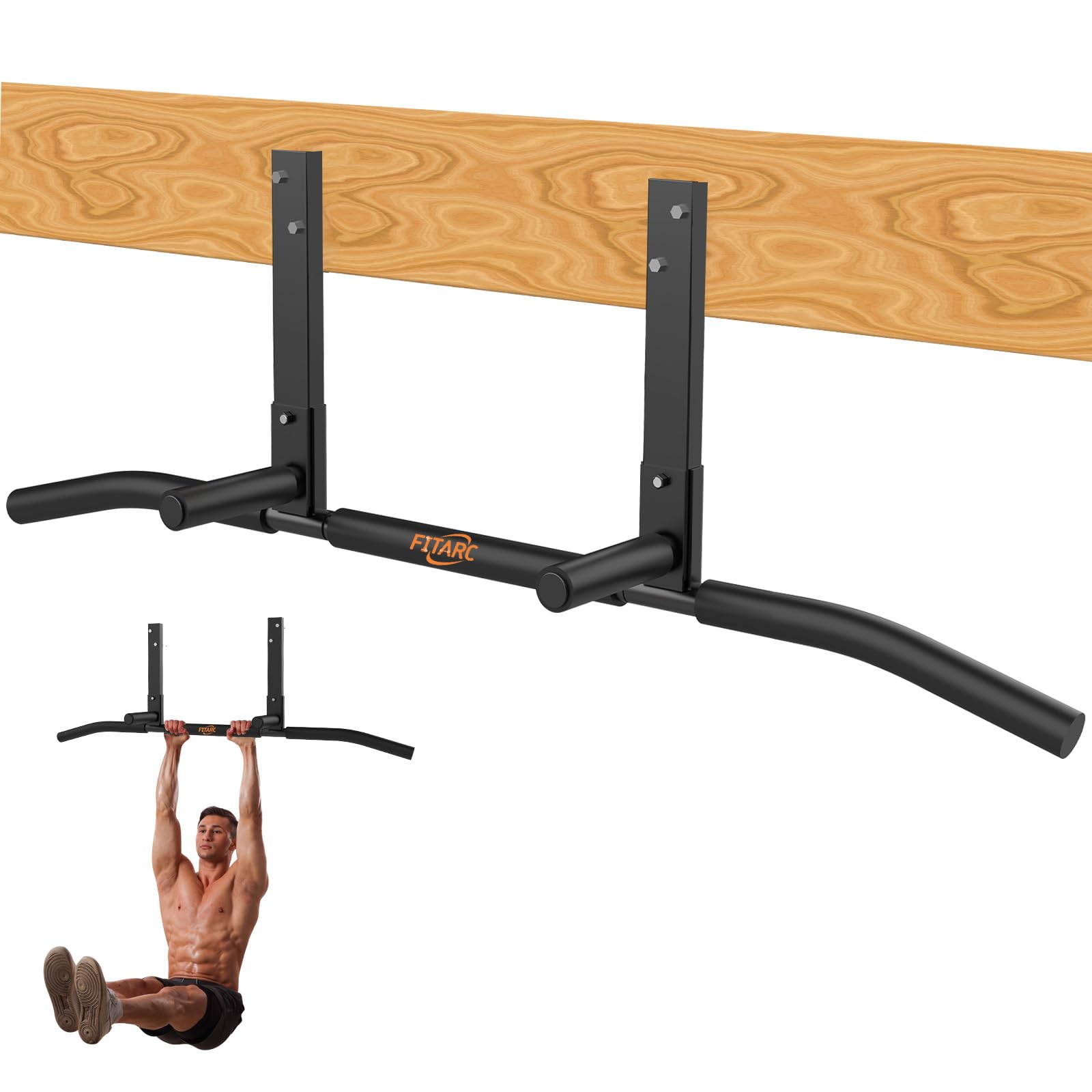
Fitarc Joist Mount Pull Up Bar

Fitarc

Fitarc Joist Mount Pull Up Bar

  • Mount Type Joist or ceiling mount
  • Weight Limit 440 lb
  • Overall Width 42.5 in
  • Grip Positions 4 padded grips
Check Price on Amazon

Bolts to exposed beams at whatever height you want, freeing every doorway.

If your training space is a basement with the ceiling framing showing, there's no reason to fight over a doorway. Four lag screws into a joist and this bar is up: a 42.5-inch span with four padded grips and a dual-support frame, mounted at whatever height you choose rather than at door-frame height.

That height choice is the whole appeal. A tall lifter gets full extension without bending knees at the bottom, a shorter one doesn't have to jump for the bar, and nobody has to take it down when guests arrive. It also costs less than most of the doorway bars here, which is an odd place for a permanently mounted bar to land.

The hex bolts in the box are the weak link — soft heads, and threads that don't always run clean. On an old, hard joist, drill pilot holes and don't force anything; if the supplied bolts fight back, four sturdier lag bolts from a hardware store settle it. The frame itself is the most confidence-inspiring part of the package, rated to 440 pounds with no flex we could find.

Two practical notes before you commit. The last five minutes want a second pair of hands, since someone has to hold the bar while the bolts go in. And the foam grips are the part that ages if this goes outdoors on a porch rafter rather than inside a basement — wrap them when they start to go and the steel will outlast everything else.

Bottom Line

The one for a garage or basement with exposed joists: bolt it up once and your doorway never has to be a gym again.

Check Latest Price

Best For First apartments

Our Score 9.0/10
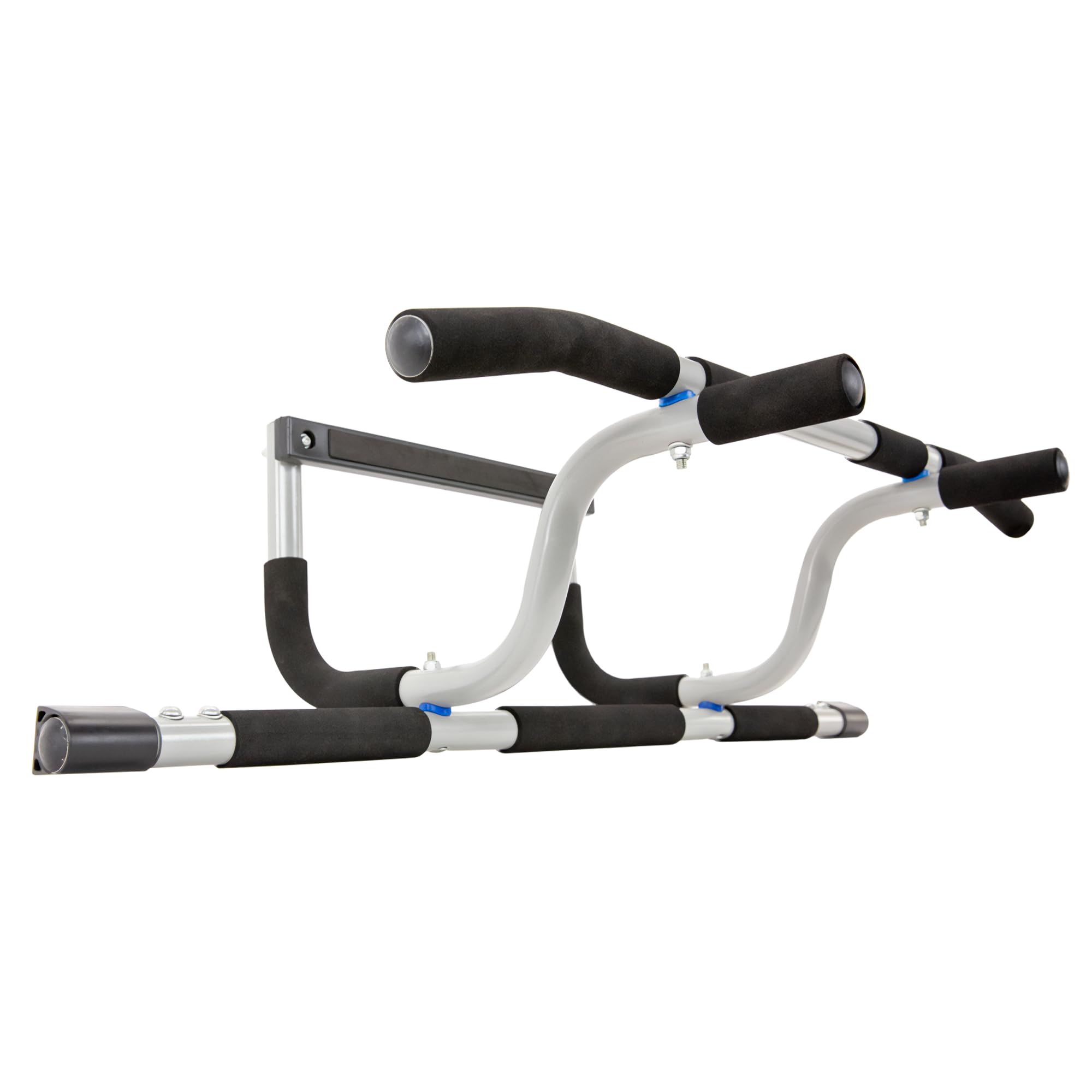
Iron Gym Pull-Up Bar

Iron

Iron Gym Pull-Up Bar

  • Mount Type Hook-over doorway
  • Weight Limit 300 lb
  • Overall Width 37 in
  • Grip Positions 3
Check Price on Amazon

Three grip positions is the pitch: wide overhand, narrow overhand, and neutral handles in the middle. The catch is arithmetic. The bar spans 37 inches, and in a standard doorway the walls stop your hands well before the widest set feels natural, so the narrow and neutral grips end up doing most of the work.

Everything else about it is friendly. It hooks over the trim without tools, comes off in a second when you need the doorway, and works on the floor for push-ups and sit-ups, which is more than most bars here offer. At 4.7 pounds it moves between rooms without a thought, and the 300-pound rating covers most single users.

What keeps it in the roundup is how low the barrier is. There's no assembly, no drilling, and nothing to learn — you hang it and you're training, which is why it's the bar we suggest to someone who isn't sure they'll stick with it. The neutral handles are also kinder to shoulders than a straight tube, and that's the grip most beginners actually need.

The 300-pound rating is the lowest tier here, level with the Maximiza and the Ultimate Body Press, so a household with two heavy adults should look at the 440- and 500-pound options instead. For one person starting out, nothing here is simpler to live with.

Bottom Line

The bar that started a million home workouts, still fine for chin-ups and floor work — just don't count on the wide grip in a normal doorway.

Check Latest Price

Best for Tall Users

Our Score 8.8/10
Ultimate Body Press XL

Ultimate Body

Ultimate Body Press XL

  • Bar Height 1 in above trim
  • Mount Type Hook-over doorway
  • Weight Limit 300 lb
  • Wall Clearance 10 in
Check Price on Amazon

Sets the bar above the trim for full leg extension on dead hangs.

If you're tall, a doorway bar puts your knees somewhere near the baseboard and turns a full dead hang into a crouch. The XL model attacks that directly: the main tube sits an inch above the door trim and ten inches out from the wall, which buys hanging room a standard hook-over bar simply doesn't have. We felt the difference the moment we hung from it.

The frame is heavier than most here and assembles from several tubes joined by ABS couplers, so first setup takes a few minutes and a clear head. The instruction sheet is thin, and laying the parts out before you start saves a second attempt. Once together it's rigid, with dense foam over the grip areas and a spread of hand positions covering wide overhand, chin-up, and neutral.

The geometry was the part we were unsure about, since pushing the bar ten inches off the wall changes the leverage on the frame. It held steady through the top of every rep — no rocking, and no sense that the extra reach was pulling the bar forward. Of the tall-friendly designs in this group, it's the one that needs no caveat about height.

What you give up is simplicity. It comes off the frame easily enough, but it isn't a bar you throw in a bag, and every extra joint is another thing to check when you tighten up. Ours has stayed put through regular use, and the ten-year limited warranty is the longest promise in this roundup.

Bottom Line

The pick for anyone whose knees graze the floor on a standard doorway bar — the raised design buys real hanging room and stays put.

Check Latest Price

Best for Odd-Size Doorways

Our Score 8.6/10
Ally Peaks Adjustable Pull Up Bar

Ally

Ally Peaks Adjustable Pull Up Bar

  • Mount Type Hook-over doorway
  • Weight Limit 500 lb
  • Overall Width 42 in
  • Width Settings 5 levels
Check Price on Amazon

Five width settings square it up to frames that defeat fixed-width bars.

Old houses don't have standard openings, and most bars here are built for one anyway. This Ally Peaks slides through five preset widths, so it can square up to a frame wider or narrower than the usual 30 or 32 inches, and silicone pads take the contact points instead of foam.

It's the least expensive bar in this group, and the money went where it matters: 1.7mm chrome steel, a double-tube center section, and a 500-pound rating that is the highest here by a clear margin. We came away impressed by how much bar that buys.

Once it's seated, it's steady. We looked for the two things that go wrong with wedge bars — rotation under a one-armed reach, and the bar walking sideways across the trim — and found neither. The silicone pads also left nothing on our casing, which is more than the foam-padded designs in this group manage.

Assembly is four bolts and a few minutes, and the whole bar lifts off when you want the door back. On the odd-sized doorway in our test house it seated on the third setting and stayed there through a full session. For a first apartment or a rental with an awkward frame, that's the whole job done.

Bottom Line

Five width settings and a 500-pound rating for less than anything else here — the pick when your doorway is an odd size.

Check Latest Price

Best Certified No-Drill

Our Score 8.4/10
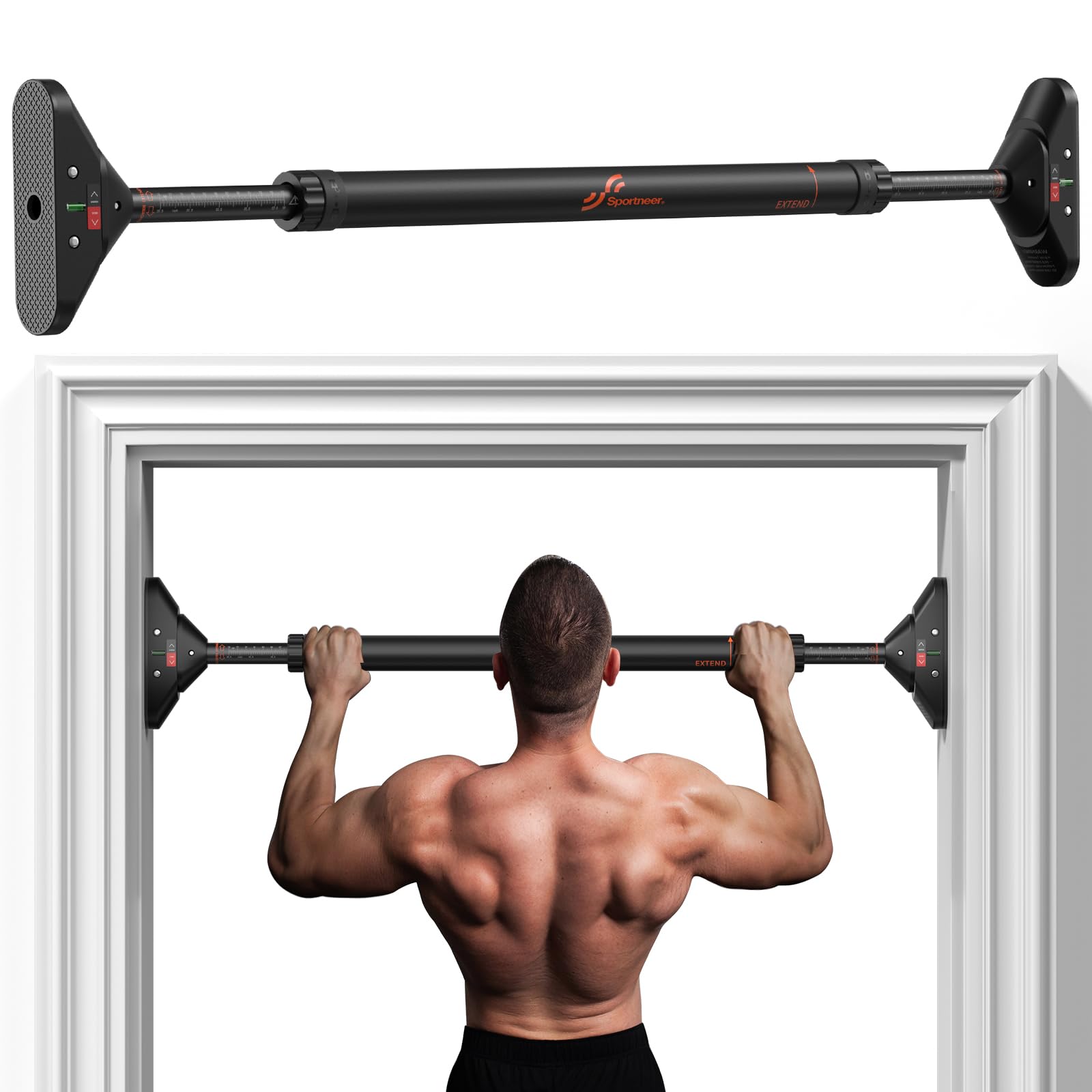
Sportneer No-Drill Pull Up Bar

Sportneer

Sportneer No-Drill Pull Up Bar

  • Mount Type No-drill frame wedge
  • Weight Limit 440 lb
  • Fits Door Widths 29.5 to 37 in
  • Frame Requirement Solid wood only
Check Price on Amazon

Independently certified and tool-free, as long as your frame is solid wood.

The line that decides whether this bar works for you is buried in the listing: solid wood door frames only. It's a wedge design that holds by pressing two 6.5-by-1.8-inch PVC mats against the casing, so the frame has to fight back. On a solid frame it's a genuinely tool-free install, and it carries ASTM and EN957 certification for structural safety, which is more third-party paperwork than anything else in this group comes with.

The numbers are generous: 29.5 to 37 inches of doorway, a 440-pound rating, and three-millimeter outer steel over a 1.5-millimeter inner tube. The width range is the useful part, since it covers wide openings where a fixed bar leaves a gap at each end.

Overtightening is the mistake to avoid. The mats bite hard, and painted or soft casing will crack before it flexes, so bring the bar up until it's firm and stop there. Give it a solid downward pull before each session; if it shifts, it isn't seated, and that's a bar to reset rather than work around.

We rank it behind the AmazeFan and the Maximiza for one reason: it asks more of your doorway than they do. But if your frames are solid wood and you'd rather not drill or assemble anything, this is the no-drill bar we point to, and the certification is exactly why we're comfortable doing it.

Bottom Line

The only bar here with published structural certification, and a no-drill design that holds — provided your door frame is solid wood.

Check Latest Price

How We Tested the Best Pull-Up Bars

We started with roughly 40 bars pulled from retailer listings and patterns in customer reviews, then narrowed by mounting type — doorway, wall-mounted, and freestanding — along with the doorway widths each one claims to fit. Price came into it only as a value question: what's in the box, whether mounting hardware and anchors are included, and whether the bar feels built to the same standard all the way across. Twelve made the cut.

Over six months, each bar went where it would actually live: a hallway doorway with narrow trim, a rental whose frame couldn't be drilled, and a garage bay with exposed studs. I did strict pull-ups, dead hangs, and slow negatives three or four times a week, and rotated in friends of different heights and weights so no bar got only one body. We noted spin, wobble, and any shift in the bar's position mid-set — the small movements you feel before you see them.

Door frame damage got its own protocol: before mounting, we marked the contact points with painter's tape, then checked after every session for compression marks, cracked paint, and creep. Assembly was timed solo, with notes on when a second person was genuinely required and whether the included tools and instructions were enough to finish without a trip to the garage. We squeezed the padding after sweaty sessions and re-checked every bolt weekly, then reinstalled three of the most adjustable bars in doorways of three different widths to see how much of that claim held up.

How to Choose

Start With the Mount, Not the Bar

Four mounting styles cover almost everything here. Hook-over bars rest on the door trim and lift off in seconds, which is why they suit renters. Wedge bars, sold as no-drill, press two pads against the casing and need solid wood to work. Screw-in bars put small mounts in the trim and are the steadiest doorway option. Joist and wall mounts are permanent and give every doorway back. Choose the mount first and half the market disappears.

Measure the Opening, Not the Door

A bar's overall width tells you almost nothing; the distance between its contact points does. Measure between the trim faces, measure how deep the trim is, and note whether the doorway sits in a corner, where a long bar will foul the side wall. Standard interior doors run 30 or 32 inches, but older houses ignore that routinely — which is exactly why the narrow-hook and adjustable bars in this group exist. Note the three numbers before you shop.

Match the Rating to Your Heaviest User

Ratings across this group run from 300 to 500 pounds, and the number to compare is the heaviest person who will hang from it, not the lightest. A 300-pound bar is fine for a 180-pound lifter and the wrong place to save money if two adults share it. The frame matters as much as the bar: solid wood, masonry, or a sound joist, because a bar rated to 440 pounds still pulls out of drywall.

Height and Clearance Decide Whether You'll Use It

A doorway bar sets at the top of the trim, which is fine at average height and frustrating above it — knees reach the floor and a dead hang becomes a crouch. Elevated designs lift the bar an inch or so over the trim and push it out from the wall; a joist mount lets you pick the height outright. Stand in the doorway, reach up, and picture where the bar would sit before you order.

Grips, Padding, and What It Leaves Behind

More grip positions isn't automatically better. Wide, neutral, and chin-up sets load the back differently, and a wide grip needs a doorway wide enough to use it. Padding is the part that ages first: foam is comfortable and tears, silicone lasts and feels firmer. Then decide what your frame can take — silicone pads and a wipe-down leave nothing behind, while screw-in mounts leave small holes you can fill.

Frequently Asked Questions

Final Verdict

For most homes the AmazeFan is the bar to buy. It hangs in doorways the rest of this group can't reach, it arrives ready to hang, and nothing about it moved under load while we tested. If your trim is solid wood and four small holes don't bother you, the Maximiza is the steadier doorway bar and the one we take when we want zero movement.

Anyone with exposed joists should skip both and bolt the Fitarc to a beam, where the height is yours to choose and no doorway gets sacrificed. Everything else here earns its place on a specific frame, a specific height, or a specific budget — and that's the right way to pick between them.