Strength & Weights

Best Wall Balls of 2026

A wall ball's entire job is to be thrown at a wall and caught on the rebound, thousands of times, and the wall always wins eventually. What separates a good one from a bad one is how long that takes. Cheap ones go soft where the fill has settled, seams start to open, and the ball comes back to your hands like a sack of laundry. A well-built one holds its shape and weight, lands where you expect, and lets you stop thinking about your hands.

I've killed my share of wall balls in my garage gym. Over five months, my team and I threw, dropped, and lived with 14 of them, from 6 pounds to 30, and the survivors shared the same traits. Here's what nobody tells a first-time buyer: the number on the ball is the least interesting spec. What matters is whether the weight stays put after a few hundred reps, and whether the fill stays centered when the ball sits in a corner between sessions. The picks below are the ones we'd happily keep throwing.

Best Overall

Our Score 9.6/10
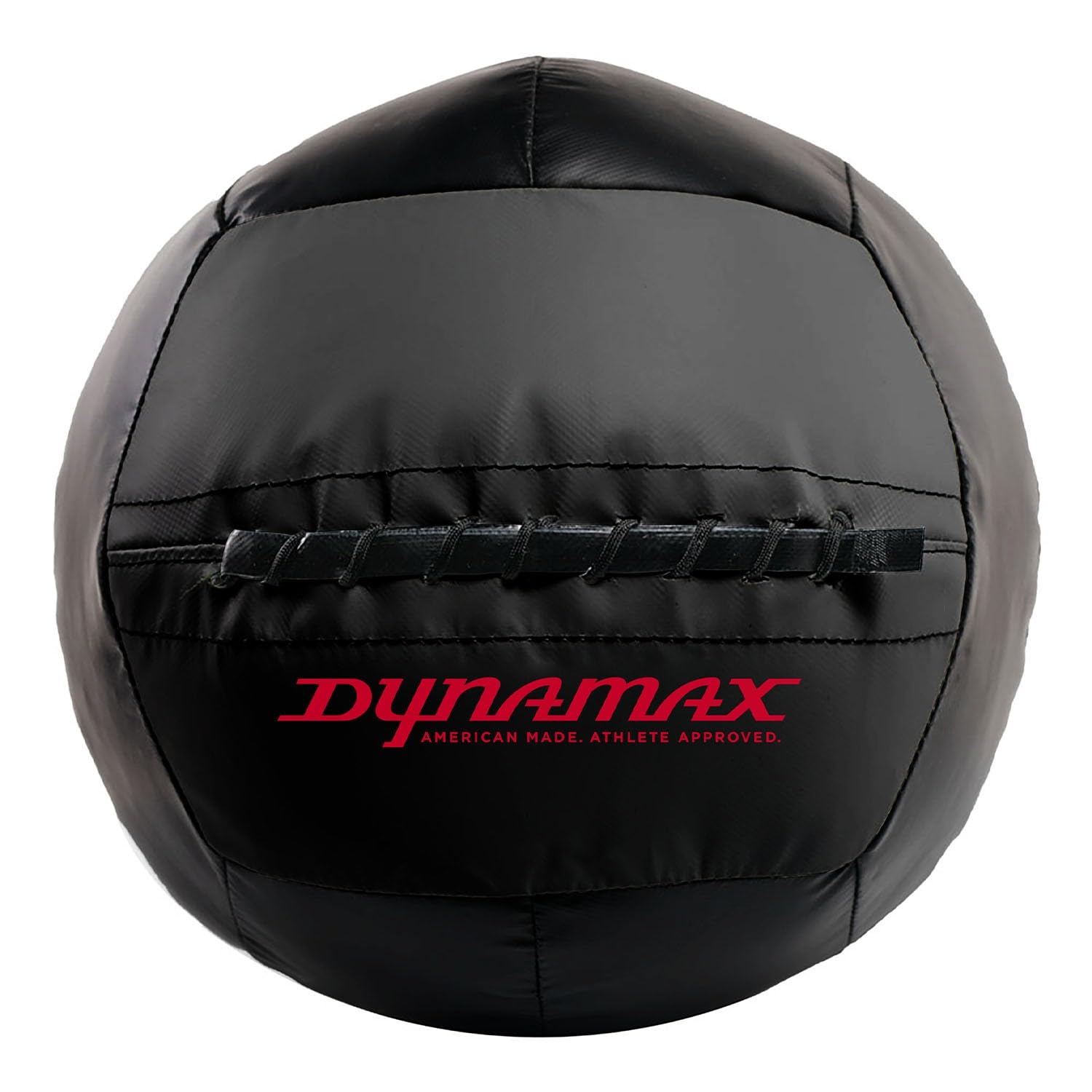
Dynamax Standard Medicine Ball

Dynamax

Dynamax Standard Medicine Ball

  • Shell Soft-shell vinyl
  • Diameter 14 inches
  • Warranty 1 year
  • Weight Range 4 to 30 lb
Check Price on Amazon

Same 14-inch diameter from 4 to 30 lb, so heavier work never changes your technique.

Every ball in the Dynamax Standard line is 14 inches across, from a 4 lb starter to a 30 lb ball for a strong athlete. That consistency is why this one sits at the top of our list. When you move up in weight, nothing about the ball in your hands changes, not the grip, not the release point, not the way it comes back off the wall, so the only new variable is the load. Your technique does not have to relearn anything.

We think that matters more than it sounds. Most missed wall-ball reps begin with the ball arriving somewhere other than where your hands expected, and a line that holds its size and its balance takes one of the usual suspects out of play. The fill is evenly distributed, and the shell is a soft, impact-absorbing vinyl with a little give to it. Set it next to a firm rubber medicine ball and the difference on the first catch is obvious: easier on the wrists, easier to hold onto.

The housekeeping is good too. The casing is moisture-resistant, which we appreciate in a ball that lives on a garage floor, and it is handmade in the USA with materials that include 70 percent post-consumer recycled content. Small things, but they are the sort of details that make a piece of equipment feel considered rather than molded.

What the premium buys is confidence in the two failures that retire wall balls early: seams that open up and fill that slumps to one side. We are happy to pay for that on a ball that gets thrown week in and week out. If your volume is a couple of garage sessions a week, the ProSource below handles it for less.

Bottom Line

We make this the default because a wall ball lives or dies on balance and seams, and the Dynamax holds both while keeping the same 14-inch feel from 4 lb to 30.

Check Latest Price

Best Value

Our Score 9.4/10
ProSource Soft Medicine Ball

ProSource

ProSource Soft Medicine Ball

  • Shell PU leather
  • Diameter 14 inches
  • Warranty Limited lifetime
  • Weight Options 6, 8, 10, 14, 20, 25 lb
Check Price on Amazon

Soft, double-stitched PU shell and a limited lifetime warranty for the least money here.

The first thing that caught our attention on the ProSource is the warranty: a limited lifetime guarantee on a soft-shell medicine ball. That is a real statement of confidence in the PU leather and the double stitching, and it is why we point people here when they want one dependable wall ball for a home gym without premium money. The padded interior gives a little when you catch it, which is kinder to the hands than a dense rubber ball, and the shell is water- and scuff-resistant.

All six weights, from 6 lb up to 25 lb, share the same 14-inch diameter, so someone learning the movement with the lightest ball keeps an identical hand position at 20. That makes the line unusually easy to build on: buy the light one now, add the heavy one when the squats get comfortable, and nothing about the movement changes except the effort. The double-stitched seams are the construction we look for before trusting a ball to repeated impact against a wall.

Where it gives ground to the Dynamax is in the feel of the thing. The ProSource is a little less refined in the hand and the finish is plainer, but that is the trade at the budget end of this list. Nothing about it gets in the way of the work, and no other ball here comes with coverage that long, which means one split seam is not the end of your purchase.

Bottom Line

If you want one dependable ball for a home gym without premium money, this is our value pick: a soft, double-stitched shell backed by a limited lifetime warranty.

Check Latest Price

Best For Building a set

Our Score 9.4/10
RitFit Soft Medicine Ball

RitFit

RitFit Soft Medicine Ball

  • Shell PU leather
  • Diameter 14 inches
  • Stitching Reinforced seams
  • Current Weight 10 lb
Check Price on Amazon

If you are buying more than one, sorting balls by weight gets old fast. RitFit handles it the simple way: the color tells you the weight and the number is stitched into the shell instead of printed on a label that wears away. A rack of them is identifiable from across the room, and everyone in a shared garage gym grabs the right ball without picking it up first.

We think the color coding plus the reinforced seams is what makes this line worth considering as a set rather than a single ball. The PU leather outer does what a soft shell should, giving slightly on the catch and shrugging off scuffs, and every size shares the 14-inch diameter, so the ball a beginner picks up is the same size as the one the strongest person in the room throws.

It is priced alongside the ProSource and does the same everyday job, so the choice between them is mostly about how many you are buying. What tips us toward RitFit for a shared gym is the refund promise: a full refund if the ball does not work out, which takes most of the risk out of ordering four at once.

Bottom Line

Buy this one when you are outfitting several people at once: the color coding and 14-inch consistency make a rack of balls easy to run.

Check Latest Price

Best for Heavier Days

Our Score 9.2/10
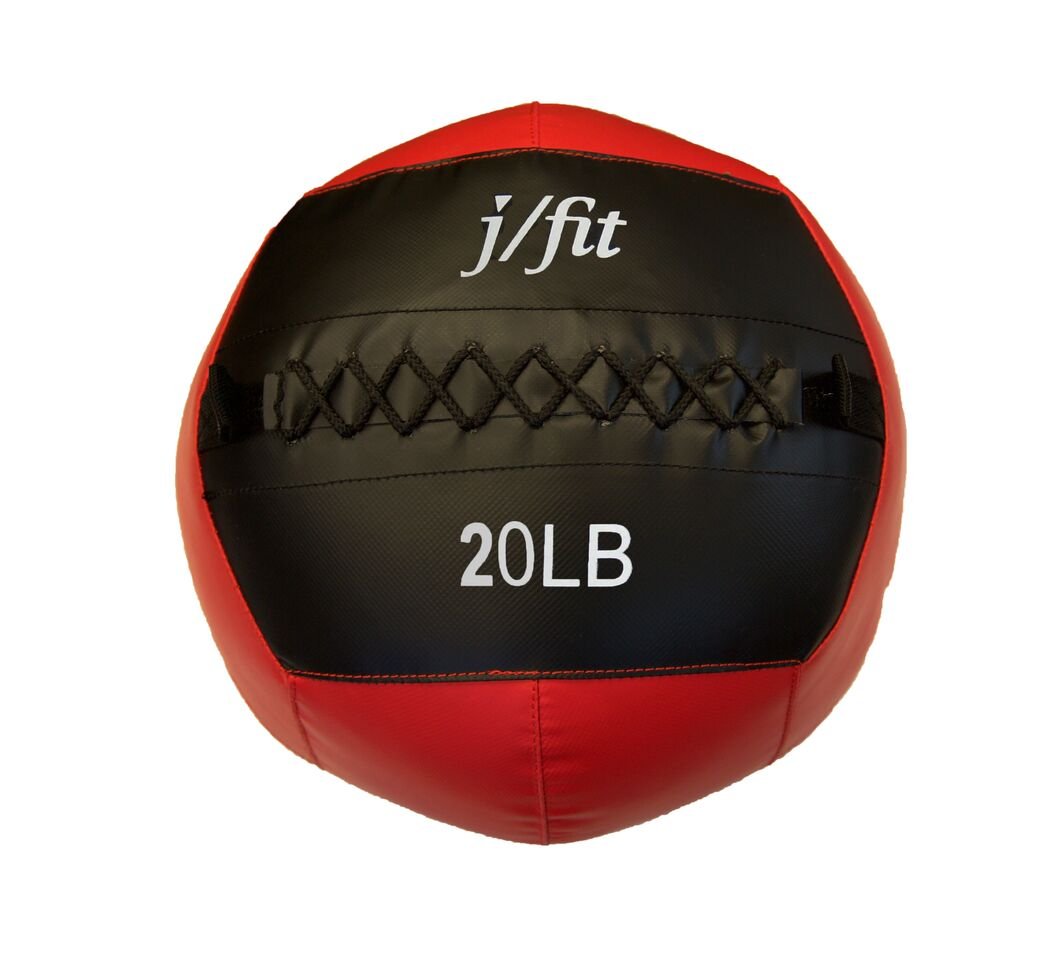
JFit Wall Ball

JFit

JFit Wall Ball

  • Shell Heavy-duty vinyl
  • Diameter 14 inches (9 inches on the 4 lb ball)
  • Stitching Double-stitched
  • Weight Range 4 to 30 lb
Check Price on Amazon

A true 20 lb ball for high-volume wall balls without a premium price.

Twenty pounds changes the exercise. The throw takes more out of you, the catch pushes you back on your heels, and a squat throw loads your legs in a way a 14-pounder never quite does. It is also the weight where construction stops being a footnote: a heavy ball carrying fill that has slumped to one side is far harder to control than a light one with the same fault, because there is more mass arguing with your hands on every rep.

JFit builds this one the traditional way: a heavy-duty vinyl shell, laser cut and double stitched, with the fill hand stuffed into the shell. The surface is the part we keep coming back to, a non-slip finish that still has some bite once your hands are wet, which is more than some smooth vinyl manages halfway through a set. All the sizes except the 4 lb ball share the standard 14-inch diameter, so the ball does not grow as the load does.

Where it earns its place on this list is the combination: a genuine 20-pounder, the same 14 inches as everything else here, at a midrange price rather than a premium one. If your 14 lb ball has stopped being a challenge, this is the sensible next rung. One limit worth noting before you buy is that JFit rates it for throws and wall shots, not for slamming.

Bottom Line

Our pick for anyone stepping up to 20 lb: a real workhorse at a midrange price, provided you accept hand-packed fill and keep an eye on the seams.

Check Latest Price

How We Tested the Best Wall Balls

We started by pulling every wall ball we could find that came in a full run of weights, then filtered out anything with the stitched-seam construction we've seen fail before, anything that skipped common increments, or anything priced well above what a home gym justifies. That left 14 balls, from 6 to 30 pounds, which we bought ourselves.

For five months they lived in a garage gym and a basement, one wall bare cinderblock, the other drywall over studs, which is a useful stress test because a mis-hit tells you fast how the shell is built. We threw sets of 20 to 30 shots at a nine- and ten-foot target, ran them through thrusters, squats, and partner passes, and dropped each one from overhead onto concrete. Every few weeks we weighed each ball on a kitchen scale and compared it to day one.

Weight distribution got its own check: after a week of sitting untouched in the same corner, we picked each ball up and felt for fill sliding to one side, then threw it to see whether it tracked straight off the wall or wobbled in the air. Stability we judged by rebound, a ball that sits flat in your hands and comes back on the same line rep after rep. Versatility came down to whether each weight still felt manageable overhead, and value was simply whether the extra money bought better shell material and tighter stitching rather than a logo.

How to Choose

Start With the Diameter, Not the Weight

Fourteen inches is the working standard, and the number earns its place: wide enough to catch with two hands at chest height, compact enough to release cleanly overhead. A line that keeps that diameter from its lightest ball to its heaviest lets your technique carry over as you get stronger. Same grip, same release point, more load.

Watch the bottom of the range. Some makers shrink the small balls, and a lighter ball that is also smaller changes how the movement feels: the 4 lb ball in the JFit line is 9 inches across while everything above it is 14. For a young athlete or a true beginner, that is a sensible feature. For an adult learning the standard movement, it is not.

Balance and Seams Are What Retire a Ball

Soft balls are stuffed rather than molded, so the fill can settle with use. A ball whose weight sits off-center rolls crooked across the floor and comes off the wall at an angle your hands were not ready for, which is why balance is the first thing we check on a new ball.

Test it before the packaging goes out: roll it slowly across a level floor and watch whether it tracks straight. Then look at the seams, because double stitching and reinforcement at the poles are what hold a shell together over thousands of throws. A maker who covers the ball for life is telling you something about their faith in those seams.

Shell Material, Grip, and Sweat

PU leather and vinyl are the two shells you will see, and the difference is mostly feel. Both are soft enough to catch comfortably; PU leather tends to feel warmer and grippier in the hand, while vinyl is firmer and slightly slicker until it is broken in. Neither is a reason to walk away from a ball.

What matters more is what happens when your hands are wet. A textured, non-slip finish keeps a 20-pounder from sliding out of your grip on rep thirty, and a moisture-resistant casing means the ball is not still holding water after a session on a damp garage floor. If you use chalk, expect to wipe the shell down regularly, because buildup on a soft surface makes it slicker, not tackier.

Weight, Volume, and the Slam-Ball Boundary

For most people training in a garage or a class, 14 lb is the ball that gets used: heavy enough to matter in a squat throw, light enough to keep unbroken sets long. Move to 20 when your conditioning work has turned into strength work, or when you are training for a competition that uses the heavier ball. Buy the weight you can throw for a full set without your form falling apart.

One boundary to respect: a wall ball is built to be thrown, not driven into the floor. A slam ball is the dense, dead-blow rubber thing that exists for that job, and a stitched soft shell landing on concrete at speed will eventually split. Check the maker's rated use before you assume, because several balls in this category are specified for throws only.

Frequently Asked Questions

Final Verdict

Our recommendation is the Dynamax. It keeps the same 14-inch feel from 4 lb to 30, its soft shell is kind on the catch, and it is built around the two things that decide whether a wall ball keeps throwing true: centered fill and seams that hold.

If the premium price does not suit your setup, the ProSource gets a home gym through the same sessions with the longest coverage on this list behind it. And when 14 lb stops being enough, the JFit is the sensible step up to 20.