Cardio Machines

Best Treadmills for Bad Knees of 2026

A treadmill can be a knee-saver or a knee-ache, and the difference usually comes down to how the deck gives underfoot. I spent years pounding on a rock-hard belt that left my joints throbbing after every jog. The right machine absorbs some of that impact, holds a steady pace without lurching, and keeps the noise low enough that you don't wake the house. That's what this list is about: treadmills that make walking or jogging feel sustainable, not punishing.

Over the past eight months, my team and I have logged miles on six treadmills, from compact folding models to sturdier gym-style decks. We assembled each one, measured its footprint, and listened for rattles at cruising speed. One thing first-time buyers miss: softer isn't always better — a deck that bottoms out can feel unstable. The six we tested are firm but forgiving, with honest speed and incline ranges, builds that don't wobble when you pick up the pace, and price tags that match what they deliver. Below are the ones worth clearing space for.

Best for Incline Walking

Our Score 9.4/10
Acezoe P30-Plus Treadmill

Acezoe

Acezoe P30-Plus Treadmill

  • Belt Size 43.5 x 16.5 in
  • Speed Range 0.6–7.6 MPH
  • Auto Incline 9 levels up to 15%
  • Weight Capacity 300 lb
Check Price on Amazon

Nine powered incline steps to 15% add effort without adding impact.

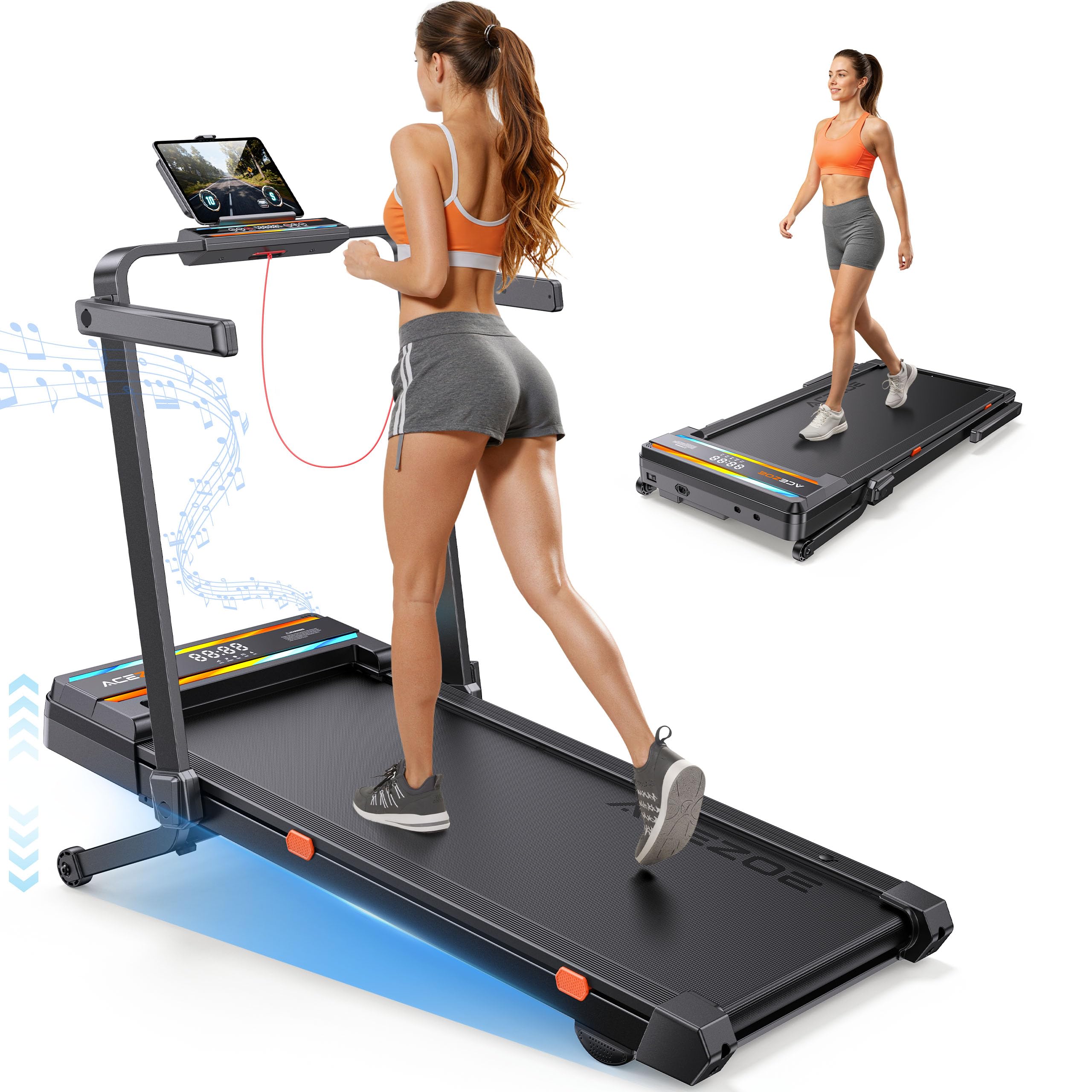
Nine powered incline steps up to 15% is more range than anything else here, and it is the reason to choose this one. Tipping the deck up asks more of your calves and hips at the same walking speed, which is the trick when your knees limit how fast you are willing to go. It is also the one feature on this list you cannot fake with discipline.

Everything else is sensibly sized: a 43.5 by 16.5-inch belt with shock absorption, a 3 HP motor running 0.6 to 7.6 MPH, front wheels, and a frame that folds to a little over six inches deep. There is an LED display, a remote, a phone app that logs sessions, and a built-in speaker that makes the app's workouts less tedious than they sound.

The number that gives us pause is the 300-pound capacity, which is on the low side for a machine that costs more than the WELLFIT with the adjustable rails. If you are a heavier walker, that figure should decide it, not the incline. If you are not, the incline is the thing you will still be using long after the novelty of a new machine wears off.

Bottom Line

Pick this if flat walking has stopped being enough: powered incline adds effort while your knees keep the same slow, low-impact stride.

Check Latest Price

Best Overall

Our Score 9.2/10
WELLFIT Adjustable Handrail Treadmill

WELLFIT

WELLFIT Adjustable Handrail Treadmill

  • Belt Size 44 x 17 in
  • Speed Range 0.6–8.6 MPH
  • Handrail Height 5 positions, 30.5–41 in
  • Weight Capacity 400 lb
Check Price on Amazon

Adjustable handrails and a cushioned 44-inch deck make slow walking feel secure.

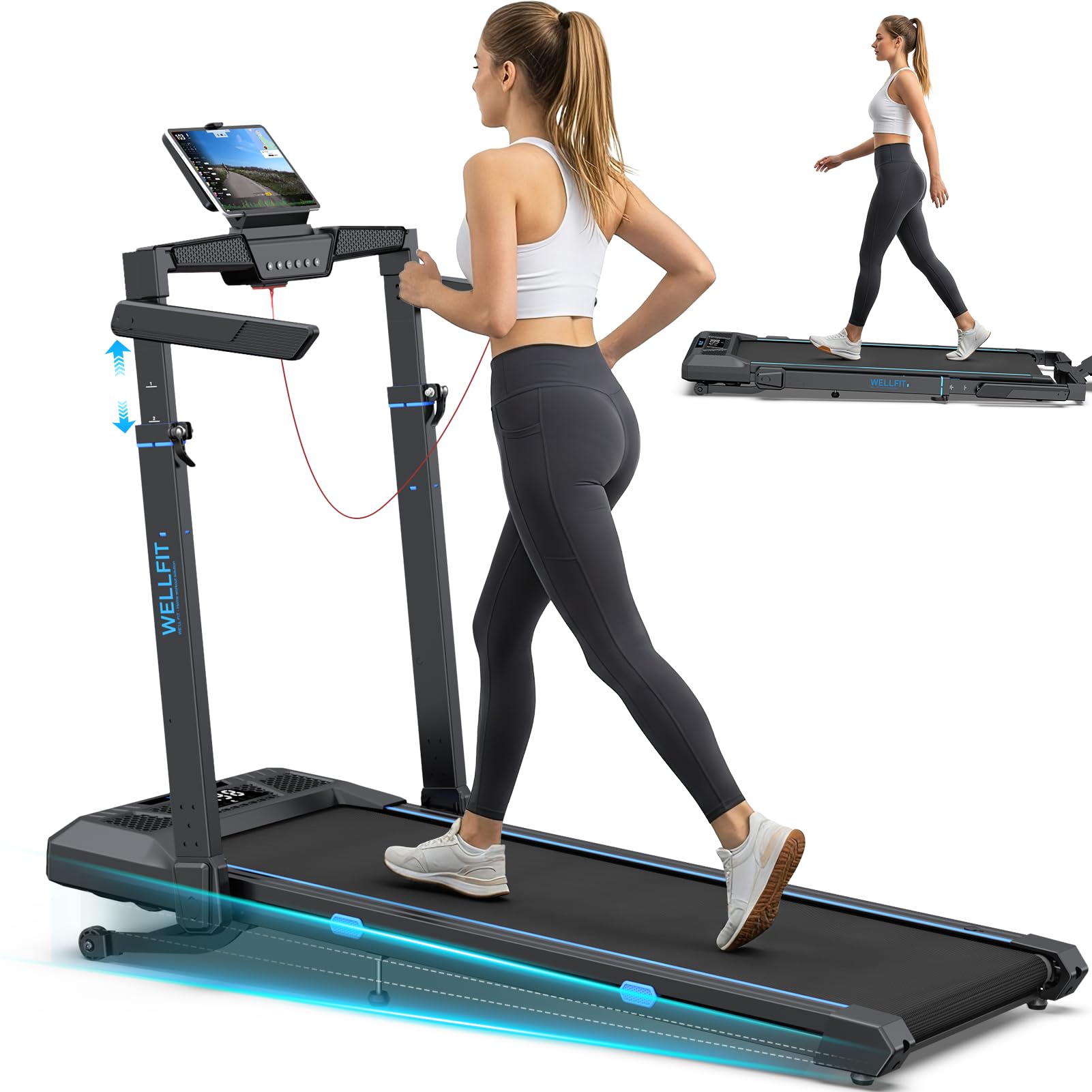
The handrails on this WELLFIT sit anywhere from 30.5 to 41 inches off the floor in five steps, and that adjustment is why it is our top pick. When sore knees are the reason you are shopping, the rail is what lets you walk upright instead of stooping over a bar that lands at your hips. Set it near waist height, rest your hands there, and a twenty-minute flat walk stops feeling like a balance drill.

Underfoot, the belt measures 44 by 17 inches and carries seven layers of shock absorption, with a 400-pound frame behind it. That is the longest deck among the compact machines here, and it means you can land a full stride without watching your feet. The 3.5 HP motor runs from 0.6 to 8.6 MPH and adds a powered incline up to 10% for the days when you want more effort without more speed.

We appreciated how little the incline intrudes. You raise and lower it from the console or the remote while you keep walking, so a session does not break into segments. The LED display is plain and readable rather than clever, and the app is a bonus rather than a reason to buy, because the buttons already do the job.

At 80.5 pounds it is the heaviest thing here short of a gym treadmill, and that is the trade: it feels planted, and you will want a second person if it has to go upstairs. Folded, it stands about six inches deep and four and a half feet tall, so a corner of a spare room is a realistic home for it rather than a closet shelf.

Bottom Line

The one we point most people to: handrails that adjust to your height, a cushioned 44-inch deck, and a 400-pound frame that stays planted while you walk.

Check Latest Price

Best for Balance

Our Score 9.2/10
Redliro Treadmill for Seniors

Redliro

Redliro Treadmill for Seniors

  • Incline 3 manual levels (0%, 1%, 2%)
  • Belt Size 39.3 x 14.8 in
  • Speed Range 0.5–5 MPH
  • Weight Capacity 300 lb
Check Price on Amazon

Long padded rails put the speed controls at your hands, not your feet.

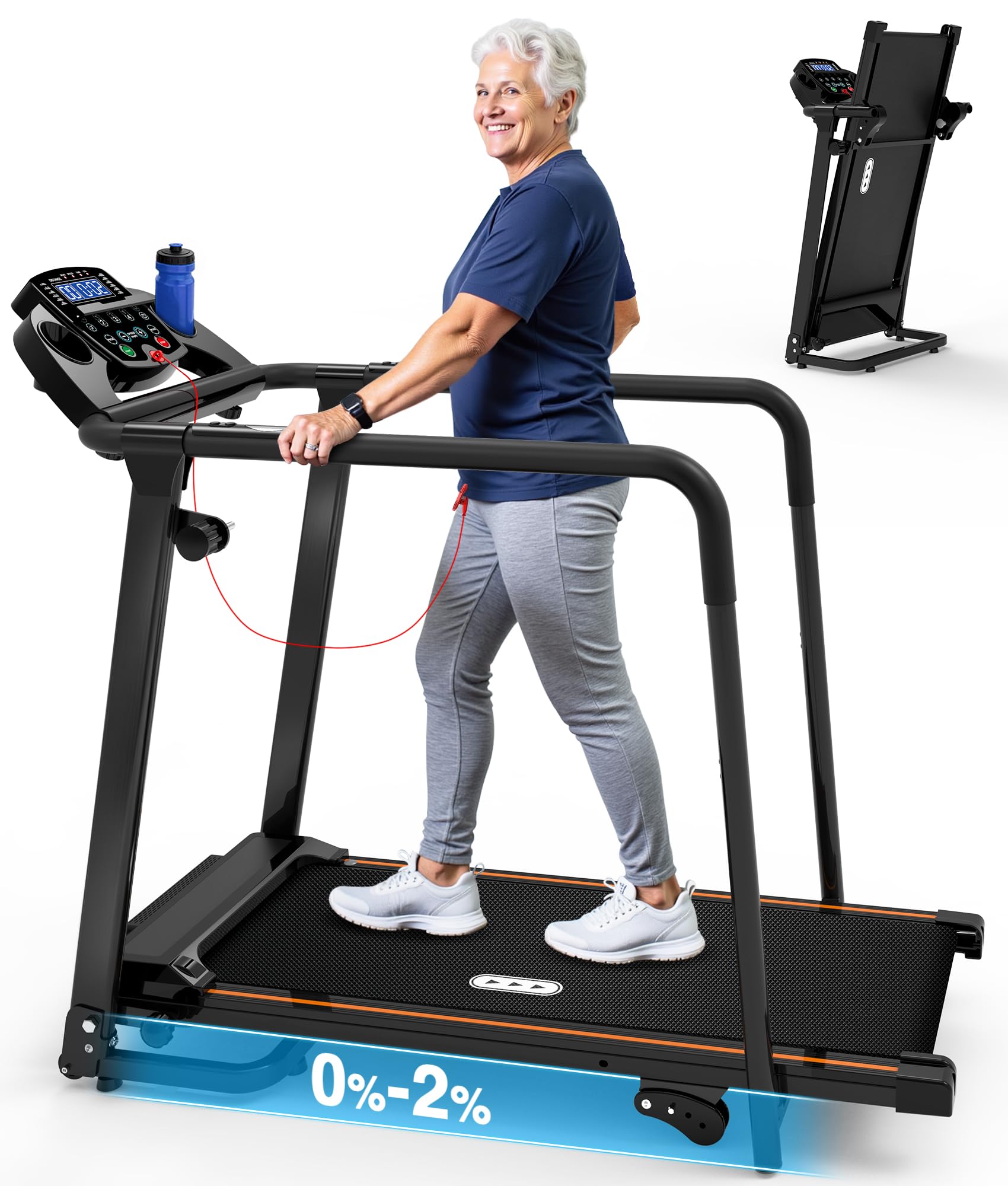
Redliro puts the controls where your hands already are. Start, stop, and speed buttons sit on the handrails, and the rails themselves run the length of the console rather than stopping short of it. The belt starts at 0.5 MPH and tops out at 5 MPH, with 12 built-in programs, a one-touch mute, and a screen-off button for evening walks in front of the television.

For anyone whose balance is the bigger worry, we think it is the most reassuring machine of the ones here. You never have to let go to change speed, which is exactly the moment a sore knee turns into a stumble, and the three gentle incline settings keep the effort low and the motion flat. It is also quiet enough that a downstairs neighbor will not know you are walking.

What it will not do is grow with you. Five miles an hour and a 2% incline ceiling make this a daily-walking machine rather than a training one, and the hill work that the WELLFIT or the Acezoe offers is simply not here. That is a fair trade if the goal is twenty safe minutes a day with both hands on a rail, and it folds to 8.5 inches so it can live against a wall.

Bottom Line

We recommend it when balance is the bigger worry: full-length rails with the controls built in, so you never let go to change speed.

Check Latest Price

Best For Budget home walking

Our Score 9.0/10
WELLFIT Handle-Bar Walking Pad

WELLFIT

WELLFIT Handle-Bar Walking Pad

  • Incline Up to 10%
  • Belt Size 36 x 16 in
  • Speed Range 0.6–6.2 MPH
  • Weight Capacity 350 lb
Check Price on Amazon

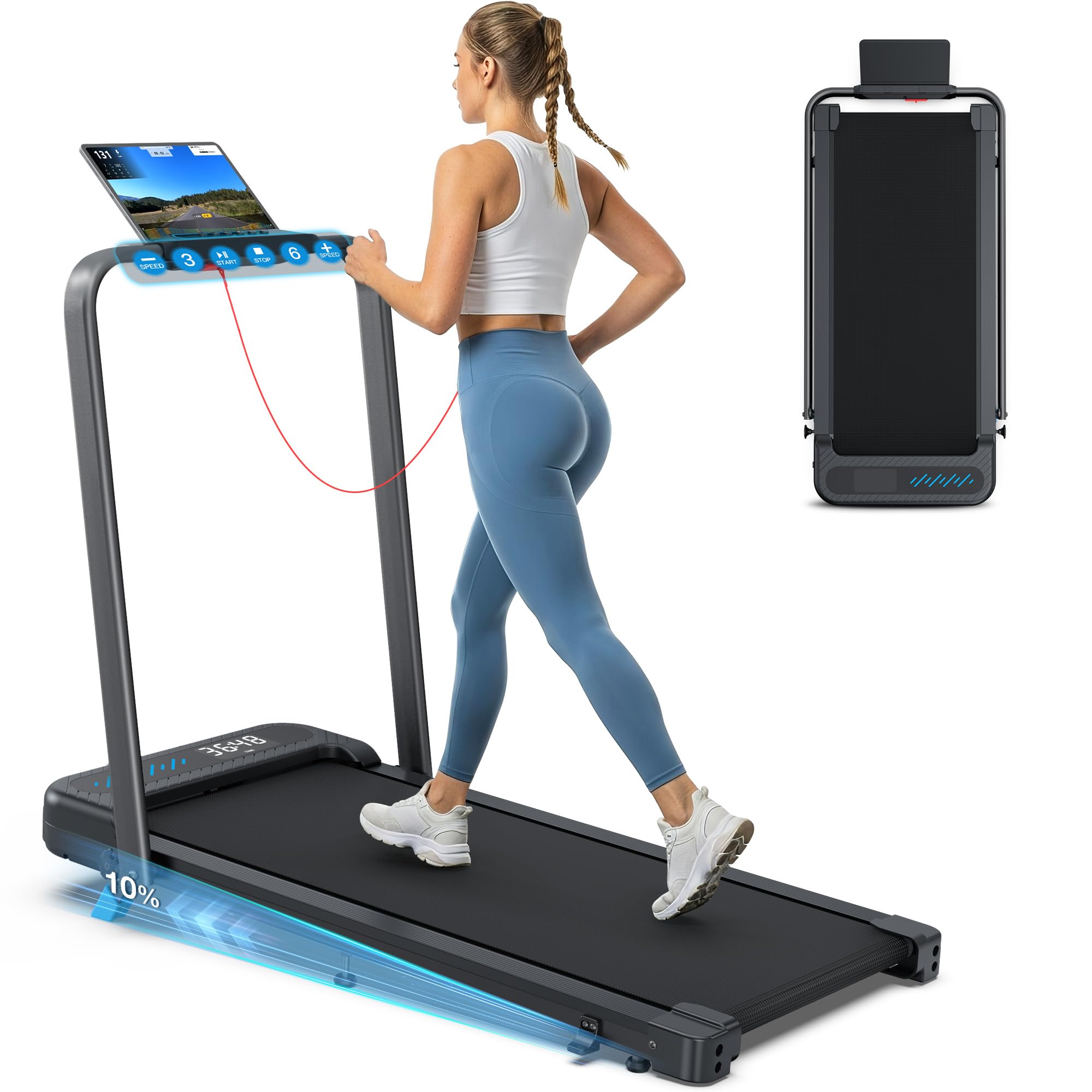
The handlebar on this one is short. On an average-height walker it lands nearer the hips than the waist, so it is a handhold for balance rather than a rail to take weight through, and if leaning on your arms is part of how you protect a sore knee, that is the wrong tool.

We still put it on the list, for a specific reader: someone who wants a flat, cushioned surface, buttons under their thumbs, and no intention of leaning. The five-layer belt is the part aimed squarely at knees and ankles, and it is the reason this made the cut over cheaper pads that give you nothing to hold. It is also the least expensive machine here by a wide margin.

The controls are the best part of the design. Start, stop, 3 MPH, 6 MPH and the speed adjustments sit on the bar, with a remote and an app as backups, so you never bend down mid-walk to change anything. Capacity is 350 pounds, the belt is 36 by 16 inches, and it folds flat and rolls under a bed on its wheels. Plan on an outlet close by, because the cord is short.

Bottom Line

The least expensive pick that still gives you a rail and a cushioned deck, as long as you do not need to lean on the bar.

Check Latest Price

Best for Recovery

Our Score 8.8/10
Exerpeutic Senior Fitness Treadmill

Exerpeutic Senior Fitness

Exerpeutic Senior Fitness Treadmill

  • Handrails Full-length, foam padded
  • Speed Range 0.3–4 MPH
  • Deck Cushioning 6 shock-absorbing cushions
  • Weight Capacity 400 lb
Check Price on Amazon

A 0.3 MPH start, full-length rails, and a low step-up for careful first walks.

This is a treadmill built for someone working back up to a quarter mile, not for someone logging five. The belt starts at 0.3 MPH and climbs in tenths of a mile per hour, so the first minute of a session can be slower than walking across a kitchen. The foam-padded rails run the full length of the machine, right up to the console.

The rest of the package follows that logic: a low step-up height, six shock-absorbing cushions under a 53-inch deck, a backlit display with two pockets for a phone and keys, and a 400-pound capacity on a 71-pound frame measuring 53 by 26 inches. There is a safety key and a pulse readout, and nothing that asks you to learn a menu before your first walk.

What we like is how little it asks of you: both hands on the rails, one button to start, and a machine that takes its time getting to speed. It is a walking machine rather than a training machine, and that is the point. For a comeback after surgery, or a household where someone is steadying themselves, the extra rail length and the low step-up are worth more than any feature it lacks.

Bottom Line

For the slowest, most careful comeback walking, this is the machine: it starts at a crawl and keeps a rail in both of your hands the whole way.

Check Latest Price

How We Tested Treadmills for Bad Knees

We started by pulling together a shortlist of 12 treadmills marketed as joint-friendly or low-impact, then narrowed it to six based on specs, price, footprint, and whether the deck actually had a suspension system rather than a token cushion. Over eight months, we assembled each one, logged at least 20 miles on every machine, and rotated among three testers with different knee histories — one with a torn meniscus, one with arthritis, one with no issues but a preference for low-impact cardio.

Assembly came first: we timed how long it took to get from box to first walk, noted whether the manual assumed two people, and measured the cord length against a standard outlet to see if an extension cord was needed. Then we settled into a routine — brisk morning walks at 3.5 mph, evening jogging sessions up to 6 mph, and incline intervals — paying attention to how the deck felt underfoot. Did it bottom out? Did the belt track straight? Did the motor strain when we bumped the speed?

We also ran each treadmill at a steady 4 mph and listened from the next room for motor whine or belt slap, then folded and unfolded the deck to judge the footprint and rolling ease. Value and functionality got checked side by side: we compared what each machine offered — preset programs, incline range, warranty — against others in the same price band, and noted any features that felt like filler. Quality showed up over time, in things like belt tracking and handrail wobble after a few weeks of use.

How to Choose

Start With the Handrail, Not the Horsepower

On compact machines the bar is usually sized to the frame rather than to a person, which is why it so often lands at hip height. Measure from the floor to the crease of your wrist with your arms hanging, then compare that number with the bar's top height. If the bar sits well below it, you will stoop, and stooping is the opposite of what a sore knee wants.

Adjustability solves it and also lets two people share one machine. Our top pick moves through five positions between 30.5 and 41 inches, which covers a short walker who needs the bar high and a tall one who needs it higher still. If you are buying fixed rails, buy the tallest set you can find and check the number before you order.

Cushioning: Softer Is Not Automatically Kinder

Deck cushioning reduces the peak impact of each footfall, and layer counts are mostly shorthand for how much give the belt has. What matters is a belt that absorbs a little and a frame that does not flex underneath it. A deck so soft that you sink into it can make your footing feel vague, which is a poor trade when balance is already a concern.

We would rather walk on a firm, damped deck with smooth speed changes than on a pillow. Six cushions under a long deck, as on the Exerpeutic, or a seven-layer belt on the WELLFIT, are the two designs here that put absorption where your foot lands. Wear shoes with a little cushion of their own and you will feel the difference in the first ten minutes.

Speed Control You Can Reach Without Letting Go

The lowest speed matters more than the highest. A floor of 0.3 to 0.6 MPH lets you start moving before you feel steady, and increments of a tenth of a mile per hour let you creep up instead of jumping. Check how the belt starts, too: it should ease in rather than lurch.

Then look at where the buttons are. Rail-mounted controls, as on the Redliro and the WELLFIT handle-bar pad, mean a speed change never costs you your handhold. A remote is convenient but it has to be found, and a console at hip height asks you to bend mid-stride, which is exactly when a bad knee complains.

Deck Size, Capacity, and Getting On

Belt widths in this group run from 14.8 to 17 inches and lengths from 36 to 44 inches. A longer deck lets you walk without watching your feet; a wider one matters if your stance is broad. Leave a couple of feet of clear floor behind the belt so a misstep does not put you into a wall.

Capacity is the figure to buy with margin. A 300-pound limit on a machine bought by a 260-pound walker leaves no room for the bounce of a real stride, while a 400-pound frame simply feels more planted. If getting on and off is the hard part, prioritise a low step-up height over every other feature.

Where It Lives and How Often You Move It

Machines here weigh between about 43 and 81 pounds, and the difference decides whether you reposition one daily or never. Folding helps, but a folded treadmill still occupies a wall or a closet floor, and folding an 80-pound frame twice a day gets old quickly.

Measure the footprint, add the clearance behind it, and check the nearest outlet before you commit, since cords on these machines run short. If the only sensible home is a room you use every day, buy for stability and leave it set up; if it has to disappear between walks, weight and folded depth outrank deck size.

Frequently Asked Questions

Final Verdict

We recommend the WELLFIT with the adjustable handrails to most people shopping this category. Five rail heights mean the bar sits where your hands want it, the 44-inch belt gives a full stride somewhere to land, and the 400-pound frame stays planted while you walk.

If your comeback is slower than that, the Exerpeutic is the better first machine: it crawls from 0.3 MPH with a rail in each hand. Where balance is the main worry, the Redliro solves it by putting every control on the rails themselves.