Cardio Machines

Best Treadmills for Walking of 2026

A treadmill takes up serious floor space, and the wrong one will rattle, wobble, or become an expensive clothes rack. For walking—not sprinting—you want a stable deck at a comfortable pace, a belt that doesn't slip, and controls you can reach without breaking stride. The best treadmills for walking make a 30-minute session feel easy enough that you actually do it daily. I've tested enough fitness gear to know that a machine's footprint and setup matter as much as its motor specs, and value isn't just about the sticker price.

We put seven treadmills through six months of daily walking—some compact enough to tuck into a corner, others built like tanks—and the differences in walking quality, stability, and reliability became obvious fast. My team and I logged miles at different speeds, folded and unfolded each one, and noted which machines felt solid underfoot when we picked up the pace. The picks below are the ones that earned a permanent spot, not the ones that just looked good in photos.

Best For Tiny-space incline

Our Score 9.6/10
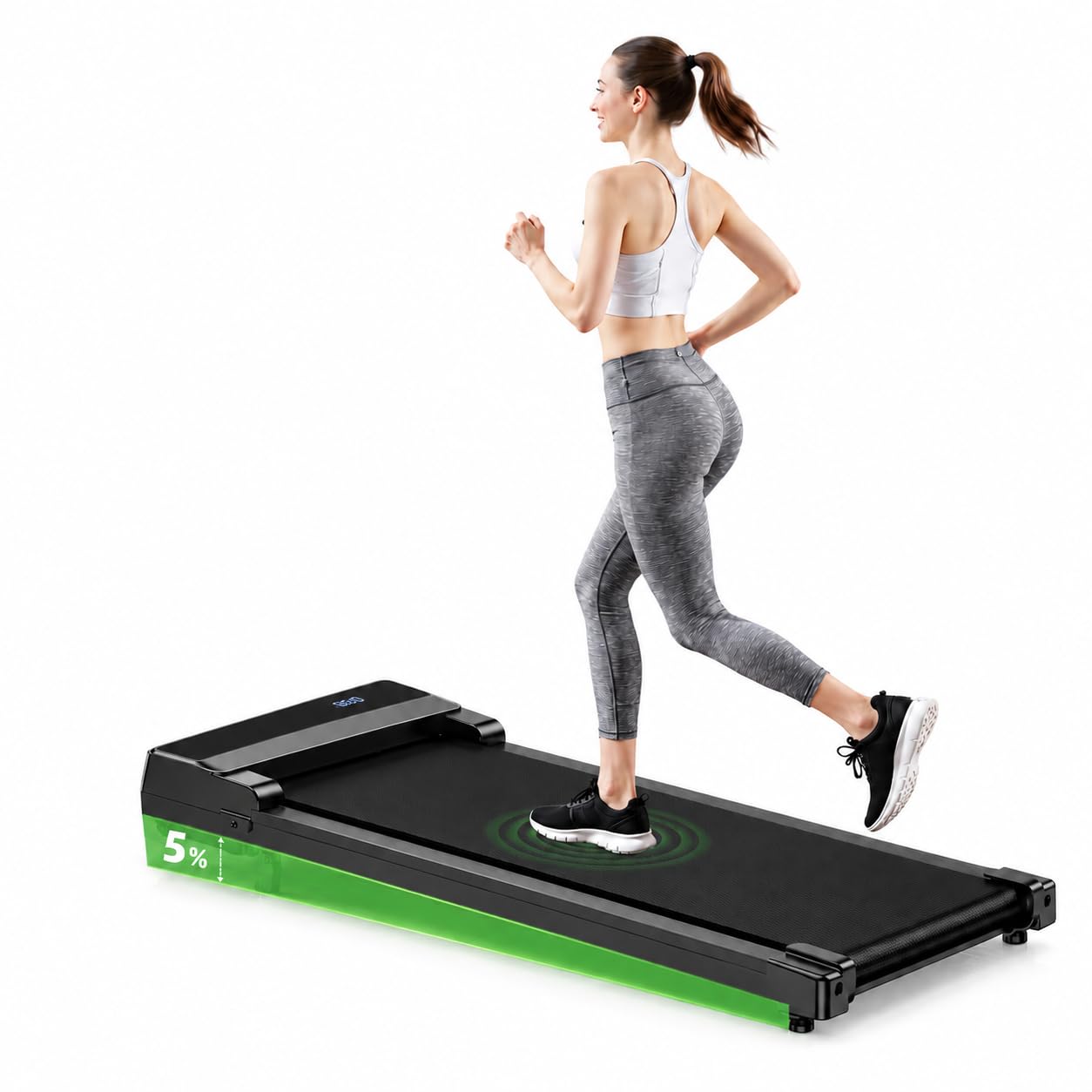
Wilpkracy Walking Pad

Wilpkracy

Wilpkracy Walking Pad

  • Incline 5% manual
  • Top Speed 3.7 mph
  • Item Weight 37.5 lb
  • Weight Capacity 264.6 lb
Check Price on Amazon

The Wilpkracy is the kind of pad you can leave beside a desk and barely notice: it arrives ready to use, stands about 10.5 cm tall, and weighs 17 kg. We think it is the best tiny-space option here if you want a little incline without adding a lot of bulk, since its 5% manual ramp is rare at this size.

The 3.7-mph top speed is modest, so it is best for short, unhurried walks. What it does well is keep things simple: a remote, an LED display, and a low deck that slides under a bed. If your walks are short and your floor space is precious, that trade makes sense.

Bottom Line

We recommend the Wilpkracy for very small rooms where a low deck, a little incline, and out-of-box readiness matter more than top speed.

Check Latest Price

Best Overall

Our Score 9.4/10
TRAILVIBER X01

TRAILVIBER

TRAILVIBER X01

  • Incline 12% auto, 9 levels
  • Belt Size 41 x 16.5 in
  • Top Speed 4 mph
  • Weight Capacity 450 lb
Check Price on Amazon

A stable, high-capacity walking treadmill with true auto incline and a three-year warranty.

The TRAILVIBER X01 doesn't look like a full-size treadmill, but its 12% auto incline and 450-pound frame are the first clues that it is built for more than a flat shuffle. The incline adjusts through nine levels with one button, so you can change the effort without stopping to move a manual ramp. We paid attention to that because a walking pad with a useful incline is much easier to keep interesting.

Underfoot, the 41-by-16.5-inch belt and 2.5-hp motor give it a steadier feel than the lightest pads here. The 4-mph top speed is a walking ceiling, not a running one, and that suits the brief. We like the triple cushioning for longer sessions, and the 44-pound build stays planted instead of skating.

It still rolls away on wheels and slides under a desk or bed, but 44 pounds is a two-hand move rather than something you toss onto a shelf. The LED display is clear, and Bluetooth plus the FitYo app add workout tracking if you want it.

The three-year warranty is the longest in this group, and it matters on a machine with a motor, belt, and electronics. We also appreciate that the frame is rated for 450 pounds, so larger walkers are not pushed toward a commercial treadmill.

For most homes, this is the walking treadmill we recommend first: it has the incline, capacity, and stable feel to handle daily use without turning the room into a gym. If you need to carry a treadmill up stairs or tuck it under a low sofa, the lighter pads below make more sense.

Bottom Line

The X01 is our default for daily walking because it pairs a true auto incline and 450-pound frame with the steadiest walking feel in this group.

Check Latest Price

Best for Brisk Walking

Our Score 9.4/10
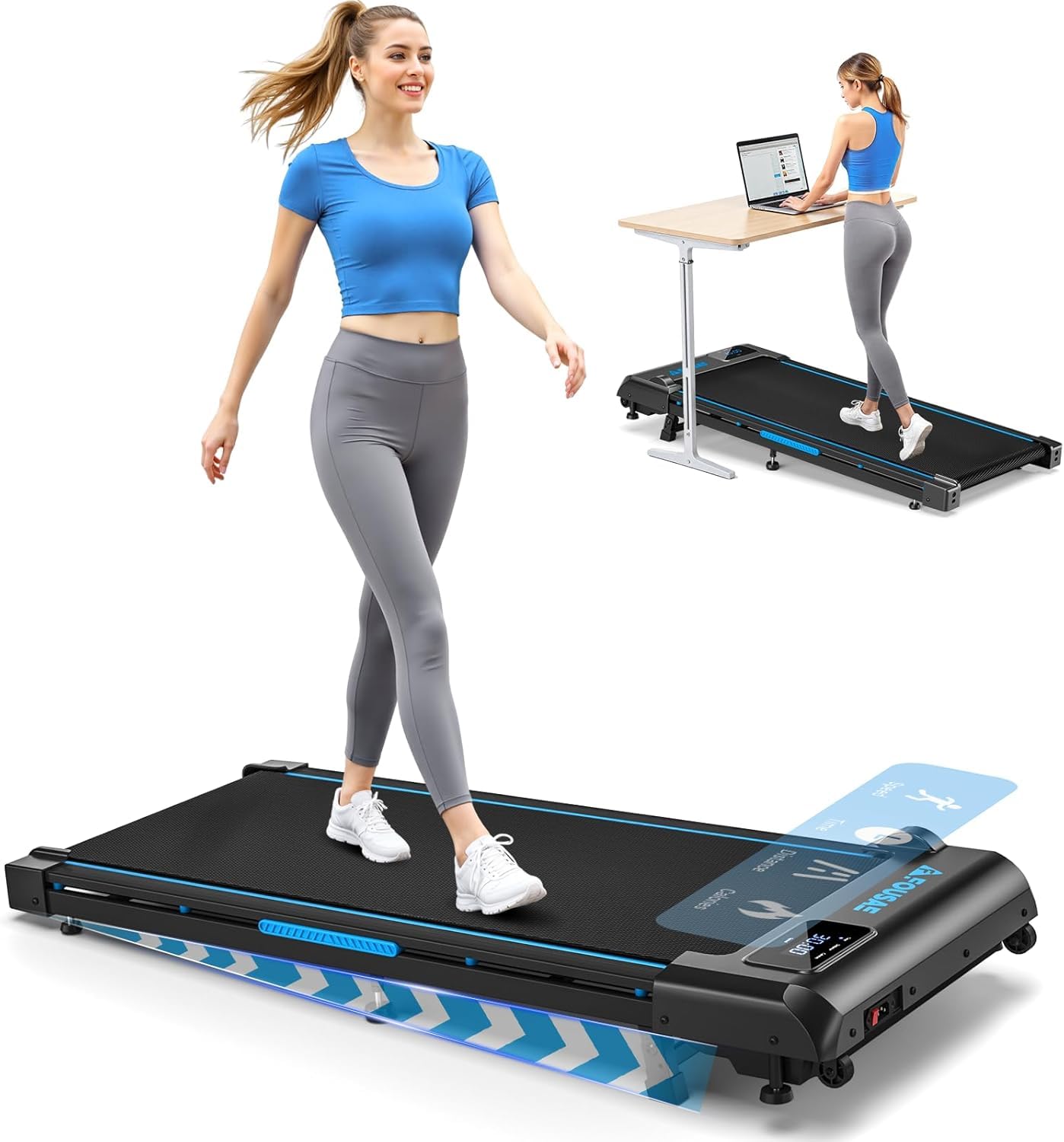
FOUSAE Walking Pad

FOUSAE

FOUSAE Walking Pad

  • Incline 10%
  • Programs 12 HIIT
  • Top Speed 6.2 mph
  • Weight Capacity 350 lb
Check Price on Amazon

More speed and incline than most compact pads, with a 350-pound capacity.

The FOUSAE's 6.2-mph top speed is unusual for a walking pad, and it is the first thing we check when a compact machine claims to handle more than a stroll. Here the claim holds on paper: a 2.75-hp brushless motor, 10% incline, and a 350-pound capacity put it closer to a compact treadmill than a basic under-desk pad.

The 12 HIIT programs are a nice change from a plain speed dial, and the incline gives you a way to make a 3-mph walk feel harder without adding speed. The double frame and wider belt are meant to keep the deck steady at the top end, and the 38-pound build is still manageable to move.

The 38-pound frame is light enough to move, and the shock-absorbing deck is comfortable for longer walks. We like that the display and remote keep controls simple.

For a brisk walker who wants more speed and incline than the budget pads offer, the FOUSAE is a strong compact choice. Check belt tension and the power connection before your first walk, and keep the deck clear at higher speeds.

Bottom Line

We see the FOUSAE as the compact speed pick: it walks briskly, adds incline, and carries more weight than most pads its size.

Check Latest Price

Best For Folding handlebar

Our Score 9.4/10
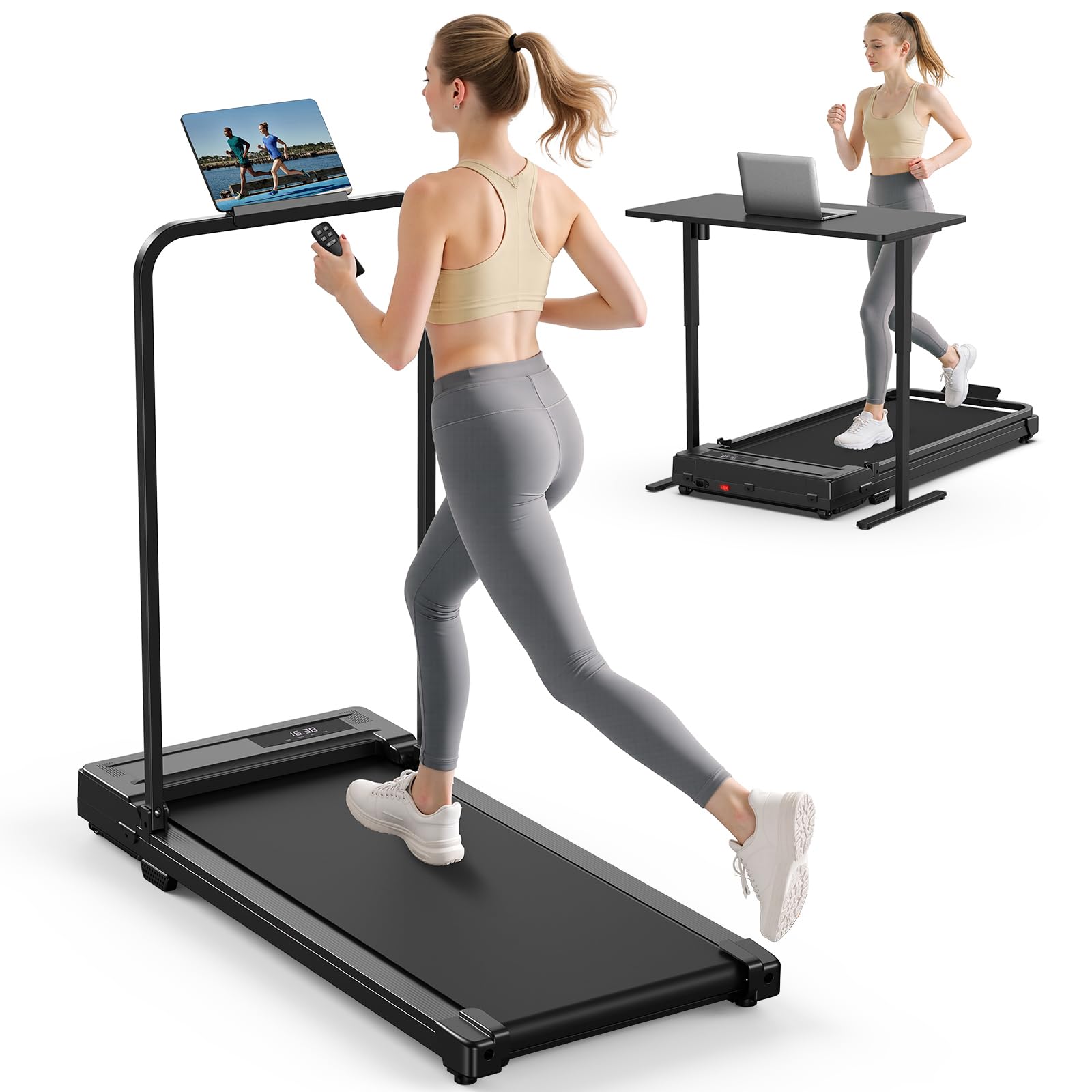
Ulfario Folding Walking Pad

Ulfario

Ulfario Folding Walking Pad

  • Deck Size 90 x 38 cm
  • Top Speed 4 mph
  • Item Weight 38.5 lb
  • Weight Capacity 264.6 lb
Check Price on Amazon

The Ulfario's handlebar is the feature that makes it flexible: loosen the securing bolts and it lowers or comes off, turning a supported walking pad into something that fits under a standing desk. We like that better than a fixed bar that forces you to choose one mode.

The 2-hp motor reaches 4 mph, the deck is 90 by 38 cm, and the 120-kg capacity covers most walkers. The five-layer belt is cushioned, and the 38.5-pound frame is light enough to move without a struggle. The LED display tracks speed, time, distance, and calories, and the remote keeps speed changes close at hand.

The 2-hp motor has less headroom than the 2.5-hp pads here, so this is a walking machine, not a jogging one. We recommend it when support and a small footprint matter more than top speed.

Bottom Line

We like the Ulfario when you want a handlebar for confidence but need it out of the way for desk walking and storage.

Check Latest Price

Best for Balance Support

Our Score 9.2/10
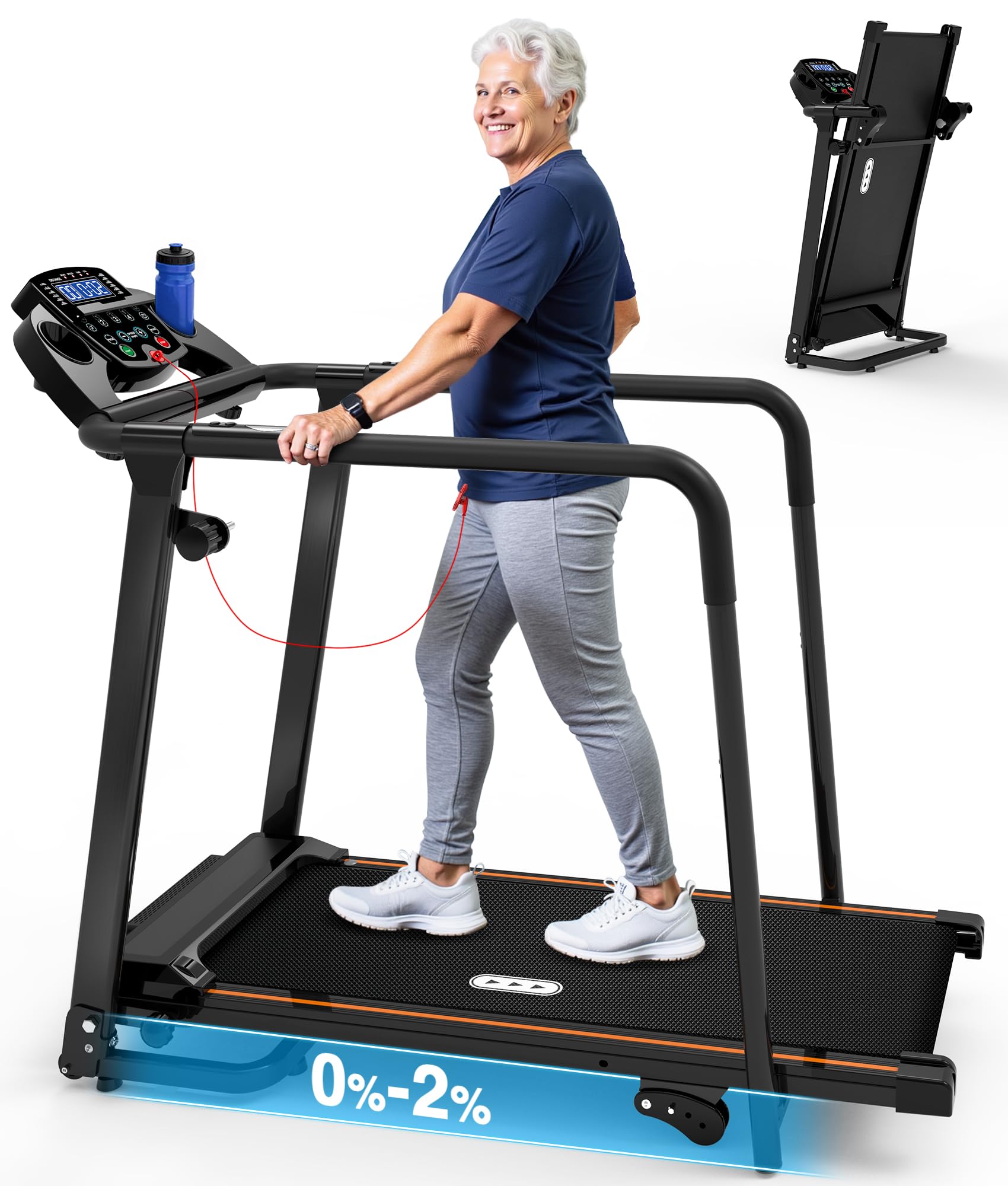
Redliro T4253A

Redliro

Redliro T4253A

  • Handrail Extended support rails
  • Deck Size 39.3 x 14.8 in
  • Top Speed 5 mph
  • Weight Capacity 300 lb
Check Price on Amazon

Long handrails and simple controls make daily walking feel more secure.

Most walking pads assume you can balance without help. The Redliro T4253A does not: its long handrails run alongside the belt and put speed controls within reach, which is why we keep it in the balance-support slot rather than the fold-away one.

That design changes the whole experience. You can start at 0.5 mph and work up to 5 mph with a hand on each rail, and the 300-pound steel frame feels substantial underfoot. We think this is the best choice here for older walkers, anyone recovering from surgery, or anyone who simply feels unsteady on a moving belt. The 12 programs and simple LCD add structure without a subscription.

The 39.3-by-14.8-inch deck is compact rather than roomy, and the long rails mean this is not a pad you slide under a desk and forget. For daily walking with confidence, though, those compromises buy a lot of security.

Bottom Line

We recommend the Redliro when balance support is the deciding factor, because its long handrails make daily walking feel more secure than a bare pad.

Check Latest Price

Best Budget

Our Score 9.0/10
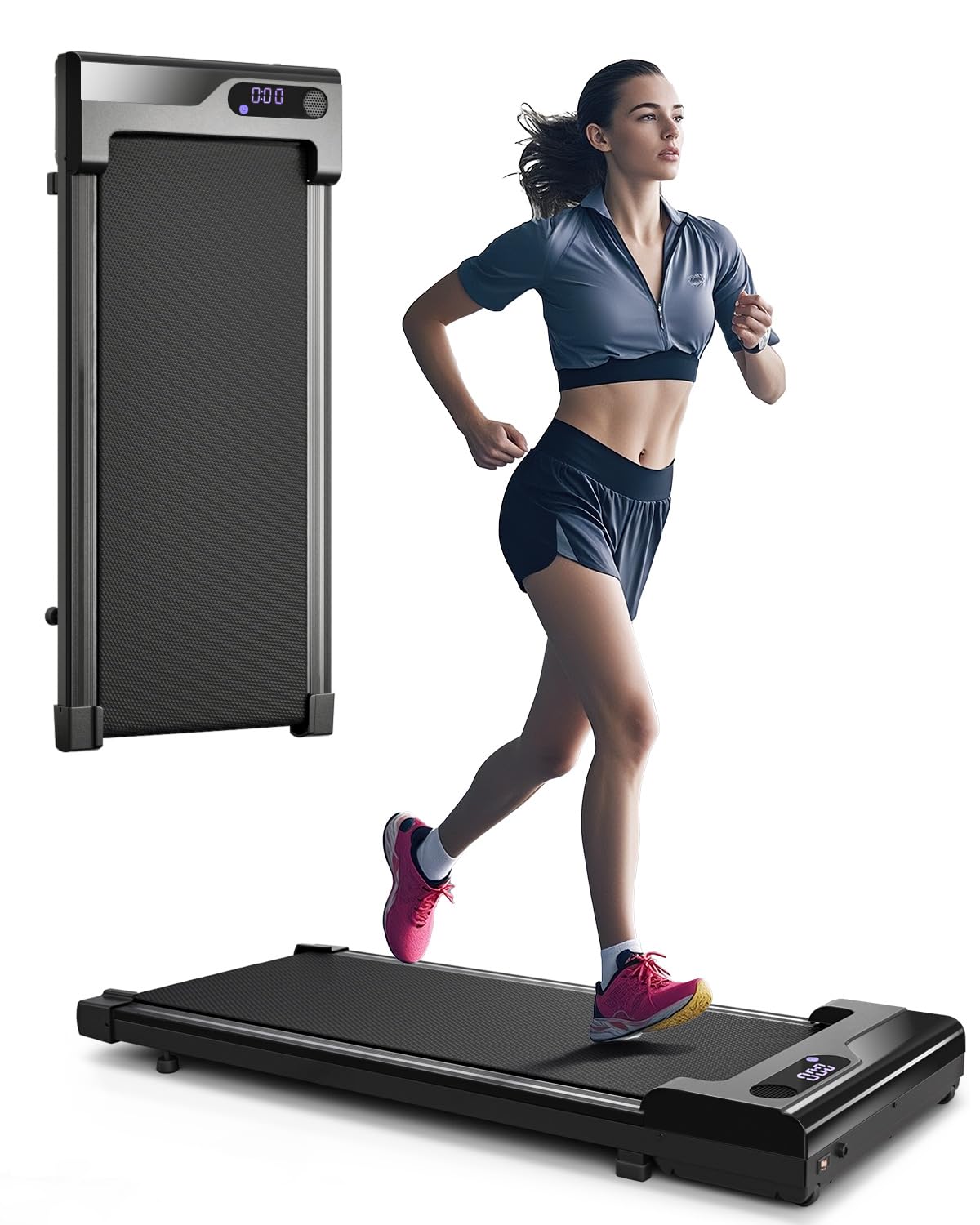
Vhorilix Walking Pad

Vhorilix

Vhorilix Walking Pad

  • Top Speed 4 mph
  • Item Weight 36.4 lb
  • Folded Height 4.1 in
  • Weight Capacity 264 lb
Check Price on Amazon

A no-assembly pad that rolls under a bed and keeps daily walking simple.

If the treadmill has to live under a bed and come out for short walks, the Vhorilix makes that routine close to frictionless. It arrives ready to use, rolls into place, and stands only 4.1 inches tall when folded. We think that combination is the reason to choose it over a heavier pad with more features.

The 2.5-hp motor tops out at 4 mph. We like the remote and LED display for quick speed changes, and the five-layer belt has a diamond texture that feels secure underfoot. It is quiet enough for an apartment, though no treadmill is silent.

For desk walking or TV walks, the flat, low deck and clear view over the console are exactly right. If you need to hold on while walking, choose a model with a handlebar or long rails; this one is meant to stay out of your way.

Bottom Line

Choose the Vhorilix if the treadmill has to live under a bed and you want to skip assembly; we think it is the best small-space value here.

Check Latest Price

Best For Fixed-incline desk walks

Our Score 9.0/10
CYBERGOING T10

CYBERGOING

CYBERGOING T10

  • Incline 7% fixed
  • Belt Size 15 x 36 in
  • Top Speed 4 mph
  • Weight Capacity 300 lb
Check Price on Amazon

We expected the T10's fixed 7% incline to feel like a gimmick on a walking pad. Instead, it changes the character of a flat walk: you set the ramp before you start and spend the session at a gentle climb rather than fiddling with buttons.

The Bosch motor and 1-hp rating are modest, but the 0.6-to-4-mph range is right for walking, and the 300-pound capacity gives it more margin than its 36.4-pound weight suggests.

We like the app and remote for speed changes, and the LED display is basic but readable. Pair the remote before your first walk so you are not fumbling with it once the belt is moving.

For a fixed-incline desk walk, the T10 is a neat solution: slim, easy to slide away, and more interesting than a flat belt. We recommend it for someone who wants to set the climb once and then forget the controls.

Bottom Line

We recommend the T10 for fixed-incline desk walks and app control, with the caveat that its short deck favors shorter strides.

Check Latest Price

Best Side Rails

Our Score 8.4/10
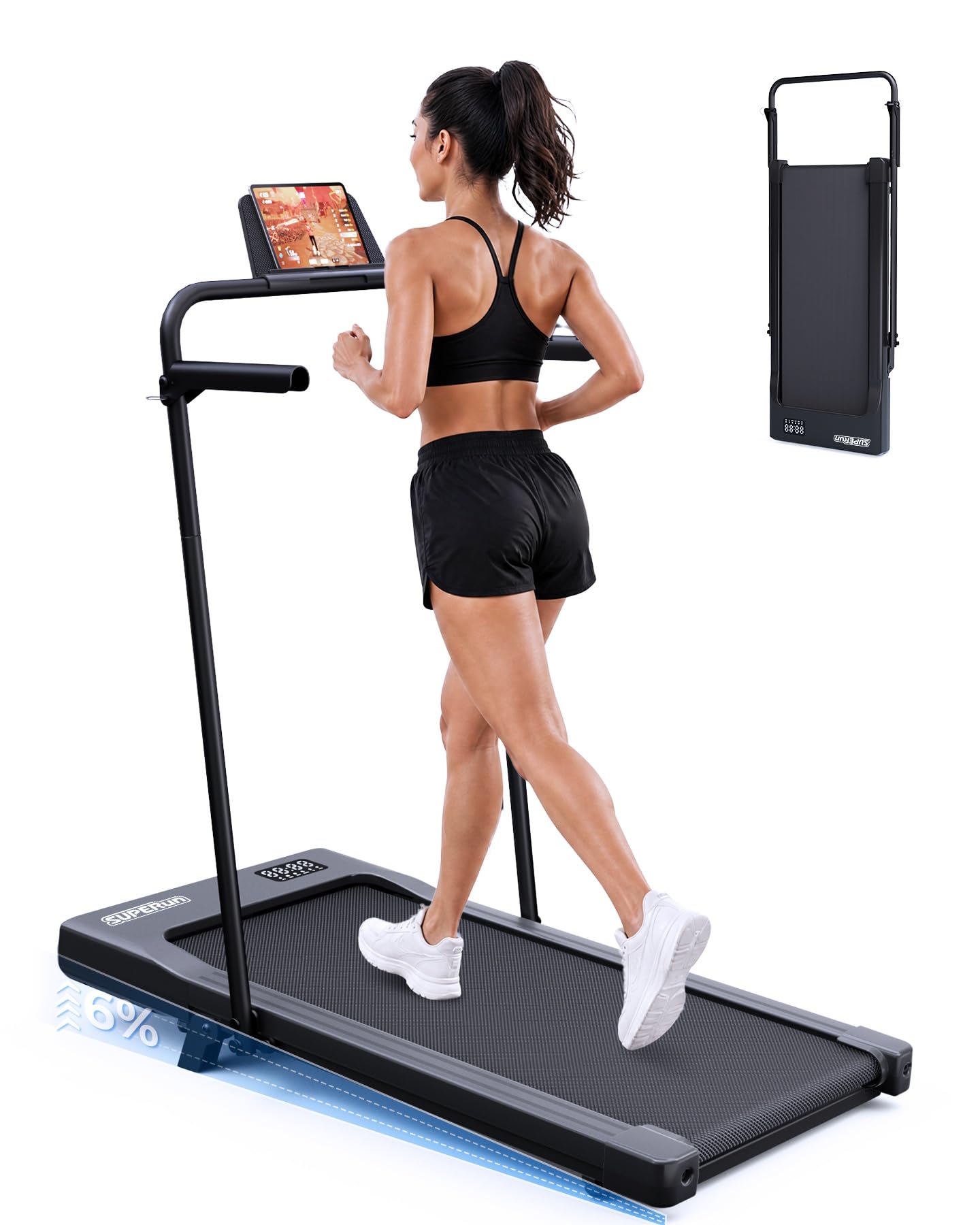
Superun Walking Pad

Superun

Superun Walking Pad

  • Incline 6% manual
  • Deck Size 42.62 x 19.69 in
  • Top Speed 3.8 mph
  • Weight Capacity 300 lb
Check Price on Amazon

Side rails and a 6% incline support walkers who dislike front handlebars.

Instead of a front handlebar, the Superun puts two side rails alongside the belt. That is a different kind of support: you can rest a hand at your side without a bar crossing your view or getting in the way of a standing desk.

We think it works best for walkers who want a little lateral stability but not a full handrail. The 6% incline adds challenge, the 42.62-by-19.69-inch deck is generous for a pad, and the 300-pound frame feels solid. It arrives ready to use, which matters when the alternative is an hour with an Allen wrench.

The 3.8-mph top speed keeps it in walking territory, and the 41.2-pound weight is still movable. The wide deck is the reason we keep it in the side-rail slot: it gives you room to drift without feeling boxed in.

Bottom Line

We like the Superun for walkers who steady themselves with side rails and want an incline without a front handlebar in the way.

Check Latest Price

Best with Handlebar

Our Score 8.2/10
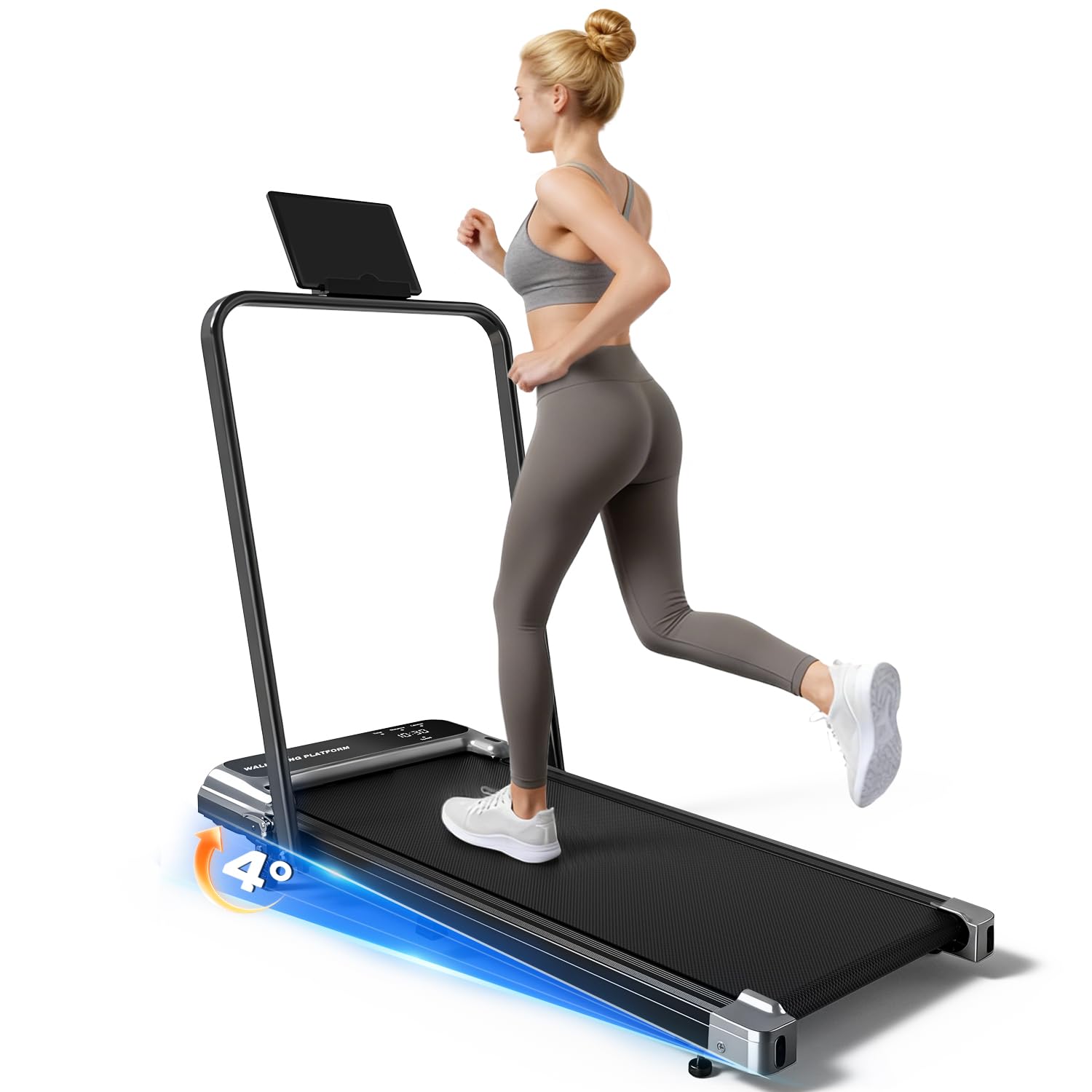
Viamotion Incline Walking Pad

Viamotion

Viamotion Incline Walking Pad

  • Incline 4% manual
  • Top Speed 3.8 mph
  • Item Weight 39.7 lb
  • Weight Capacity 265 lb
Check Price on Amazon

A compact incline pad with a handlebar for extra confidence while walking.

A handlebar is the difference between a walking pad you tolerate and one you trust, especially when you are learning to walk on a moving belt. The Viamotion adds one without turning into a full treadmill, and it folds upright when the walk is over.

The 4% incline is set before you start, so it is best for a consistent route rather than mid-walk changes. The 2.5-hp motor reaches 3.8 mph, the deck is rated to 265 pounds, and the unit weighs about 18 kg. We like the LED readout and the remote for quick changes, and the handlebar gives you something to grab when you look away from the belt.

Our reservation is stability: the belt can slip if tracking drifts, so check the tension and alignment before you settle into a routine. The 4% incline is set by hand before you start, which keeps the mechanism simple. Still, for someone who wants support and incline in a compact pad, the Viamotion is a sensible middle ground between a bare walking pad and the Redliro's long rails.

Bottom Line

For a handlebar without a full treadmill footprint, the Viamotion is our pick, provided you check belt tracking and need only a fixed bar height.

Check Latest Price

How We Tested the Best Treadmills for Walking

We started with more than 30 treadmills marketed for walking, then narrowed the list by footprint, price, and features like folding frames and controls that sit within arm's reach. Seven made the cut. Each arrived flat-packed, so I timed assembly solo and noted whether the instructions were clear enough to follow without help. I also measured the folded and unfolded footprint in a 10-by-10 room to see how much floor space each one really took up.

For six months, my team and I used each treadmill for at least 30 minutes a day, rotating them through morning walks, lunchtime step breaks, and evenings in front of the TV. Walking quality came down to the deck and belt: I noted whether the belt drifted to one side, whether the deck felt cushioned or dead underfoot, and whether speed changes were smooth or jerky. Stability got tested at a brisk 3.5 to 4 mph by watching for wobble at the console and listening for rattles. To check reliability, we tracked every hiccup over the six months—from a slipping belt to a frozen console—and noted how easy each fix was.

Functionality was judged by what we actually touched: cup holders that held a water bottle without tipping, controls within reach, and preset programs that weren't buried in menus. For value, we compared price against the features we used daily—not the ones that looked good on a spec sheet—and asked whether each machine felt solid enough to last. The treadmills that scored highest were the ones we forgot about while walking, because nothing rattled, slipped, or needed adjusting mid-stride.

How to Choose

Start with the deck, not the top speed

Walking comfort starts with the belt under your feet. The compact pads here list decks from about 36 to 42 inches long and roughly 15 to 19 inches wide; a 36-inch belt is fine for desk walking but can feel short if you stride out. We prioritize the longer, wider deck if you are tall or plan to walk briskly.

Measure your normal step and imagine it on the belt. A 41-by-16.5-inch deck such as the TRAILVIBER's gives you more room than the 36-inch T10, while the Superun's 42.6-by-19.7-inch deck is the roomiest here. If you only shuffle at a desk, a smaller deck is easier to store.

Match support to your balance

Handrails change who a treadmill is for. A bare walking pad keeps your view clear and slides under a desk, but it gives you nothing to grab. A handlebar like the Viamotion's adds confidence; long rails like the Redliro's are better for balance-limited walkers because they run alongside the belt and put controls within reach. Side rails, as on the Superun, are a middle ground.

Choose support only if you will use it. A fixed handlebar can block a standing desk, and a rail that forces you to lean forward is worse than none. If you want both modes, look for a bar that lowers or removes.

Decide between manual and automatic incline

An incline turns a flat walk into a harder session without more speed. Manual ramps are set before you start, which is fine if you keep one setting. Automatic incline, as on the TRAILVIBER, lets you change effort mid-walk and is worth paying for if you follow intervals or want variety.

Do not assume a higher incline is always better. A 2% ramp is gentle enough for recovery walking; 7% to 12% is a real climb. Match the range to your knees and your routine, and remember that incline adds strain before speed does.

Plan for storage, noise, and the floor

Compact describes the footprint, not necessarily the folded height. Check both. The Vhorilix folds to 4.1 inches and weighs 36.4 pounds, so it slides under many beds; the TRAILVIBER is a 44-pound machine that rolls but takes two hands. Measure the gap under the bed or sofa before you choose.

Noise is harder to promise. Motor noise is only part of it; footfalls and belt hum matter too. A mat can soften vibration on hardwood, and keeping the belt clean helps. Keep vents and the belt clear either way.

Check the controls, belt, and warranty

A remote is only useful if it works when you are already walking. Test the pairing before you build a routine around it, and keep the display where you can read speed and time without leaning. Belt tracking matters too: if the belt drifts to one side, stop and adjust it before the edge frays.

Warranty length is a fair proxy for how much confidence the maker has in the motor and frame. Three years, as on the TRAILVIBER, is the longest here; most others offer one. Read what the warranty covers, because wear items and labor can be excluded.

Frequently Asked Questions

Final Verdict

The TRAILVIBER X01 is the walking treadmill we recommend first because it combines a useful auto incline, a 450-pound frame, and a stable 41-inch deck without becoming a full gym machine. If the pad has to live under a bed, the Vhorilix is the easier everyday choice; if you need to hold on, the Redliro's long rails are worth the extra weight. Those two requirements decide more purchases than any spec sheet.