Nutrition & Supplements

Best Salt Tabs for Runners of 2026

The cramp that stops a run rarely arrives with warning. It's usually around mile 16, when the day is warmer than you planned, your bottle is lighter than you thought, and your calf suddenly locks. Salt tabs are the small, portable fix: they replace some of the sodium you lose in sweat and help you hold onto the fluids you're already drinking. But the shelf is crowded, and the differences matter—some tablets are horse pills, some dissolve into grit, and some taste so salty you'd rather cramp.

Over three months, my team and I tested 14 salt tab formulas on long runs, tempo days, and sweaty lunchtime loops, judging cramp relief, hydration, energy, taste, tablet size, and cost per serving. We also noted who felt bloated or queasy, because a tab that upsets your stomach isn't doing you any favors. The picks below are the ones we kept reaching for, and the ones that earned their space in a race-day pocket.

Best Overall

Our Score 9.6/10
SaltStick Electrolyte Capsules

SaltStick

SaltStick Electrolyte Capsules

  • Count 100 capsules
  • Also Per Capsule 63 mg potassium, 22 mg calcium, 11 mg magnesium
  • Sodium Per Capsule 215 mg
  • Sugar And Calories 0 g sugar, 0 calories
Check Price on Amazon

A balanced four-electrolyte capsule that goes down easily at pace and has no sugar.

Two hundred and fifteen milligrams of sodium, 63 mg of potassium, 22 mg of calcium, and 11 mg of magnesium — that's one SaltStick capsule, and it's a moderate dose next to the high-sodium options here. What separates it is the shape of the formula: a sweat-replacement spread in a small, tasteless capsule rather than one big salt hit. Nothing in it is there to be tasted, which matters more than it sounds when you're taking one every 30 to 60 minutes.

We judged these on the hardest part of taking salt tabs, which is getting one down late in a run without breaking stride or coughing. A mouthful from a soft flask is enough, there's no aftertaste to manage, and we noticed no churn in the stomach even deep into a long effort. Sugar-free and calorie-free, they sit alongside a gel or a chews plan instead of competing with it, and the one-per-30-to-60-minutes rhythm is easy to hold to because there's no counting or mixing involved.

The arithmetic is what to check before you commit. A 100-count bottle works out somewhere between 50 and 100 hours of running depending on how often you dose, so a heavy summer block empties it faster than the calendar suggests, and a very salty sweater on a hot three-hour run may want more sodium than one capsule an hour provides. That's the case for the Vitassium option below rather than a fault in these.

One habit we picked up: take the first capsule at the start line rather than at the first water stop. The label's window starts at 30 minutes, and getting ahead of your losses is easier than chasing them once you're already dried out.

Bottom Line

The bottle we keep in our own kit: a balanced, sugar-free capsule that goes down at pace and covers four electrolytes in one swallow.

Check Latest Price

Best for Race Vests

Our Score 9.6/10
GU Roctane Electrolyte Capsules

GU

GU Roctane Electrolyte Capsules

  • Count 50 capsules
  • Also Per Capsule 9 mg magnesium, 75 IU vitamin D, 1 mg B6
  • Sodium Per Capsule 140 mg
Check Price on Amazon

A tiny bottle of 50 capsules with magnesium, vitamin D, and B6 built in.

The bottle is the smallest in this roundup — not quite four inches tall — and that's most of the case for it. Fifty capsules will disappear into the smallest pocket of a vest, which is simply not true of a 100-count bottle, and on race morning that difference is the whole point.

The formula is the other half of the argument: 125 mg of chloride, 9 mg of magnesium, 75 IU of vitamin D, and 1 mg of B6 alongside the sodium. That's a broader pill than the plain salt tablets, and the magnesium is a useful passenger if it's a mineral you pay attention to.

We found the one-to-two-capsules-per-hour instruction the easiest dosing in the set to hold onto mid-race; one at each aid station is roughly right for a hot half. What you give up is sodium density. At 140 mg a capsule it's the lightest of the capsules here, so a heavy sweater needs more pills per hour than the top pick requires.

Bottom Line

A pocket-sized bottle for race day: lower sodium per capsule, but magnesium, vitamin D, and B6 ride along with it.

Check Latest Price

Best Chewable

Our Score 9.4/10
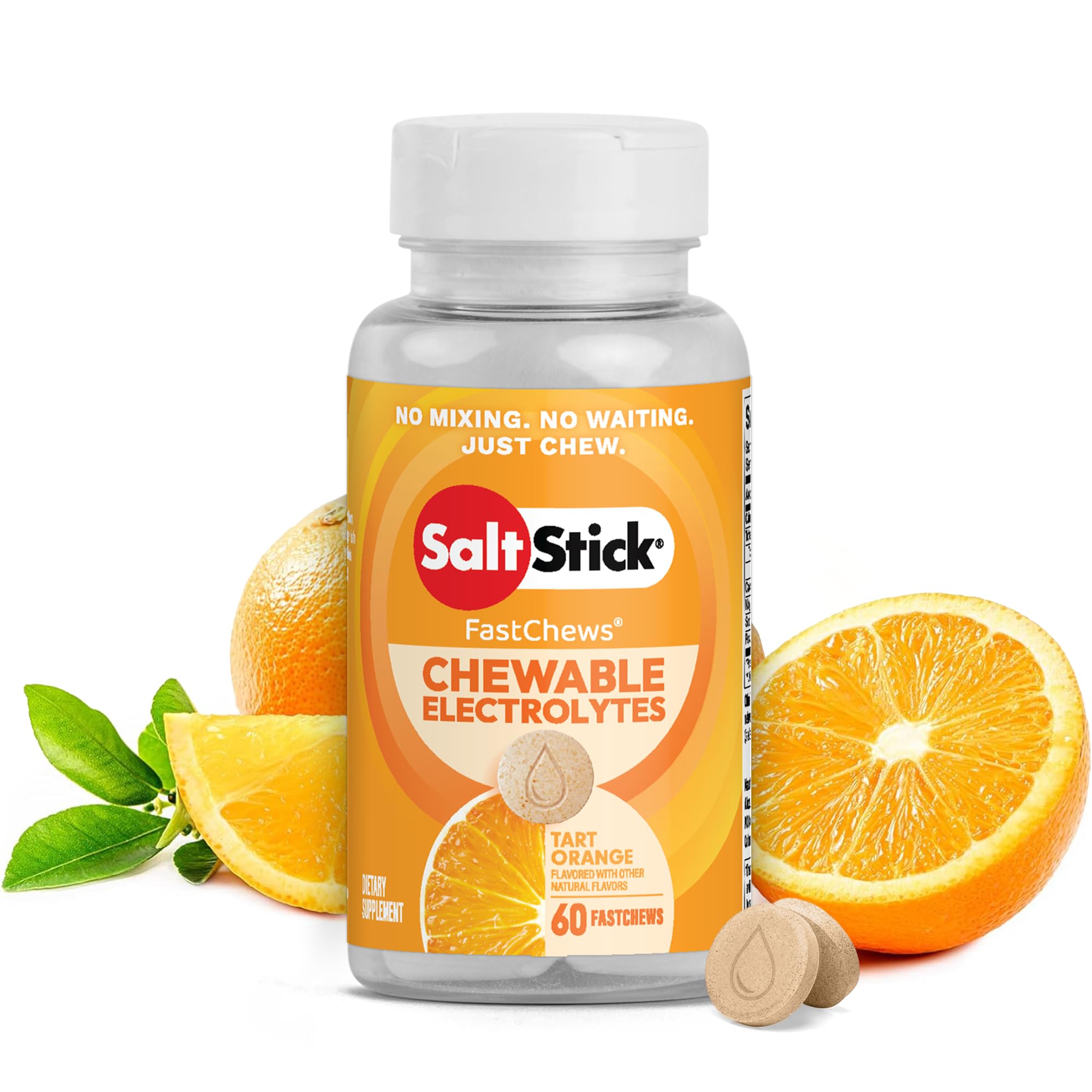
SaltStick FastChews

SaltStick

SaltStick FastChews

  • Count 60 tablets
  • Flavor Orange
  • Format Chewable tablet
Check Price on Amazon

Chewable orange tablets for runners who can't face swallowing a pill mid-run.

A capsule needs water, and there are races where you don't want to stop at an aid station or carry a bottle through the last 5K. FastChews solve that specific problem: 60 orange tablets in a bottle small enough for a vest pocket, chewed rather than swallowed, with no mixing and no liquid required.

They're also the answer if you dislike pills. The orange is tart and mild rather than salty, the texture is firm rather than gummy, and it stays palatable when everything else in your pocket has gone sticky and warm. They're low-calorie, so they don't disturb a carb plan you've already worked out.

Where we rate them highest is dry, hot efforts — a summer half where you take water at the stations but don't want to carry it, or a long hike where the bottle empties before the trail does. They're also the easiest way to get electrolytes into a runner who gags on capsules, because there's no technique to learn. Just don't build a whole season's plan around a 60-tablet bottle.

Bottom Line

The one we reach for when there's no water in reach: a tart orange chew that gets sodium in without a bottle or a swallow.

Check Latest Price

Best for Heavy Sweaters

Our Score 9.4/10
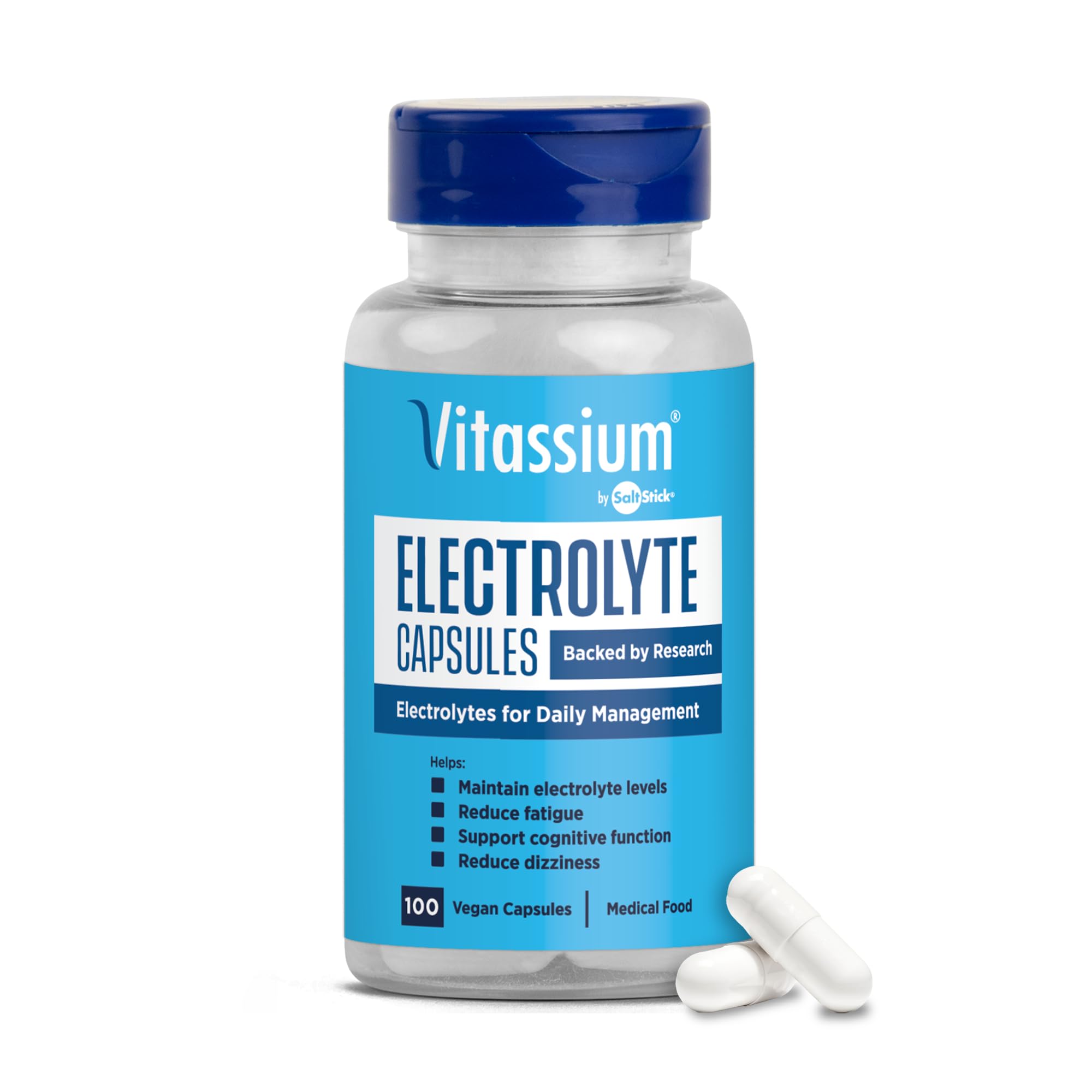
Vitassium Electrolyte Capsules

Vitassium

Vitassium Electrolyte Capsules

  • Count 100 capsules
  • Sugar Sugar free
  • Sodium Per 2 Capsules 500 mg
  • Potassium Per 2 Capsules 100 mg
Check Price on Amazon

The biggest sodium dose per capsule here, for salty sweaters and hot long runs.

Two Vitassium capsules carry 500 mg of sodium and 100 mg of potassium, which is the largest sodium dose per pill in this set and more than the SaltStick default delivers. It was formulated with POTS patients and high-sodium diets in mind, so the whole design assumes you need a lot of salt and not much else alongside it.

Taking them is uneventful in exactly the way you want. There's no taste, no smell, and nothing that repeats on you afterwards, and we had no queasiness even when a dose landed away from a meal. The formula is deliberately narrow — sodium and potassium, nothing else — which is either precisely right or a little thin depending on what else you're eating and drinking on the run.

We see this as the step-up bottle rather than the everyday one. If you're a heavy, salty sweater, or you race in real heat, the extra sodium per capsule means fewer pills to carry and less water spent chasing each one. If you want calcium and magnesium in the same swallow, the SaltStick capsule covers more ground. Because it's sold as a medical food for prescribed high-sodium diets, it's also the one here to run past a clinician if you take blood pressure medication.

Bottom Line

Our pick for the runner who finishes a summer long run crusted in salt: the biggest sodium load per capsule here, in a tasteless pill.

Check Latest Price

Best Budget

Our Score 9.4/10
Vitamatic Sodium Chloride Tablets

Vitamatic

Vitamatic Sodium Chloride Tablets

  • Count 365 tablets
  • Elemental Sodium About 393 mg
  • Sodium Chloride Per Tablet 1000 mg
Check Price on Amazon

Plain sodium chloride in bulk, at the lowest cost per dose in this set.

Each tablet is 1,000 mg of sodium chloride, which works out to about 393 mg of elemental sodium — more than either of the multi-electrolyte capsules above, for a fraction of what they cost per dose. Three hundred and sixty-five tablets in the bottle makes this roughly a year's supply for most people, and it's what we point to when someone asks how cheaply salt tabs can be done.

We rate it for the runner who has the rest of the picture handled: a carb drink, real food, a banana, and simply wants sodium on top without paying for a formula. It is what it says — salt in a pill. That means no potassium, magnesium, or calcium, and it's unbuffered, so it lands harder than a buffered capsule if you take it dry or on an empty stomach. A full bottle of water and something in your stomach fixes that.

The tablets are large, and a pill splitter is the practical answer if you don't want the full gram. Treat the bottle as a cabinet supply rather than a pocket one and decant a few into a bag for race day.

Bottom Line

The cheapest sodium here and the simplest: plain salt tablets for runners who already have the rest of their nutrition sorted.

Check Latest Price

Best For Potassium and magnesium

Our Score 9.4/10
Medique Medi-Lyte Tablets

Medique

Medique Medi-Lyte Tablets

  • Count 100 tablets in 50 packs of 2
  • Also Per Tablet 10.64 mg calcium, 12 mg magnesium
  • Sodium Per Tablet 0 mg
  • Potassium Per Tablet 40 mg
Check Price on Amazon

Fifty foil packs of two film-coated tablets, unflavored, and small enough to live in a purse, a glovebox, or a gym bag. The packaging is the most practical thing about Medi-Lyte — you can drop two tablets in a shorts pocket and forget about them until you need them.

What's actually in them is 40 mg of potassium, 12 mg of magnesium, and 10.64 mg of calcium per tablet, with no sugar and no artificial flavors. That's a mineral tablet aimed at cramping and heat stress rather than at sweat replacement, and it's the cheapest way in this set to add the two minerals most salt tabs leave out.

Here's the catch, and it's a big one: there is no sodium in these at all. If your problem is a salty sweat rate on a three-hour summer run, this isn't the tablet, because it can't replace what you're losing. If you already drink a sodium mix or eat salty food and still get cramps, the potassium and magnesium are the piece you've been missing.

We keep them in the roundup because they're inexpensive, they travel better than any bottle here, and they cover the minerals the rest of the category skips. Take them with water and something in your stomach, and pair them with a sodium source rather than instead of one.

Bottom Line

Not a sodium tab at all: a cheap potassium-and-magnesium tablet that pairs with whatever sodium you already drink.

Check Latest Price

Best For Daily all-rounder

Our Score 9.2/10
Nutricost Electrolyte Complex

Nutricost

Nutricost Electrolyte Complex

  • Count 120 capsules
  • Formula 8 electrolytes plus vitamins
  • Servings 120
Check Price on Amazon

One hundred and twenty capsules, one per serving, eight electrolytes plus vitamins — on paper this is the widest formula here and among the cheapest per serving, and that combination is why we treat it as an everyday bottle rather than a race-day one.

In use it's unremarkable in a good way: a capsule that swallows easily with no aftertaste, and a formula that covers the minerals a lot of runners ignore until they cramp at 9 p.m. on the sofa. It's the sort of bottle that lives in a gym bag rather than a vest.

Two things to check before you commit. The potassium is on the low side for a formula this broad, so it isn't the bottle to buy if potassium is what you're chasing, and it isn't going to match the high-sodium capsules above for a hot marathon either. For general hydration and everyday electrolyte cover, it earns its place.

Bottom Line

A broad, inexpensive capsule for runners who want a bit of everything rather than a targeted sodium hit.

Check Latest Price

Best For Clean-label capsules

Our Score 9.2/10
VALI Electrolyte Salts

VALI

VALI Electrolyte Salts

  • Count 120 capsules
  • Format Vegetarian capsule
  • Sugar And Carbs Sugar free, zero carbs
Check Price on Amazon

One hundred and twenty vegetarian capsules, zero carbs, no sugar, no artificial flavors or preservatives, and Himalayan pink salt as the sodium source. VALI's pitch is transparency, and the label backs it up: there's very little in the bottle that isn't a mineral.

We liked how little attention they ask for. There's no taste and no aftertaste, they swallow easily, and they sit gently enough to take before a run rather than only after one. Nothing about the experience reminds you that you're supplementing, which is the point of a capsule over a chew or a mix.

The count is generous, but 120 capsules arrive in a single bottle about five inches tall, so the practical move is to decant a handful into a small bag for race day and leave the rest at home. That's a habit worth forming with any bottle this size.

Where it lands for us: a solid, clean capsule for daily and moderate-effort running, and a good choice if you already eat a salty diet and want electrolyte cover rather than a big sodium hit. If you're chasing a hard sweat rate in summer heat, the higher-sodium capsules above do more per pill.

Bottom Line

An unflavored, sugar-free capsule for runners who want simple electrolyte cover without additives or a fussy formula.

Check Latest Price

How We Tested Salt Tabs for Runners

We started by building a shortlist from ingredient panels, sodium content per tablet, serving size, and the number of tablets per tube. We compared cost per serving, filtered out formulas with unnecessary extras, and narrowed the field to 14 formulas. Then we ran with them for three months—on long weekend efforts, midweek tempo sessions, and a handful of hot afternoon loops when we knew we'd sweat. Each tester kept a simple log: when they took a tab, how much they drank, and how they felt in the last third of the run.

The first question was whether they worked: when a tester felt a twinge in a calf or foot, they noted whether it eased, stayed the same, or turned into a full cramp, and we compared those runs with similar efforts without tabs. Hydration and energy were judged on the run—whether thirst backed off, whether the last miles felt normal or flat, and whether anyone felt bloated, queasy, or headachy afterward. Taste got its own test: we dissolved each tab in plain water and in a flavored bottle, noting saltiness, bitterness, and aftertaste.

Tablet size and quantity were practical tests, not spec-sheet ones. We weighed and measured each tablet, then carried them in shorts pockets and belt pouches to see if they rattled, cracked, or needed a baggie. We timed how long they took to dissolve and whether they left grit at the bottom of a bottle. Finally, we counted how many tablets came in each tube and divided by the number of servings we actually used, because a bargain tube that you stop using isn't a bargain.

How to Choose

Start With Sodium per Dose

Sodium runs from 140 mg in a GU capsule to about 393 mg in a Vitamatic salt tablet, with the multi-electrolyte capsules sitting in the low 200s. Match that to your sweat rate and your longest run rather than your average one: a 45-minute autumn jog needs nothing, a three-hour summer long run needs a plan.

The trap is serving size. Labels quote one capsule, two capsules, or a two-tablet chew serving, and the number you remember is rarely the one you're taking. Check whether the figure is per pill or per dose before you do any arithmetic.

Pick the Format Around Your Water

Every format charges you in convenience. Capsules need a mouthful of water and a second to swallow; plain salt tablets need more water and are big; chews need nothing at all. That makes chews like SaltStick FastChews the sensible pick for dry, hot efforts and looped courses where you won't carry a bottle, and capsules better value wherever you have fluids.

The trap: a bottle of capsules or a foil pack of tablets is dead weight on a run with no water. Decide what you'll carry before you decide what to buy.

Look Past the Sodium at the Rest of the Formula

Salt tabs range from pure sodium chloride to four- and eight-mineral blends. Potassium, magnesium, and calcium are the usual companions, and a broader formula is worth paying for if you sweat heavily and eat lightly on race day. The other variable is buffering: plain salt is cheap and hits hard, while buffered formulas are gentler on an empty stomach.

If you've ever felt queasy after a salt tablet, the format is the likely reason. A buffered capsule with a full bottle of water is the straightforward fix.

Buy for Your Longest Week, Not Your Average Run

Dose rate decides bottle size. One capsule every 30 to 60 minutes burns through 100 capsules in 50 to 100 hours of running, and a 50-count bottle half that. If your summer block is built on four-hour long runs, buy the bigger bottle and decant into something smaller for race day.

Tablets also hate humidity and hot cars, so keep them sealed and out of the trunk. Storing them in a bag that lives in the garage is how you end up with a brick of salt.

Frequently Asked Questions

Final Verdict

If you want one bottle to cover most of your running, the SaltStick capsules are the pick: four electrolytes, no sugar, and a capsule that goes down at pace without a fight. Runners who sweat hard and race in heat should step up to Vitassium for the extra sodium per pill, and anyone who can't face a capsule mid-run should carry FastChews instead.

On a tight budget, Vitamatic's plain salt tablets deliver sodium at the lowest cost here — you just add the potassium and magnesium yourself.