Cardio Machines

Best Recumbent Bikes with Arm Exercisers, Tested of 2026

Recumbent bikes with arm exercisers have a reputation problem: the arms often feel like a bolt-on gimmick, and the whole machine can rattle like a paint shaker. But when the mechanism is built right, you get low-impact cardio for your legs and a real upper-body workout without leaving the house — a combination that matters if your knees, hips, or back prefer a supported seat. Over the past six months, I assembled, adjusted, and rode seven of these bikes in my own living room, on carpet and hard floors, at 5 a.m. and after dinner.

I rolled each one into a corner to see how much floor space it really ate up, set the seat for riders from 5-foot-2 to 6-foot-4, and listened for the squeaks and clunks that tell you a frame is flexing. Price didn't always predict quality, and the quietest models weren't the most expensive. The picks below are the ones that felt sturdy, adjusted without a fight, and made the arm exerciser feel like part of the ride rather than a gimmick.

Best for Heavier Riders

Our Score 9.6/10
WFLGFT W80601 Recumbent Bike

WFLGFT

WFLGFT W80601 Recumbent Bike

  • Item Weight 87 lb
  • Connectivity Bluetooth app
  • Weight Capacity 450 lb
  • Resistance Levels 16
Check Price on Amazon

The highest weight capacity here, with 16 resistance levels and app-guided workouts.

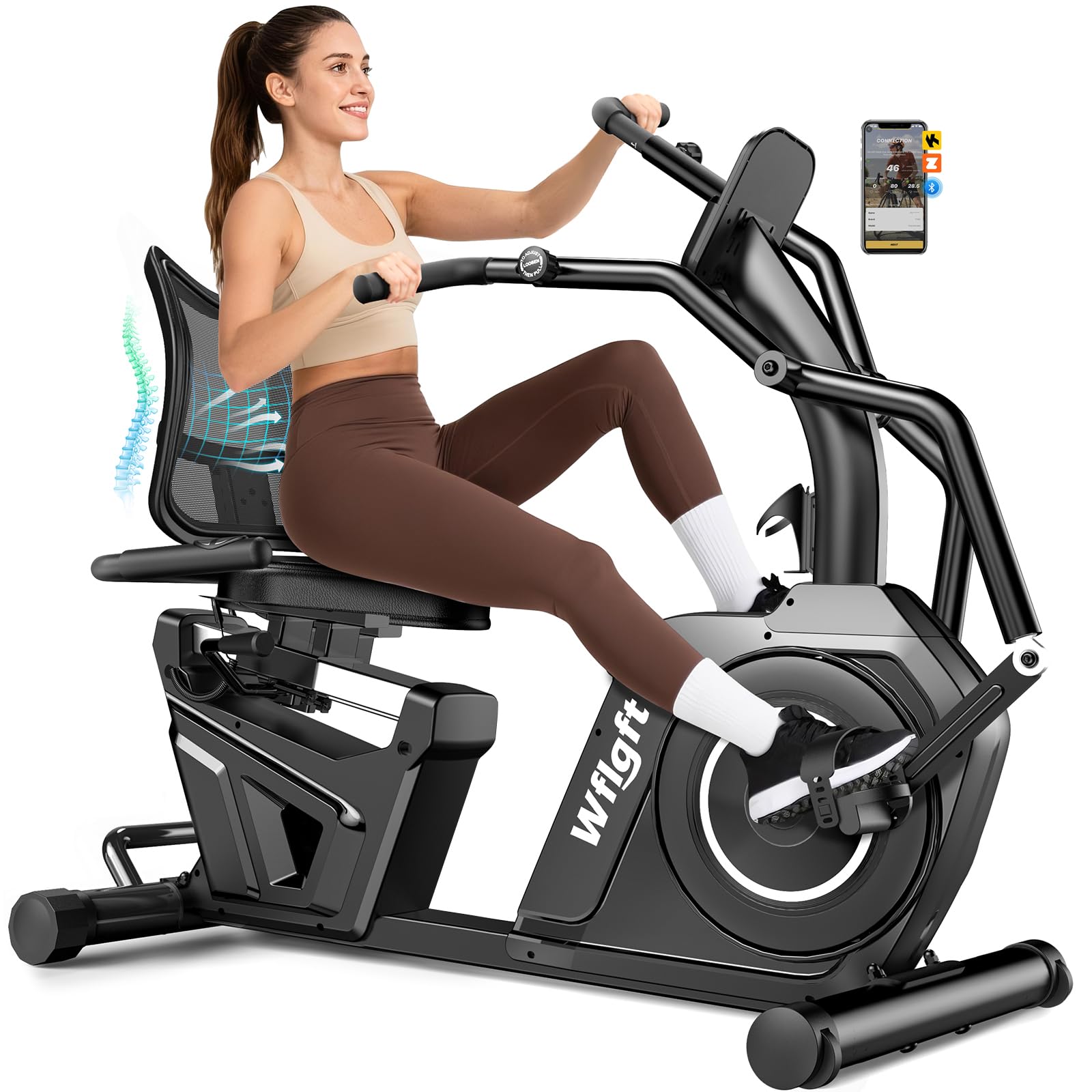
Four hundred and fifty pounds is the highest weight rating in this group, and the WFLGFT W80601 is built like it means it: reinforced steel tubing, a wide stabilizing base and an 87-pound frame meant to hold a heavy rider steady rather than absorb the load. If you've pedaled a light recumbent that skates across the floor mid-stroke, the extra steel is the entire point of this bike.

This is the pick for the heaviest rider in the house. The 16 resistance levels give you somewhere to progress, and the Bluetooth app turns a basic console into guided sessions and progress tracking — worth having if you like structure and easy to ignore if you don't. Setup is the most forgiving of the seven: parts are bagged by assembly step and the diagrams hold up, which is more than most machines this size manage.

What you're paying for is capacity rather than features. The app, the resistance range and the quiet belt drive all show up elsewhere in this group for less, so if nobody in the house needs a 450-pound frame, the pooboo is the better-balanced buy. If someone does, this is the one machine here that won't feel like a compromise.

Bottom Line

If someone in the house is near 400 pounds, this is the frame to buy: 450-pound capacity, 16 resistance levels and app-guided workouts.

Check Latest Price

Best Overall

Our Score 9.2/10
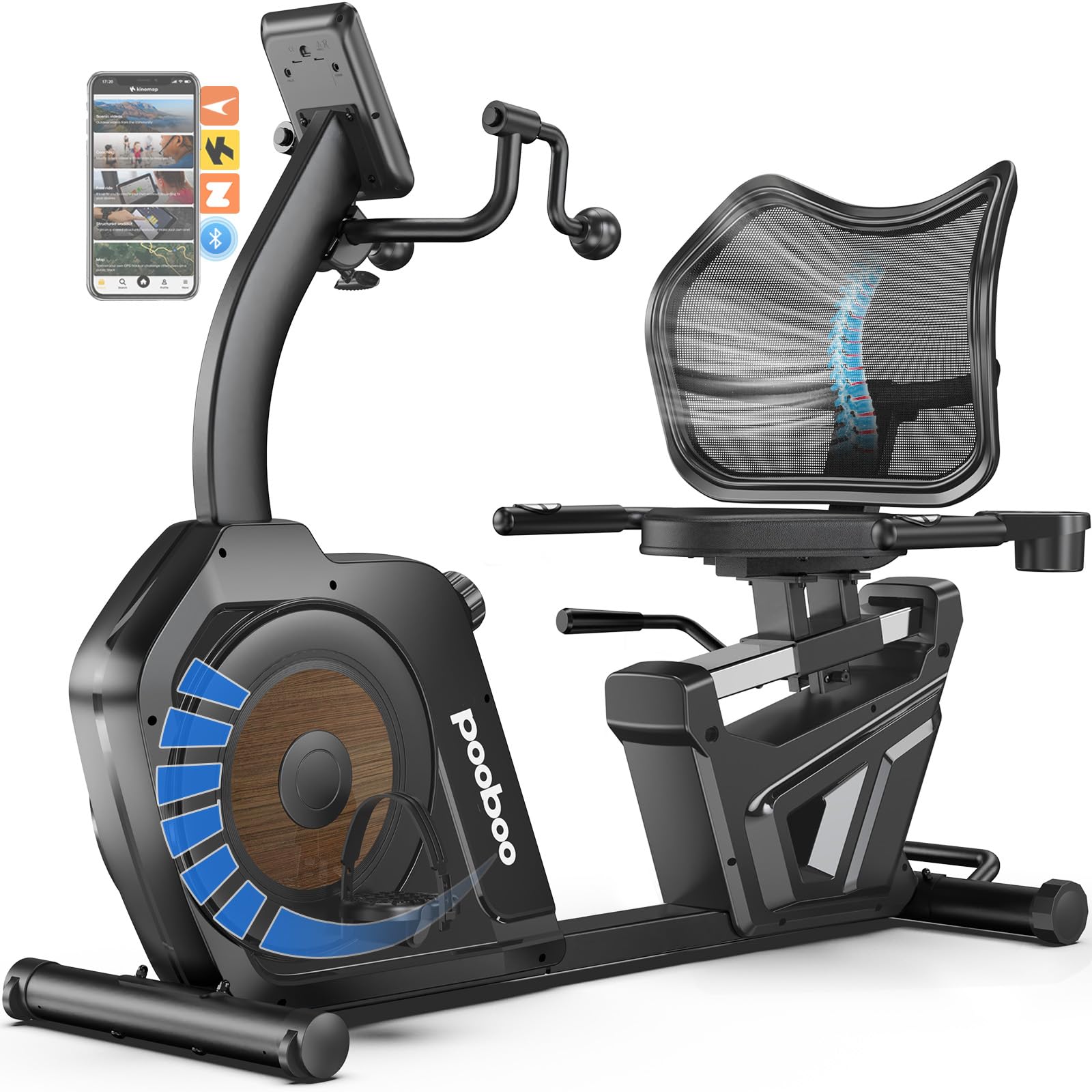
pooboo W216 Recumbent Bike

pooboo

pooboo W216 Recumbent Bike

  • Drive Belt
  • Item Weight 79.4 lb
  • Seat Adjustment Sliding rail, multi-position
  • Weight Capacity 400 lb
Check Price on Amazon

A wide, back-supported seat and a 400-pound frame with a genuinely quiet belt drive.

The seat is where a recumbent succeeds or fails, so it's the first thing we look at, and the pooboo W216 gets it right. The cushion is wide and thick rather than narrow and sculpted, and the backrest curves to support the lower back instead of simply stopping you from tipping over. Underneath, the seat slides along a rail rather than dropping into a handful of notches, so a tall rider and a short one can both find their position without adding a gel cushion. That pairing of real support and a continuously adjustable seat is why it holds the top spot.

The frame is rated to 400 pounds and sits still while you push, which is what you want from a machine you'll be climbing on and off for years. The belt drive and magnetic resistance are quiet enough that someone can read in the same room, and the resistance knob turns smoothly through its range. The arm exercisers give the upper body real work from the same seat — this is a full-body machine, not a bike with decorative handles bolted on.

The details are aimed at people who ride for half an hour rather than five minutes: a console that tracks time, speed, distance, calories and pulse, and a shelf that holds a phone or tablet at reading angle. Assembly is straightforward with the tools in the box. What it isn't is a bike for hard interval work — resistance climbs smoothly but tops out around steady cardiovascular effort, which suits the daily-movement brief and will frustrate someone chasing a spin-class burn.

Bottom Line

Our pick for most homes: a wide, back-supported seat on a 400-pound frame, with a belt drive quiet enough for the next room.

Check Latest Price

Best Value

Our Score 9.2/10
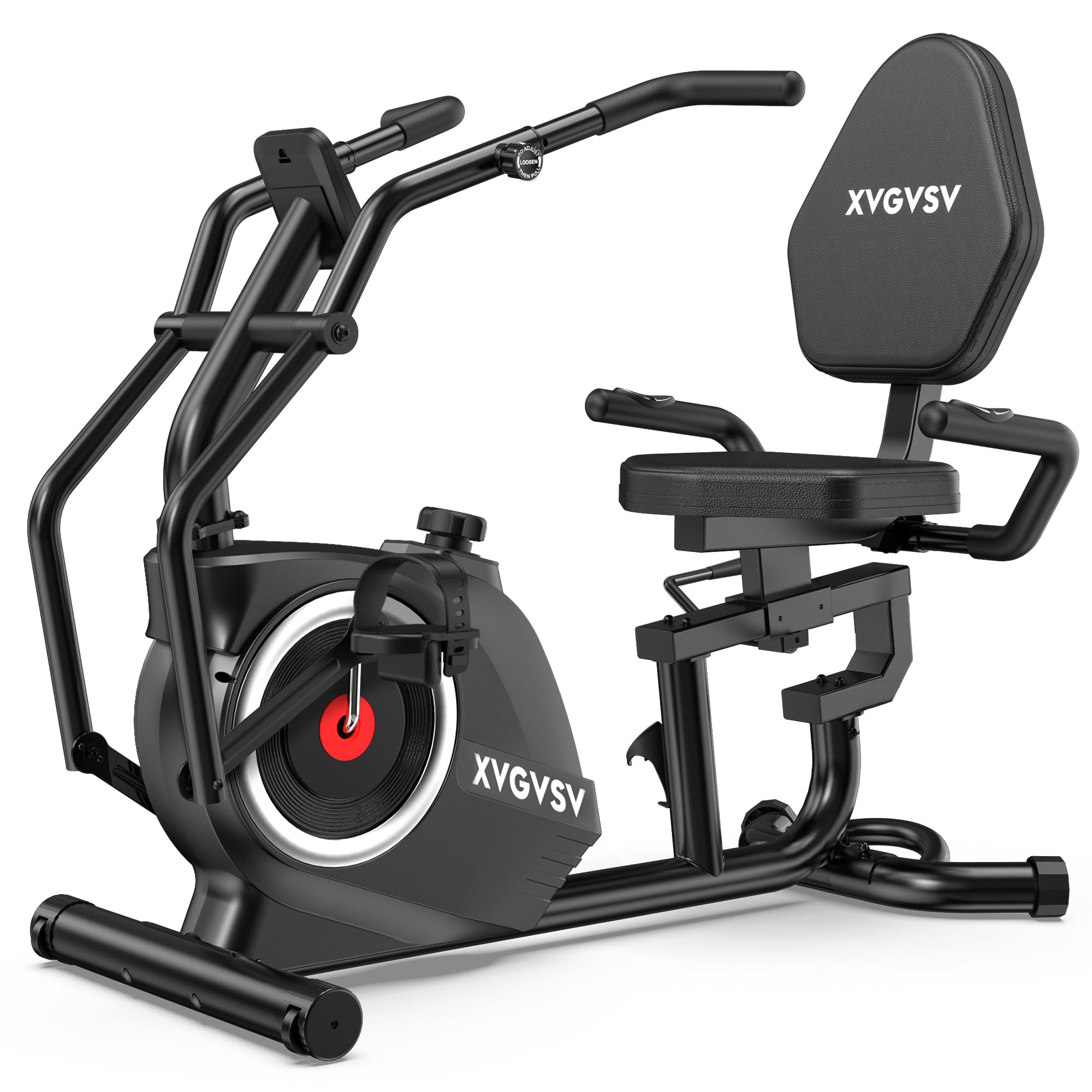
XVGVSV W241 Recumbent Bike

XVGVSV

XVGVSV W241 Recumbent Bike

  • Assembly 85% pre-assembled
  • Item Weight 66 lb
  • Weight Capacity 400 lb
  • Resistance Levels 16
Check Price on Amazon

16 resistance levels and a 400-pound frame for about the top pick's money.

The pedal path is what separates this from the other bikes here. The XVGVSV's footplates travel a short elliptical arc instead of a circle, which spreads the effort differently through the stroke and takes some of the sharpness out of the top of it. Whether that's easier on your knees is personal, but if circular pedaling leaves you sore the next day, this is the design to try first — and it's the reason we point riders with cranky joints this way before they spend more.

The rest of the package punches above its price. Sixteen resistance levels is as many as any bike in this group, the 400-pound frame doesn't wobble, and the belt drive is quiet enough for an apartment. Front transport wheels let one person push it against the wall between sessions, and at 66 pounds it's light enough that you actually will. It also arrives 85 percent assembled, with about half an hour of setup left — the least intimidating unboxing here.

Bottom Line

The one to choose if you want an elliptical-style stride from a seat: 16 resistance levels and a 400-pound frame that arrives 85 percent built.

Check Latest Price

Best for Tall Riders

Our Score 9.0/10
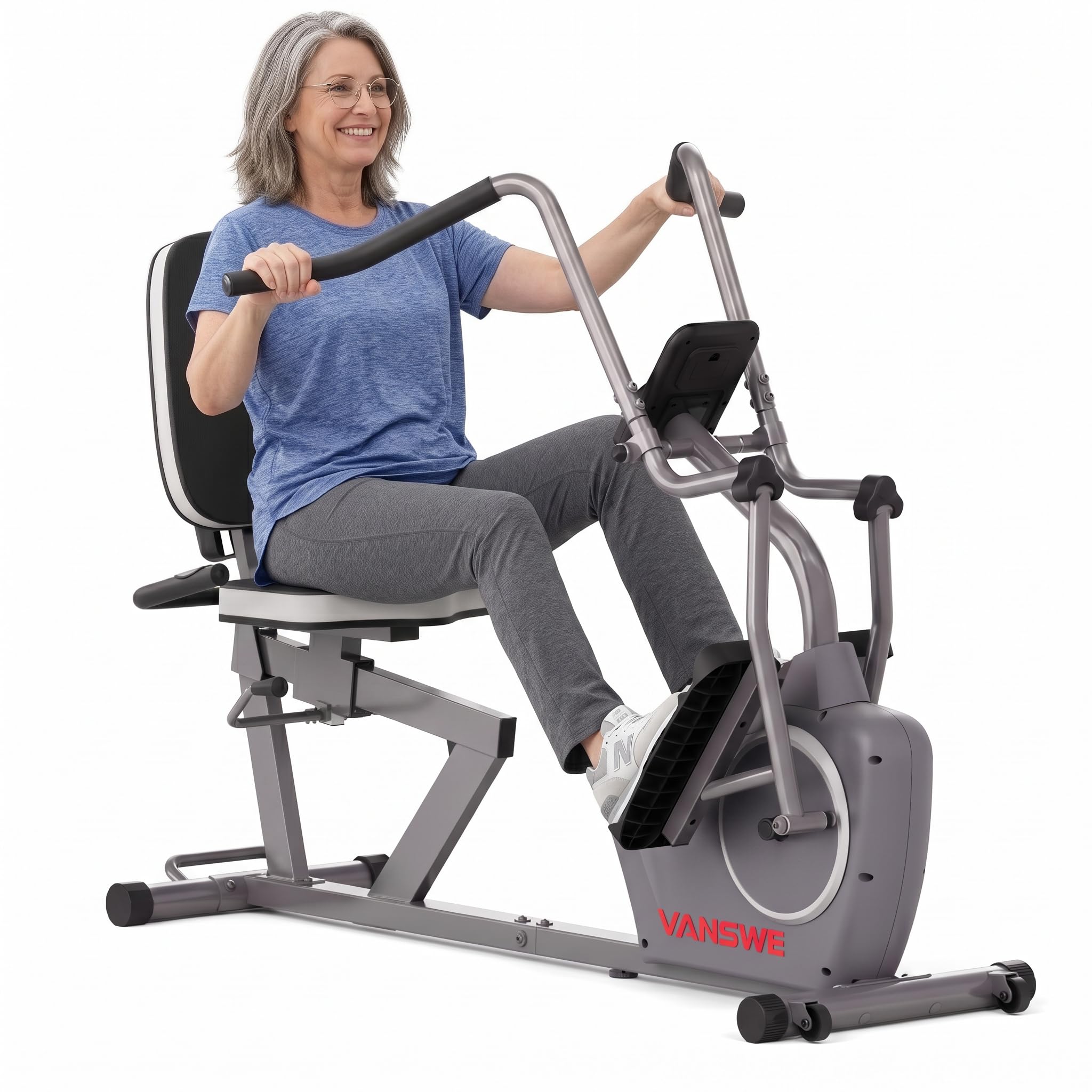
VANSWE VSRB408 Recumbent Bike

VANSWE

VANSWE VSRB408 Recumbent Bike

  • Seat Range 29" to 37" inseam
  • Connectivity Bluetooth (Kinomap, Zwift)
  • Weight Capacity 400 lb
  • Resistance Levels 8
Check Price on Amazon

A continuously sliding seat covering a 29- to 37-inch inseam, plus app pairing.

Leg extension is the first thing a tall rider loses on a recumbent, and the VANSWE VSRB408 solves it with a seat that slides continuously instead of clicking between fixed holes. The range runs from a 29- to a 37-inch inseam, which covers a short teenager and a six-foot-plus adult on the same machine. If two people of very different heights will share one bike, this is the one to look at.

The rest is competent rather than exciting: eight resistance levels, a 400-pound frame, grip pulse sensors and transport wheels. Bluetooth pairing with Kinomap and Zwift is the standout — it turns a plain LED console into virtual routes and structured rides, which is often the difference between a bike that gets used and one that ends up holding laundry.

The caveat is room through the middle. The frame is narrower between the handles than the pooboo or the WFLGFT, and broader riders have less space to settle into, so think past your inseam before you commit. The seat travel is genuinely excellent; the rest of the fit is less generous than that range suggests.

Bottom Line

For long legs and shared households: a seat that slides continuously across a 29- to 37-inch inseam, plus Bluetooth pairing with Kinomap and Zwift.

Check Latest Price

Best Budget

Our Score 8.8/10
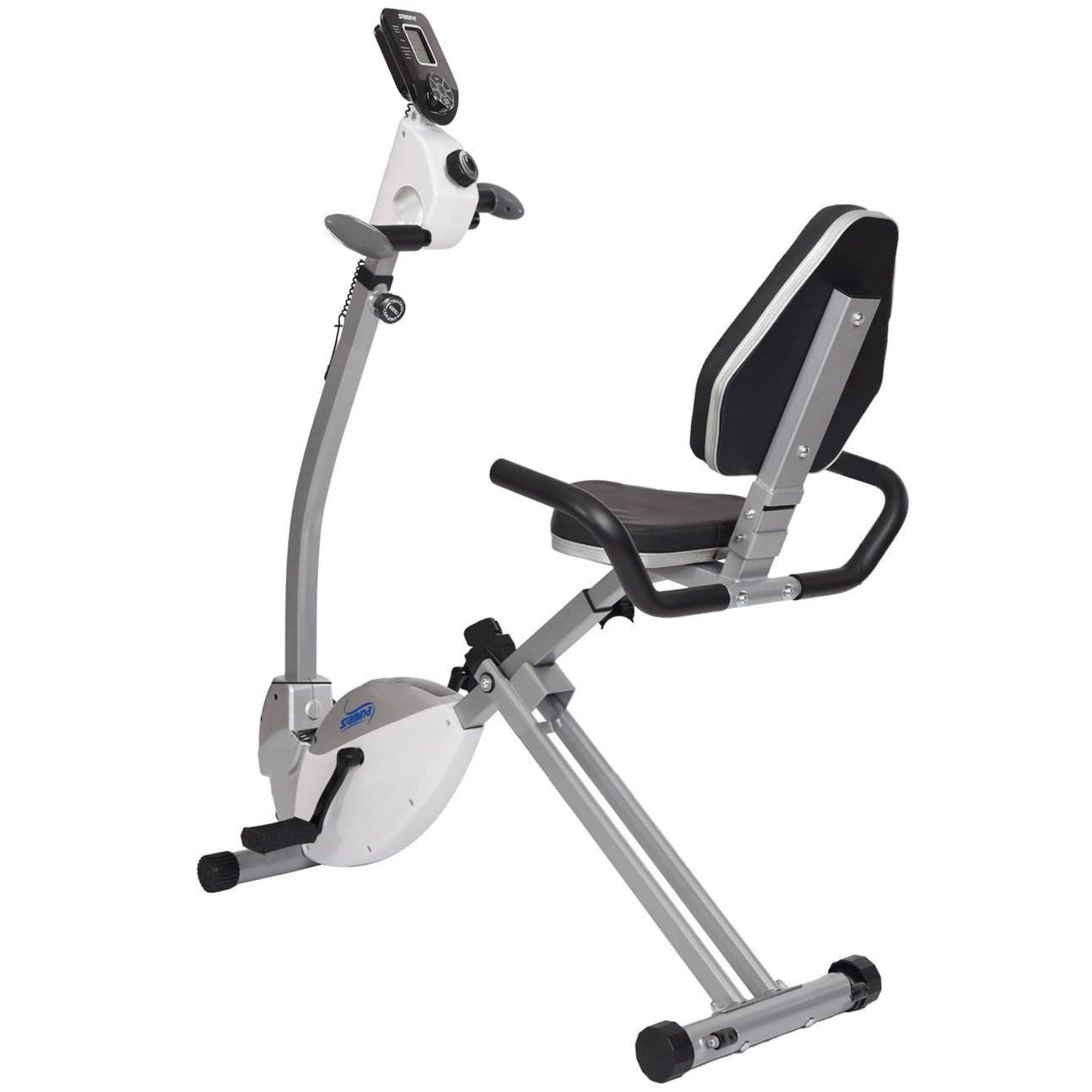
Stamina Recumbent Bike 15-0340

Stamina

Stamina Recumbent Bike 15-0340

  • Item Weight 53 lb
  • Weight Capacity 250 lb
  • Lower-Body Resistance 8 magnetic levels
  • Upper-Body Resistance Adjustable tension dial
Check Price on Amazon

Independent hand cranks and the lightest frame here, at the lowest price.

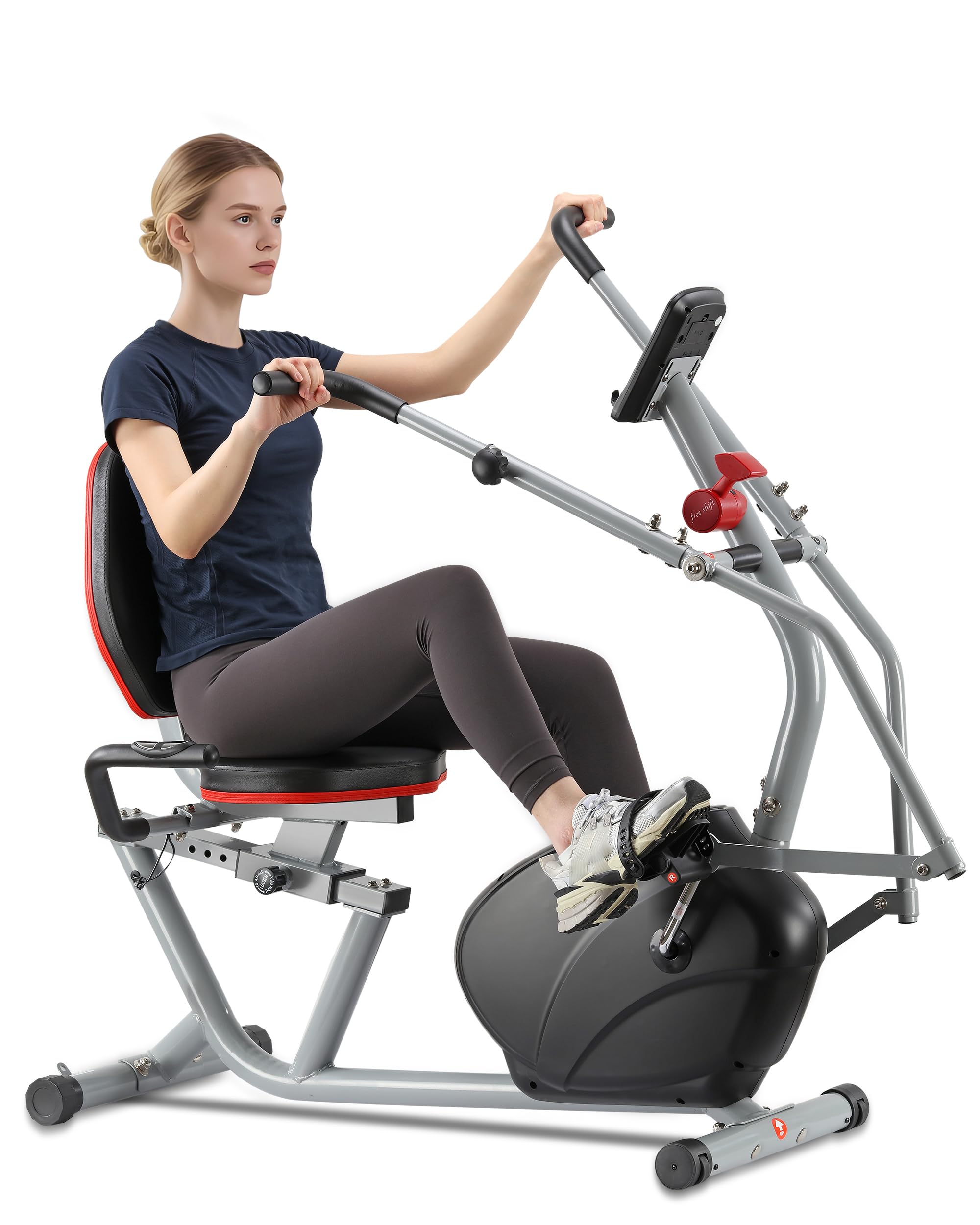
On most recumbent bikes the arm handles are tied to the pedals: push with your arms and your legs keep pace whether you want them to or not. The Stamina separates the two, giving the upper body its own hand pedals and its own tension dial, so you can spin your legs easy while you grind with your arms — or stop the legs entirely and keep working. That independence is the reason it stays on this list.

Weight is the other argument in its favor. At 53 pounds it's the lightest machine here, and the 44-by-25-inch footprint tucks into a corner or the end of a couch, which matters in an apartment where a 90-pound bike would be a negotiation with whoever else lives there. For a light rider who wants upper-body work without a gym membership, it's the most sensible thing in this guide.

The seat and arm pedals adjust through a narrower range than the bigger machines, so a household of very different body types will feel that compromise. For one rider of average build in a small room, none of it bites. For two adults sharing one bike, it does.

Bottom Line

The cheapest, lightest way into a seated full-body workout, with hand pedals you can crank independently of your legs.

Check Latest Price

Best For Simple setups

Our Score 8.6/10
ECHANFIT USNC-CBK2409 Recumbent

ECHANFIT

ECHANFIT USNC-CBK2409 Recumbent

  • Rider Fit 4'9" to 6'3"
  • Item Weight 62.2 lb
  • Weight Capacity 380 lb
  • Resistance Levels 8
Check Price on Amazon

A backlit console sounds like a spec-sheet afterthought until you're pedaling in a dim basement at six in the morning. The ECHANFIT's display stays readable in low light and cycles through time, speed, distance, calories, odometer and pulse from the grip sensors — a small thing that keeps a January routine going.

The build holds up its end: a 380-pound frame, eight magnetic resistance levels and a belt drive that stays quiet enough that you won't wake anyone. At 62 pounds it's light enough to shift and heavy enough to sit still, and the sliding seat spans a 4-foot-9 to 6-foot-3 range, so most families can find a workable position.

Position is where the caveats start. The seat pan and the pedal straps run small, so riders at the top of that height range end up perched rather than settled, and broad riders will feel it first. If everyone in the house is average-sized it's a non-issue, and the seat rail still gives you a useful spread of positions.

What we keep coming back to is how little it asks of you: no app to configure, no subscription, no learning curve — get on and pedal. Among the bikes in this guide it's the simplest to live with, and the one we point to when someone wants a solid machine without paying for features they'll never open.

Bottom Line

A quiet, well-built 380-pound recumbent at a friendly price — best for average-height riders who want simple resistance and a readable console.

Check Latest Price

Best For Long stride

Our Score 8.4/10
THERUN Recumbent Elliptical

THERUN

THERUN Recumbent Elliptical

  • Item Weight 129 lb
  • Stride Length 15.8 inches
  • Weight Capacity 330 lb
  • Resistance Levels 8
Check Price on Amazon

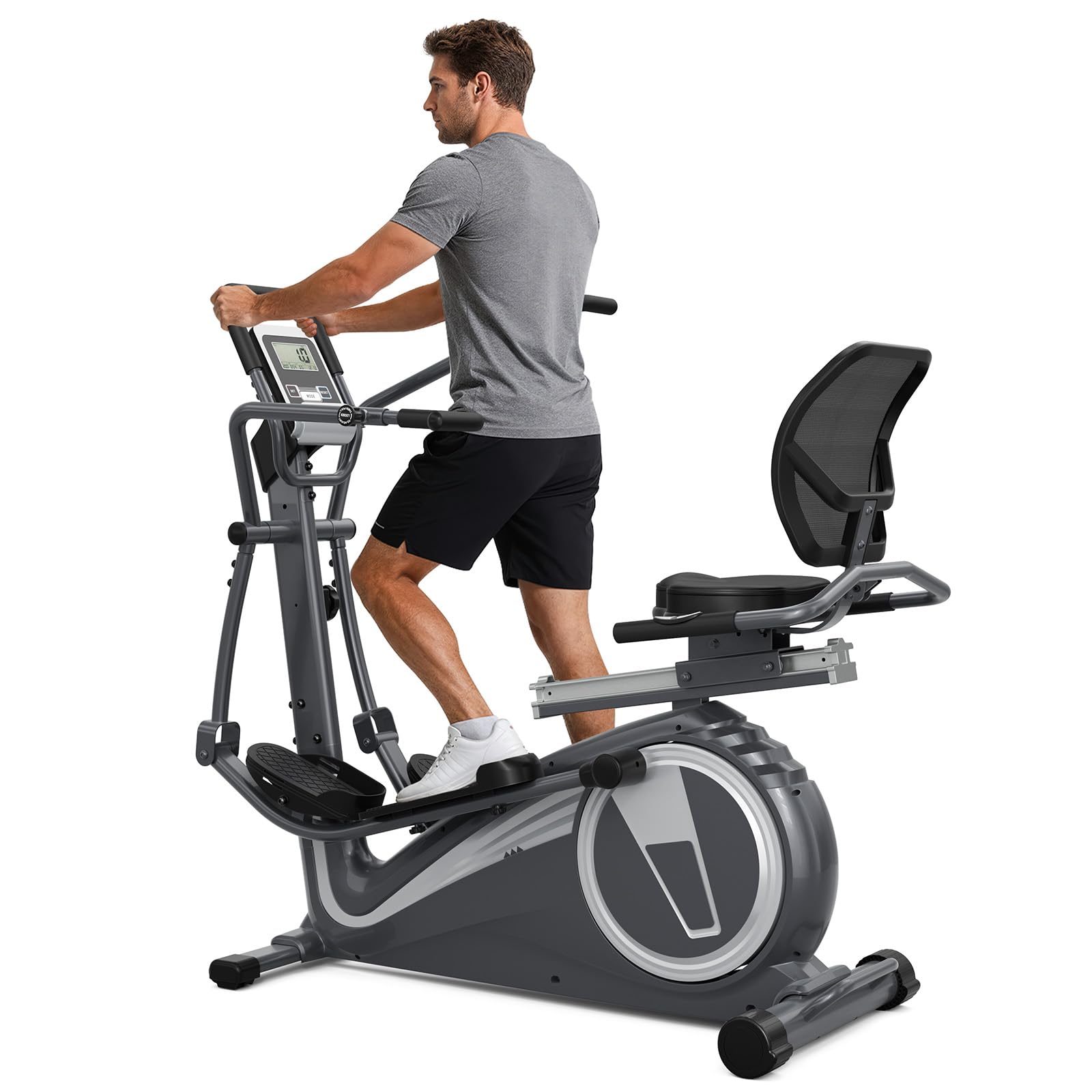
A 15.8-inch stride is short for a standing elliptical and long for a recumbent, which tells you what the THERUN is: an elliptical that keeps you seated. Fixed handles give you a stable brace for leg-focused work; grab the curved moving handles and the same machine becomes a full-body push-pull. It's a genuine two-mode design, and the only one here that states its stride length.

The hardware is substantial — a 330-pound capacity, eight magnetic resistance levels and a frame that stays planted through a hard effort. Resistance changes are smooth and the belt drive keeps it quiet, which matters more with a machine this big in a room you actually use.

Where we hesitate is the fit. A fixed stride and a 330-pound ceiling suit a specific rider rather than a whole household, and the price sits at the top of this group. If you want the closest thing to a gym elliptical that still lets you sit down, it earns the money. If you mainly want to pedal with your arms along for the ride, the pooboo does that for considerably less.

Bottom Line

For a rider under 330 pounds who wants a true elliptical stride from a seat, this dual-mode machine is the most versatile here — with a setup to plan for.

Check Latest Price

How We Tested Seven Recumbent Bikes With Arm Exercisers

We started with a list of 23 recumbent bikes with arm exercisers from brands we trust for home fitness gear, then narrowed it by footprint, weight capacity, seat adjustability, and whether the arm handles moved independently or were linked to the pedals. Seven made the cut for hands-on testing — a mix of budget and midrange models that represented what's actually for sale.

Each bike arrived in a box and got assembled in my living room, which is where the instructions earned their keep. I timed how long assembly took solo, noted whether the manual's diagrams matched the hardware, and checked whether the frame felt solid once the last bolt was tightened. Then the bikes lived in the same corner for six months. I rode each one at least three times a week, sometimes before work and sometimes after dinner, wearing everything from bare feet to sneakers.

To judge noise, I pedaled at a moderate pace and listened for whirring, clicking, or creaking, paying attention to whether the arm exerciser added any clunking. For adjustability, I set the seat and handles for riders from 5-foot-2 to 6-foot-4 and noted whether changes required tools or a second person. For mobility, I rolled each bike across carpet and hardwood, lifted the front end onto the transport wheels, and measured the footprint with the arms at rest and in motion.

Sturdiness got tested by standing on the pedals and leaning into the arm handles; value got weighed against features that actually mattered, like a smooth resistance range and a seat that didn't numb me after 20 minutes. After six months, the bikes that held up best were the ones that stayed quiet and didn't need constant re-tightening — that's the quality gap you feel every time you climb on.

How to Choose

Linked Handles or Independent Arm Cranks

On most recumbent bikes the handles are connected to the pedals: your arms and legs move in a fixed rhythm and one resistance setting governs both. That's fine for a coordinated full-body session and less useful when you want to rest your legs and keep working your arms. A separate hand-crank set, like the one on the Stamina, has its own tension dial and moves independently, which suits upper-body rehab work and arm-focused intervals.

You can settle it in ten seconds on a showroom floor: push one handle and watch the pedals. If they turn, the arm drive is linked; if they don't, you have independent cranks and a genuinely different machine.

Fit Comes Down to the Seat Rail

A recumbent is only comfortable when your leg is nearly straight at the bottom of the stroke and your back is fully supported. Two things decide that: how the seat adjusts and how far the handles reach. Seats that drop into fixed notches limit you to a handful of positions, while a continuous slider, like the one on the VANSWE, lets one bike serve riders several inches apart in height.

If two people of very different heights will share the machine, put your budget into the seat adjustment rather than the console. A readable display is nice; a seat that never quite fits is the reason these bikes end up folded against a wall.

Weight Capacity, Frame Weight, and Floor Space

A capacity rating is a ceiling, not a target: a 250-pound limit is generous for a 180-pound rider and wrong for a household with two adults near 230. Frame weight is the other half of the equation — heavier bikes feel planted under hard pedaling, lighter ones are easier to move, and you can't have both.

Measure the floor before you order. The machines here run 43 to 57 inches deep, so a recumbent needs roughly the footprint of a small armchair plus clearance behind it for the seat and in front for your feet. Leave a hand's width behind the frame if it sits near a wall.

Noise, Flooring, and Upkeep

Magnetic resistance and a belt drive are what make these bikes quiet enough for a shared room. When noise does appear, it's usually mechanical rather than electrical: a pedal that needs tightening, a seat rail clamp that has worked loose, or a hand-crank that squeaks under high tension.

Put a mat under the machine on hardwood, and go around the pedals and crank bolts again after the first week of riding. If silence matters — a sleeping child, a shared apartment — belt-driven magnetic is the specification to look for, and it's the one upgrade worth prioritizing.

Frequently Asked Questions

Final Verdict

The pooboo W216 is the bike we recommend for most homes. It pairs a wide, back-supported seat with a 400-pound frame and a belt drive quiet enough that someone else can read in the same room, and it does that in the middle of the price range rather than the top of it.

Choose differently for a reason: the WFLGFT if a rider needs the 450-pound frame, the VANSWE if two people of very different heights will share one bike, and the Stamina if the budget is tight and the rider is light.