Nutrition & Supplements

Best Protein Pasta of 2026

Protein pasta has a reputation problem: the first box you buy is often gritty, beany, or gummy enough that you wish you'd just made the regular stuff. I felt that way the first time I swapped chickpea rotini into a weeknight cacio e pepe and watched it dissolve into paste. The category has grown up, though. The best boxes now put 10 to 20 grams of protein in a serving without asking you to give up the chew, the twirl, or the way sauce clings — a bowl that fills you up and holds its shape, whether you're eating gluten-free or just chasing more protein at dinner.

The first thing to know is that protein pasta isn't one thing. Lentil and chickpea noodles cook and taste nothing like wheat pasta with added protein, and the gluten-free ones vary wildly in how they hold together. Over three months, my team and I cooked through 16 boxes, tasting every one plain, then under olive oil and garlic, then with a heavier tomato sauce, to see which held up and which collapsed. These are the ones we'd buy again.

Best High-Protein, Low-Carb

Our Score 9.6/10
Al Dente Protein Fusilli

Al

Al Dente Protein Fusilli

  • Protein 30g per serving
  • Cook Time 8 minutes
  • Net Carbs 40% fewer than standard pasta
  • Protein Source Cage-free eggs and durum semolina
Check Price on Amazon

30 grams of protein from egg pasta with a firm, real-pasta bite.

Thirty grams of protein a serving from cage-free eggs, not beans. That number is the reason to look, but the reason to buy is what egg pasta does that legume flour can't: it stays firm. The fusilli holds a dense, springy chew even when you leave it in the water a minute past the timer, and it lands closer to the texture of good dried pasta than anything else in this group.

It's also the only pick here that solves two problems with one box — 30 grams of protein and roughly 40 percent fewer net carbs than standard pasta — without asking you to eat something that tastes like a compromise. We expected the egg to dominate the flavor; it doesn't. It just reads as good pasta with a slightly denser bite.

The caveats are about attention rather than quality. It's wheat-based, so it isn't an option for a gluten-free kitchen, and the cooking time drifts: the box says eight minutes, and enough batches needed longer that we taste at eight rather than trust the timer. Stay near the stove and it rewards you.

Bottom Line

Buy this if you want the highest protein count from real egg pasta and don't mind paying for it — 30 grams a serving with a firm, eggy chew nothing else here matches.

Check Latest Price

Best For Picky eaters

Our Score 9.4/10
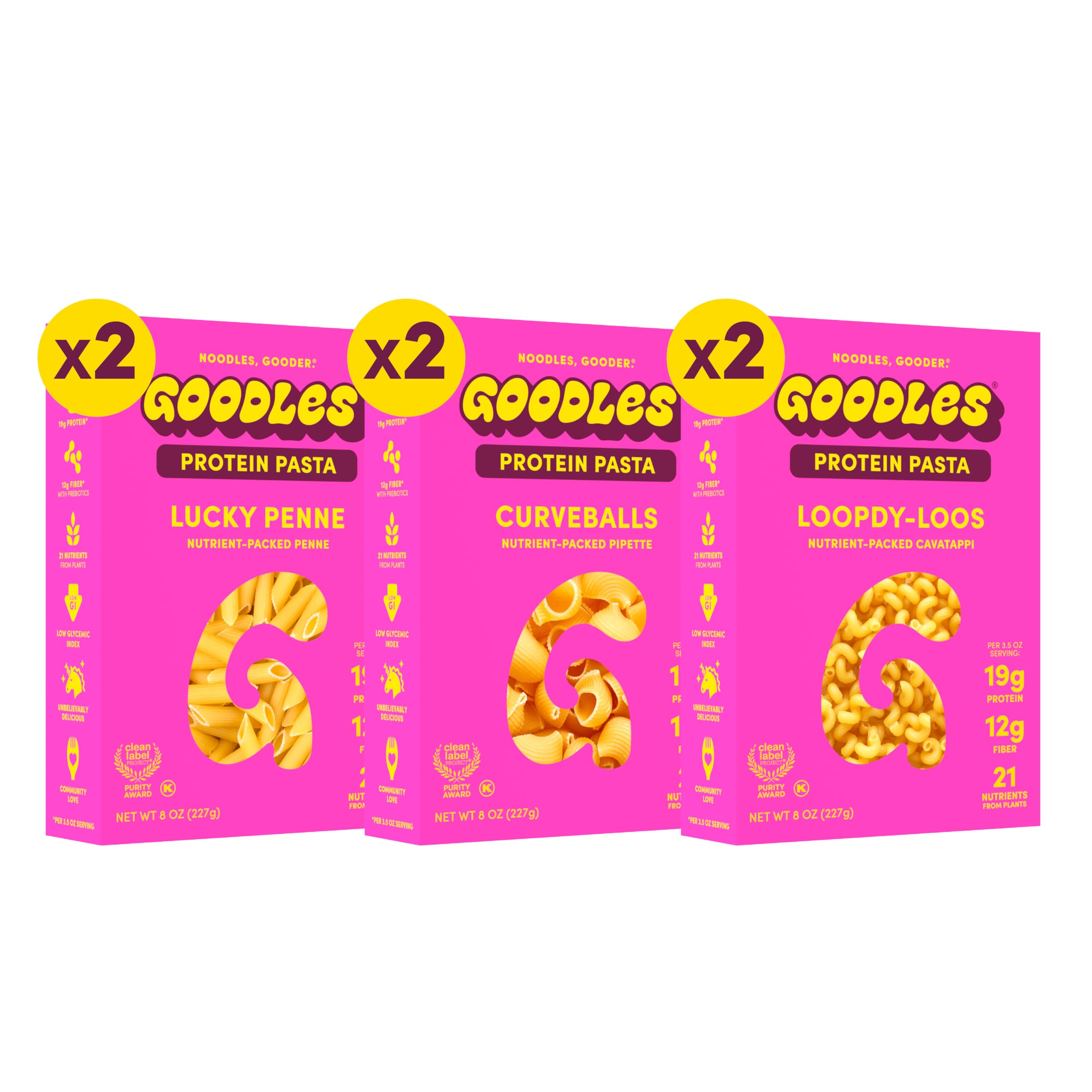
GOODLES Pasta Variety Pack

GOODLES

GOODLES Pasta Variety Pack

  • Fiber 12g with prebiotics
  • Package Six 8 oz boxes
  • Protein 19g per serving
  • Certification Clean Label Project
Check Price on Amazon

GOODLES is the box we bring out when there's a skeptic at the table — a kid, a teenager, a partner with opinions about health food. It's the least noticeable swap here: 19 grams of protein and 12 grams of fiber with prebiotics folded into pasta that tastes like the boxed pasta it's replacing, with no cardboard aftertaste and no gummy bite.

The variety pack gives you three shapes — penne, curves, and loops — which matters more than it sounds when you're cooking for children with views on such things. It's Clean Label Project certified too, screened for contaminants, which is unusual in this aisle. Where it gives ground to our top pick is the base: this is fortified wheat rather than a legume pasta, so part of the nutrition is added rather than built in. It also isn't positioned as gluten-free, so check the label if that's your requirement.

Bottom Line

The pick for households with picky eaters: 19 grams of protein and 12 grams of fiber in pasta nobody will question, with added nutrition rather than a legume base.

Check Latest Price

Best Overall

Our Score 9.2/10
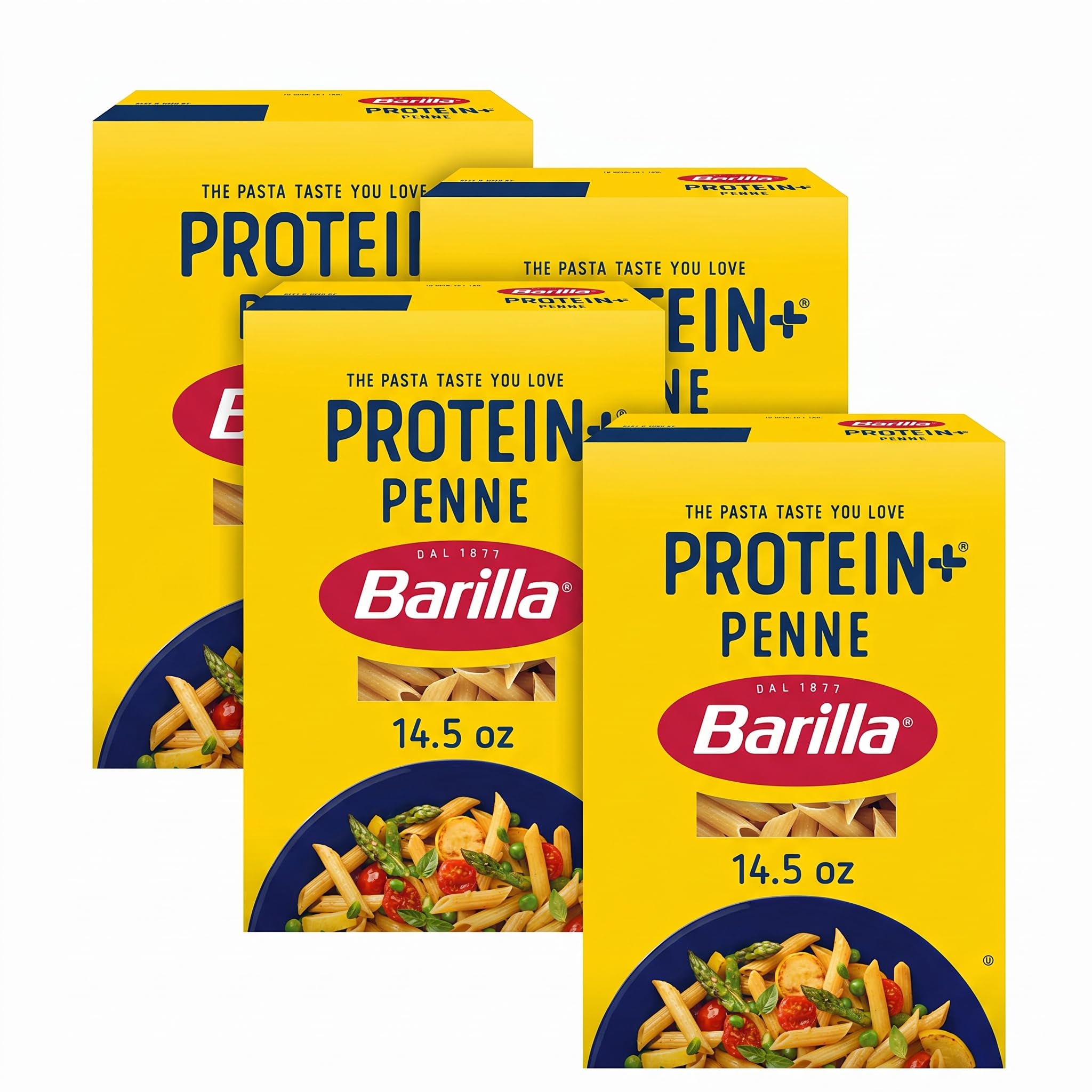
Barilla Protein+ Penne

Barilla

Barilla Protein+ Penne

  • Package Four 14.5 oz boxes
  • Protein 17g per 3.5 oz serving
  • Servings About 7 per box
  • Protein Source Lentil flour, pea protein, chickpea flour
Check Price on Amazon

Familiar penne texture, plant protein, and the lowest cost per plate in this group.

Pound for pound, this is the cheapest protein pasta in our group, and it's also the one that behaves most like the box you grew up with. The penne comes out firm at eight or nine minutes, holds its ridges, and doesn't slump when we fold it into a heavy ragù or reheat it the next day. Against the legume pastas here, it's the least demanding thing you can put in a pot.

The protein is plant-based — lentil flour, pea protein, and chickpea flour — at 17 grams a serving, with fiber alongside. We noted one thing worth knowing before you compare boxes: that 17 grams is measured on a 3.5-ounce dry serving, not the two-ounce serving the box divides into, so a normal weeknight bowl lands well under the headline. It's still meaningfully more protein than plain semolina, and you don't pay for it in flavor.

Where it wins is the calculation nobody wants to do twice. This is a box you can keep on the shelf and cook on a Tuesday, not one you save for a health kick, and the four-pack format makes it a genuine restock rather than a sampler. It also means you can serve it to people who never asked for protein pasta and hear nothing about it, which is more than most of this group can claim.

It contains wheat, so gluten-free households need one of the single-ingredient picks instead. And 17 grams isn't the biggest number on this page — if that's your priority, the edamame fettuccine wins outright. For everyone else the trade is a good one: protein pasta's hardest job is tasting like pasta, and this is the box that does it while staying the cheapest per plate.

Bottom Line

If you want one box of protein pasta the whole household will eat without comment, this is it — familiar penne texture, real plant protein, and the lowest cost per plate here.

Check Latest Price

Highest Protein

Our Score 9.2/10
The Only Bean Edamame Fettuccine

The

The Only Bean Edamame Fettuccine

  • Package Six 8 oz boxes
  • Protein Over 40g per 3.5 oz serving
  • Cook Time 3 to 5 minutes
  • Protein Source Organic edamame
Check Price on Amazon

Over 40 grams of plant protein and a three-minute cook — the fastest dinner here.

Three to five minutes in boiling water is all this needs, which makes it the fastest dinner in this group by a wide margin and the easiest sell on a night when nobody wants to cook. That short window is also the thing to respect. Edamame pasta goes from firm to soft in a hurry, so set a timer and taste early rather than drifting past the pot.

The payoff is the biggest protein number here: over 40 grams per 3.5-ounce serving, plus 19 grams of fiber, from a single ingredient — organic edamame. We were surprised by how much substance the ribbons have. They carry a heavy ragù without disintegrating and, unusually for a bean pasta, they're still al dente as leftovers the next day.

The trade-offs are narrow but real. There's an earthy, beany flavor underneath that a butter-and-Parmesan finish or a vinegar-based dressing flatters and a delicate cream sauce does not, so sauce choice matters more here than with the wheat-based picks. If you're vegetarian and training hard, or you simply want the most protein per forkful, that won't register as a problem.

Bottom Line

The highest protein count here by a mile, and the fastest to cook — buy it if the number matters more to you than a neutral, wheaty flavor.

Check Latest Price

Best Texture

Our Score 9.2/10
Brami Italian Protein Pasta

Brami

Brami Italian Protein Pasta

  • Package Three 12 oz boxes
  • Protein About 21g per 3.5 oz serving
  • Net Carbs 25% fewer than regular pasta
  • Protein Source Durum semolina and lupini beans
Check Price on Amazon

Two ingredients, semolina and lupini beans, and the closest texture to real pasta.

Two ingredients: Italian durum semolina and lupini beans. That's the entire list, and it's why this is the pick that reads as wheat pasta first and protein pasta second. The noodles are bronze-cut, which leaves a rougher surface, and you can feel it — sauce clings instead of pooling in the bottom of the bowl.

The lupini beans carry the nutrition: about 21 grams of protein per 3.5-ounce serving, three times the fiber of regular pasta, and 25 percent fewer net carbs. Because the base is still semolina, it cooks like semolina — al dente at the box time, no gumminess, and it reheats without turning to paste. That's rarer than it should be in this category.

We rank it just behind our top pick, and not for anything that happens in the pot. On texture, nothing here is closer to the real thing, and the flavor is clean enough that a plain tomato sauce is enough. The gap is practical: it costs more per plate, and the semolina base rules out the gluten-free kitchens that the legume picks serve.

Bottom Line

If every protein pasta you've tried has felt like a compromise, start here: two real ingredients, a proper al dente bite, and 21 grams of protein a serving.

Check Latest Price

Best Gluten-Free

Our Score 9.0/10
Banza Chickpea Pasta

Banza

Banza Chickpea Pasta

  • Package Six 8 oz boxes
  • Protein 20g per serving
  • Gluten-Free Yes
  • Protein Source Chickpea flour
Check Price on Amazon

Gluten-free standard: 20 grams of protein and a good chew, pulled early.

Chickpea pasta has a reputation problem, and Banza is the brand that both created it and doesn't fully deserve it. Twenty grams of protein a serving, three times the fiber of regular pasta, and a texture that's genuinely good — if you pull it a minute before the box says. Leave it in the water and you get the grainy, collapsing bowl that turns people off bean pasta for good.

The timing is the whole game, and it's worth saying plainly: chickpea pasta keeps cooking after it hits the colander. We drain it while there's still a little chalk at the center and let a hot sauce finish the job, which is the difference between a bowl worth serving someone and one headed for the trash.

Doing that opens up more than a plain bowl. It holds in a baked casserole and a cold pasta salad, and the penne and rotini shapes grab sauce properly instead of letting it slide. It's a genuinely useful gluten-free staple rather than a novelty — good enough that we keep a box around even when nobody in the house has to avoid wheat. The higher cost per serving is the honest reason it isn't our default.

Bottom Line

For gluten-free households, Banza is the chickpea pasta worth keeping stocked — 20 grams of protein and real fiber, as long as you pull it a minute early.

Check Latest Price

Best Single-Ingredient

Our Score 8.8/10
Barilla Red Lentil Rotini

Barilla

Barilla Red Lentil Rotini

  • Fiber 11g per 3.5 oz serving
  • Protein 25g per 3.5 oz serving
  • Cook Time 8 minutes, plus 1 to 2 for tenderness
  • Protein Source Red lentil flour
Check Price on Amazon

One ingredient, 25 grams of protein, and a noodle best suited to soups and bakes.

Red lentil pasta is where texture usually goes wrong, and this rotini is no exception: cook it past al dente and the pieces go grainy, then start breaking up in the water. We're recommending it anyway, because the ingredient list is one item long and the protein number is 25 grams a serving.

So cook it like you're expecting trouble. Salt the water heavily, set a timer for eight minutes, and start tasting at seven — the box allows one to two extra minutes for tenderness, and that's exactly the window where the mush happens. Drain it early and finish it in a hot sauce rather than letting it sit and steam itself soft.

What you're buying is the cleanest label in this group: red lentil flour and nothing else, no gums or starches propping up the structure. Twenty-five grams of protein and 11 grams of fiber per 3.5-ounce serving, gluten-free, vegan, and non-GMO. It also happens to be the best of these in soup — a broken rotini in minestrone is not something anyone notices.

It isn't the box for a fork-twirling pasta night; Brami and Barilla Protein+ both do that better. It is the box for minestrone, a cold lentil salad, a baked dish where the sauce does the work, or a gluten-free household that wants the shortest ingredient list on the shelf. Those are narrower asks, and for them we haven't found better.

Bottom Line

Buy it for soups, bakes, and cold salads rather than a plain bowl — one ingredient, 25 grams of protein, and a noodle that needs watching.

Check Latest Price

How We Tested Protein Pasta

We started by pulling every box we could find on shelf and online — 41 in all — and reading labels before cooking anything. Anything under 10 grams of protein per serving, anything listing wheat flour ahead of its legume flour, and anything priced so high per ounce that one dinner cost more than a steak got cut. We also noted fiber and sodium per serving and whether the protein came from whole legumes or an isolate, since those numbers tell you more about a box than the front-of-package claims do. That left 16 boxes — lentil, chickpea, soy, and protein-enriched wheat pastas, several of them gluten-free — which my team and I cooked at least three times each over three months.

Cooking happened in my kitchen on weeknights, on a timer, in salted water, following each box exactly. Then we deliberately cooked a second batch two minutes past the stated time to see which noodles forgave us and which turned to paste. Every shape was tasted plain first, then with olive oil and garlic, then under a heavy tomato sauce, because a noodle that only works bare isn't one you'll keep buying. Texture was judged on the first bite: springy, mealy, or slick.

The next-day test mattered as much as the hot one. Each batch went into a cold pasta salad with vinaigrette and sat overnight in the fridge; the ones that stayed separate and firm earned points for versatility, and the ones that clumped into a brick did not. We weighed dry portions to compare protein per serving against cost per gram, since a 20-gram noodle at twice the price isn't a bargain. Gluten-free boxes were cooked in a clean pot with a clean colander and checked for the grittiness and falling-apart that plague that aisle.

How to Choose the Right Protein Pasta

Start With the Protein Source, Not the Count

The base ingredient decides almost everything about how a protein pasta behaves in the pot. Chickpea and lentil flours have no gluten to build structure, so they soften fast and break down under long heat — fine in soup, less fine on a fork. Egg and semolina, or semolina fortified with lupini, keeps a firm bite because the wheat is still doing its job. Edamame is its own case: firm and substantial, with an earthy flavor that needs a sauce with some backbone.

So pick the base that matches the dish first, then compare numbers. If you want a bowl you can twirl and sauce heavily, look at the semolina-based picks. If you're cooking a bake, a minestrone, or a cold salad, the legume flours are the better tool and their softness stops being a flaw.

Cook It Shorter Than the Box Says

Nearly every protein pasta here keeps softening after it leaves the water, and several have cook times that drift with the batch. Salt the water properly, set a timer a minute under the box time, and start tasting early. Drain it while there's still a hint of chalk at the center and finish it in the pan with the sauce — the residual heat does the last of the work, and the starch that would have gone down the drain thickens what you're eating instead.

Do the Servings Math

Protein pasta rarely comes in a one-pound box. Several picks here are eight ounces, which is half the pasta you'd normally cook for four, and a six-pack of eight-ounce boxes gets you closer to five standard boxes than six. Divide the price by the servings you'll actually get and the ranking shifts: our fortified wheat pick is the least expensive per plate by a wide margin, while the single-ingredient and egg-based ones run roughly double to triple that.

That math is also the honest answer to whether a box is worth it. A pasta you cook twice a week needs to survive the cost comparison; one you keep for a specific dish doesn't.

Match the Shape to the Dish

Shapes stop being cosmetic once the base isn't wheat. Long ribbons and fettuccine carry cream and ragù and hold up to twirling; short rotini and penne are the safer bet for bakes, pasta salads, and soups, where a piece that softens is less noticeable. Small shapes matter for a different reason — they're what gets eaten without argument by children, which is exactly where the fortified wheat pick earns its place in a rotation.

Know Which Claims You Actually Need

Gluten-free isn't automatic in this category. Chickpea, lentil, and edamame pastas are; egg pasta, lupini-fortified semolina, and fortified wheat pasta are not. If someone in the house has celiac disease, buy only packages marked gluten-free rather than assuming a high-protein pasta is wheat-free.

Low-carb positioning deserves the same scrutiny. Some picks state a gram count for net carbs on a small serving; others state a percentage below regular pasta. Read the panel for the portion you'll eat rather than the badge on the front.

Frequently Asked Questions

Final Verdict

Barilla Protein+ is the box we tell people to buy first, and the reason is that it asks nothing of you: the same eight-minute cook, the same firm bite, the same sauce coverage as the penne you already know, with plant protein and fiber built in and the lowest cost per plate here. That's what makes it the one you can keep in the pantry rather than save for a health kick.

Change one requirement and the answer changes. For a gluten-free kitchen it's Banza, for a texture-first eater it's Brami, and for the biggest number on the label it's The Only Bean. Nobody needs four boxes open at once — buy the one that matches the constraint you actually have.