Nutrition & Supplements

Best Organic Protein Powder of 2026

Organic protein powder asks you to pay more for a label you can't taste — and too often, it tastes like the label. There's the grassy edge of hemp, the chalky film brown rice leaves on your tongue, the scoop that somehow turns a smoothie into penance. The good ones earn that premium back in ways that go beyond flavor: shorter ingredient lists, protein from actual plants instead of a proprietary blend, and a scoop that dissolves rather than sinking to the bottom of the shaker.

Taste is the first test any powder has to pass in my kitchen, but it isn't the only one. Over the past three months I worked through 14 organic protein powders — shaken with water after workouts, blended with frozen banana and spinach, stirred into oatmeal on mornings when I couldn't be bothered — and the spread in texture and real value per tub surprised me. A serving size printed on a label is rarely the serving you actually scoop, and once you work out grams of protein per dollar, some of the priciest tubs come out ahead. The picks below are the ones that held up on every count.

Best Unsweetened

Our Score 9.2/10
Sprout Living Pumpkin Seed Protein

Sprout Living

Sprout Living Pumpkin Seed Protein

  • Flavor Unflavored
  • Certification USDA Organic
  • Protein Source Organic pumpkin seed
  • Protein Per Serving 0.71 oz
Check Price on Amazon

One ingredient and no sweetener, so you decide what the shake tastes like.

The ingredient list is one word long. Sprout Living's powder is cold-pressed organic pumpkin seed and nothing else, with no gums, no fillers, no stevia, and no flavoring, and a scoop still delivers 20 grams of complete protein with all nine essential amino acids. For anyone who reads labels before buying, that is the shortest read in this roundup.

It is also the pick for people who do not want a sweet shake at all. Straight, it tastes faintly nutty and finishes clean, which makes it the easiest powder here to fold into something else: cocoa and banana in a smoothie, or a spoonful stirred into oatmeal where you would rather not taste protein. We like it most for exactly that. It is an ingredient rather than a beverage.

Texture is where it asks something of you. In a blender it comes out smooth enough; shaken in water it stays grainy, and no amount of extra rattling fixes that. Go in expecting to blend, and the trade you are making, one ingredient and nothing to react to, is a fair one.

Bottom Line

Our pick for anyone who does not want a sweet shake: a single organic ingredient, 20 grams of complete protein, and no gums or sweeteners.

Check Latest Price

Best Overall

Our Score 9.0/10
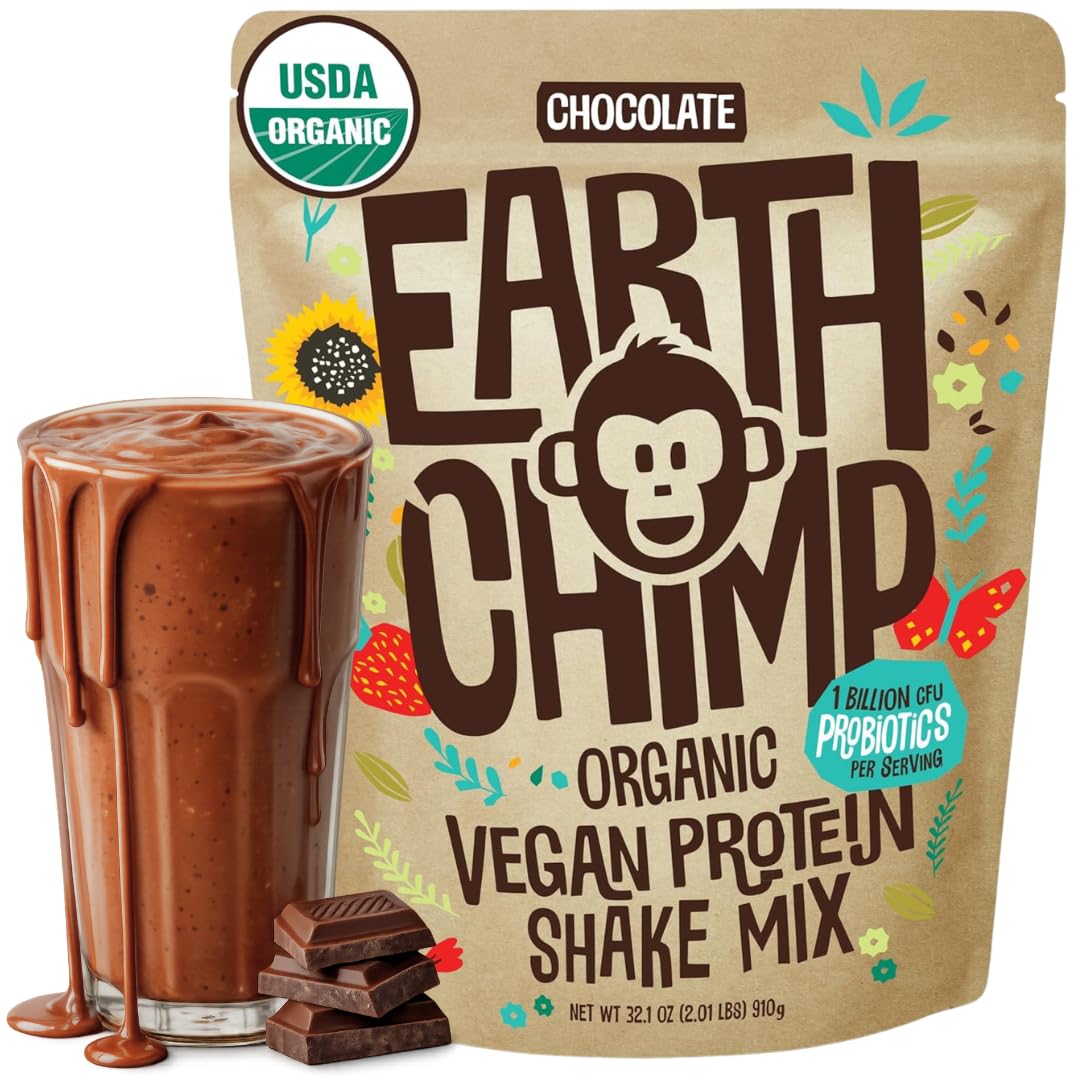
EarthChimp Organic Vegan Protein, Chocolate

EarthChimp

EarthChimp Organic Vegan Protein, Chocolate

  • Extras 1 billion CFU probiotics
  • Sweetener Monk fruit
  • Certification USDA Organic
  • Protein Per Serving 0.71 oz
Check Price on Amazon

Smooth, cocoa-forward chocolate with monk fruit sweetness, the tub we actually finish.

Chalky is the word that usually ends a plant protein for us. The first shake is fine, the fifth is a chore, and by the end of the tub you are drinking it out of obligation. EarthChimp's chocolate is the one here that never became a chore: 20 grams of plant protein that goes into a shaker with cold milk and comes out smooth, with cocoa that reads dark rather than candy-sweet. That is why it is our top pick. In a category where texture is the usual dealbreaker, this is the tub we reach for without thinking.

The sweetness is doing most of the work. Instead of stevia or a sugar alcohol, there is organic cocoa with a little monk fruit and dates, and it lands like a chocolate drink rather than a supplement wearing chocolate flavor. We have had plant proteins where the sweetener arrives a beat after everything else and then lingers for a minute; this one finishes clean. No erythritol, no carrageenan, no artificial flavoring, and no added sugar.

What we noticed beyond taste is how it sits. A 35-gram scoop carries 4 grams of fiber, 120 calories, and a billion CFU of Bacillus coagulans, and it is the pick we hand to people who like the idea of plant protein but not the heavy hour that sometimes follows it. It is dairy-, gluten-, and soy-free and certified vegan, so it also works for anyone leaving whey behind.

What keeps it in the rotation is how little it demands. It does not need a blender, since a bottle and a ball of wire will do, and it holds its flavor when you add frozen banana or a spoon of peanut butter instead of turning thin and bitter. If you drink one shake a day, that reliability is the whole purchase.

Bottom Line

We recommend EarthChimp to anyone who wants an organic plant protein they will actually finish: the chocolate tastes like cocoa rather than sweetener, and it shakes smooth. Worth it if you drink shakes most days.

Check Latest Price

Best Value

Our Score 9.0/10
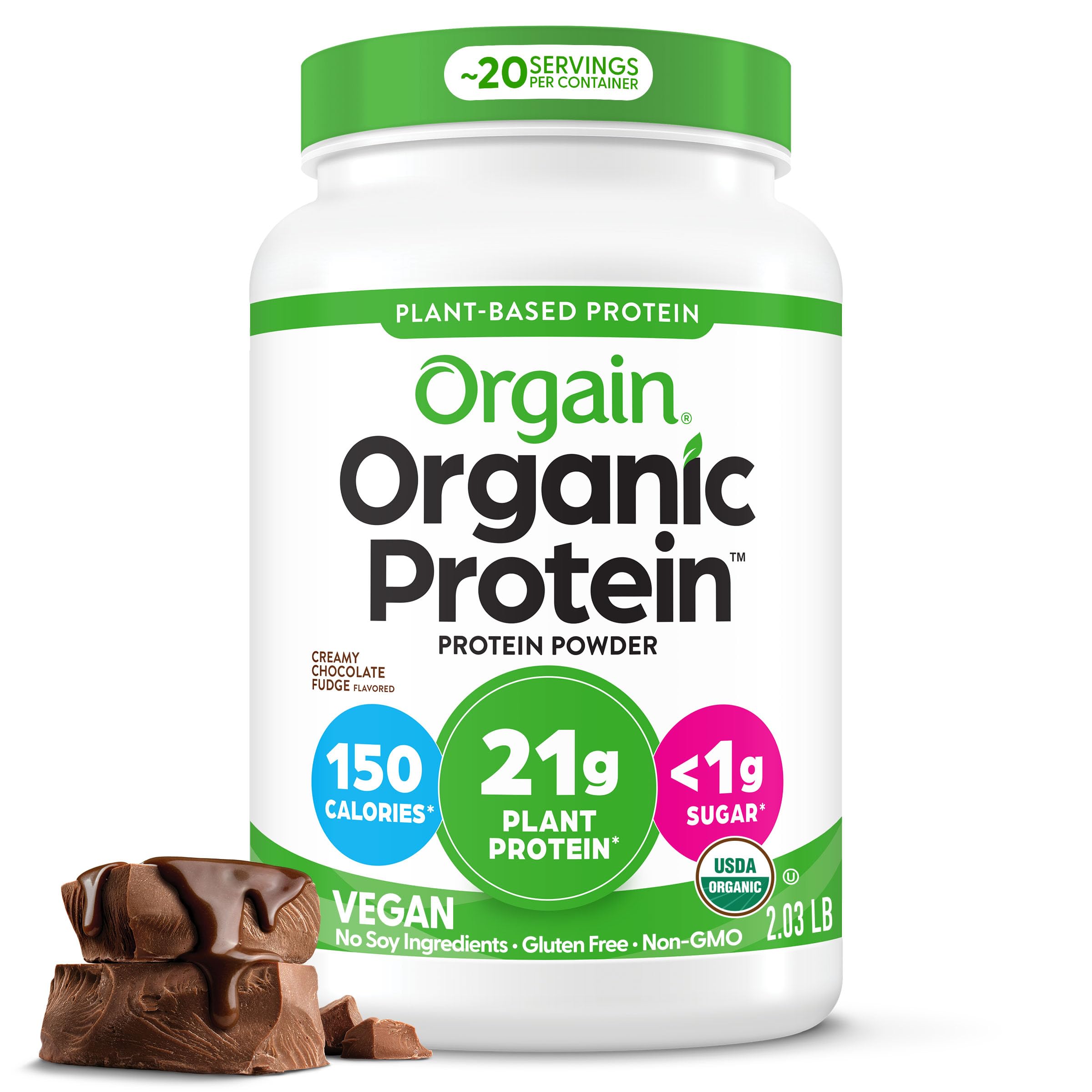
Orgain Organic Vegan Protein, Chocolate Fudge

Orgain

Orgain Organic Vegan Protein, Chocolate Fudge

  • Certification USDA Organic
  • Protein Sources Pea, brown rice, chia
  • Sugar Per Serving 0g
  • Protein Per Serving 0.74 oz
Check Price on Amazon

The lowest cost per pound here for 21 grams of organic plant protein.

If you want organic plant protein without paying a premium for the privilege, start here. Orgain's chocolate fudge is the lowest cost per pound in this group, and it still gets you 21 grams of complete protein from peas, brown rice, and chia, zero grams of sugar, and a USDA Organic seal. That combination is why it is our value pick rather than an also-ran.

It is at its best in a blender. With milk and a frozen banana it turns thick and creamy, and the chocolate reads like cocoa rather than flavoring. Shaken in water it is a different drink, grainy and thinner than the flavor suggests, so this is the tub we keep for mornings with ninety seconds and a blender, not the ones where we are running out the door.

What it has going for it beyond price is range. It disappears into a smoothie with peanut butter, it is the tub we are least precious about spooning into oatmeal, and it does not fight the other ingredients in the cup. A formulation with no erythritol, no carrageenan, and no soy ingredients also makes it easy to hand to a household with mixed dietary rules.

Bottom Line

The lowest cost per pound in this group for 21 grams of complete organic plant protein and zero sugar, and the tub to buy if you drink shakes daily.

Check Latest Price

Best for Sensitive Stomachs

Our Score 9.0/10
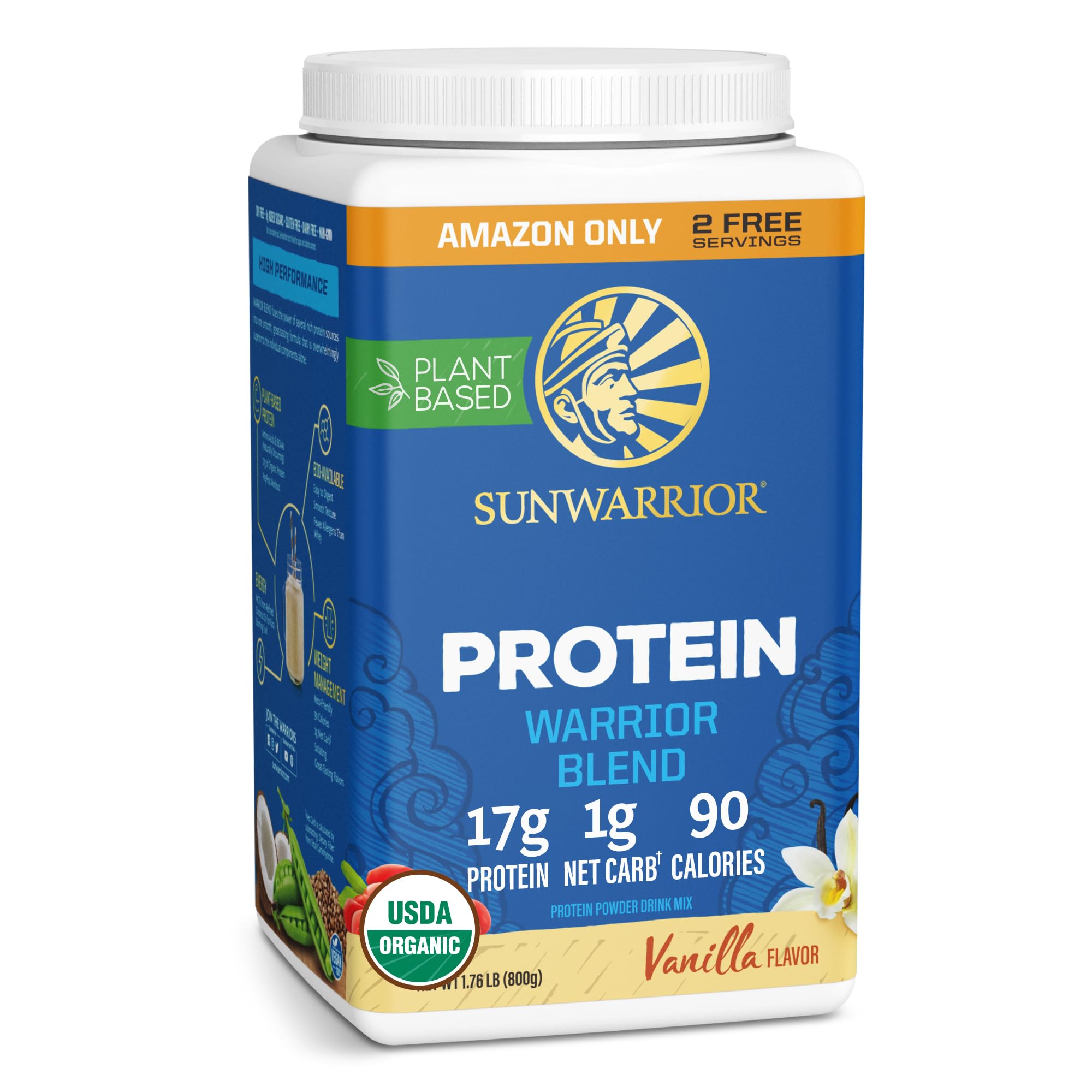
Sunwarrior Organic Plant Protein, Vanilla

Sunwarrior

Sunwarrior Organic Plant Protein, Vanilla

  • Flavor Vanilla
  • Servings 32
  • Amino Profile Similar to whey
  • Certification Organic
Check Price on Amazon

Gentle, restrained vanilla with a whey-like amino profile for athletes switching over.

If whey stopped agreeing with you and plant proteins have been a gamble since, Sunwarrior's vanilla is the one to try first. It is a blend of several plant proteins rather than a single pea base, with an amino acid profile close enough to whey that the switch feels less like a compromise, and 32 servings to a tub. For anyone counting protein around training, that profile is the reason to pay attention.

The vanilla is restrained, closer to a light custard than a milkshake, and it mixes clean in a smoothie with banana and almond milk. What we keep coming back to is how it behaves afterward: no bloating, no heavy hour, which is not something we can say for every plant powder we have tried. That is why it holds a place in a guide that already contains cheaper options.

The weakness shows up when you skip the blender. Shaken in water it can finish chalky, and the fix is more liquid and something frozen in the cup rather than more shaking. Otherwise it is a quiet, well-behaved powder that does not call attention to itself, which for something you drink every morning is close to the highest compliment we can give.

Bottom Line

We point anyone with a sensitive stomach toward Sunwarrior: it is the easiest of these to digest, the vanilla stays restrained, and the amino profile mirrors whey.

Check Latest Price

Best High-Protein

Our Score 8.8/10
Orgain Organic 30g Protein, Vanilla

Orgain

Orgain Organic 30g Protein, Vanilla

  • Certification USDA Organic
  • Fiber Per Serving 4g prebiotic
  • Sugar Per Serving 0.04 oz
  • Protein Per Serving 1.06 oz
Check Price on Amazon

Thirty grams a scoop for lifters who want organic protein in one serving.

Thirty grams is the number that makes this tub worth a look. Most organic plant proteins here land at 20 or 21 grams a scoop; Orgain gets to 30 with peas, brown rice, and mung bean, plus 4 grams of prebiotic fiber and a single gram of sugar, in a 200-calorie serving. If you are lifting seriously, or you are short on protein at the end of the day, that is a meaningful jump over the rest of the field.

The trade is in the glass. The shake comes out thick, and the powder needs more liquid than you would guess, so in a bottle with water it is closer to a slurry than a drink. Blended with milk and ice it is better, though still not the smoothest texture here. Give it room in the cup and it behaves.

Our take is that this is a protein-first powder, not a treat, and it earns its place only if the number is what you are after. Set it beside Orgain's own 21-gram chocolate and the difference is clear: that one is the nicer drink, this one is the bigger protein hit in a category that otherwise tops out around 22 grams. If hitting a target is the reason you are shopping, this is the shortcut; if you want a shake to look forward to, buy the chocolate.

Bottom Line

The highest protein per serving in this group, and the one we hand a lifter who wants organic: 30 grams a scoop plus prebiotic fiber.

Check Latest Price

Best For Protein plus greens

Our Score 8.6/10
Garden of Life Raw Protein & Greens

Garden of Life

Garden of Life Raw Protein & Greens

  • Servings 20
  • Certification USDA Organic
  • Greens Per Serving Six organic vegetables
  • Protein Per Serving 0.71 oz
Check Price on Amazon

Two tubs become one here: 20 grams of plant protein from organic peas, sprouted grains, and legumes, plus six organic vegetables and greens, including spinach, kale, broccoli, alfalfa grass, carrot, and beet, all in a scoop of vanilla. If a greens powder is already part of your morning, the appeal is obvious. One less scoop, one less jar, one less step before you leave the house.

The greens are also why it is not the smoothest drink in this guide. There is a vegetal edge under the vanilla, and the powder lands chalky if you only shake it. Blended with almond milk and frozen berries it is fine, since the fruit covers the greens and the texture smooths out, but it is a powder that wants a blender in a way our top picks do not.

We still keep a tub around for mornings when convenience beats everything else. Twenty servings to a container means it goes quickly if you use it daily, and the certifications are the ones worth having: USDA Organic, Non-GMO Project Verified, and NSF Certified Gluten-Free. It is the pick when the greens are the point rather than an add-on.

Bottom Line

For anyone who already buys a greens powder, this replaces two tubs with one: 20 grams of organic plant protein and six organic vegetables in a single scoop.

Check Latest Price

How We Tested: Three Months, 14 Tubs, One Shaker Bottle

We started with a list of more than 60 organic powders and cut it down before buying anything. Anything without a USDA Organic seal was out, as was anything that wouldn't disclose where its protein came from or how it was screened for heavy metals. From there we compared protein per scoop, servings per tub, and price per serving, then bought 14 tubs spanning plant-based blends, single-source pea and rice, hemp, and organic whey.

Testing ran about three months and followed a real routine rather than a lab bench: a shaker bottle with 8 ounces of water after a morning workout, a blender smoothie with frozen banana and spinach a few times a week, and the occasional spoonful stirred into oatmeal. For blendability, we shook for 10 seconds, poured, then checked the bottom of the bottle for the clumps that always settle there, and let each shake sit 10 minutes to see whether it thickened or separated. Every powder was tasted plain in water first — the honest test — before we judged it in a smoothie.

We also weighed each scoop on a kitchen scale, because a leveled scoop rarely matches the printed serving size, and used that to calculate real servings per tub and cost per 25 grams of protein. Effectiveness came down to notes kept over weeks: how long a shake stayed with us, whether the texture made us stop halfway through the glass, and how our stomachs handled the fiber and gums in the plant-based blends. Texture notes were deliberately blunt — gritty, chalky, slick, or genuinely creamy — since that is usually what decides whether a tub gets finished.

How to Choose

Check the seal, then read past it

USDA Organic tells you how the peas, rice, or seeds were grown and which synthetic inputs were left off them. It says nothing about whether the powder dissolves, tastes good, or suits your stomach. Treat the seal as the entry ticket and put the rest of the label to work: the plant sources, the sweetener, the gums, and any probiotic or greens blend.

One practical warning: organic does not mean allergen-free. Some blends here omit soy, dairy, and gluten entirely; others make fewer promises. If you are avoiding one of those, read the allergen statement on the back rather than the marketing on the front.

Pick your sweetener before your flavor

Sweetness is the complaint that comes up most in this category, and it is almost never about sugar, because most of these powders contain none. It is about what stands in for it. Stevia can finish bitter or metallic for some drinkers; monk fruit, which our top pick uses, lands rounder and then fades. An unsweetened powder hands the whole decision to you.

Do not read 0g sugar as unsweetened, either. It only means the sweetness comes from something other than sugar, and that something is what you will taste a second after the cocoa.

Look at the scoop, not just the protein number

Thirty grams per serving sounds better than twenty until you notice it takes two large scoops to get there, which also means the tub empties faster and the shake comes out thicker. Protein per serving tells you half the story; scoop size and servings per container tell you how far the tub goes.

Compare cost by the pound or by the serving rather than by the tub. Package sizes here run from a single pound to just over two, and the smallest tub on this page costs about as much as the biggest one.

Texture is the spec nobody prints

Plant proteins do not behave like whey. Pea and brown rice blends come out smoothest, pumpkin seed is the grainiest of the lot, and gums such as acacia get added to make any of them feel creamier. The trap is judging a powder from a smoothie, because almost anything disappears in a blender with frozen fruit.

If you plan to shake in water at a desk, expect some grain, use more liquid than the label suggests, and drop a shaker ball in. Cold liquid and a minute of sitting before you drink both help the powder hydrate.

Decide what the extras are worth

Probiotics, digestive enzymes, prebiotic fiber, superfoods, greens: the add-ons are where the price difference lives. Some earn their keep. Four grams of fiber makes a shake feel like food, and live cultures are a reasonable bet if plant powders tend to sit heavily on you.

Others are a smaller return. Greens are worth paying for only if you would otherwise buy a greens powder, and a superfood blend rarely changes what the shake does for your day. Buy the formulation you will actually drink, because an inexpensive tub you finish beats a premium one you abandon.

Frequently Asked Questions

Final Verdict

EarthChimp's chocolate is the tub we buy again: organic, 20 grams of plant protein, sweetened with monk fruit rather than stevia, and smooth enough to drink from a shaker without hauling out the blender. It costs more than the rest, which is the honest case against it.

If budget is the constraint, Orgain's chocolate fudge delivers organic plant protein at the lowest cost per pound here, provided you blend it. Sunwarrior is the one for a stomach that objects to everything else. Buy the one you will finish.