Strength & Weights

Best Lifting Hooks of 2026

The worst place to find out your grip has limits is the last rep of a heavy deadlift. Your back and legs have more to give, your forearms have already voted, and the bar starts sliding. Lifting hooks fix that specific problem: a steel hook hangs off a wrist strap, the bar settles into the curve, and the load travels up your arm instead of through your fingers. A badly made pair feels like a handcuff with a hook welded on.

I've owned plenty of pairs, and the details that matter only show up under load: how deep the hook sits, whether the strap spins around your wrist mid-set, how the padding holds up through 40 minutes of pull-ups. We spent six months with 12 pairs, on heavy deadlift days and high-volume back work, and the good ones share a few habits. Worth knowing: hooks are quicker in and out than straps but less forgiving on lifts where your wrists need to move freely, so most lifters keep both in the bag. The picks below earned their place.

Best 3-In-1

Our Score 9.0/10
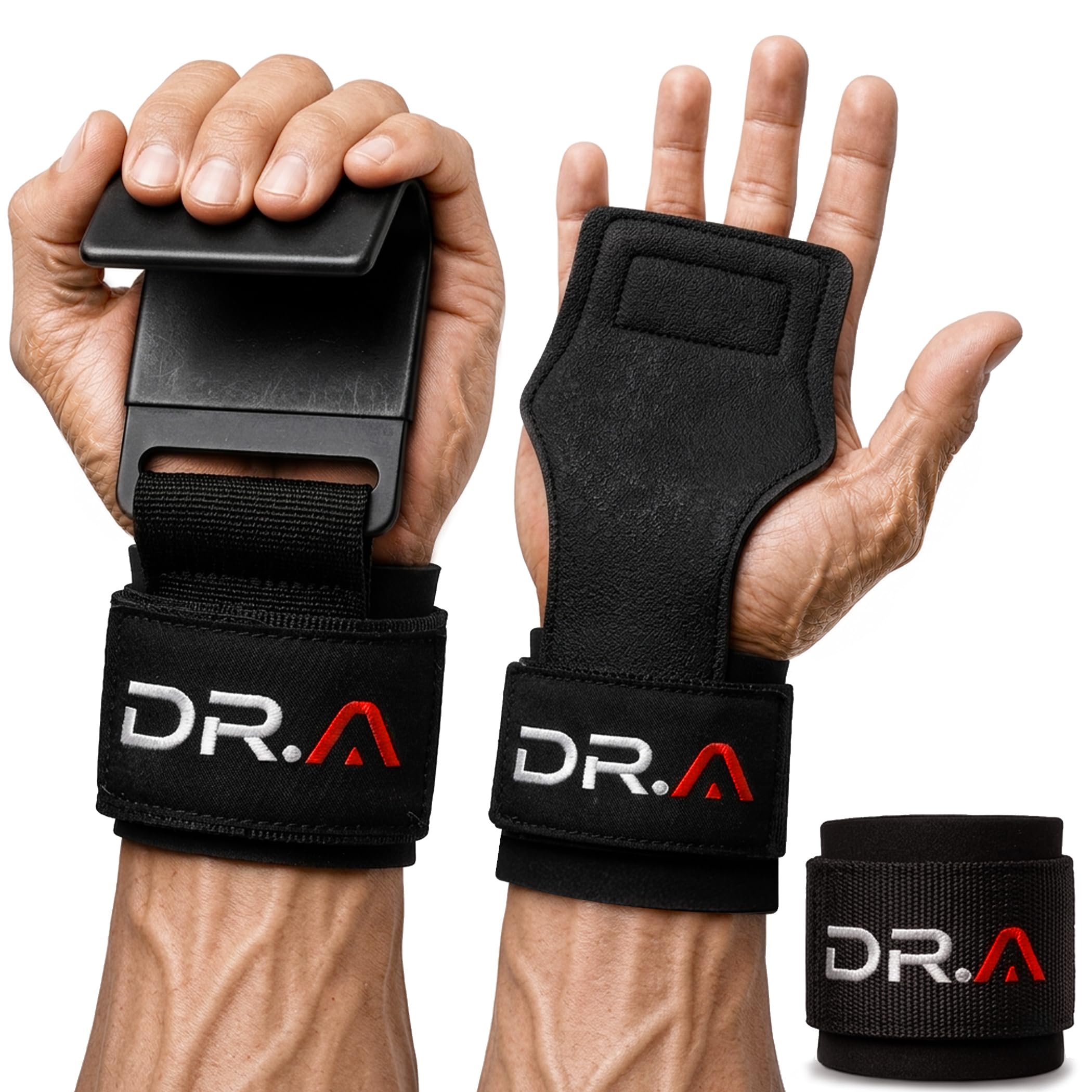
Dr. Arthritis 3-in-1 Lifting Straps

Dr.

Dr. Arthritis 3-in-1 Lifting Straps

  • Modes Hooks, straps, wrist wraps
  • Material Neoprene, synthetic leather, stainless steel
  • Fastening Adjustable Velcro
Check Price on Amazon

Hooks, straps, and wrist wraps in one pair, so you can switch mid-session.

Three products in one pair is the whole pitch: the hook unclips and the cuff works as a plain lifting strap, and the removable wrap goes around your wrist for pressing days. The swap takes seconds, which is the part that matters — a convertible design that needed a minute of fiddling between exercises would end up living at the bottom of the bag.

The closure is the strong part. It's a wide Velcro cuff over padded neoprene, and it bites hard and stays where you set it, which is what keeps the hook under the bar. The fiddly bit is the thumb loop on the strap mode: it can twist as you pull the strap on, and a twisted loop digs in, so straighten it against your thumb before you cinch down.

What we keep coming back to is the logic of it. Most people shopping for hooks already own straps and have thought about wrist wraps, and this replaces all three for less than the priciest pair in this guide. The hook mode has no published load rating, which is the one thing we want to see added — for everything short of a maximal pull, the versatility is worth more than the missing number.

Bottom Line

If you want hooks, straps, and wrist wraps without carrying three things to the gym, this is the pair to buy.

Check Latest Price

Best Overall

Our Score 8.8/10
DMoose Fitness Lifting Hooks

DMoose Fitness Lifting

DMoose Fitness Lifting Hooks

  • Material Nylon, neoprene, steel
  • Hook Coating Non-slip
  • Wrist Padding 8 mm
  • Stated Capacity 500 lb
Check Price on Amazon

The most padded, most proven pair here for heavy pulling, with a 500 lb rating.

Eight millimeters of neoprene is a lot of cuff, and it's the first thing you feel with the DMoose pair — not as bulk, but as spread. Pressure from a loaded bar lands across the whole back of the wrist rather than in one line under the strap, which is the difference between finishing a set and shaking your hand out halfway through it.

The hardware backs the padding up. The hooks are rated to 500 lb, the coating on them grabs a knurled bar instead of skating along it, and the nylon strap is double cross-stitched where the hook meets the cuff — the seam that carries the load. On deadlifts and shrugs we stopped thinking about our hands entirely, which is the whole reason to own a pair of these.

What puts it ahead of the cheaper pairs is consistency. Nothing on this one asks you to compromise for something else: the padding doesn't bunch when you cinch it down, the hook doesn't need a particular bar diameter to sit right, and the cuff holds its tension between sets rather than creeping loose. The less expensive pairs here tend to be good at one of those and ordinary at the other two.

That's why it's our top pick. It isn't the cheapest pair in this guide and it doesn't do anything clever like switching modes; what it does is put the money into the three parts that decide whether a hook works — the cuff, the coating, and the seam. For heavy pulling, that's the trade we want.

Bottom Line

With 8 mm of padding and a 500 lb rating, this is the pair we hand to anyone who wants one less thing to think about on a heavy pull.

Check Latest Price

Best for Grip-Limited Lifters

Our Score 8.8/10
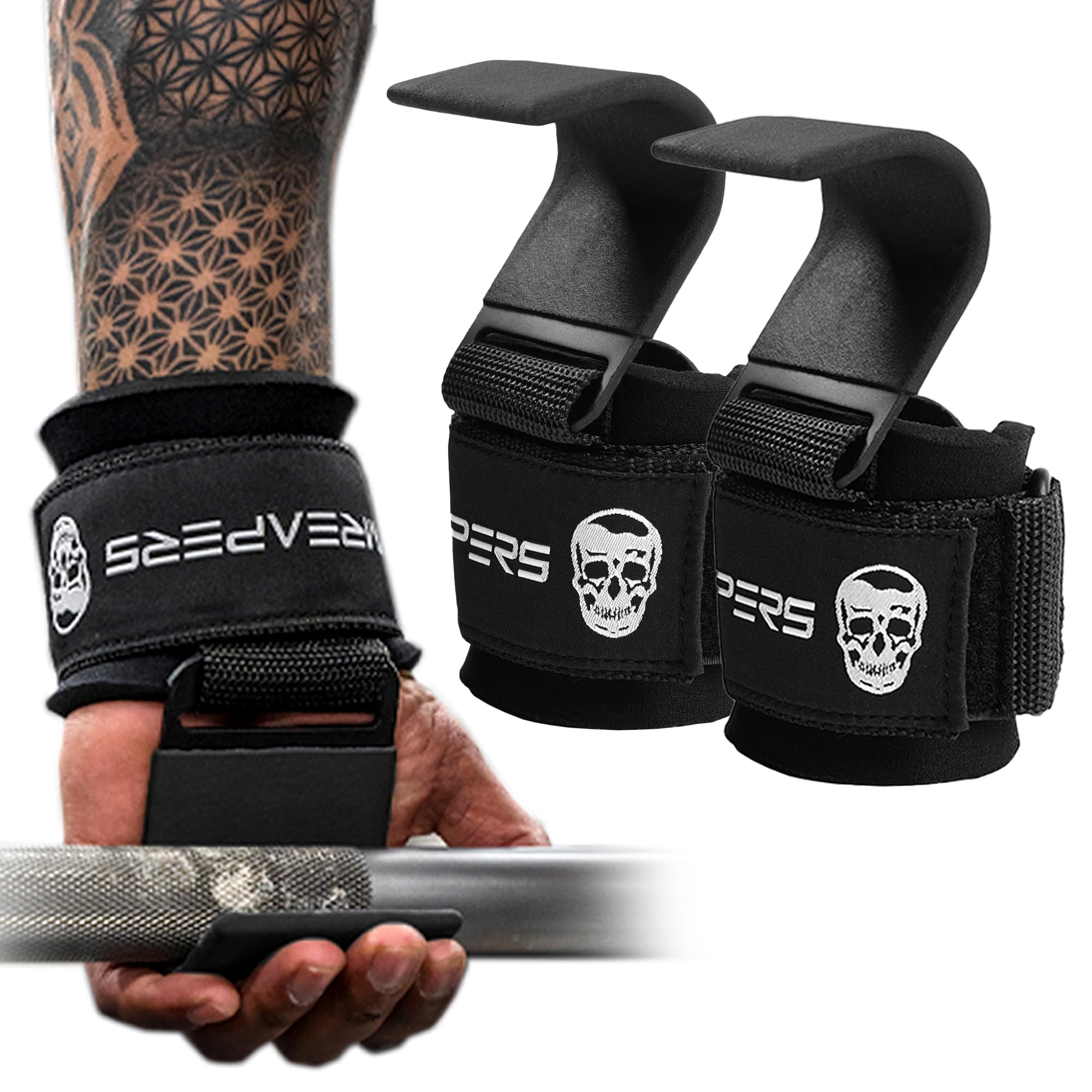
Gymreapers Weight Lifting Hooks

Gymreapers Weight Lifting

Gymreapers Weight Lifting Hooks

  • Hook Metal coated
  • Closure Hook and loop
  • Wrist Padding Neoprene
  • Stated Capacity 250 lb per hook
Check Price on Amazon

Rated 250 lb per hook and built for lifters whose grip quits first.

If your hands give out before your back does, the Gymreapers pair is aimed straight at you. The hooks are rated to 250 lb each, the cuff is neoprene-padded, and the closure is hook-and-loop — which sounds mundane until you're trying to get a pair on one-handed between sets at a crowded rack. On rows and lat pulldowns the hook takes the bar and your hand just steers it, which is exactly the trade you're buying.

We like them most for back-day volume rather than max attempts. The 250 lb per-hook rating is the lowest published figure among the pairs here that state one, and a grinding deadlift is not where this design is at its best; pulldowns, seated rows, shrugs, and machine work are. For that work they're comfortable through a full session, they adjust in a couple of seconds, and the strap stays where you set it before the set starts.

Bottom Line

For a lifter whose hands quit before their back does, these offload the pull to your wrists and keep a back-day set going.

Check Latest Price

Best For Budget all-rounder

Our Score 8.8/10
AmStaff Fitness Lifting Hooks

AmStaff Fitness Lifting

AmStaff Fitness Lifting Hooks

  • Hook Steel, non-slip coated
  • Closure Adjustable Velcro
  • Wrist Padding Neoprene
Check Price on Amazon

Nothing on the AmStaff pair is a design advance — a coated steel hook, an adjustable neoprene cuff, a hook-and-loop closure — and that's the appeal. It puts the money into the parts that matter and skips the rest, which is why it works as a straightforward everyday pair: on in a couple of seconds, comfortable across a full pull session, and steady on the bar while you work.

Build quality is where it earns its place. The coating on the hooks and the seams at the cuff hold up under regular use, and the padding is soft enough that a heavy set doesn't leave a mark across the wrist. It doesn't do anything the DMoose pair doesn't do, which is why it sits behind it here — but if you want the same job for less money, this is where we point.

Bottom Line

A sturdy, comfortable steel-hook pair with nothing clever about it — the pick when you want the basics done well for less.

Check Latest Price

Best For Home gym starters

Our Score 8.8/10
powerfeng Lifting Hooks

powerfeng Lifting

powerfeng Lifting Hooks

  • Hook Solid steel
  • Stitching Double stitched
  • Wrist Lining Chloroprene rubber
  • Listed Weight 1.15 lb
Check Price on Amazon

The strap is the detail that decides these. It runs long, and slack between the cuff and the hook turns into hang: the hook dangles lower before it catches the bar, and on a close-grip pull or a low row that's when it starts to skate instead of bite. Pull the strap tight enough that the hook sits right under your hand and the problem mostly disappears; leave it loose and you'll fight it for the whole set.

Underneath that, the powerfeng pair is more hardware than the price suggests: a solid steel hook, double stitching at the seam that takes the strain, and a thick chloroprene lining that takes the sting out of a heavy pull. The lining is the part we noticed most — it's softer and thicker than the neoprene on pairs that cost more, and it doesn't bunch when you tighten the cuff.

For a first pair, or a spare set for a home rack, the trade works out. The parts that carry the load are better than the price implies, and once the strap is cinched properly it stops being the thing you notice mid-set. It's cheaper than most of this guide, and on rows, pulldowns, and moderate deadlift work it does what those pairs do.

Bottom Line

A cheap pair with a solid steel hook and a thick lining — as long as you cinch the strap down properly, it does the job.

Check Latest Price

Best For A first pair

Our Score 8.8/10
POZTEV Weight Lifting Hooks

POZTEV Weight Lifting

POZTEV Weight Lifting Hooks

  • Warranty 1-year replacement
  • Wrist Padding Neoprene
  • Stated Capacity 750 lb
Check Price on Amazon

POZTEV puts 750 lb on the label, and that's the biggest capacity figure in this guide. Read it as a ceiling rather than a target: the hooks are steel with a non-slip coating, the cuff is padded neoprene, and the pair is built to hold more than most people will ever pull. What the number doesn't tell you is how the cuff behaves on a long set of shrugs.

The rest of the case is straightforward. A one-year replacement warranty backs the pair, the price is the lowest here, and the neoprene does the same job as the padding on pairs that cost more. If you're buying hooks to find out whether hooks work for you at all, this is where to start — and if they do, you'll know exactly what to look for when you upgrade.

Bottom Line

The cheapest way to find out whether hooks suit you, with a 750 lb claim and a replacement warranty behind it.

Check Latest Price

Best For Adjustable hook fit

Our Score 8.6/10
Harbinger Lifting Hooks

Harbinger Lifting

Harbinger Lifting Hooks

  • Hook Extra-wide, adjustable position
  • Wrist Cuff Neoprene
  • Listed Weight 3.84 oz
Check Price on Amazon

Harbinger lists the pair at 3.84 ounces, and that figure is the reason to look at them. They're the lightest hooks in this guide by a wide margin, which matters more than it sounds: a light pair is one you'll carry in a gym bag every day and won't notice on your wrist between sets.

The hook itself is the second thing worth knowing. It's extra wide, and its position relative to the cuff is adjustable, which is the closest thing here to tailoring a hook to your hand. Fit a wide hook to a small hand and you get the thumb problem; being able to slide the hook back along the strap gives you somewhere to go instead of giving up on hooks.

The cuff is the plainest part of the design — neoprene, hook-and-loop, no wrap and no padding figure worth quoting — and it's fine. Comfortable, doesn't dig, adjusts in a second. It's just not where the money went.

Where the money went is the hook, and for the right buyer that's the correct call. We rate the adjustable positioning and the low weight above paying the most in this guide for them, because a hook you can move to suit your hand solves the problem that keeps people off hooks in the first place. If your hands are small and every pair so far has felt like it was built for somebody else, start here.

Bottom Line

The lightest pair here, with a hook you can reposition to suit your hand — worth the premium if standard hooks have never quite fit.

Check Latest Price

Best Value

Our Score 8.4/10
RDX Weight Lifting Hooks

RDX Weight Lifting

RDX Weight Lifting Hooks

  • Wrist Padding 8 mm neoprene
  • Hook Face Width 6.5 cm
  • Stated Capacity 600 lb combined (300 lb per hook)
  • Wrist Wrap Length 40 cm
Check Price on Amazon

The widest hook face in this set, plus 40 cm wraps, at a budget price.

Six and a half centimeters of hook face is the widest in this guide, and it changes how the pair behaves: more metal sits against the bar, so the load has less room to rock sideways on a shrug or a rack pull. Add a 40 cm wrist wrap that goes around the joint rather than just across the top of it, and this is the pair we point to first when the budget is the binding constraint. The support is real, not a compromise.

The wraps are the part that surprised us. At 40 cm they wrap the wrist instead of pressing on it, and that's where the stability comes from on a heavy pull — more than the padding does. The 600 lb figure is combined, 300 lb per hook, which leaves headroom for most working sets as long as you treat it as a ceiling rather than a target weight.

Bottom Line

The widest hook face here and the lowest price among our main picks — inspect the steel before every heavy set.

Check Latest Price

How We Tested the Lifting Hooks

We built the shortlist from the pairs that keep turning up in gym bags, powerlifting forums, and coach recommendations, then narrowed by hook material and depth, strap width, cuff closure, and price. We wanted a real spread, from bare-bones canvas straps to padded leather cuffs, rather than 12 versions of the same design.

Twelve pairs went through six months of training: deadlift sessions that ran from empty-bar warm-ups to heavy singles, pull-up and row volume at the end of a workout when our hands were already shot, and lat pulldowns where the hook has to stay put through a long range of motion. We counted how many tries it took to seat the hook on the bar one-handed, both with chalky hands and with sweaty ones.

Fit and comfort got logged the same way: which wrist sizes each pair actually closed around, whether the cuff could be cinched one-handed, how much wrist support it gave on a heavy pull, and whether we came out of a session with chafing or red marks. Strap and hook stability were a separate check — whether the cuff rotated around the wrist mid-set, and whether the hook twisted on the bar or tipped the load into the palm instead of the curve. We also watched function: whether we could still run rows and curls without unbuckling.

Durability and value came at the end, when we laid all 12 pairs out and compared stitching, frayed edges, coating wear, and any bend in the hook, then weighed that against what each pair cost. The ones that survived looking almost new are the ones still in our gym bags.

How to Choose

Start With the Hook, Not the Padding

Hook geometry decides more than any other figure on the listing. A wide face, like the 6.5 cm one on the RDX pair, puts more metal against the bar and steadies a heavy pull; a narrower hook is easier to seat on a small handle. Length matters too — the more strap between cuff and hook, the lower the hook hangs and the more slack it has to take up before it bites.

The trap is width without hand size. A hook wide enough to swallow a thick bar can hold your thumb away from it, so you end up balancing the bar on a hook instead of closing your hand around it. Grip the hook with the bar in place and check that your thumb can meet your fingers. If it can't, look for adjustable hook positioning, like the Harbinger pair, rather than simply a bigger hook.

Strap Security Beats Padding Thickness

Thick neoprene is comfortable, but comfort isn't what keeps the hook under the bar. The closure is. A cuff that rotates on your wrist rolls the hook out from under the bar mid-rep, and that's the failure most people blame on the hook itself. A long wrap that spirals around the joint, like the 40 cm one on the RDX pair, holds more securely than a short cuff with a thick pad.

Before a working set, put the hooks on, hook a bar, and twist your wrist. If the cuff moves, tighten it. If your fingers tingle or your hand goes cold, it's too tight — back it off a notch and test again.

Read the Load Rating Correctly

Capacity is quoted two ways, and the difference matters. Gymreapers rates 250 lb per hook; RDX rates 300 lb per hook and sells the pair as 600 lb combined; DMoose lists 500 lb and POZTEV 750 lb. None of those is a target. Treat the figure as the ceiling the hardware was built to hold and work well beneath it, especially on a deadlift where the bar bounces out of the bottom.

Several pairs here publish no rating at all. That isn't automatically a red flag — plenty of hooks are sold on the strength of the stitching and the hook metal — but if you pull near your max, buy from the pairs that print a number.

Hooks, Straps, or a Convertible

A hook takes grip out of the lift: the load transfers to the cuff and your hand only steers the bar. That's what you want on heavy deadlifts, shrugs, and rack pulls, and it's why hooks suit lifters whose hands can't close fully. A plain strap is different — it locks the bar into your hand, so your hand still does the work. If grip development is part of your training, keep some pulls on straps or bare hands.

You don't have to pick one. The Dr. Arthritis 3-in-1 switches between hook, strap, and wrist wrap, which is the pair to look at if you would rather carry one piece of kit than three.

What Wears Out, and When to Replace

Three things fail in order: the coating on the hook, the stitching where the strap meets the cuff, then the closure. Chalk and sweat speed all three along, so wipe the hooks down and hand wash the neoprene cuffs rather than putting them through the laundry.

Check before heavy sets. A hook that has bent, a coating worn through to bare metal, or a stitch line that has started to fray are all reasons to leave the pair in the bag that day. Replace rather than repair — a hook that lets go at lockout is not a small problem.

Frequently Asked Questions

Final Verdict

Start with the DMoose Fitness pair. The 8 mm cuff is as plush as anything here, the 500 lb rating gives you headroom on a heavy deadlift, and the coated hook grips a knurled bar instead of sliding along it — it's the pair we hand to anyone who wants one less thing to think about mid-set.

If budget decides it, the RDX pair gives you a wider hook face for less money; inspect the steel before every heavy pull, because that's where it gives something up. And if you're not ready to abandon strap work, the Dr. Arthritis 3-in-1 lets you switch modes instead of buying twice.