Strength & Weights

Best Leg Extension Machines of 2026

Leg extensions look like the simplest machine in the gym: a seat, a roller, a stack of weight. That simplicity is exactly why a bad home version is so maddening. The pad lands on your shin at the wrong spot, the seat doesn't slide back far enough for your height, and by the second set the frame is rocking with every rep. The movement itself is just sitting down and straightening your knees against resistance — what separates a machine you'll still be using in three years from one you drape laundry over is the frame, the adjustment range, how smooth that arc feels under real load, and whether everything still feels tight three months in.

Here's something first-time buyers rarely hear: the spec sheet almost never lists the two numbers that matter most — the shortest seat-to-pad distance, and how much the uprights flex at the top of a heavy set. My team and I spent eight months with seven machines, and the differences showed up within a week of lifting. The picks below cover both ends of that range.

Best Overall

Our Score 9.0/10
GMWD LE02

GMWD

GMWD LE02

  • Footprint 34"D x 36"W x 37"H
  • Adjustment 28+5 leg positions
  • Resistance Plate loaded, 300 lb
  • Max User Weight 500 lb
Check Price on Amazon

A stable, highly adjustable all-rounder that fits a home gym without dominating it.

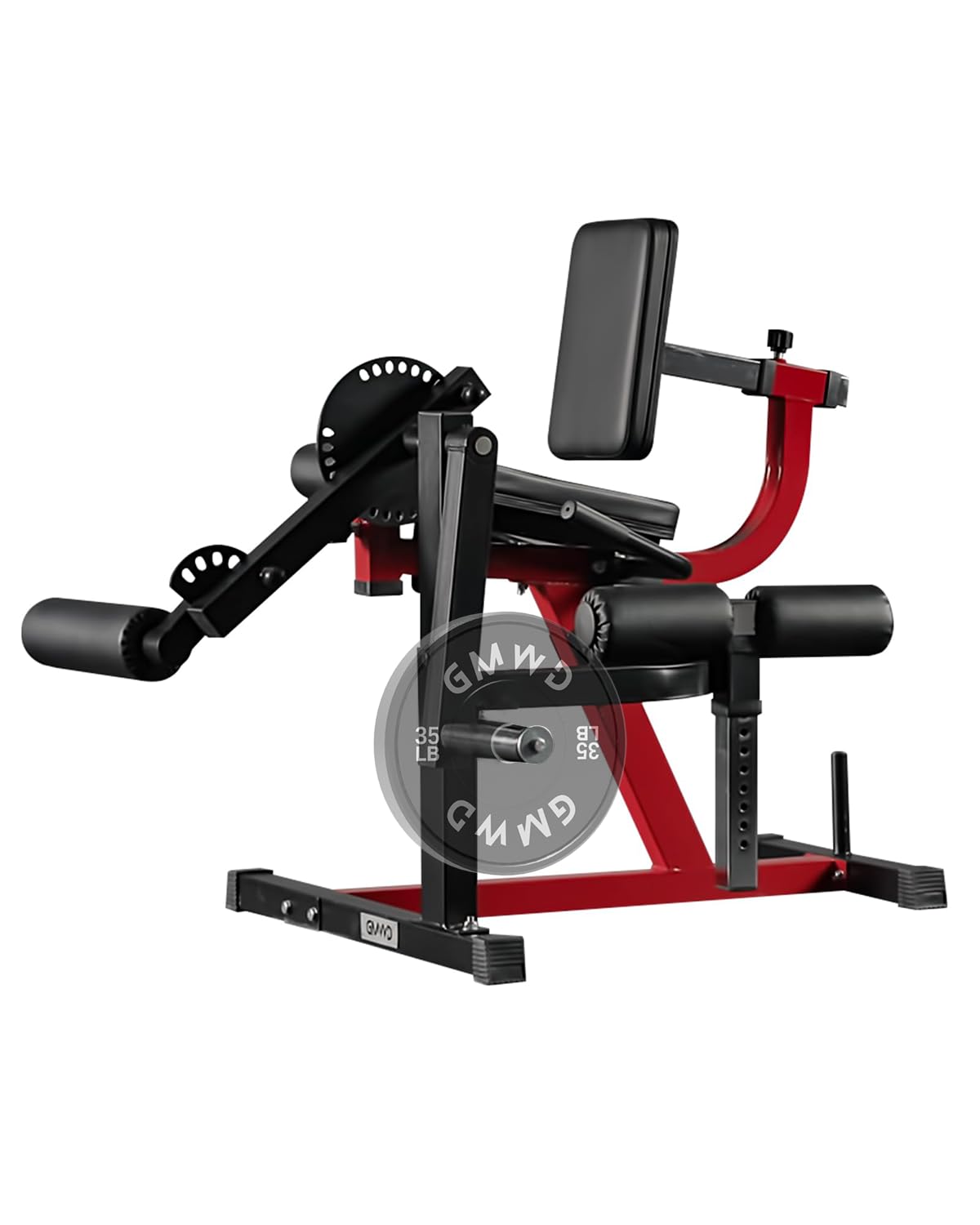
Most home leg machines force a choice between a footprint that fits a spare room and an adjustment range that fits a person. The GMWD LE02 gets closer to both than anything else here: 28+5 leg positions, eight backrest positions, and four seat positions inside a 34 by 36 inch footprint. It is a plate-loaded unit with a 300-pound resistance rating and a 500-pound user limit, and it adds a glute bridge option rather than stopping at extension and curl.

That combination is why we recommend it as the default for most home gyms. The 95-pound frame has enough mass to feel planted without becoming a permanent fixture, and the adjustment range is the real selling point: shorter and taller users can find a working position instead of settling for the closest pin. We also like the wide seat and back pads, which make the setup feel closer to a club machine than a bare-bones bench.

It is not the most specialized machine here. If you want independent leg arms, the GMWD LE03 is the one to choose; if built-in resistance and a larger footprint suit your room, the Mikolo LE12 is the premium step. But those are answers to narrower needs. For a lifter who wants one station for quads and hamstrings without dedicating half a room to it, the LE02's balance is hard to beat.

Bottom Line

We make this the default for most home gyms because its wide adjustment range and compact plate-loaded frame cover the most buyers with the fewest compromises.

Check Latest Price

Best For Tightest budgets

Our Score 9.0/10
Z ZHICHI TT02

Z ZHICHI

Z ZHICHI TT02

  • Warranty 6 months for metal part, 3 months for cushion
  • Plate Limit Less than 130 pounds
  • Max User Weight 660 lb
  • Plate Compatibility 1" and 2" plates
Check Price on Amazon

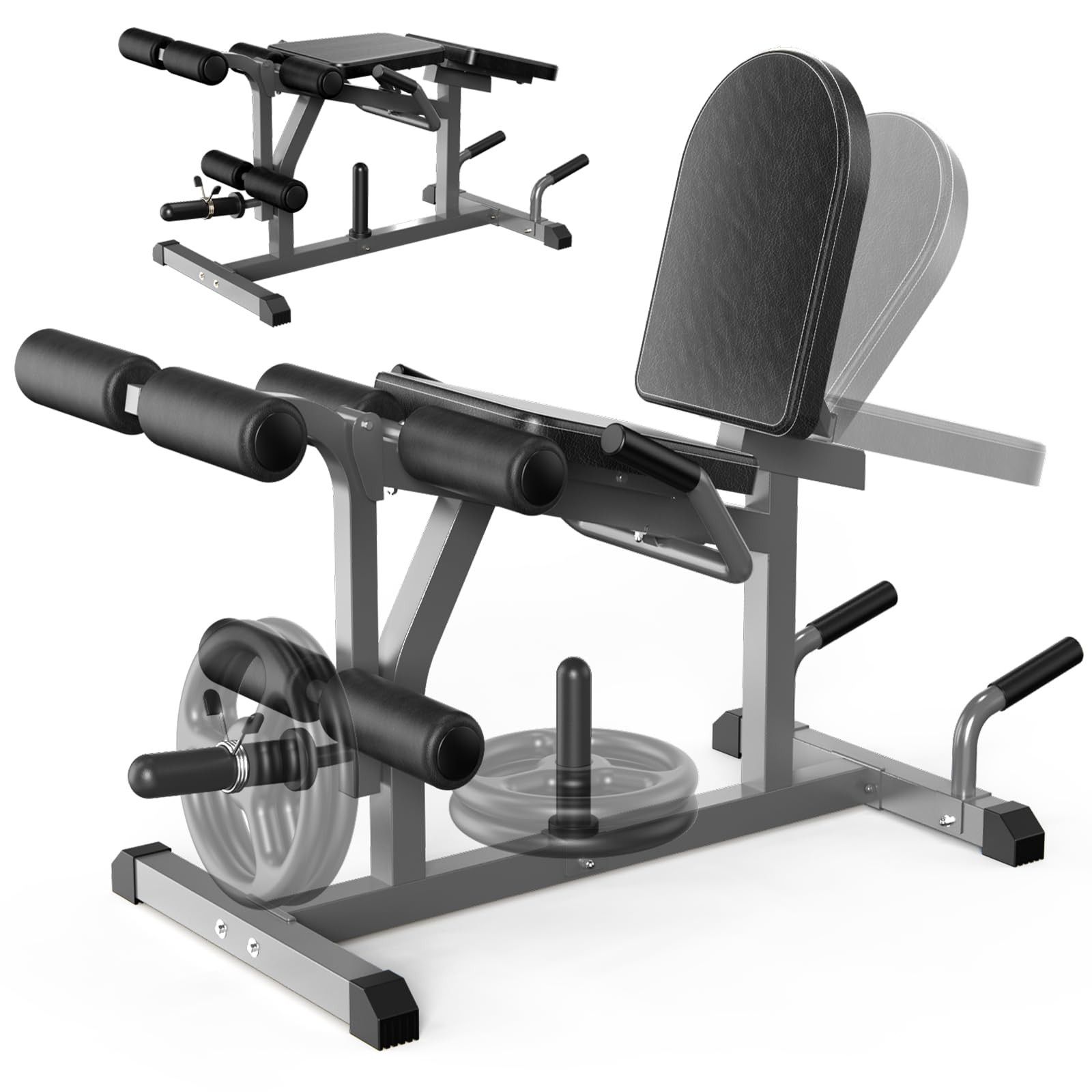
The Z ZHICHI TT02 is the smallest and least expensive way into this category. It is a 20 kg frame with a 660-pound user rating, and it combines a leg extension and lying curl in a footprint that fits beside a rack. The black-and-silver finish is plain, but the machine does not pretend to be a commercial station.

The official limits are the part to read carefully. The 660-pound figure is a user-weight rating, while the plate load is suggested at less than 130 pounds. That is enough for high-rep work and lighter users, but it is not a heavy lifter's machine. The 20 kg frame is correspondingly portable, and the 1-inch and 2-inch plate compatibility gives you flexibility with whatever plates you own.

The TT02's compact geometry is the other consideration. The seat and rollers sit low, and taller users may find the shin pad crowds the ankle in the extension position. The padding does not rotate freely on every unit, which can make longer curl sets less comfortable. For a shorter lifter on a tight budget, those are easier compromises to accept.

We recommend the TT02 as a budget starter or a space-saving second station. If you train heavy or want a machine that feels solid under a serious load, spend more on the GMWD LE02 or the Mikolo LE00. The TT02 earns its place on price and size, not on refinement.

Bottom Line

We recommend the TT02 only as a budget starter or a second station for light, high-rep leg work.

Check Latest Price

Best Premium Resistance

Our Score 8.8/10
Mikolo LE12

Mikolo

Mikolo LE12

  • Warranty 2 years
  • Footprint 56.5"D x 51.18"W x 47.24"H
  • Load Ratio 1.0/1.1/1.2
  • Resistance 1:1, 120 lb system
Check Price on Amazon

Built-in resistance with variable ratios and a smooth, planted feel.

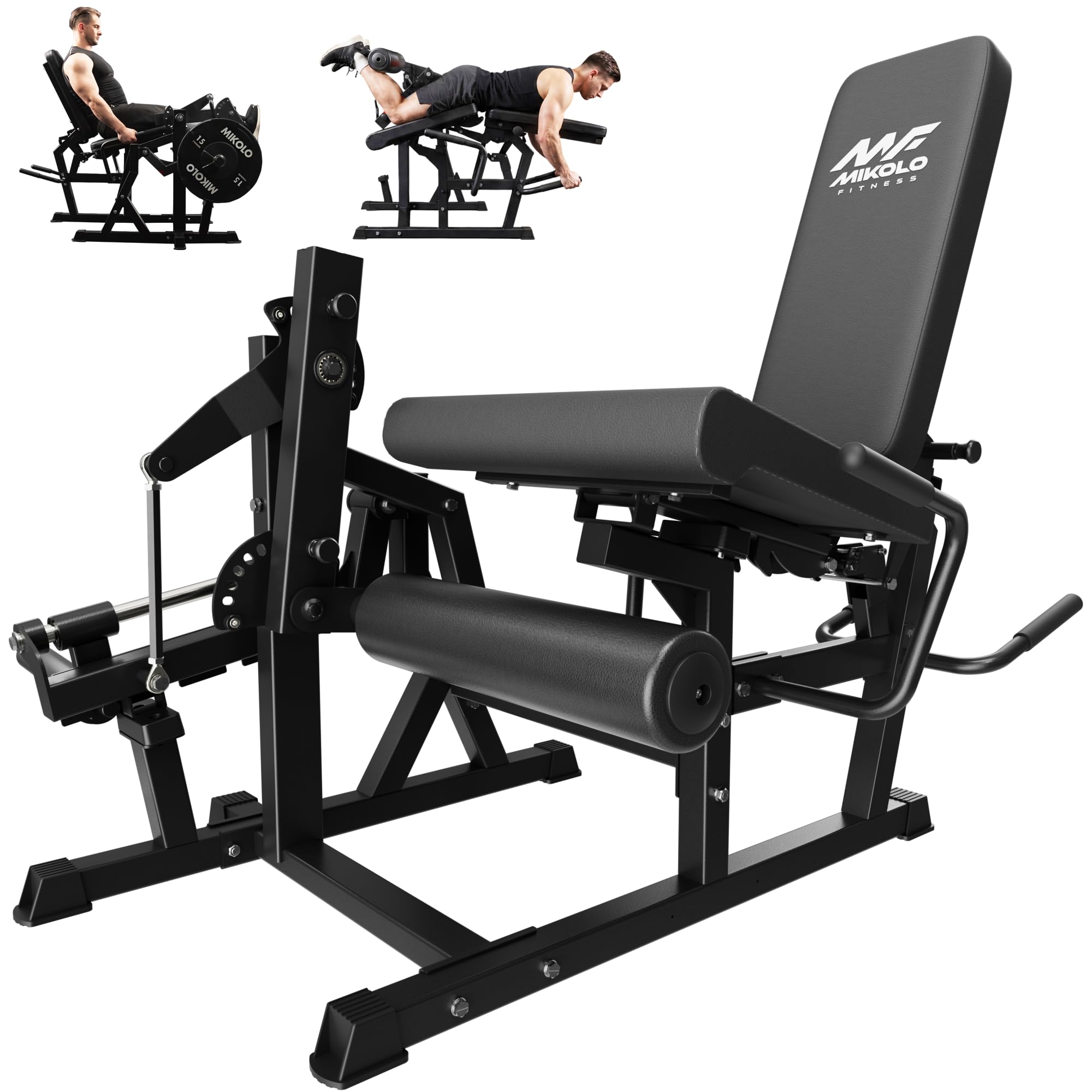
The Mikolo LE12 is the machine for someone who is tired of loading plates between sets. Its built-in resistance runs through a 1:1 system with variable ratios of 1.0, 1.1, and 1.2, so you can nudge the load without stripping a sleeve. That convenience is the reason it earns a premium place here, even though it will not suit every room.

The eight starting positions and quick pull-pin switch between seated extension and lying curl are the parts we appreciate most. They make the machine feel designed for frequent changes rather than a one-setting bench. The 12-degree V-tilt pad is shaped to leave room for breathing and reduce pressure on the spine, and the wide seat and firm cushioning keep longer sessions from feeling like a compromise.

Smoothness is where the LE12 makes its strongest case. The constant-tension loading keeps resistance present through the sweep, so the movement does not go slack at the top or bottom. We also like the fixed hand grips and wide seat, which give you a stable base when you are pushing close to the top of the range.

The trade is size. At 56.5 by 51.18 by 47.24 inches and 136 pounds, it is the largest machine in this group; measure the floor and the walk-around clearance before you buy. If you have the room and want built-in resistance, it is a lovely premium pick. If you need heavy loading or a tight footprint, the plate-loaded GMWD LE02 makes more sense.

Bottom Line

We choose the LE12 when built-in resistance and quick load changes matter more than a big resistance ceiling or a small footprint.

Check Latest Price

Best Budget

Our Score 8.8/10
JELENS J10

JELENS

JELENS J10

  • Warranty 1 year
  • Resistance 440-pound tension
  • Max User Weight 500 lb
Check Price on Amazon

An affordable way to add quads and hamstrings without a hulking frame.

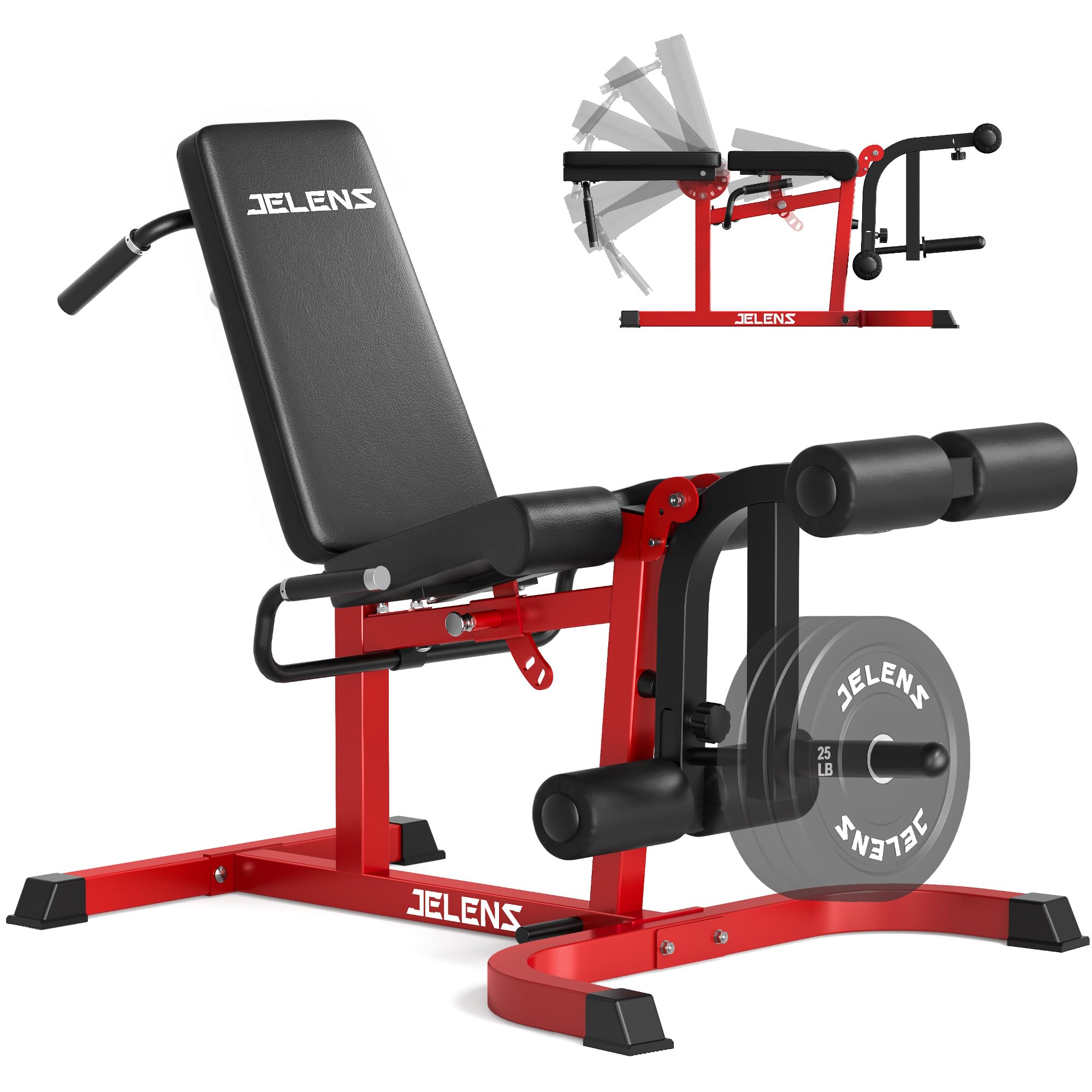
The JELENS J10 is the least expensive way in this group to get both a leg extension and a leg curl, and it does not look like a penalty box. The red frame, linear-bearing straps, and ergonomic backrest give it a more finished look than the price suggests, and the 500-pound user limit is generous for a budget machine.

The 440-pound tension rating is the number that matters for loading, and it covers most home-gym lifters who are not chasing maximal singles. We like the way the backrest and handles keep the upper body neutral; that is the sort of detail that makes a budget machine feel less like a compromise during longer sets. The broad pads also make it easier to settle in without hunting for a comfortable position.

We recommend the J10 for a first home leg station, a spare room, or a lifter who wants the movement without paying premium money. It does the two core jobs, and the one-year warranty is reasonable at this end of the market. What it does not do is offer the adjustment depth of the GMWD LE02 or the unilateral work of the LE03.

If your priority is a low entry point and a compact leg station, this is the sensible pick. If you want independent leg work, the GMWD LE03 is the step up. The J10 is proof that you do not need a commercial-size machine to train quads and hamstrings seriously.

Bottom Line

We recommend the J10 as a first home leg station when you want both extension and curl without paying premium money.

Check Latest Price

Best High-Capacity Value

Our Score 8.6/10
FEIERDUN 4-in-1

FEIERDUN

FEIERDUN 4-in-1

  • Modes 4-in-1 lower body
  • Warranty 1 year
  • Footprint 34"D x 33"W x 38.5"H
  • Max User Weight 700 lb
Check Price on Amazon

A high user rating and wide adjustment range at a midrange price.

The FEIERDUN's 700-pound rating is the headline, but the compact four-in-one frame is what makes it useful. The 34 by 33 inch footprint is genuinely small for a lower-body station, and the bright red frame is easy to spot in a garage gym. It covers leg extension and curl in one unit without the bulk of a premium built-in-resistance machine.

We like it as the high-capacity value pick because it gives larger users a generous rating without demanding a large room. The wide, non-slip pads and curved seat edges make the setup feel more considered than the price suggests. Assembly is claimed at under 40 minutes; plan for a clear hour and a second pair of hands if you can get them.

The adjustment range is the other reason it earns a spot. The leg and back positions cover a wide spread of heights, and the pop pins are easy to work once you have the settings marked. We did not find the setup fussy once the pins were set, and the 34-inch depth leaves more room for a bench or rack than the bigger Mikolo LE12.

It is not the most refined machine here; the Mikolo LE12 is smoother and the GMWD LE03 is more specialized. But for a lifter who wants a high user rating, a wide adjustment range, and a compact four-in-one station without paying premium money, the FEIERDUN is the value play.

Bottom Line

We see the FEIERDUN as the value pick for a compact four-in-one station with a high user rating and a broad adjustment range.

Check Latest Price

Best For Small spaces

Our Score 8.6/10
Mikolo LE00

Mikolo

Mikolo LE00

  • Weight 55 lb
  • Warranty 2 years
  • Footprint 48.3"D x 21.7"W x 39.2"H
  • Resistance Triple loading, 440 lb
Check Price on Amazon

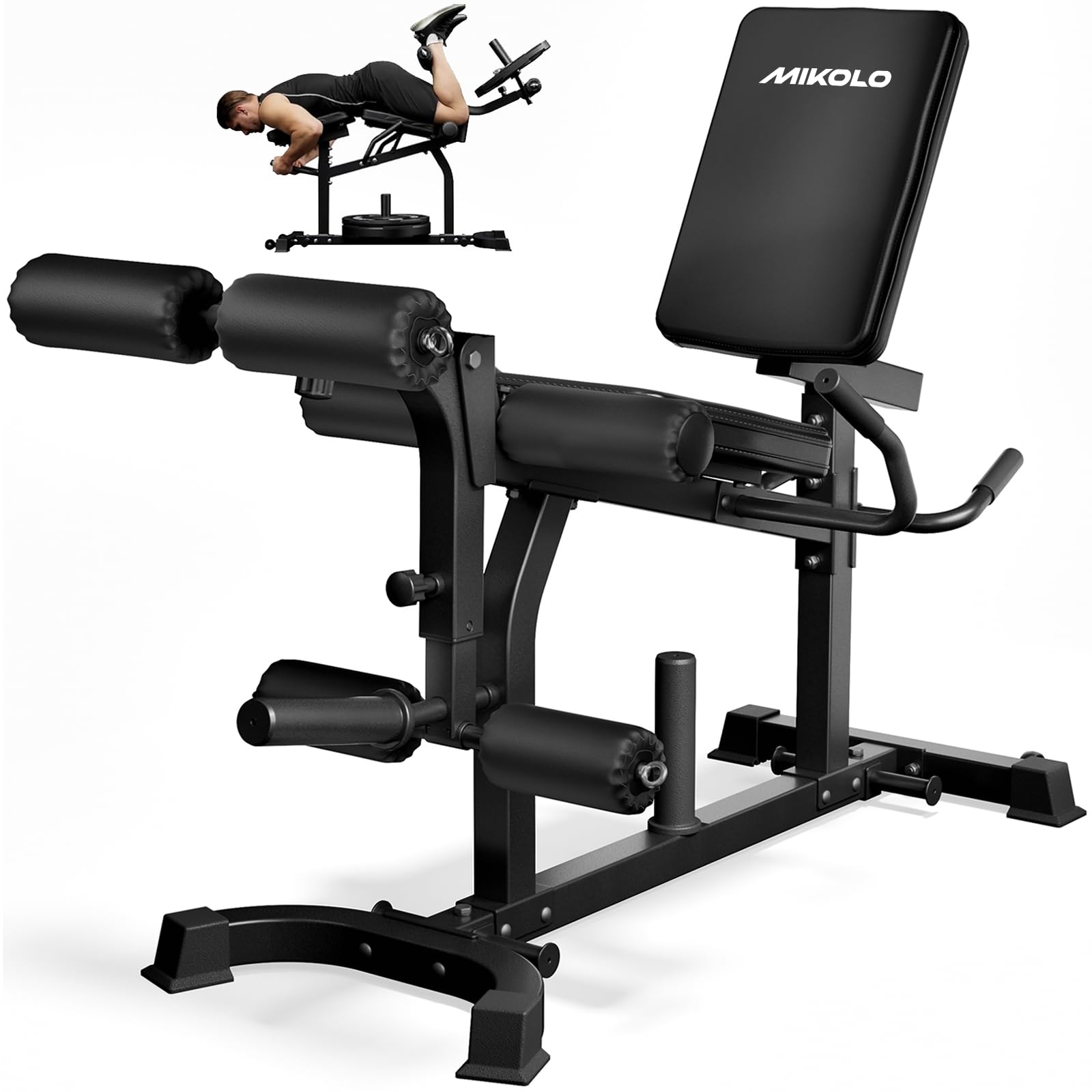
The Mikolo LE00 is the machine that disappears into a corner. Its 48.3 by 21.7 inch footprint covers 7.28 square feet, and at 55 pounds it is light enough to move without a helper. That small footprint is why it earns a place here, even though it gives up some heft to the bigger machines.

The triple loading system is the other useful trick: plate posts, band pegs, and a cable clip let you add resistance in different ways without buying a second machine. The 440-pound rating covers most home users, and the 15-degree V-tilt pad is shaped to reduce spinal pressure during curls. We like the integrated plate storage, which keeps the next load close instead of on the floor.

The trade is stability. A 55-pound frame does not have the planted feel of a 115-pound station, so if you train heavy, plan to ballast the base or keep the load moderate. That is a setup choice, not a dealbreaker. For a small apartment gym or a room where the machine has to share space with a rack, the LE00's compactness is worth the compromise.

Bottom Line

We like the LE00 for tight rooms where a full-size leg station would crowd out everything else.

Check Latest Price

Best for Unilateral Training

Our Score 8.4/10
GMWD LE03

GMWD

GMWD LE03

  • Footprint 48"D x 32.5"W x 41"H
  • Adjustment 6-position ankle roller, 3 seat and 2 back cushion positions
  • Resistance Plate loaded, 350 lb pin
  • Max User Weight 700 lb
Check Price on Amazon

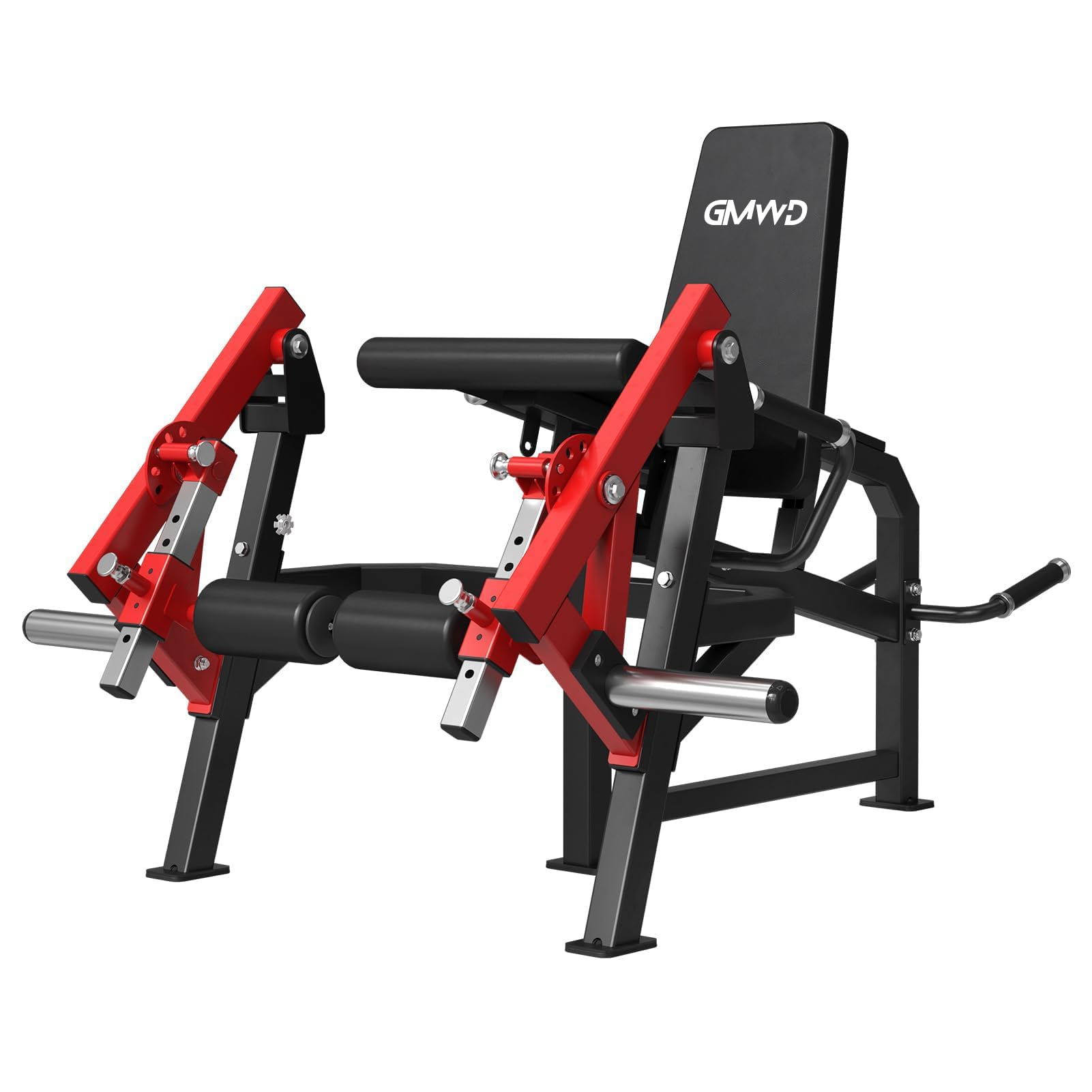
Independent arms let each leg work alone and expose side-to-side strength gaps.

The feature that makes the GMWD LE03 worth its premium is not another exercise mode; it is the split. Each arm loads and moves independently, so your stronger leg cannot quietly take over a set. That makes the LE03 the one we point to for anyone working back from an injury, chasing a side-to-side strength gap, or simply wanting honest single-leg work at home.

The rest of the machine backs up that specialist brief. The 115-pound frame rides on a 48 by 32.5 inch footprint and is rated to 700 pounds of user weight. You get leg extension, lying curl, and standing curl, with six ankle-roller positions, three seat positions, and two back positions. The pop pins make those changes quick, which matters because unilateral training means more setup between sides.

We rate the independent arms as the most useful feature here for a specific buyer, not as a universal upgrade. If you mostly train both legs together, you can save money and space with the LE02. The LE03's value comes from letting you load each side on its own, and from a heavier frame that feels more like a dedicated station than a compact accessory.

The LE03 is not for a lifter who mostly works both legs together; the LE02 does that with less cost and less floor space. It earns its premium when single-leg work is the point, not an occasional add-on.

Bottom Line

We recommend the LE03 for anyone who wants each leg to work independently, with the exercise range and frame heft to justify its premium.

Check Latest Price

How We Tested: Seven Machines, Eight Months of Leg Days

We started by pulling every leg extension machine we could find that shipped to a home address and didn't demand a commercial gym footprint — plate-loaded and selectorized, standalone and combo units — then narrowed by weight capacity, adjustment range, and whether the maker stocked replacement pads and cables. Seven made the cut, and each one lived in a garage gym or spare bedroom for eight months.

Assembly came first: I built each machine alone with a timer running, noting whether the hardware bag matched the manual, whether the included tools actually fit the bolts, and whether one person could hold the pad arm steady while threading it in. Then five testers from 5-foot-2 to 6-foot-3 ran three sets of twelve on each, and we measured seat-to-pad distance at its shortest and longest settings, marking the seat position every tester needed. Pins that fought back got written down.

Stability and motion got the closest look. We chalked the feet and watched whether the frame crept forward during heavy sets, pushed the top of the pad arm sideways to see how far the uprights gave, and checked both ends of the arc — whether the knee could fully flex at the bottom and whether resistance held at the top. We listened for cable rub and grinding. Across eight months of twice-weekly leg days, we watched pad foam for compression, seams for splitting, welds for paint cracking, and bolts for loosening.

We also taped each footprint and height against a low ceiling and a shared room, and set the price against a year of gym dues plus the plates needed to load it.

How to Choose

Extension, Curl, or Both

Start with the movement you will actually do. A leg extension isolates the quads; a leg curl trains the hamstrings. Most machines here combine both, but the switch matters: pop pins are quicker than pulling and resetting a pad, and a machine with independent arms such as the GMWD LE03 lets each leg work on its own. If you mostly train both legs together, a simpler model can save space and money.

Watch the label trap: four-in-one or multi-mode does not mean four equally useful exercises. Check that the modes you care about are easy to get into and out of, with pads that clear your knees and ankles through the range you use.

Measure the Room and the Lifter

A compact footprint is not the same as a small installation. A machine can be narrow and still deep, and the loading post needs room for plates and your body. Tape out the depth plus loading clearance before you buy. The GMWD LE02 is a genuinely tidy 34 by 36 inches; the Mikolo LE00 is even narrower at 21.7 inches but runs 48.3 inches deep. The Mikolo LE12 is the opposite problem, at 56.5 by 51.18 inches.

Then fit the lifter, not just the floor. Seat and back adjustment decide whether the knee lines up with the pivot and whether the pad sits on the shin rather than the ankle. If you are tall or short, buy adjustment range before extra features.

Read the Load Rating in Two Parts

Separate the user-weight rating from the resistance you actually lift. A 500-pound user limit does not mean 500 pounds of plate loading, and a high frame rating can sit above a much lower plate-post limit. The Z ZHICHI TT02 is the clearest example: its 660-pound figure is a user rating, while the plate load is suggested at less than 130 pounds.

Decide whether you want plate-loaded resistance or a built-in system. Plate loading is simple and lets you add small increments with fractional plates; built-in resistance is faster to change but has a ceiling, as with the Mikolo LE12's 120-pound system. Check the sleeve length if you use thick bumper plates.

Stability, Pads, and Setup

A heavier frame usually feels more planted, but it is harder to move. The GMWD LE03 is 115 pounds and wants a permanent spot; the Mikolo LE00 is 55 pounds and can shift under heavier loading unless you ballast the base. Put any plate-loaded machine on a level, non-slip surface, and check that the pads roll or clear your ankle as the arm sweeps.

Assembly is part of the purchase. Some machines claim under 40 minutes, but a clear hour with a second pair of hands is more realistic. Check the warranty length, then check the bolts after the first few sessions; that is when a loose frame announces itself.

Frequently Asked Questions

Final Verdict

For most home gyms, the GMWD LE02 is the one to start with. It combines the adjustment range to fit different bodies with a compact plate-loaded frame that feels planted without taking over the room.

If unilateral work is the point, choose the GMWD LE03; if built-in resistance and a larger footprint suit your space, the Mikolo LE12 is the premium step up.