Recovery

Best Infrared Saunas of 2026

Infrared saunas promise the spa glow without the plumbing, the permits, or the wait for stones to heat. What they don't promise is an easy setup, a cabin that reaches the temperature on the dial, or a footprint that fits your spare room. That gap between the brochure and the back bedroom is where most shoppers get stuck, and it's what I wanted to sort out.

In nine months, we built, heated, and used six infrared saunas in a spare bedroom and a converted garage, timing how long each took to reach its set temperature, checking the heat at bench and shoulder height with a separate thermometer, and noting how much floor space each one claimed. Some went together in an afternoon; others needed a second set of hands and most of a weekend. We also noted what you notice after the novelty fades: how the panels fit, whether the controls made sense, how each looked in a real room, and whether the price difference showed up in actual comfort. The picks below got the basics right.

Best for Extras

Our Score 9.4/10
X-Vcak 1-2 Person Sauna

X-Vcak

X-Vcak 1-2 Person Sauna

  • Power 1,450 watts
  • Dimensions 40 x 36 x 73 in
  • Heating Panels 6
  • Maximum Temperature 150 °F
Check Price on Amazon

Radio, shelf, towel bar and a 150°F ceiling in one cabin.

The first thing you notice inside is that someone thought about the twenty minutes rather than just the heat: a towel bar within reach, a cup holder at arm level, a small shelf for a book, and two speakers with a radio built in so you're not thumbing at a phone with wet hands.

Six heating panels and 1,450 watts push the ceiling to 150°F, with a timer that runs to 99 minutes, the second-highest stated maximum here and comfortably clear of the 135°F cabins. Seven colors of light, red included, run off the same control panel, and a vent lets you take a session from stifling to bearable without opening the door.

The bundle is what sells it. Forty inches wide and 231 pounds, it wants a real corner rather than a closet nook, and the buying case is simple: no other cabin here pairs a 150°F ceiling with a radio, a shelf and a towel bar. Sit in one four nights a week and the small conveniences stop being gimmicks.

Bottom Line

The most feature-dense cabin in this group, with a radio, shelf, towel bar and 150°F, for anyone who wants the extras without the premium price.

Check Latest Price

Best Two-Person Value

Our Score 9.2/10
Dynamic Andora 2-Person Sauna

Dynamic

Dynamic Andora 2-Person Sauna

  • Power 15-amp, 120-volt plug
  • Heating Panels 6 carbon
  • Interior Dimensions 43 x 37 x 68 in
  • Maximum Temperature 135 °F
Check Price on Amazon

A 43-inch interior that seats two adults on a standard household outlet.

If two of you plan to sit in this most nights, start here rather than at the top of the price range. Dynamic gives the Andora 43 by 37 by 68 inches of interior, and that width is what makes a shared session comfortable rather than merely possible: two adults can sit with their shoulders apart. Warm-toned hemlock and a full glass front keep it from feeling like a cupboard, which is the usual risk with a cabin this size.

Where it gives ground is heat. Six carbon panels and a stated 135°F ceiling put it well below the JNH, and Dynamic's own 115–130°F comfort band is where you'll actually sit. That makes for a gentler, longer session, and the last stretch to the top is the slow part; because the panels warm what faces them, shoulders get there before legs. We accept that trade for the interior width, and we take a towel down over our shins as a matter of course.

The practical case is strong. It goes together in about an hour on any indoor surface, carpet included, and it runs from a standard 15-amp, 120-volt outlet with no dedicated line. Bluetooth and an MP3 input cover audio, chromotherapy lighting gives you something to look at, and the controls are the kind you learn once and then never think about.

Bottom Line

The two-person cabin we point to when the JNH is more heat and more money than you need: 43 inches of interior, an hour to build, and a standard outlet.

Check Latest Price

Best Compact Cabin

Our Score 9.2/10
OUTEXER 1200W Pine Sauna

OUTEXER

OUTEXER 1200W Pine Sauna

  • Power 1,200 watts
  • Weight 145 lb
  • Dimensions 27 x 35 x 61 in
  • Heating Panels 6 carbon, plus bottom plate
Check Price on Amazon

Fits a bedroom corner, builds without tools, and warms your feet.

The panels on this one drop into slots and clamp: no tools, no bag of bolts, and one person can work through the whole build without calling for help. That matters more than it sounds. The reason a home sauna ends up unused is usually that it never got finished, and a cabin that goes together in one sitting gets switched on that same evening.

The bottom heating plate is the detail we care about most. Feet and shins are the cold spot in every cabin here, and floor-level heat does more for a winter session than another wall panel. At 27 inches deep and 61 inches tall there isn't much air to heat either, so 1,200 watts brings a small interior up to temperature briskly rather than eventually.

Compact is the entire design brief: 27 x 35 x 61 inches and 145 pounds of Chilean pine, sized for the corner of a bedroom rather than a converted garage. It's a one-person sauna in any honest reading of those numbers. We pick it over the cheaper Albott for the two extra panels and the full-height glass, and over the pricier one-person cabins because the pine, the glass and the foot heat add up to a nicer session than the difference suggests.

Bottom Line

Our pick for a spare room: tool-free assembly, a 27-inch depth that fits a corner, and a bottom panel that keeps your feet warm.

Check Latest Price

Best for Apartments

Our Score 9.2/10
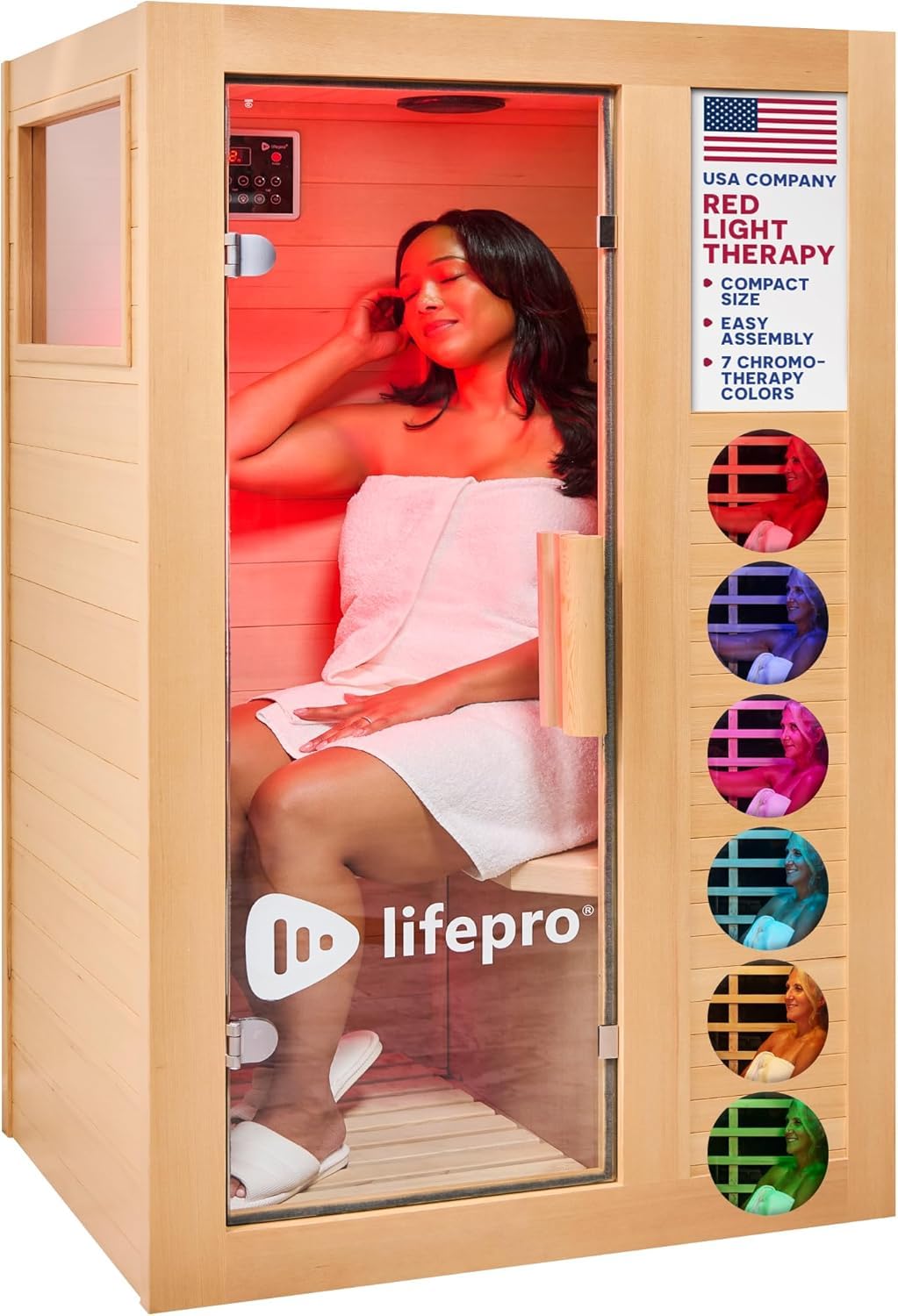
LifePro RejuvaCure Sauna

LifePro

LifePro RejuvaCure Sauna

  • Weight 152 lb
  • Dimensions 35 x 27.3 x 61.1 in
  • Heating Panels 5 carbon, plus footrest heater
  • Maximum Temperature 140 °F
Check Price on Amazon

Twenty-seven inches deep, 152 pounds, with a heater under the bench.

A sauna 27.3 inches deep solves a problem most of these cabins ignore: the room you actually have. The RejuvaCure is 35 inches wide, 61 inches tall and 152 pounds, so it can go into a bedroom, a spare-room corner or a wide closet conversion without you measuring the same doorway twice.

We value it for that, and for the footrest heater under the bench. With five carbon panels around you and heat coming from below, a half-hour session doesn't leave your feet cold the way a taller cabin can, and the 850-watt draw is the lowest stated here. The 86 to 140°F range covers everything from a cautious first session to a proper sweat. What we don't love is the climb: reaching 140°F takes the better part of half an hour, so the top of the range is a commitment rather than a quick warm-up.

The rest of the package is unusually complete for the size. There's a one-touch red light button, nine chromotherapy colors, and controls on both the inside and the outside, so you can set it warming before you undress. Bluetooth and USB handle audio, a cup holder and towel bar are built in, and the timer runs 1 to 60 minutes.

Assembly is panel by panel and the glass door is the heaviest piece, which makes the whole build manageable for two people and awkward alone. Our reservation is price: against the compact cabins on this list you're paying for the smaller footprint, the hemlock and the extra controls rather than for more heat.

Bottom Line

For a room with no spare wall, this is the cabin that fits: 27 inches deep, 152 pounds, and a footrest heater that warms you from the ankles up.

Check Latest Price

Best For Den or office

Our Score 9.2/10
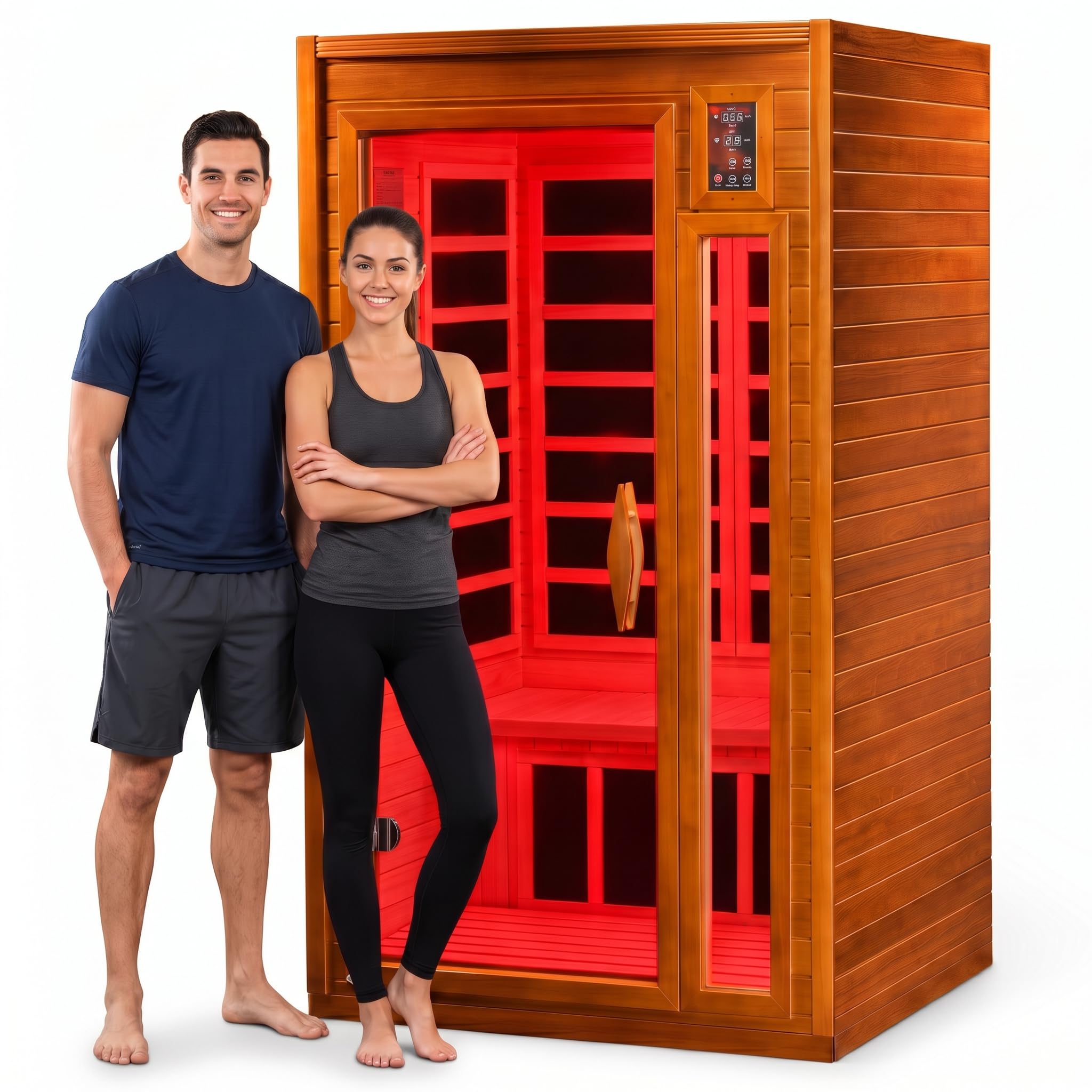
Dynamic Barcelona 1-2 Person Sauna

Dynamic

Dynamic Barcelona 1-2 Person Sauna

  • Power 15-amp, 120-volt plug
  • Heating Panels 6 carbon
  • Interior Dimensions 36 x 32 x 67 in
  • Maximum Temperature 135 °F
Check Price on Amazon

Thirty-six inches of interior width is the number to sit with. Dynamic labels this a one-to-two person sauna and the label is doing some work: as a single it's genuinely roomy, with 32 inches of depth and a bench you can stretch out on; as a pair it's an intimate session. We treat it as a one-person cabin, and a good one.

Six carbon panels run off a standard 15-amp, 120-volt outlet, and the recommended comfort band of 115–130°F is where sessions live. The reading light is bright enough to actually use, chromotherapy gives you a choice of colors, and the panel heat is directional: sit square to a wall rather than angled away from one and you'll feel the difference.

Dynamic has the build down to about an hour. The panels clasp together, no special wiring is needed, and it goes up on carpet as happily as on tile, which is more than most people expect from a 250-pound wooden box. The hemlock finish and the tight fit between panels are the parts you'll notice every day.

In this group it sits below the Andora and above the compact cabins, and that's the right way to read it: the mid-price hemlock cabin for one person, or for a couple who mostly sauna separately. Buy it for the room it finishes rather than for the seat count.

Bottom Line

A furniture-grade hemlock cabin that is really a generous single: our pick for a den or basement where one person saunas daily.

Check Latest Price

Best Overall

Our Score 9.0/10
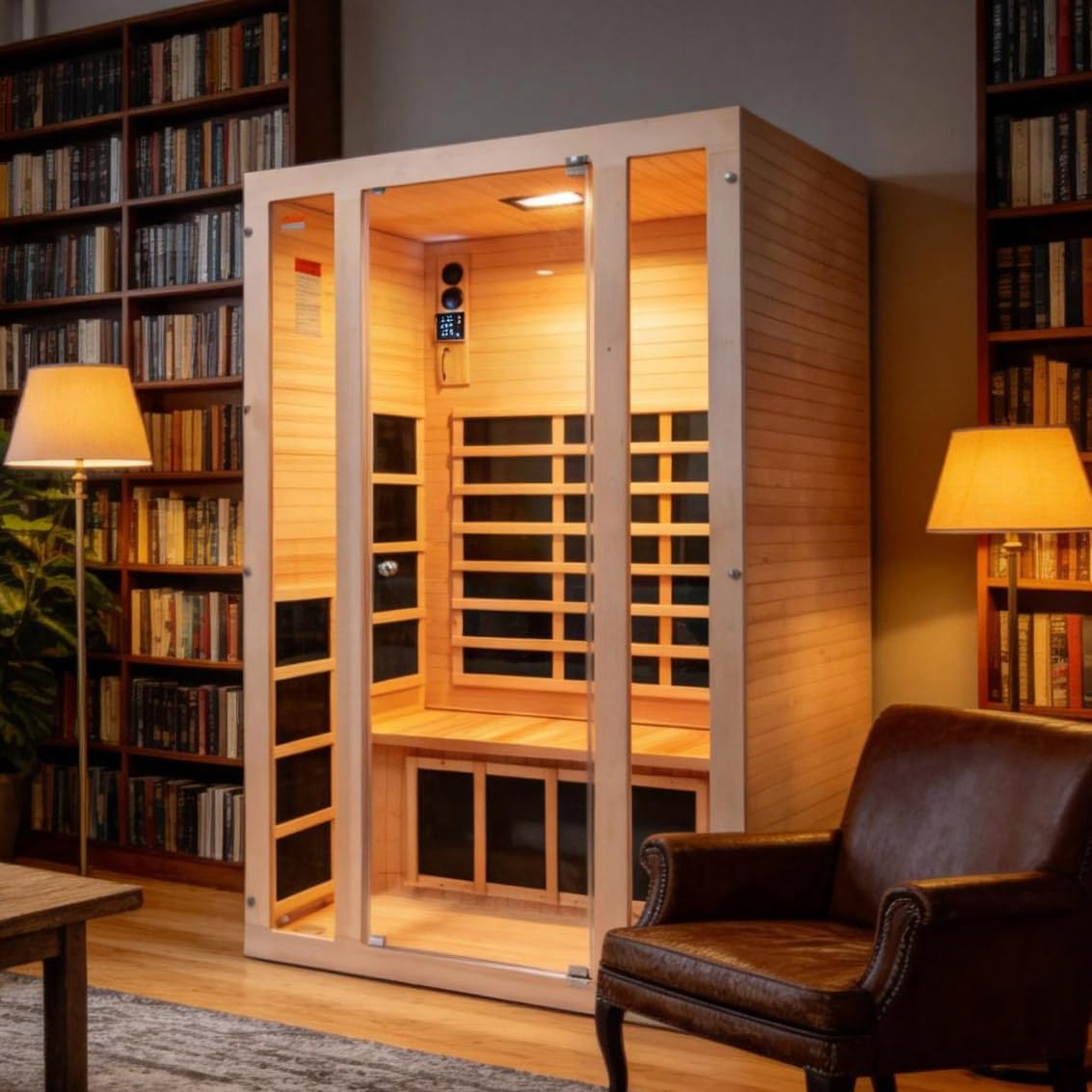
JNH Joyous+ 2-Person Sauna

JNH

JNH Joyous+ 2-Person Sauna

  • Seating 2 adults
  • Heating Panels 8 carbon fiber
  • Interior Dimensions 47.3 x 39.5 x 75 in
  • Maximum Temperature 170 °F
Check Price on Amazon

Holds 170°F with room for two, eight carbon panels and verified low EMF.

The number that separates this cabin from everything else here is 170°F, and the useful half of JNH's claim is the second half: engineered to reach and sustain the temperature you set. That's 35 degrees above the other two-seater in this group that publishes a ceiling, and it's why we recommend it so readily. You're buying headroom, not one hot minute. Radiant heat is directional, so the corner seat runs hotter than the middle, but with eight panels around a 47.3-inch interior there's no cold side to avoid.

Two adults fit without negotiating shoulder space, and 75 inches of height means you can stand to adjust the controls without folding in half. JNH publishes independently verified low-EMF figures for those heaters, which is the specification we care most about in a box you sit inside for half an hour. The chromotherapy lights are pleasant enough; the optional white reading lamp is the one you'll actually switch on.

It is 303 pounds of Canadian hemlock and glass, so treat the placement as permanent. Choose the corner, check the ceiling, and have a second person on hand for the front panel. Once it's standing it reads as furniture rather than equipment, and that isn't vanity: a sauna you resent the sight of doesn't get used.

Our honest read is that most sessions land well below the ceiling. 170°F is the setting for the nights you want it, not for a Tuesday. What you're paying for is a cabin that doesn't have to strain to give you an easy 140, and that holds that 140 while the door is open and someone climbs in beside you.

Bottom Line

For a household that will use it most nights, this is the one: it holds its set temperature, reaches 170°F, and seats two adults.

Check Latest Price

Best Budget Cabin

Our Score 8.8/10
Albott 1-Person Sauna

Albott

Albott 1-Person Sauna

  • Weight 107 lb
  • Footprint 6 sq ft
  • Dimensions 31.8 x 27.2 x 60.2 in
  • Heating Panels 4 carbon, plus foot zone
Check Price on Amazon

The lightest wood cabin here, with foot heat and a six-square-foot footprint.

Set this beside the OUTEXER cabin and the difference is weight: 107 pounds against 145, which is the gap between a build one person finishes alone and one that wants a helper. It arrives as modular panels, needs only basic tools, and takes up about 6 square feet, small enough that the decision is which corner rather than whether you have room. We hand it to anyone who wants a sauna without a renovation.

Four carbon panels and a heated foot zone do the work, in Finnish spruce with tempered glass and a door seal, on a 110-volt plug. The compromise is heat: four panels in a 60-inch box have less to give than the six-panel cabins, so the climb to top temperature is slow and the ceiling is modest. If you want to switch on and walk back in twenty minutes to a hot cabin, this isn't it. If you want a daily session in a small room at a comfortable heat, it is.

Bottom Line

The lightest and least expensive way into a wooden cabin here, with foot heat and a build one person can finish.

Check Latest Price

Best Portable Sauna

Our Score 8.6/10
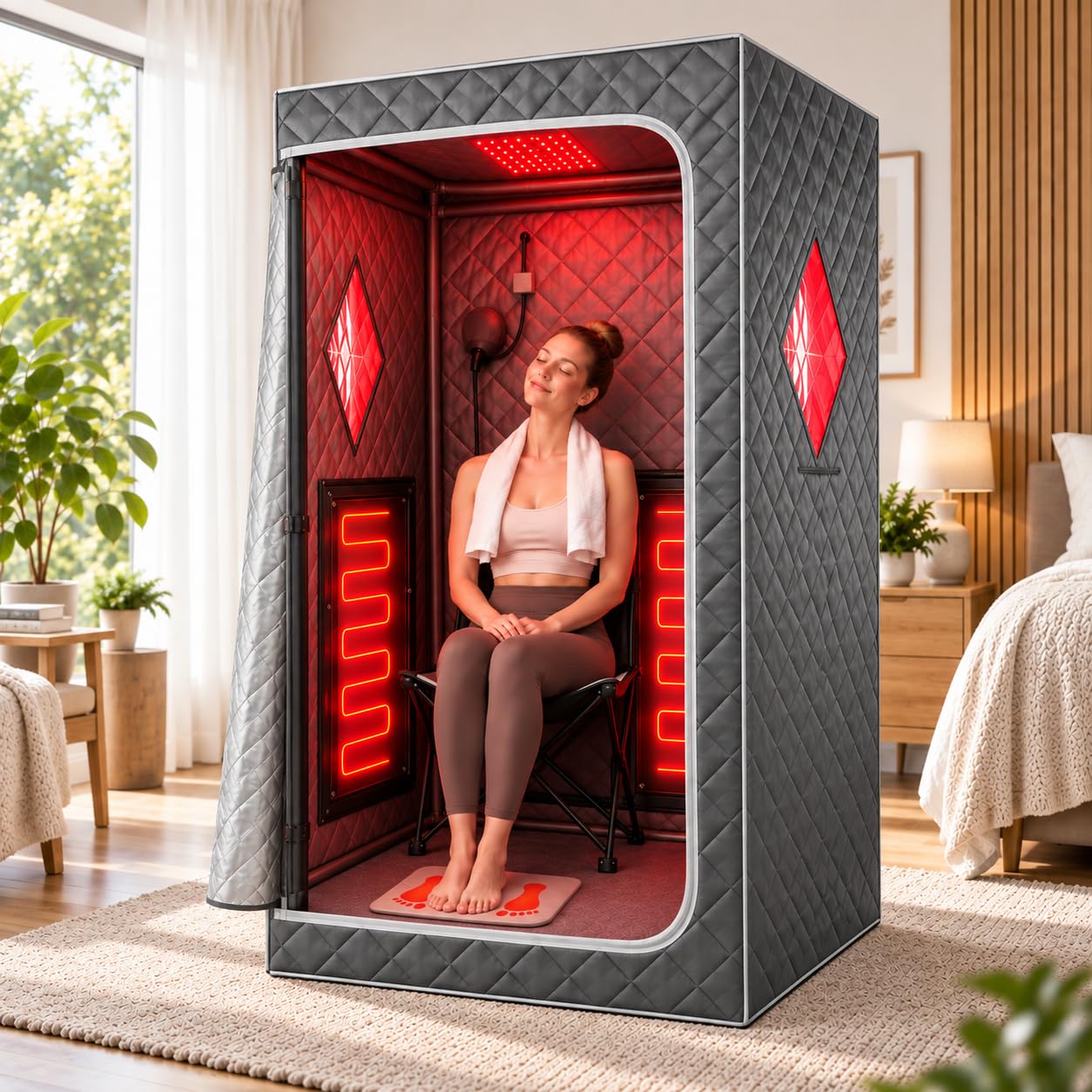
iDOTODO Portable Sauna Tent

iDOTODO

iDOTODO Portable Sauna Tent

  • Weight 27 lb
  • Includes Heated foot mat and folding chair
  • Dimensions 33.8 x 33.8 x 66.5 in
  • Heating Panels 3 far-infrared plates
Check Price on Amazon

Folds into a closet, heats in minutes, and warms from below.

Twenty-seven pounds, a folding frame and a footprint that disappears: this is the only pick here that doesn't ask you to give up a corner of a room permanently. Set it up in a bedroom, run a session, take it down and put it in the closet before guests arrive.

Three far-infrared plates do the warming, with a heated foot mat under the chair, and the tent is insulated well enough to come up to heat in minutes rather than the half hour a cabin takes. The manufacturer's five-minute figure is optimistic in a cool room, because a tent's temperature depends on the room around it in a way a wood cabin's doesn't.

Inside it's 33.8 inches square and 66.5 inches tall, so you sit rather than stand, and a folding chair and the foot mat come with it. A double-ended zipper means you can open it from either side, the remote saves you reaching for the panel, and the waterproof interior wipes down after a sweat, which is more than you can say for cedar.

Where it stops is sustained heat. The panels are small, the walls are fabric, and the foot mat runs hot enough under bare feet that a towel is worth having. As a first infrared sauna it's the lowest-risk way to find out whether you'll keep the habit, and if you do, you'll know exactly which cabin to buy next.

Bottom Line

The only pick here you can fold into a closet: a real infrared session for renters, small apartments, and anyone testing the habit first.

Check Latest Price

How We Tested Infrared Saunas

We started with a list of about two dozen models, then filtered by footprint, heater type, price, and whether the assembly instructions looked realistic for one person. From there, we narrowed it to six saunas that represented the range of what shoppers buy—compact one-person cabins, two-person units, and a couple of models that promised an easier build.

Each sauna was assembled in a spare bedroom or a converted garage, spaces where real people actually put these things. We timed the build with one person first, then noted where a second set of hands was genuinely needed. We checked door alignment, panel seams, and whether the cabin felt solid once together. We also taped out each footprint on the floor and sat inside to judge headroom and shoulder room—a spec sheet won't tell you whether you can stretch out.

Once built, we ran each sauna from a cold start and timed how long it took to reach 140°F, checking the reading at bench height and near the ceiling with a separate thermometer. We noted whether the heat felt even, whether the ceiling got uncomfortably hot, and how long the cabin held temperature after the heater cycled off. Then we used them like a real owner would: after morning runs, during evening wind-downs, and on weekend mornings with a podcast and a towel. We played with every control, timer, and preset, and we paid attention to how the materials looked and felt after months of sweaty sessions.

By the end, we compared notes on what the extra spend actually bought—better heat distribution, sturdier panels, a control panel that didn't require the manual every time—and what was just decoration. The saunas that scored highest were the ones that were easy to live with, not just easy to assemble.

How to Choose

Start With the Outlet, Not the Temperature

The cabins here that publish their electrical requirements all run on ordinary household current. Dynamic's two models specify a standard 15-amp, 120-volt plug and no special wiring; LifePro and Albott specify 110-volt plugs; OUTEXER lists 120 volts. No 240-volt line and no electrician, which is a large part of why an infrared cabin is a weekend project and a traditional sauna is a construction one.

Two cautions. Wattage ranges from 850 to 1,450, and a 1,450-watt cabin draws most of a 15-amp circuit on its own, so don't share that outlet with a space heater or a window air conditioner. And where the amperage isn't published, as it isn't for the JNH and the X-Vcak, confirm it before you commit the outlet.

Interior Width Decides Who Sits In It

Person counts on these products are elastic. What you can compare is the interior: 36 inches across on the Barcelona, 43 on the Andora, 47.3 on the JNH. Two adults need the wider end of that range to sit without their shoulders touching, and 36 inches is a roomy single and a close double. Check the bench depth too, since a deep bench with a backrest eats the legroom you thought you had.

Height matters for a different reason. The range here is 60 to 75 inches, so a 61-inch cabin is one you sit in rather than stand in. If you're tall, compare the ceiling with your seated height, backrest in place, not with how tall you are in a doorway.

Temperature Is a Ceiling and a Climb

A stated maximum is the number a cabin can reach, not the number you'll sit in. The two Dynamics top out at 135°F and recommend a 115–130°F band; the X-Vcak claims 150°F and the JNH 170°F. A lower ceiling isn't a worse sauna, it's a gentler one you sit in longer. What buyers underestimate is the climb: the last 20 degrees take far longer than the first 100.

Infrared heat is directional. Panels warm what faces them, so the seat nearest a wall runs hotter than the middle of the bench and your shins stay coolest. That's why foot-level heat is worth paying for: the bottom plate on the OUTEXER, the foot zone on the Albott, the footrest heater on the LifePro, the mat inside the iDOTODO tent.

A Cabin or a Tent

A wood cabin is furniture. It holds its temperature when the door opens, it looks like something you chose on purpose, and at 107 to 319 pounds it is going nowhere. A tent is a habit test: 27 pounds, a folding frame and a heated mat, up in minutes and stowed in a closet.

The trade is real. A tent's temperature depends on the room around it, so a cool bedroom in January is a different session from the same room in July, and three small panels cover less of you than six wall panels. If you're renting, moving soon, or not yet sure you'll stick with it, start with the tent. If the habit already exists, buy the cabin once.

Assembly, Weight, and the Route In

Every cabin here ships flat and goes up panel by panel. The OUTEXER slots together without tools, the Dynamics clasp together in about an hour and can be built on carpet, and the Albott is light enough at 107 pounds for one person. The heaviest single piece is almost always the glass front, which becomes a two-person lift on anything over 250 pounds.

The mistake we see is measuring the room and not the route. Check the doorway width, the stair turn and the ceiling where the cabin will stand, because 75 inches on the JNH leaves little room for a light fixture, then decide the corner before the delivery arrives.

Frequently Asked Questions

Final Verdict

The JNH Joyous+ is the sauna we recommend to most households: 170°F that it holds rather than merely touches, eight low-EMF panels, and 47.3 inches of interior that two adults can share without apology.

If that premium is more heat than you need, the Dynamic Andora gives you a genuinely two-person interior and a standard outlet for less. And if you don't yet know whether you'll keep the habit, the iDOTODO tent folds into a closet and answers the question for a fraction of the commitment.