Strength & Weights

Best Hip Thrust Machines of 2026

Hip thrusts are the rare exercise that earns their reputation—but the setup is a hassle. Balancing a barbell across your hips while your upper back digs into a bench is a recipe for bruises, sliding plates, and a nagging sense that your glutes are doing less than they could. A dedicated hip thrust machine solves that by locking you into a stable, repeatable position so you can load heavy without thinking about anything but the squeeze. The catch is that not every machine feels solid at lockout or fits a range of bodies, which is why we spent the last eight months putting 10 of them through real home workouts.

We tested in garages and spare bedrooms, with lifters ranging from 5-foot-2 to 6-foot-2 and loads up to 300 pounds. The two specs that matter most are base stability and pad density—a machine that rocks or bottoms out will ruin your session no matter how adjustable it is. The picks below earned their place by staying planted, fitting a range of hips and heights, and making setup quick enough that you'll actually use them.

Best Portable Bench

Our Score 9.2/10
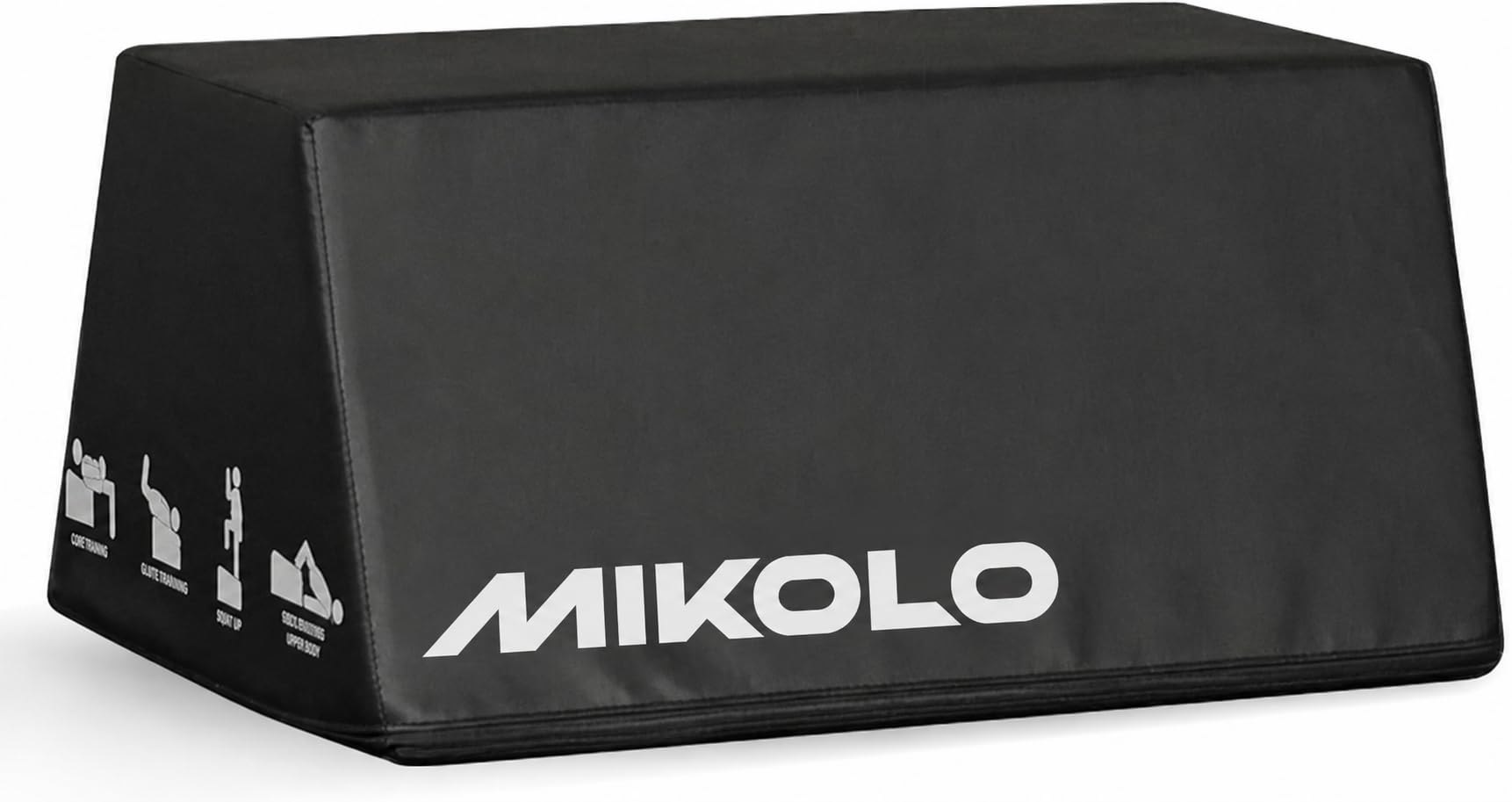
Mikolo Hip Thrust Bench

Mikolo

Mikolo Hip Thrust Bench

  • Base Anti-slip pads
  • Exercises Hip thrusts, glute bridges, sissy squats and push-ups
  • Item Weight 4 lb
  • Load Capacity 700 lb
Check Price on Amazon

A four-pound bench rated to 700 pounds for lifters who need portability.

A four-pound hip thrust bench sounds like it should be a prop, not a training tool, but the Mikolo is the one we reach for when the barbell is already on the floor. Its 700-pound load rating means the high-density foam does not collapse under a loaded bar, and the carry handle makes it easy to move from the rack to the middle of the room.

The trade-off is that it is only a bench: you bring the bar, plates, and your own setup. What we liked is how little ceremony it adds. You drop it down, set your upper back, and thrust; when you are done it goes on a shelf or under a rack. The low height suits shorter lifters especially well, while taller users should check that the bench puts their upper back at a comfortable angle for their setup.

The anti-slip base is a good match for a rubber gym mat, and the foam is firm enough that we did not feel the frame through the pad. For a garage gym that already has a bar and plates, that simplicity is worth more than another frame to assemble and store.

Bottom Line

Buy the Mikolo if you already own a barbell and want a light, stable bench you can move around; it is not a complete machine.

Check Latest Price

Best Compact Band Option

Our Score 8.8/10
BootySprout Hip Thrust Trainer

BootySprout

BootySprout Hip Thrust Trainer

  • Footprint 29"D x 25"W x 7"H
  • Item Weight 32.9 lb
  • Weight Capacity 400 lb
  • Resistance Levels 45, 90, and 135 Lbs
Check Price on Amazon

A compact band trainer that comes assembled and fits under a bed.

The BootySprout solves a different problem: it gives you a hip thrust station that lives in a closet. The frame is 7 inches tall, comes assembled, and uses bands rather than plates, so you can set it up in a spare room and slide it under a bed when you are done.

The band resistance is the whole story. You get 45, 90, and 135 pounds of tension, and the 400-pound weight rating covers the frame, not the load you can add. We found the lighter bands useful for warm-ups and activation, while the heaviest band is the one that makes the setup feel like training rather than rehab. If you are already hip thrusting a loaded barbell, this is a step down in ceiling, not a replacement.

The caveat is stability. The frame is light, and the foot platform depends on your feet staying on the board; a smooth floor and a fast rep can let it shift. Set it on a mat, check the Velcro straps and band connections before each session, and keep your feet planted. We also wish the bands were longer for taller users, since the tension gets short at lockout.

Bottom Line

Buy the BootySprout if you need a compact, assembled band trainer for home glute work; it will not match a plate-loaded machine for heavy progression.

Check Latest Price

Best Overall

Our Score 8.4/10
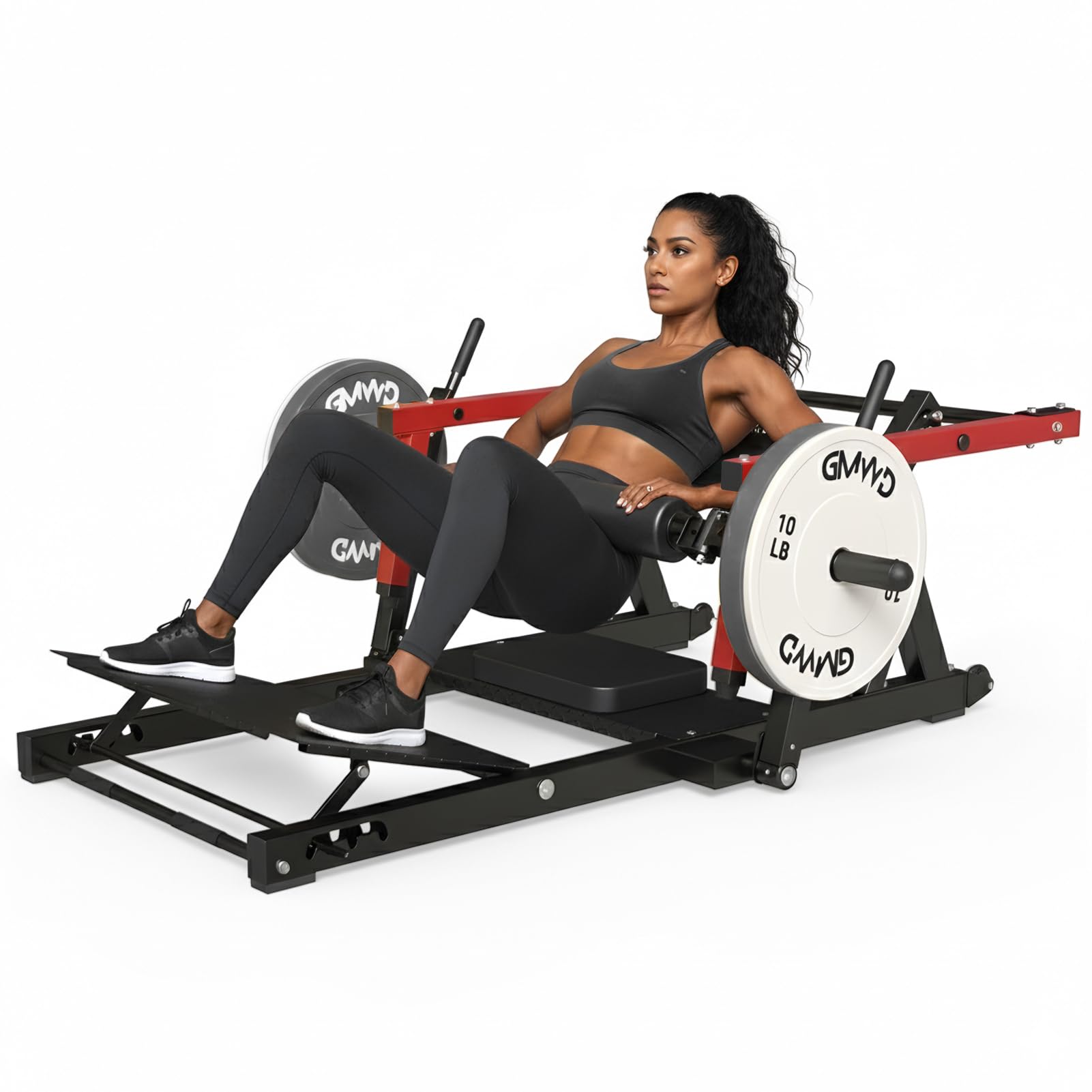
GMWD HRTQ Hip Thrust Machine

GMWD HRTQ

GMWD HRTQ Hip Thrust Machine

  • Load Capacity 800 lb
  • Resistance Type Plate-loaded
  • Footboard Positions 3 angles
  • Assembled Dimensions 71"D x 30.98"W x 22"H
Check Price on Amazon

A plate-loaded machine with an 800-pound ceiling and three footboard angles for steady progression.

The GMWD HRTQ is the only machine here that loads like a barbell hip thrust: you slide plates onto the posts and get an 800-pound ceiling from a 14-gauge steel frame. That capacity is why we make it the top pick for a home gym where the goal is to keep adding weight, not to keep replacing bands.

We appreciated the three footboard angles more than we expected. Changing the angle shifts where the thrust lands and lets you find a stance that keeps your shins comfortable at lockout. The side handles give you something to grip when you are learning the movement or finishing a hard set, and the plate and band posts make switching resistance quicker than threading a band through a frame.

We found the fit is the one thing to check before ordering. The hip pad does not slide forward or back, and the footboard extensions are short, so taller lifters may find the lap bar tight. Sit in the machine with your upper back on the pad and your feet on the plate; if your knees are not close to 90 degrees at the top, it is the wrong fit. On a good fit, the padding and fixed handles make the setup feel secure rather than fussy.

Bottom Line

Buy the GMWD HRTQ if you want a plate-loaded hip thrust station with the highest load ceiling here; it is built for steady progression.

Check Latest Price

How We Tested 10 Hip Thrust Machines in Real Home Gyms

We built our shortlist by combing through home gym forums, retailer reviews, and manufacturer specs, then filtering for machines that could handle progressive overload without requiring a commercial footprint. We ended up with 10 units at different price points, from simple bench-style setups to plate-loaded rigs, and used each one for eight months. Our testers included a 5-foot-2 lifter, a 6-foot-2 lifter, and everyone in between, so we could judge fit and adjustability across hip widths and torso lengths.

Testing happened in real home gyms—a garage with a rubber mat, a spare bedroom, and a basement corner. Each session followed a similar script: we adjusted the back pad and footplate for each tester, loaded the machine with plates or bands, and performed multiple sets of hip thrusts, single-leg variations, and banded warm-ups. We watched for base wobble at lockout, especially with heavier loads, and noted whether the padding compressed or stayed supportive after 20 reps. We also checked the range of motion—whether we could reach full hip extension without the pad digging into ribs—and whether the footplate gripped our shoes during fast reps.

Durability and build quality got checked every few weeks—we looked for loosening hardware, fraying upholstery, and flex in the frame. To judge value, we compared what each machine included, like band pegs or transport wheels, against its price and how often we actually reached for it. Home use mattered too: we measured footprints, noted whether the machine could be stored upright, and paid attention to noise and movement during fast reps. The machines that made the list shared a few traits: no wobble under heavy loads, padding that didn't bottom out, and adjustments intuitive enough to change mid-workout.

How to Choose

Match the resistance to your next progression

Plate-loaded machines like the GMWD HRTQ let you add small increments and keep going as you get stronger; the 800-pound rating is there for a reason. Band-based trainers like the BootySprout are compact and cheaper to start, but the tension tops out and bands can feel different through the range. A bench like the Mikolo adds no resistance at all, so it only makes sense if you already own a barbell and plates. Decide what you already have before you pay for a frame.

Check the fit before the features

Hip thrust machines are not one-size. You want your upper back on the pad, your feet flat on the plate, and your knees close to 90 degrees at the top. A fixed hip pad, a short footboard, or a lap bar that presses into your hips will make every rep feel wrong. The GMWD's footboard has three angles, but its hip pad does not slide fore and aft, so taller lifters should check the lap-bar clearance. If you can, sit in the machine before buying.

Treat stability and capacity as safety specs

A hip thrust puts your upper back on the pad and a load across your hips, so a light frame that shifts or a pad that flexes is not a minor annoyance. Look for a stated load rating, a wide base, and hardware that stays tight. Keep user-weight capacity separate from plate capacity; a bench rated for a user's body weight is not the same as a machine rated for plates. If a frame arrives wobbly, stop and tighten or return it before you load it.

Measure the footprint and the setup

A hip thrust machine is a long piece of equipment. The GMWD is 71 inches deep, so it wants a wall or a dedicated corner; the Mikolo is a four-pound bench you can move with one hand, and the BootySprout is 7 inches tall, enough to slide under a bed. Measure the floor space plus the clearance you need to load plates or get in and out. If the machine stays out, treat it like a rack, not a mat.

Decide how much versatility you need

Some benches double as boxes for step-ups, split squats, and push-ups; some machines have band posts and handles that make them useful beyond hip thrusts. That versatility is nice, but it should not come before a stable back pad and a fit that lets you lock out. If you only want one job done well, spend the money on the frame and loading system. If you want one piece for a small gym, check the secondary exercises against the height and load rating.

Frequently Asked Questions

Final Verdict

For most home gyms, the GMWD HRTQ is the hip thrust machine to beat: it takes plates to 800 pounds, gives you three footboard angles, and puts handles where you need them. The fit is the caveat, so taller lifters should check the lap-bar clearance before committing.

If you already own a barbell and plates, the Mikolo bench is the simpler, more portable way to add hip thrusts without another frame. For a spare room or apartment, the BootySprout is the compact band option, provided you accept its lower resistance ceiling and light frame.