Strength & Weights

Best Glute Machines of 2026

A barbell hip thrust works beautifully until you're balancing a loaded bar on your hips with a bench behind you and a couch cushion jammed under your ribs. A glute machine removes that circus: your back stays planted, the resistance follows a fixed path, and the only job left is squeezing at the top. That's the real payoff, a workout you'll actually finish.

I've done plenty of hip thrusts off a coffee table, so I came in skeptical. Over nine months, my team and I assembled, adjusted, and trained on seven glute machines, and the difference between a good one and a frustrating one shows up in the first set. The detail first-time buyers miss: the hip pad matters as much as the resistance, because a pad that digs into your hip bones ends the workout before your glutes do. The picks below held up session after session.

Best Overall

Our Score 8.8/10
BootySprout Hip Thruster

BootySprout

BootySprout Hip Thruster

  • Assembly Arrives assembled
  • Dimensions 29"D x 25"W x 7"H
  • Resistance 45, 90, or 135 lbs
  • Frame Capacity 400 lb
Check Price on Amazon

Arrives assembled, stows under a bed, and delivers 135 pounds of hip-thrust resistance.

Unboxing took us about two minutes, because there is nothing to build. The BootySprout arrives assembled — no bolts, no Allen wrench, no hour on the floor — and once you lie back on the foam rest, hook your heels over the footplate, and run a band across your hips, you are training. Between sessions it lies 7 inches off the floor and slides under a bed.

Three bands give you 45, 90, or 135 pounds of resistance, and that range is why it takes the top spot. It covers a beginner through a decent intermediate hip thrust without a rack, a bar, or a single weight plate, and the maker sells extra bands if you outgrow the third one. For a home gym that shares a room with a sofa, trading top-end load for no footprint is the right deal.

What we did not love is the band itself. At the full 135 pounds it digs into the hip crease, and a folded towel under it stops being optional. The bands are also the wear item here rather than the frame, and with a 30-day warranty a snapped one is yours to replace.

So the ceiling is real. If your hip thrust working weight already runs past what three bands can give you, the GMWD below is the machine to look at. Everyone else gets a genuinely useful piece of equipment for a fraction of what a plate-loaded setup costs, and gets it without giving up a corner of the room.

Bottom Line

The best default for a home gym: 135 pounds of hip-thrust resistance, no barbell or plates, and a frame that stores under a bed.

Check Latest Price

Best Plate-Loaded

Our Score 8.4/10
GMWD HRTQ Hip Thrust Machine

GMWD HRTQ

GMWD HRTQ Hip Thrust Machine

  • Frame 14-gauge steel
  • Footboard 3 positions, 21.8" x 31.1"
  • Dimensions 71"D x 30.98"W x 22"H
  • Maximum Load 800 lb
Check Price on Amazon

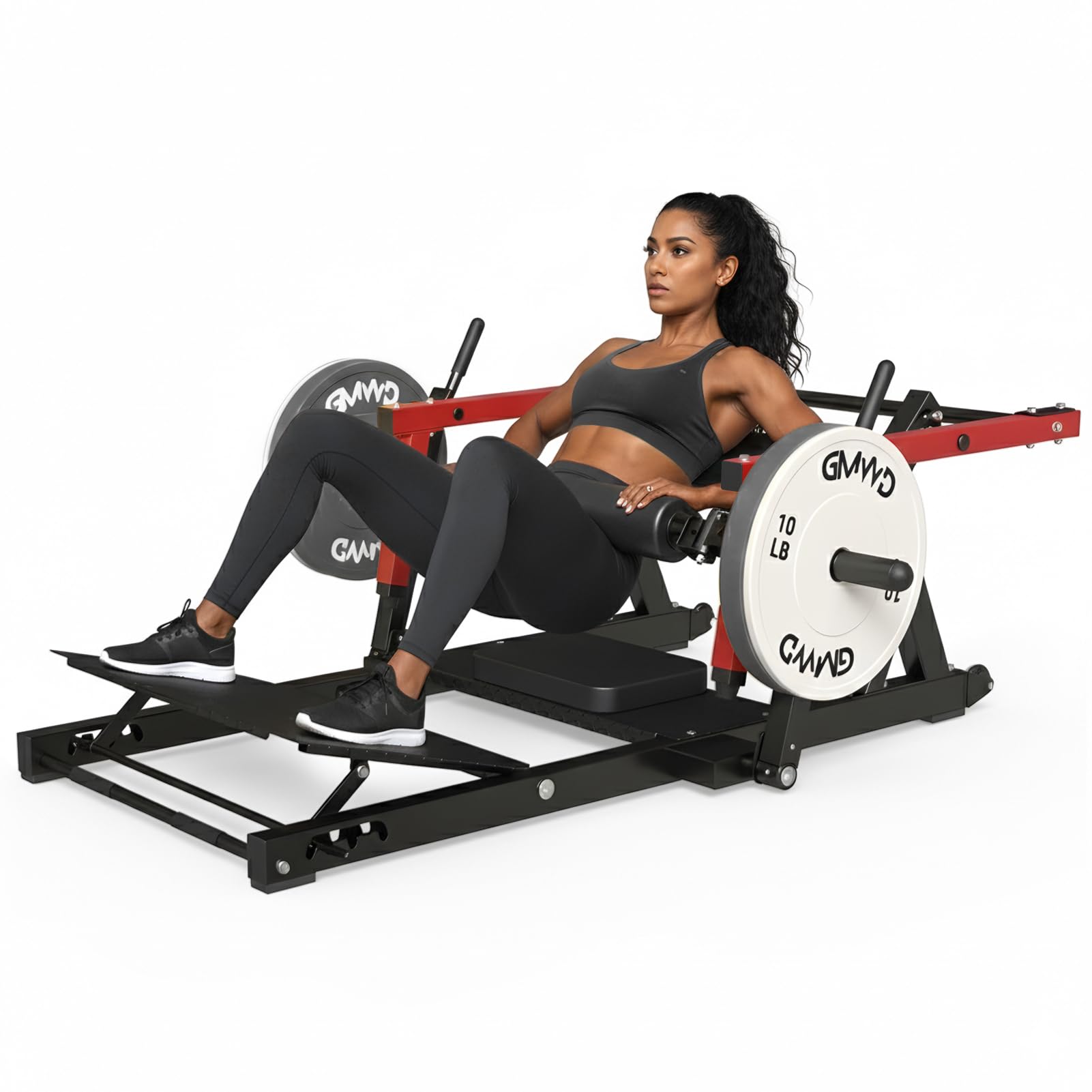
800-pound capacity and a three-position footboard for lifters who already own plates.

Eight hundred pounds is the reason this machine exists, and it is why the GMWD sits near the top of this group. Nothing else here loads like it: the 14-gauge steel frame is the most substantial in the set and it sits still under a loaded bar path, the footboard takes three height settings on a 21.8 by 31.1 inch plate, and there are handles on both sides of the shoulder pad to brace against when the last rep gets ugly.

The three footboard positions do more than the specification suggests. Raising or lowering the plate shifts where the movement lands, higher into the glute or further down into the hamstring, without changing the machine underneath you. We came back to the middle setting most.

It also takes up room. The frame runs about six feet in its longest dimension and folds for nothing, so this is a machine that claims a permanent rectangle of floor. If your training space doubles as a living room, that is the whole argument against it.

One smaller thing worth knowing: the lap-bar latch has to seat squarely, and when it does not it takes a couple of tries before the set starts. Once it is closed, though, the machine disappears under you in a way the band machines cannot manage, which is the point of loading it properly.

Bottom Line

Heavy lifters who already own plates get the most loading here by a wide margin — measure your torso before you commit.

Check Latest Price

Best for Inner and Outer Thighs

Our Score 8.4/10
HA1 2-in-1 Hip Abductor Machine

HA1

HA1 2-in-1 Hip Abductor Machine

  • Modes Abduction, 2 adduction angles
  • Resistance Up to 108 lbs (6 bands)
  • Frame Weight 48.5 lb
  • Maximum User Weight 600 lb
Check Price on Amazon

One seat, both directions: switch from abduction to adduction with a single pin.

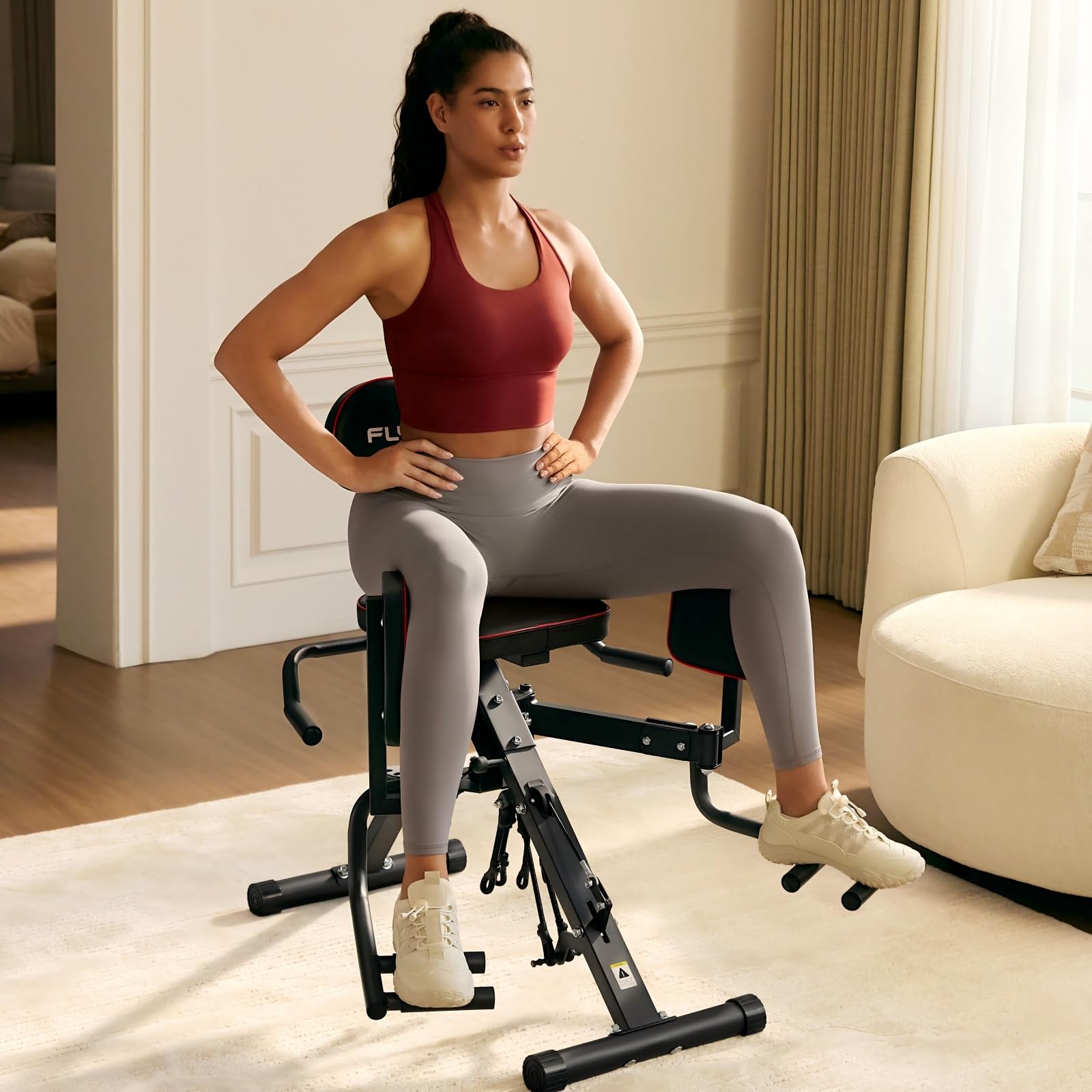
A spring-lock pin under the seat is the whole idea. Pull it and the pads switch from pushing out — hip abduction, the sideways glute and hip work that thrusting never reaches — to pulling in, with a narrow and a wide starting angle on the adduction side so that stiffer hips are not forced into the same range as everyone else's.

Six 18-pound bands give 108 pounds total, and you change the load by adding or removing them. The frame is the part we noticed: 48.5 pounds of steel with a 600-pound user rating, which is why it stays planted rather than walking across the floor the way a lighter band machine can. The dual foot bars are the other half of the pitch — moving your feet shifts whether the work lands higher or lower in the glutes.

It is the most expensive abductor machine here and the most capable: two directions, two adduction start angles, and more resistance than the rest of the band machines in this group. What it will not do is replace a hip thrust machine, because abduction is accessory work — very good accessory work, the kind that shows up as hip stability and a rounder side profile.

So treat it as the second machine in a home gym, or the only one if thrusting is not for you. Fifteen quiet minutes at the end of a session is where this one earns its floor space.

Bottom Line

The heaviest-built abductor machine here, and the only one with dual foot bars for shifting glute emphasis; 108 pounds of band resistance is the ceiling.

Check Latest Price

Best Squat Trainer

Our Score 8.4/10
MERACH Deep Squat Machine

MERACH

MERACH Deep Squat Machine

  • Resistance 4 spring levels
  • Adjustments 2 height, 3 length settings
  • Item Weight 11 lb
  • Maximum User Weight 300 lb
Check Price on Amazon

A cheap, compact squat coach that teaches depth before you add real weight.

This is the odd one out in the group, and the price is only part of why. It is a squat coach rather than a loading machine: it supports you at the knees, holds your line through the bottom of the squat, and adds just enough spring to help you stand back up. If your problem is that you cannot get low without your form collapsing, that is worth more than another resistance band.

Four spring levels, two height settings, and three length adjustments let you fit it to your stance, and the whole thing weighs 11 pounds and takes up about two feet of floor. Assembly is simple enough, though the printed instructions are thinner than the machine deserves.

Where it comes up short is resistance. The springs assist; they do not load. If building glutes is the goal you will be holding dumbbells or a kettlebell through your sets, which the frame handles fine but does not do for you. We treat this as a form-and-rep machine, and as that it is good.

It also flips into a push-up board with elevated handles, which is a nicer bonus than it sounds when you are equipping a first apartment gym: two exercises, one footprint, no plates. Buy it to learn the movement, then add a hip thruster when you want load.

Bottom Line

The cheapest entry here, and a good one if you want to learn the squat before you load it — this coaches form, it does not build heavy glutes.

Check Latest Price

Best For Closet-sized abductor

Our Score 8.4/10
Yagud Hip Abductor Machine

Yagud

Yagud Hip Abductor Machine

  • Seat 3 height positions
  • Warranty 1 year
  • Dimensions 35"L x 18.1"W x 32.1"H
  • Resistance Levels 9
Check Price on Amazon

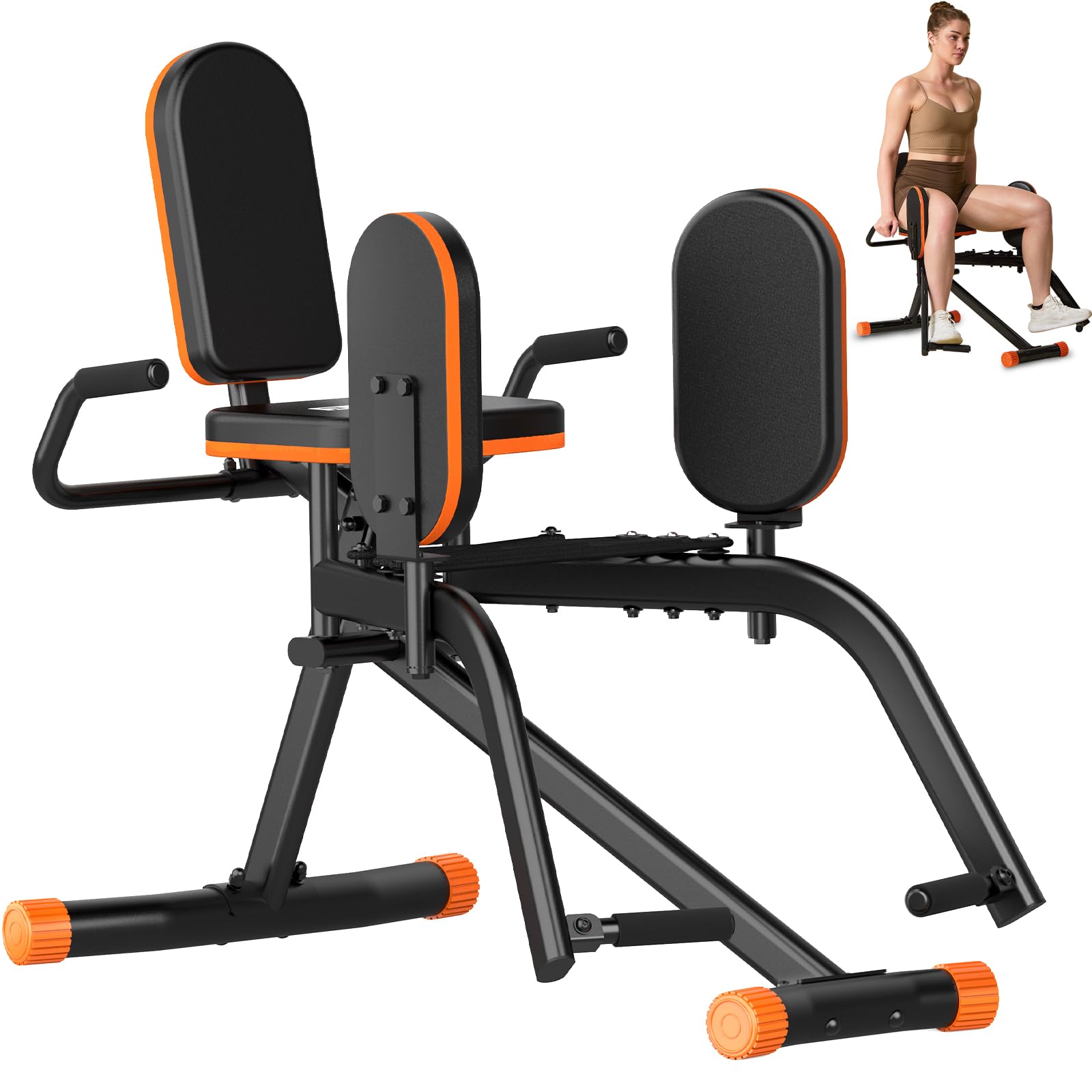
Three seat heights and nine resistance levels are the two details that make this one easier to share than most abductor machines. The seat adjustment is not a luxury: it is what lets a shorter and a taller user both get their hips into a workable relationship with the pads, and nine levels mean smaller jumps between them than a three-band machine gives you.

At 35 by 18 by 32 inches it is narrow enough to live in a closet, which changes how often you will actually use it, and assembly is straightforward for one person in under an hour. Band resistance also means no plates, no weight stack, and nothing to oil or re-cable.

What you give up is capacity. The frame is light, the bands are the only resistance, and this is built for home use rather than a heavy lifter's long progression. Add it to a hip thrust setup rather than buying it instead of one: this is the machine that finishes a session, not the one that starts it.

Bottom Line

A compact abductor machine with a three-position seat and nine band levels — the easiest of these to share and to store.

Check Latest Price

Best For Quiet apartment sessions

Our Score 8.4/10
HXD-ERGO Hip Abductor Machine

HXD-ERGO

HXD-ERGO Hip Abductor Machine

  • Warranty 2 years
  • Dimensions 32.6"D x 20.3"W x 30.7"H
  • Resistance Dual top and bottom bands
  • Maximum User Weight 440 lb
Check Price on Amazon

Under 25 decibels, the listing says, and we did not put a meter on it, but quiet is the right word. There is no stack to clank, just bands and a pivot, so a set in a second-floor apartment before work is a realistic thing to do. That sounds like a small selling point until you have abandoned a machine because it was too loud to use at the hour you actually had free.

The numbers hold up for the size: a 440-pound user rating, a two-year warranty that is the longest of the band machines here, and a 32.6 by 20.3 inch footprint. Fifteen minutes with one person and no second pair of hands is not what we expected from a machine this size, and it is the reason this one gets assembled instead of sitting in its box.

Where it lands for us: it is the abductor machine for a shared wall or a small room. The 440-pound rating and the two-year warranty are the strongest pair among the band machines in this group, and the dual top-and-bottom bands let you tune where the resistance starts as well as how much of it there is.

Bottom Line

The quietest machine here and the easiest to build alone, with a two-year warranty — just know that it only trains one direction.

Check Latest Price

How We Tested Seven Glute Machines

We started with a shortlist of more than 20 machines from brands known for home gym equipment, then filtered by resistance type, footprint, frame weight, and price. Anything with a fixed back pad that couldn't comfortably fit both a 5-foot-3 and a 6-foot-1 tester got cut. That left seven, which we assembled in a garage gym and a spare bedroom and lived with for nine months.

Each machine got at least three sessions a week. We timed assembly from unboxing to first rep, noted whether it took one person or two, and recorded which tools were needed. We measured footprint with a tape and checked whether the frame rolled or shifted on the floor. Every session included three sets of 12 hip thrusts, plus single-leg and abduction variations where the machine allowed, watching where the resistance engaged, whether the top end felt smooth or snappy, and whether bands stretched out or cables frayed after a few hundred reps.

Two testers of different heights swapped settings on each machine and we counted how many pins it took to get there. Footplate angle got a close look, since knee comfort hinged on whether knees tracked over toes at the bottom. After each set we checked the hip pad for pressure marks, shoved the frame side to side mid-rep for stability, and listened for creaks at the base. Value came down to how often we reached for a machine without dreading the setup.

How to Choose

Start With the Movement You're Missing

For all the different shapes, these are three machines. A hip thrust machine loads the bridge pattern, which is where most people can move the most weight and where the glute max does its real work. An abductor or adductor machine works the glutes sideways, into the hip stabilizers that thrusting never reaches. A squat trainer coaches depth and form with light assistance.

Decide which of those your training lacks before you compare anything else. For a first machine we would rather see you buy the hip thruster, because it is the one that keeps giving as you get stronger, and add sideways work later if you have room for a second footprint.

Read the Resistance Rating Properly

Capacity and resistance are different numbers and the listings blur them. A 400- or 600-pound figure is how much user the frame holds; the load you actually train against is the bands, the springs, or the plates you hang on it.

Band machines stack in fixed jumps, so check the top of the range rather than the middle. If your working hip thrust already sits above what a band machine can give you, buy plate loading once instead of trading up in a year.

Measure the Floor Before the Machine

A plate-loaded hip thruster can run about six feet in its longest dimension and folds for nothing; abductor machines are far smaller, roughly 32 to 35 inches long and under two feet wide.

Decide up front whether the machine lives in place or comes out of storage, because those are different purchases. The ones that stow are flat and light; the ones that do not are the ones you can load. Measure the doorway between the delivery spot and the training spot as well, since a six-foot frame does not turn corners well.

Fit Comes Down to Torso and Seat

Adjustment is the most overpromised word in this category. A three-position footboard changes where the movement lands, and a three-position seat changes who can use the machine, but neither makes up for a torso pad that cannot slide forward and back.

If you are tall or long-torsoed, treat a fixed torso pad as a hard limit and look for a seat or footboard you can move instead. If you are plus-size, seat width and the space between the leg pads matter more than the weight rating.

Frequently Asked Questions

Final Verdict

Start with the BootySprout. It is the machine most people will actually use: assembled out of the box, easy to stow, and loaded with enough band resistance to build glutes through a year or two of steady training.

If you already hip thrust heavy and own plates, the GMWD is the better buy, because it takes the load the bands cannot in about six feet of floor you will need to keep clear. And if your glutes need sideways work rather than more thrusting, the HA1 covers both directions from one seat.