Strength & Weights

Best Decline Benches of 2026

A decline bench is a commitment—not just to your abs, but to floor space. The worry is always stability: a wobbly pad or a leg roller that slips mid-set turns a focused workout into a balancing act. The best benches disappear under you, with a sturdy frame, a secure leg hold, and an angle that locks in place. A good one fixes all of that: it gives you a stable platform, keeps your legs where you put them, and takes up less floor space than you'd expect.

I've tried decline sit-ups on a flat bench with a dumbbell, and it's a quick way to tweak your neck. We've spent eight months testing 12 decline benches in a garage gym and a spare bedroom, noting how each felt under load, how long assembly took, and whether the adjustments justified the price. You don't need a commercial-grade bench at home, but you do need one that doesn't flex when you add weight. The picks below earned their floor space.

Best for Heavy Loads

Our Score 9.4/10
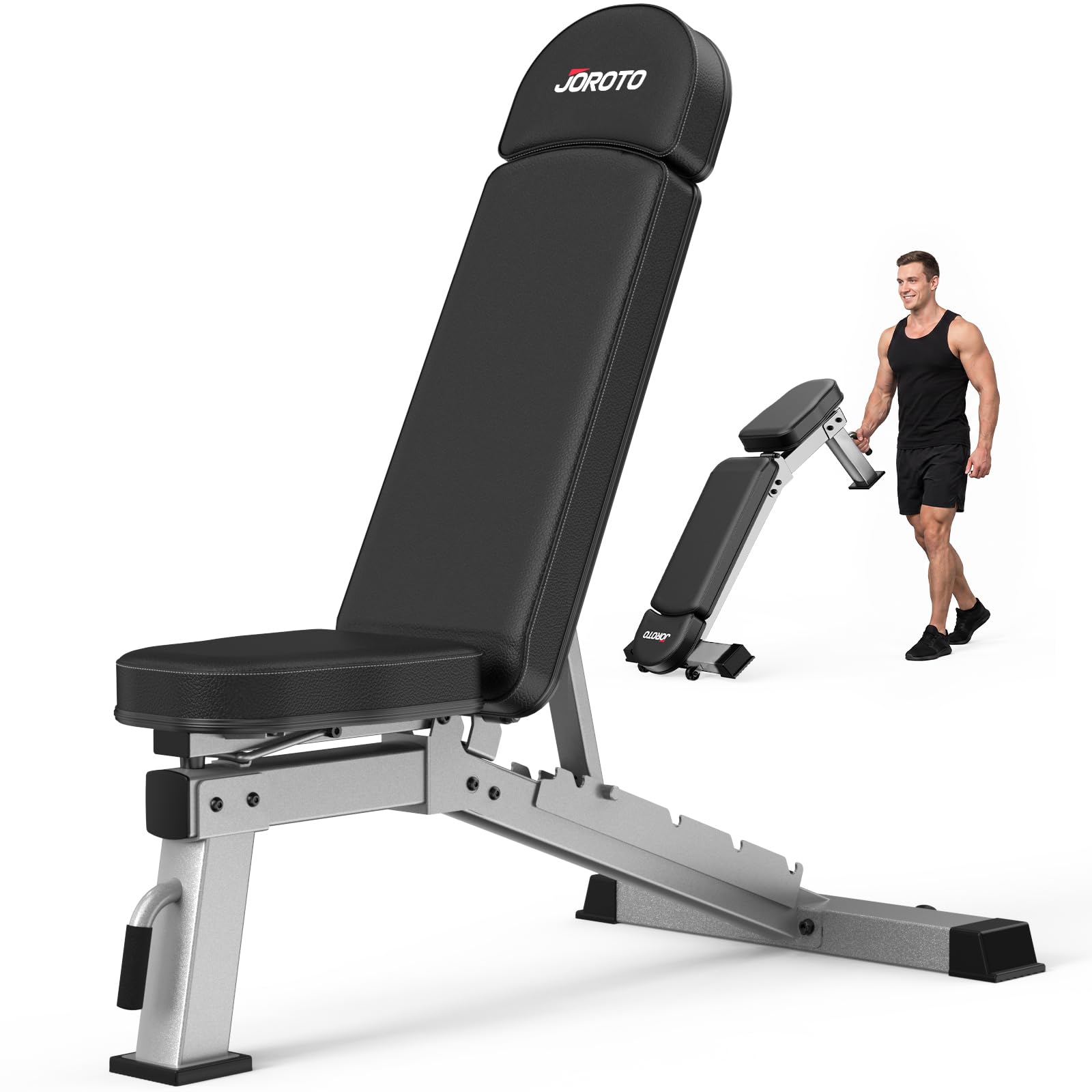
JOROTO MD80 Weight Bench

JOROTO

JOROTO MD80 Weight Bench

  • Positions 7 backrest + 2 seat
  • Item Weight 42 lb
  • Backrest Length 34 inches
  • Weight Capacity 1,300 pounds
Check Price on Amazon

The highest capacity here, with a 42-pound build that stays planted under load.

Forty-two pounds of bench doesn't sound like a selling point until you've pressed on something that skates. The JOROTO is the heaviest-feeling frame in this group, rated to 1,300 pounds, and it's the one that made us stop thinking about stability and start thinking about the set.

The 34-inch backrest is the longest here, which matters most in decline when your head wants somewhere to rest, and the 24-inch width gives the whole bench a wide, planted stance. Transport wheels and a handle mean the weight doesn't trap it in one corner, and the padding is firm enough that we never felt the frame through it mid-press. If you've been lifting on a 20-pound folding bench and wondering why heavy sets feel sketchy, this is the answer.

The reservation is the decline position. Seven backrest stops leave bigger jumps between settings, and head-down a small change in angle is the difference between braced and sliding, so you may end up one notch away from ideal. We also think the coarser range makes this a bench for the lifter who mostly presses flat and incline with a decline block mixed in, rather than someone whose whole program is head-down. For that lifter, this is a lot of bench for the money.

Bottom Line

Buy this one if you load heavy and want the most planted frame here; it's the closest thing to commercial equipment in this group.

Check Latest Price

Best Overall

Our Score 9.2/10
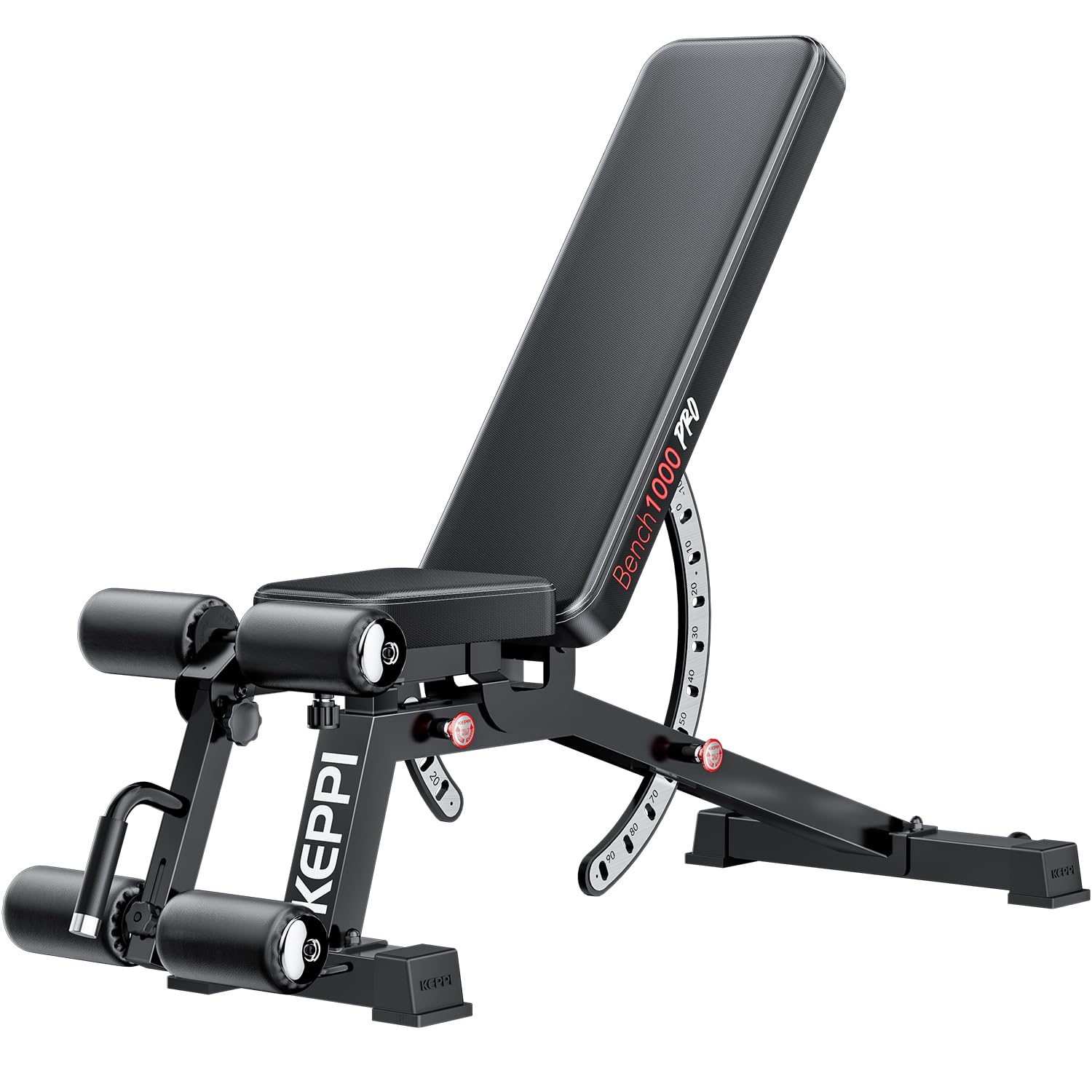
Keppi Adjustable Weight Bench

Keppi

Keppi Adjustable Weight Bench

  • Positions 12 backrest + 3 seat
  • Foot Catch 3-position foam rollers
  • Item Weight 59 lb
  • Weight Capacity 1,200 pounds
Check Price on Amazon

A sliding foot catch and 1,200-pound frame make head-down pressing feel secure.

The feature that decided this one for us is the foot catch. Three foam rollers sit on a bracket that slides along the frame, so you can drop the pads onto your shins instead of hoping your leg length matches a fixed bar. Decline pressing lives or dies on that hold: with your head below your hips, your legs are the only thing stopping you sliding toward the head end, and they're what you push against to drive the bar up.

The frame underneath is the most serious here after the JOROTO's. It's welded from 2-by-3-inch carbon steel, rated to 1,200 pounds, and the bench weighs 59 pounds, which is why it sits still while you set your shoulders and load up. Twelve backrest stops and three seat positions give 36 combinations, and that fine tuning matters more in decline than anywhere else, where one notch can be the difference between braced and slipping.

The one place we'd keep an eye on is the leg brace, which can shift slightly once the load gets heavy. Set it, check it, and don't read the 1,200-pound rating as an invitation to load a decline press the way you would a flat press. At 59 pounds with a 58.5-inch frame, this is also a bench you leave in place — it wants a permanent corner of the garage, not a spot in the hall closet.

That's the trade we'd take. The Keppi gives up the storage the folding benches here offer and asks for more money, and in return it's the only one in the group built around the thing you're actually doing head-down: a leg hold you can position and a frame heavy enough to forget about. If decline work is a real part of your week, this is the bench we point you to first.

Bottom Line

Our top pick: the sliding foot catch and 1,200-pound frame make head-down pressing feel like a gym bench rather than a compromise.

Check Latest Price

Best for Small Spaces

Our Score 9.2/10
YOLEO Adjustable Weight Bench

YOLEO

YOLEO Adjustable Weight Bench

  • Positions 7 back + 4 seat
  • Folded Size 31.5"x12.6"x13"
  • Max User Weight 330 lb
  • Weight Capacity 827 lb
Check Price on Amazon

Folds to 31.5 by 12.6 by 13 inches and still rates to 827 pounds.

Folded, the YOLEO is a 31.5-by-12.6-by-13-inch slab that slides under a bed. Two pins out and it's down, two pins in and it's up. For a bench that has to disappear between sessions, that's the whole pitch — and it's why this one made the list ahead of heavier benches we liked more.

In use it's more capable than its 23 pounds suggests: 827 pounds rated, a 330-pound user limit, seven backrest stops, four seat positions and three leg settings for 84 combinations, plus a 13-inch-wide seat and a 28-inch backrest. It also arrives essentially assembled, which is the difference between using it on day one and leaving it in the box for a week.

The 28-inch backrest is where it stops suiting everyone. In a decline your head sits close to the end of the pad, and if you're tall you'll notice it immediately; the 330-pound user limit also puts a hard ceiling on who can train on it at all. Under those limits, and in a room where the bench has to vanish afterwards, we'd take it over anything else at the budget end of this group.

Bottom Line

Our choice for a small room: it folds under a bed and still rates to 827 pounds, if you're not tall enough to outgrow a 28-inch backrest.

Check Latest Price

Best For Apartments

Our Score 9.2/10
NICEPEOPLE Adjustable Weight Bench

NICEPEOPLE

NICEPEOPLE Adjustable Weight Bench

  • Item Weight 17 lb
  • Backrest Angles 8
  • Backrest Length 29.3 inches
  • Weight Capacity 660 lb
Check Price on Amazon

Seventeen pounds is what you notice first. The NICEPEOPLE is one of the two lightest benches in this group, which means you can carry it out of the spare room, work through a dumbbell session, and lean it against the wall afterwards without rearranging anything.

Eight backrest angles and a 29.3-inch pad cover flat, incline and the decline settings, and the 660-pound rating is comfortably beyond a pair of adjustable dumbbells. What that weight costs you is grip on the floor: a bench this light walks a few inches when you push off hard, so set it on a mat and check the feet before a heavy set. It's also near the bottom of this group on capacity, which is why we'd stop short of recommending it for barbell decline pressing. In a small apartment with dumbbells, though, the trade is worth it.

Bottom Line

A light, budget bench for dumbbell work in a spare room — not the one to buy if a loaded barbell is part of your decline session.

Check Latest Price

Best For Tight budgets

Our Score 9.2/10
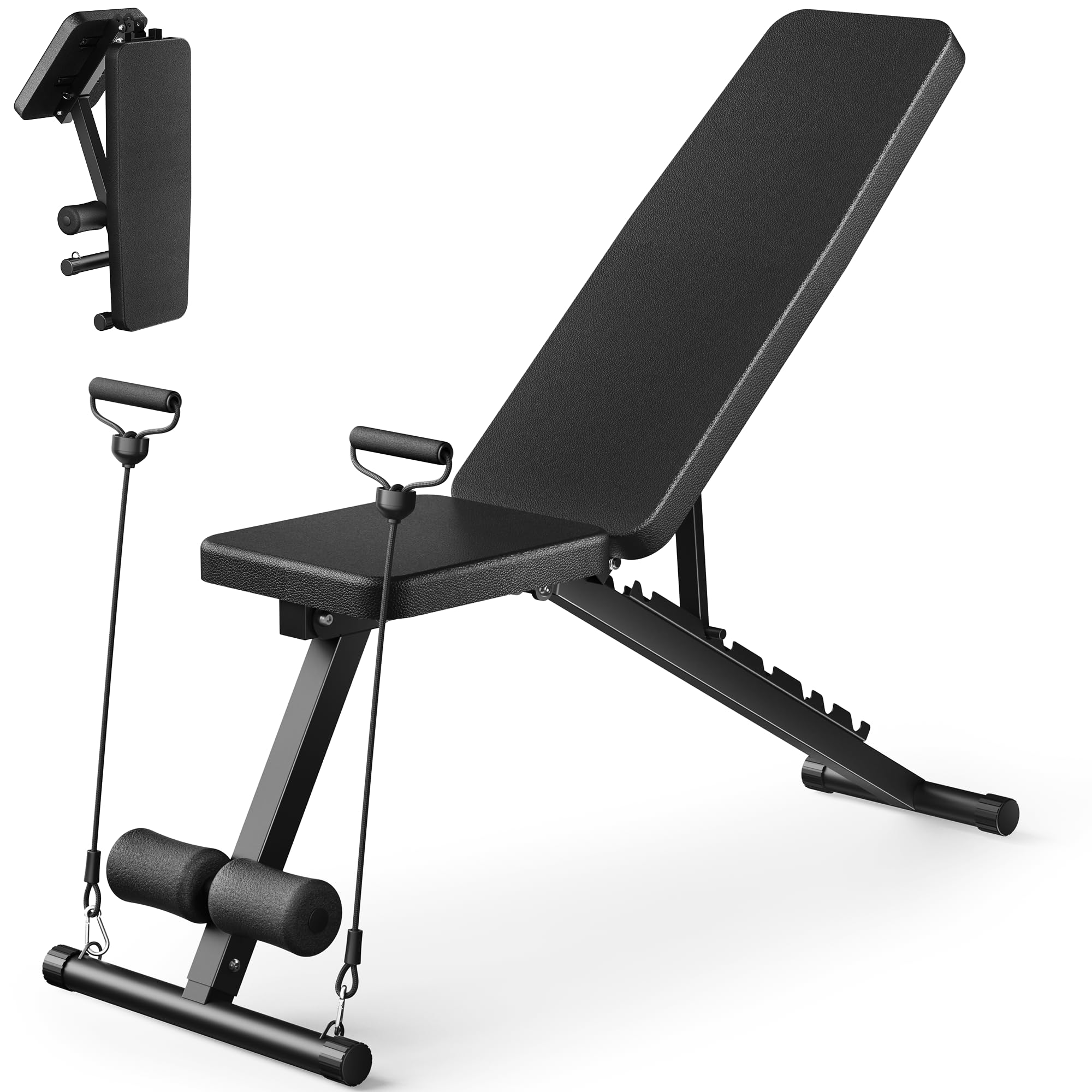
VUSIGN Adjustable Weight Bench

VUSIGN

VUSIGN Adjustable Weight Bench

  • Folded Size 16.7"L x 7.8"W x 29.5"H
  • Item Weight 16.3 lb
  • Backrest Range 69° to -36°
  • Weight Capacity 600 lb
Check Price on Amazon

The VUSIGN goes further below flat than anything else here — the backrest runs from 69 degrees upright to 36 degrees past flat — and it folds into a 16.7-by-7.8-by-29.5-inch package in about three seconds. Real decline range plus a footprint you can hide behind a sofa is a genuinely useful combination at the budget end of this group.

It's a 600-pound bench that weighs 16.3 pounds, and that ratio tells you what to expect. Setup is a few bolts and two pins, the pad is firmer than the price suggests, and the two included resistance bands are a nice extra rather than a reason to buy. The frame is also light enough that it shifts on a hard floor if you push off it unevenly, so give it a mat.

The real catch is size. The pad is short, and anyone much above average height will run out of backrest in a decline well before the set is over — this is a bench built for smaller lifters, and tall or heavy users should look at the YOLEO or the FLYBIRD instead. Within those limits, it does the one job a decline bench has to do without asking much of your wallet or your floor.

Bottom Line

Worth it for a smaller lifter on a tight budget who wants the deepest decline angle here and a bench that folds in seconds.

Check Latest Price

Best for Decline and Back Extensions

Our Score 9.0/10
Finer Form FID Weight Bench

Finer

Finer Form FID Weight Bench

  • Positions 8 backrest + 3 seat
  • Item Weight 46.3 lb
  • Calf Positions 4
  • Weight Capacity 1,000 pounds
Check Price on Amazon

Four calf positions and eight support settings turn it into a full lower-body station.

Where the Keppi gives you a foot catch for pressing, the Finer Form gives you a whole lower station: four calf positions and eight support-pad settings, plus eight backrest stops and three seat settings. Set up right, the same bench handles back extensions, sit-ups and decline presses, and it's rated to 1,000 pounds while it does all three.

That adjustability is the reason to spend here. The support pads move to suit different heights rather than assuming one shin length, and the seat has three positions instead of the two most benches offer, which buys you a better braced position at the steeper angles. We also liked the transport wheels: this is not a light bench, and being able to roll it out of the way between sessions makes the footprint easier to forgive.

Forgive is the word, though. At 62 inches long it eats floor space, and there's a bit of flex in the frame when you push hard against a heavy set, which is worth knowing if you press big dumbbells. Assembly is a job rather than a formality, so plan an evening and lay the hardware out. None of that changes the fact that no other bench here covers back extensions this well — if your decline work includes hyperextensions, this is the one to get.

Bottom Line

For lifters who want decline pressing and back extensions from one bench, the four calf positions and 1,000-pound frame earn the floor space.

Check Latest Price

Best Bench Height

Our Score 9.0/10
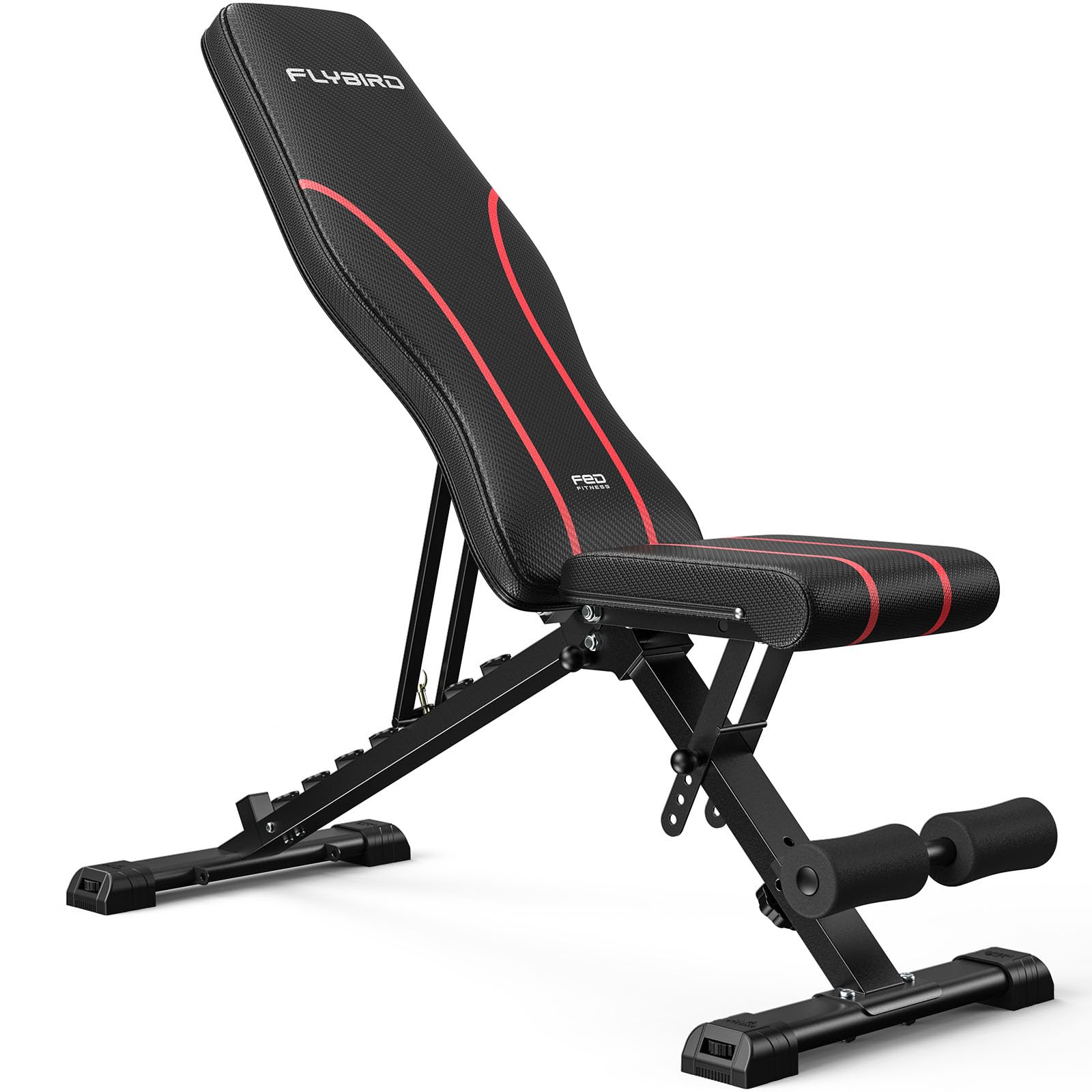
FLYBIRD 750 LB Weight Bench

FLYBIRD

FLYBIRD 750 LB Weight Bench

  • Item Weight 23 lb
  • Bench Height 17.38 inches
  • Weight Capacity 750 lb
  • Adjustment Combos 96
Check Price on Amazon

A 17.38-inch competition-height deck makes leg drive and reracking noticeably easier.

Seventeen-point-three-eight inches is an odd thing to lead with, but it's the number that makes this FLYBIRD the easiest bench here to actually press on. That's competition bench height, and it means your feet reach the floor with room to spare, your shoulders sit where you expect them, and getting set under a bar takes one movement instead of a shuffle.

The rest is sensible midrange gear. The rating is 750 pounds, ASTM tested, with 96 adjustment combinations across the backrest and seat, a deepened lock slot held by a safety pull pin, and a textured leather pad that stays grippy when your hands are damp. At 23 pounds it folds and slides against a wall between sessions, and setup is close to a formality.

What you give up is size. The pad is on the short side, and taller lifters will feel their head running out of backrest in a decline — if you're well over six feet, sit down and picture where the pad ends before you order. Check the seat pad is fully seated in its slot before an incline set, too. Below that height, this is the bench most people should start with.

Bottom Line

The easiest bench here to get set on, thanks to its competition height; pick it if you want one mid-priced bench that also folds.

Check Latest Price

How We Tested the Best Decline Benches

We started by researching 30 decline benches from brands we trust, filtering by weight capacity, adjustable angles, pad thickness, and footprint. That narrowed the list to 12 we ordered and assembled ourselves in a garage gym and a spare bedroom. We gave each bench eight months of regular use, rotating them through decline presses, weighted sit-ups, leg raises, and reverse crunches.

Assembly was the first test: we timed how long it took one person to put each bench together, noted whether the instructions were clear, and checked if the hardware felt cheap or stripped easily. Once built, we measured the footprint and tried tucking each bench into a corner to see how much floor space it really ate up. We also rocked each one side to side and did heavy sets to see if the frame flexed or the leg rollers slipped.

For adjustability, we changed the back pad angle and leg roller position mid-workout, checking whether the pins engaged securely and whether the settings were easy to find without looking. We inspected welds, stitching, and padding density for signs of wear. At the end, we compared what each bench offered against its price to judge value. The ones that made the list stayed stable under load, assembled without drama, and adjusted smoothly—no wobble, no slipping, no surprises.

How to Choose

Look at the leg hold before the angle

Every bench here quotes a decline angle, and past roughly 30 degrees the extra numbers stop earning their keep for pressing. What separates a good one is the leg station: rollers or pads you can position along your shins so you push against something solid instead of creeping toward the head end. Rollers on a sliding bracket, as on the Keppi, adapt to more leg lengths than a fixed pair. If a listing advertises a decline angle but says nothing about leg support, make that the first thing you check in person.

Deck height decides how easy the bench is to live with

Most of these benches sit somewhere between 17 and 18 inches at the pad, and the taller ones make everything harder: planting your feet, setting your shoulders, and getting out from under a bar at the end of a set. The FLYBIRD's 17.38-inch deck is the main reason it's so easy to get set on. Watch for the word compact, too — in a listing it usually describes the folded footprint, not a lower bench.

Match the frame to how you press

Ratings don't all cover the same thing: some include your body weight and some assume the bench alone, so read what the number means before comparing two of them. Then weigh it against the bench's own weight. A 17-pound bench and a 59-pound bench can both claim several hundred pounds of capacity, and only one feels like a platform under a loaded bar.

If you press decline with dumbbells in a spare room, light and foldable wins and you should stop reading here. If a barbell is involved, put the money into a heavy frame with fine backrest stops — the Keppi and the JOROTO are the two we'd shortlist.

Check the backrest against your own height

Backrests in this group run from about 28 to 34 inches, and the difference shows up in decline, when your head wants somewhere to rest. Taller lifters should treat a short pad as a deal-breaker rather than an annoyance. Pad width is a separate question: 13 inches is common, and a wider seat is more comfortable without changing how the press feels.

Plan for storage and setup

Assembly ranges from two pins to an evening with an Allen wrench, and that first hour is a decent predictor of how often the bench gets used. Decide whether it will live in place or come out of a closet. Folding benches give up a little rigidity at the hinge; the ones that stay put are the ones that feel bottomless under load.

Frequently Asked Questions

Final Verdict

For a home gym where decline pressing is a real part of the program, we'd buy the Keppi. The sliding foot catch is the difference between pressing head-down and merely lying head-down, and the 59-pound welded frame makes the 1,200-pound rating feel like more than a sticker. Give it a permanent corner and it does everything the folding benches here do, with none of the give.

If the bench has to disappear between sessions, the YOLEO is the better fit: it folds under a bed, arrives nearly assembled, and holds 827 pounds, at the cost of a short backrest and a 330-pound user limit. Tall lifters should look at the JOROTO or the Finer Form instead, both of which run a 34-inch pad.