Yoga & Mobility

Best Balance Pads of 2026

A balance pad looks simple until you stand on one. Too soft and your foot sinks into a wobbly slab that punishes your ankles; too firm and you might as well be standing on the floor. The right one gives just enough underfoot, whether you're rebuilding an ankle after a sprain, adding instability to lunges, or trying to hold a single-leg stand while the coffee brews. I've kept one by my desk for years, and the difference between a useful pad and a trip hazard comes down to how the foam compresses and how much surface you have to work with.

Over the past six months, we put 12 balance pads through daily use. We stood on them in socks and bare feet, tried them at different difficulty levels, and paid attention to size, firmness, and whether the price felt fair for what the foam did after weeks of wear. The picks below range from gentle starters to genuinely wobbly challenges—the right one depends on how much instability you actually want.

Best Overall

Our Score 9.6/10
ProsourceFit Balance Pad

ProsourceFit Balance

ProsourceFit Balance Pad

  • Weight 12 oz
  • Surface Non-slip, sweat-resistant
  • Dimensions 15.5 x 12.75 x 2.25 in
  • Foam Material TPE
Check Price on Amazon

The best all-around foam pad for balance drills, PT homework, and comfortable kneeling.

Most balance pads make you choose: soft enough to kneel on, or firm enough to make standing work feel worthwhile. The ProsourceFit sits closer to the middle than anything else in this group, and that balance is why it is our top pick. Its 15.5-by-12.75-inch deck is big enough for a normal two-foot stance, lunges, and kneeling, while the 2.25-inch TPE foam gives a little without letting you sink. We recommend it first for a reason that has nothing to do with a single headline spec: it handles several jobs without asking you to buy a second pad.

The surface is sweat-resistant and wipes clean, which matters more than it sounds in a pad you use barefoot. On wood and tile it stayed put under a normal stance, and the edges did not curl up when we shifted weight. At 12 ounces it is light enough to carry to a class or tuck under a desk, but the footprint still feels substantial underfoot.

Firmness is the one place where this pad can surprise you. It is supportive rather than pillowy, so if you want a deep, cushioned sink for seated work, the AIREX is the softer alternative. The trade-off is that the ProsourceFit gives you a bit more feedback through the foot, which is exactly what we want from a balance pad.

What we kept coming back to is how little ceremony it requires. It works barefoot, under socks, and under knees for floor exercises, and it does not need a mat underneath to feel stable. That flexibility is why it stays out instead of getting folded into a closet.

Bottom Line

The best all-around balance pad we tested: firm enough for balance drills, forgiving enough for kneeling, and grippy enough to use barefoot on hard floors.

Check Latest Price

Best Large Platform

Our Score 9.6/10
AIREX Balance Pad

AIREX Balance

AIREX Balance Pad

  • Weight 2 lb
  • Dimensions 19.69 x 16.14 x 2.36 in
  • Foam Material Closed-cell foam
  • Weight Capacity 600 lb
Check Price on Amazon

A roomy, softly supportive deck for wide stances and broad-footed balance work.

The AIREX is the pad that changes how much floor you have. At 19.69 by 16.14 inches, it is the largest deck in this set by a clear margin, and the extra room is obvious the moment you set up a wide or split stance. It is also the heaviest here at 2 pounds, so this is a pad you carry deliberately rather than toss into a tote. The closed-cell foam is rated to 600 pounds, the highest capacity in this group.

That size is why we choose it for balance work that involves moving your feet, not just standing still. A wider deck lets you step out, shift side to side, and kneel without feeling as if you are about to run out of foam. The surface is softer than the ProsourceFit's, which gives a more forgiving landing under knees and a slightly gentler challenge underfoot. We found it encouraged a broader stance, and that is a useful thing to practice.

The foam is softer than the ProsourceFit's, which means more give under a knee and a slightly gentler challenge underfoot. If you want a crisp, dense platform, the StrongTek is the better match. What the AIREX buys with its softer foam is a pad that feels friendly for longer kneeling and broad standing work, without turning into a marshmallow. The roomier deck is the reason we keep it in the rotation; it makes balance practice feel less cramped.

Bottom Line

For wide stances, broad-footed users, and anyone who wants more floor under them, the AIREX is the roomiest pad here and still portable enough to move.

Check Latest Price

Best Firm Cushioning

Our Score 9.4/10
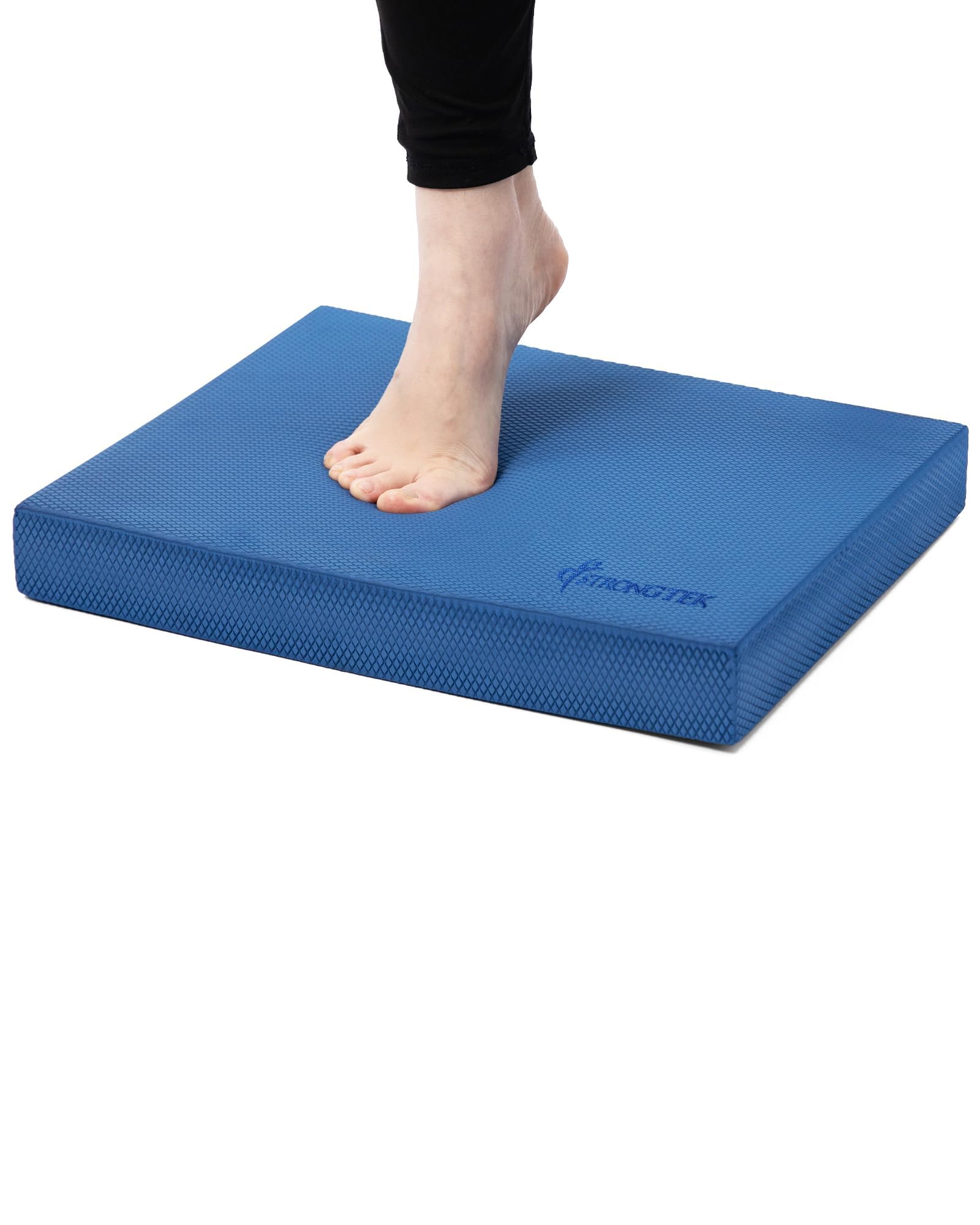
StrongTek Balance Pad

StrongTek Balance

StrongTek Balance Pad

  • Weight 11.2 oz
  • Surface Textured
  • Dimensions 15.8 x 13 x 2 in
  • Foam Material High-density TPE
Check Price on Amazon

Dense TPE foam gives firm, stable support for balance drills and floor work.

Firmness is the first thing you notice on the StrongTek. The 2-inch high-density TPE foam barely compresses under a heel, and that makes the pad feel more like a stable platform than a cushion. We like that for balance work because the challenge comes from the rounded edges and the slight give in the foam, not from sinking into it. It also stays put on a hard floor, thanks to the textured surface.

At 15.8 by 13 inches, the deck fits a normal two-foot stance with a little room to shift. We used it under hands and knees for floor work and found the firmness welcome there too: it protects without letting your knees roll inward. The pad is light, just 11.2 ounces, so it moves between rooms easily. The foam is water-resistant and wipes clean, which is useful if you sweat on it or use it barefoot.

For deliberate balance drills and knee-supported floor exercises, this is the pad we recommend when you want a firm, planted feel. It is the one we choose for balance drills that should feel stable rather than wobbly. The textured surface and light weight make it easy to keep close at hand. It is a straightforward, low-fuss pad rather than a plush one.

Bottom Line

For firm, stable balance work and floor exercises that need knee support, the StrongTek is the dense pad we recommend.

Check Latest Price

Best Kit

Our Score 9.4/10
Pete's Choice Balance Pad

Pete's Choice Balance

Pete's Choice Balance Pad

  • Weight 12 oz
  • Included Stretch strap and exercise guide
  • Dimensions 16 x 13.5 x 2 in
  • Foam Material High-density foam
Check Price on Amazon

A solid pad plus a stretching strap and exercise guide for home routines.

The stretching strap is what separates the Pete's Choice from a shelf of nearly identical foam pads. It comes with the pad along with a digital exercise guide, and together they turn a simple balance tool into a small home mobility kit. The pad itself is 16 by 13.5 by 2 inches, so it has a little more length than the ProsourceFit and the same easy-to-carry 12-ounce weight.

The foam is high-density and firm, with a smooth finish that wipes clean after sweaty sessions. We found it stable for standing balance work and comfortable enough for kneeling, although it does not have the textured grip of the Vive or HAPBEAR. That smooth surface is not a problem on a dry floor, but it is something to notice if you plan to use the pad in shoes or with sweaty feet.

The extras are genuinely useful, not filler. The strap gives you something to hold for calf and hamstring stretches, and the digital guide provides a starting routine if you are not working from a PT handout. The bundle is what you are buying here; if you already own a strap and know your routine, a pad-only pick makes more sense.

For balance alone, we prefer the ProsourceFit; the bundle is why this one earns a place. It is firm, stable, and roomy enough for a standard stance, and the strap earns its keep in a stretching routine. The pad still works as a standalone, so the extras are a bonus rather than a requirement.

Bottom Line

The Pete's Choice is a firm, roomy pad with a useful stretching strap and guide, and we recommend it for anyone building a home mobility kit.

Check Latest Price

Best for Single-Leg Balance

Our Score 9.4/10
THERABAND Stability Trainer

THERABAND

THERABAND Stability Trainer

  • Firmness Soft intermediate
  • Material Foam
  • Dimensions 16.35 x 10.25 x 2.3 in
  • Weight Capacity 300 lb
Check Price on Amazon

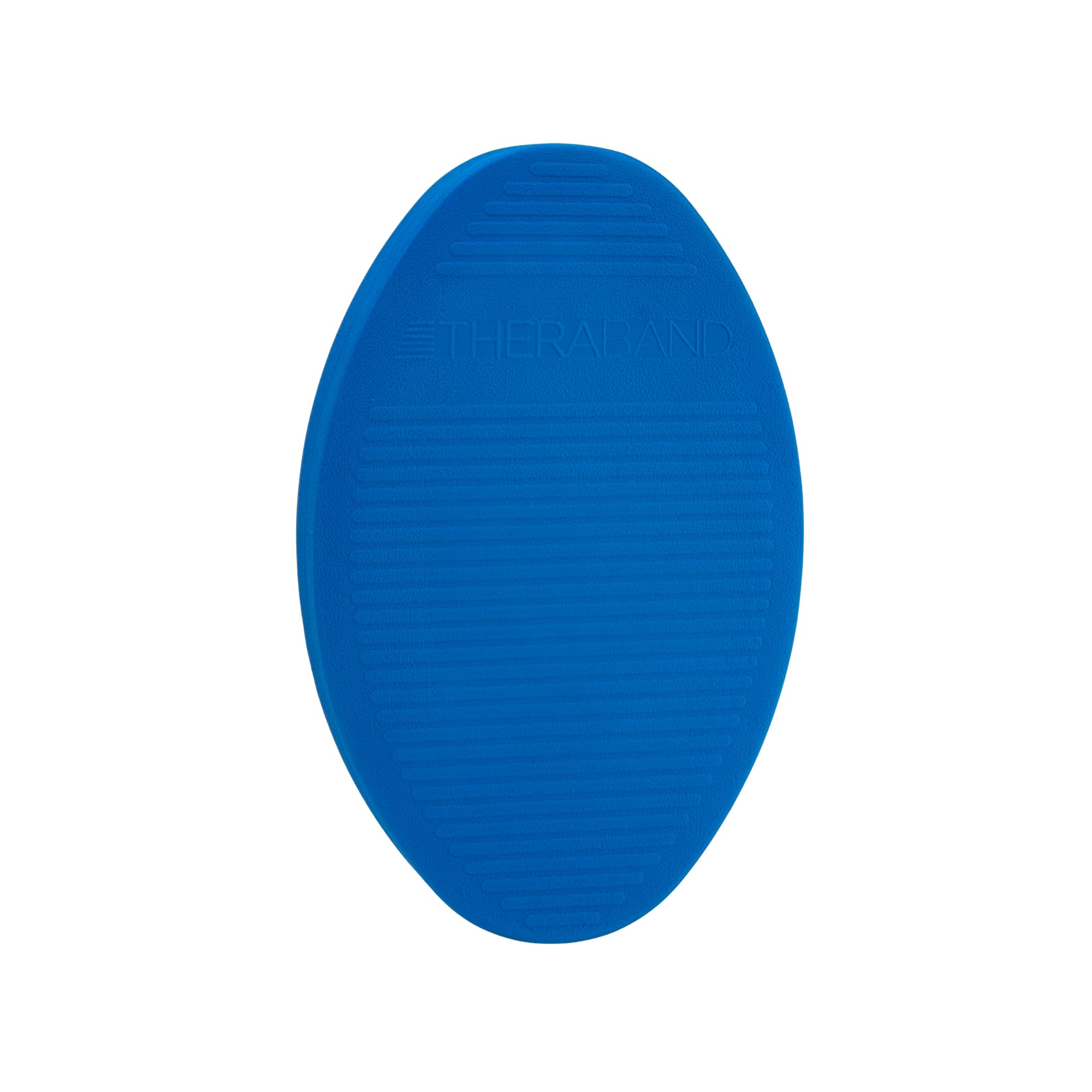
A narrow, forgiving pad that shines for single-leg balance and ankle rehab.

The THERABAND pad is 16.35 inches long but only 10.25 inches wide, and that narrower deck is the point. It is built around single-leg balance, ankle work, and travel. The blue foam is the soft-intermediate version, with 2.3 inches of thickness and a textured surface that gives bare feet something to grip.

We like it best for isolating one ankle at a time. The narrower deck keeps you honest: there is less room to cheat with a wide foot position, and the soft-intermediate foam introduces a little more movement than the firm pads here. At 300 pounds, it has the same capacity as several larger pads, so the compact size is not a sign of fragility. It is the pad we reach for when we want a focused ankle or single-leg session without dragging out a full mat.

The compact shape is also easy to live with. It slips into a small duffel, stores in a drawer, and does not turn a corner of the room into a gym. We used it for short ankle and balance sessions where a larger pad felt like overkill. The soft foam is not the most demanding surface here, but it is a useful middle step between standing on the floor and moving to a wobble board.

Bottom Line

A focused pad for single-leg balance and ankle work, with a narrow deck that fits small spaces and a forgiving soft-intermediate surface.

Check Latest Price

Best Budget

Our Score 9.4/10
HAPBEAR Balance Pad

HAPBEAR Balance

HAPBEAR Balance Pad

  • Surface Diamond-grid texture
  • Footprint 15 x 12 in
  • Foam Material TPE
  • Foam Thickness 2.4 in
Check Price on Amazon

A grippy, thick pad at the budget end that covers daily balance basics.

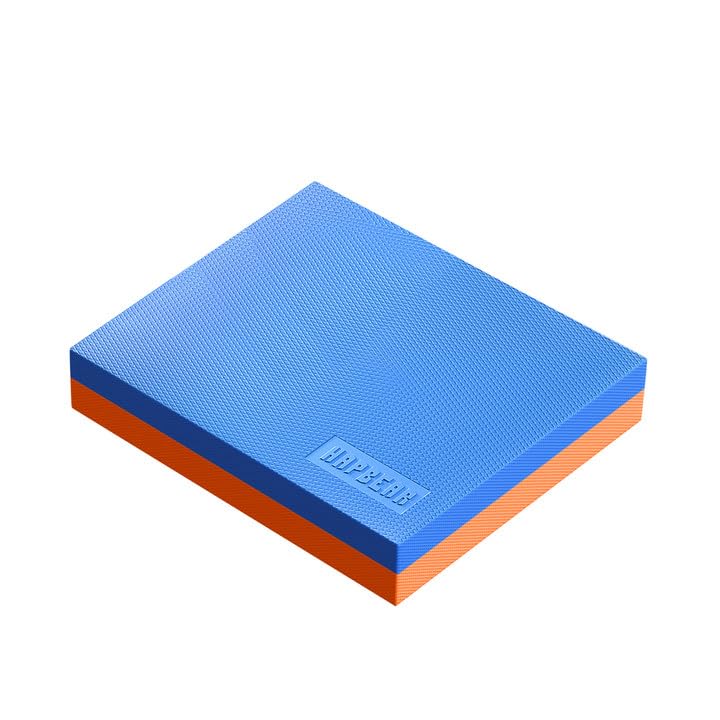
The HAPBEAR is the budget pick, and it gets the basics right: a 15-by-12-inch deck, 2.4 inches of dense TPE foam, and a diamond-grid surface that grips the floor well. It is big enough for a normal two-foot stance, balance drills, and kneeling. For a first balance pad or a second one for travel, we recommend it without much hesitation.

The dual-color surfaces are both usable, which is a small thing until you are flipping the pad around between exercises. The texture is pronounced enough to feel underfoot without being uncomfortable on bare skin. The TPE is waterproof and wipes clean, and the pad is light enough to move between the living room and a standing desk. We also like that the 2.4-inch thickness feels substantial without turning into a soft mattress.

What we noticed most is how easy it is to leave out. It sits by a desk without shouting for attention, and the grip means it does not wander when you step on it with socks. The dual-color sides make it easy to flip between a standing session and a kneeling stretch. For the price, it covers the daily basics without asking you to baby it.

Bottom Line

The HAPBEAR gives you a grippy, thick balance pad at the budget end, and we recommend it for first-time buyers and travel kits.

Check Latest Price

Best for Shoes

Our Score 9.2/10
Vive Balance Pad

Vive Balance

Vive Balance Pad

  • Weight 10.6 oz
  • Dimensions 15.8 x 13.4 x 2.4 in
  • Foam Material Closed-cell foam
  • Weight Capacity 300 lb
Check Price on Amazon

Textured top and base hold steady for barefoot or shoe workouts.

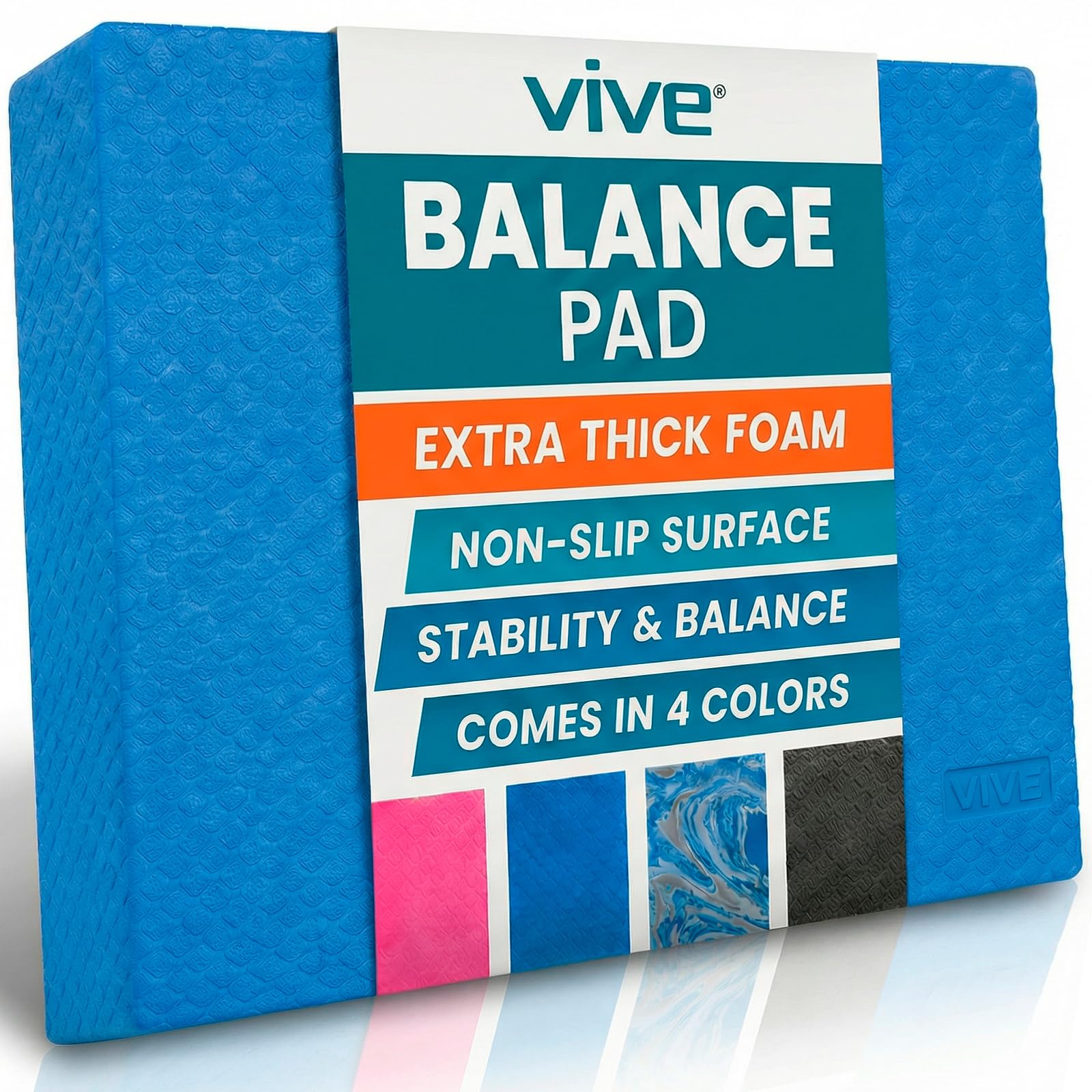
Most foam balance pads are designed for bare feet. The Vive is the one we are comfortable using in shoes, thanks to a lightly textured top and a textured base that both resist sliding. The 2.4-inch closed-cell foam is thick enough to cushion knees and elbows, and the pad weighs just 10.56 ounces, so it is easy to move from room to room.

The Vive is firm rather than pillowy. That firmness makes it stable for standing drills and shoe-based work, and the closed-cell foam does not absorb sweat or moisture. We found the surface easy to wipe down after use. The 15.8-by-13.4-inch footprint gives a normal stance room without taking over the floor.

Where the Vive earns its place is as the pad you keep by the door for quick balance work in sneakers. The textured top gives a shoe something to grip, and the base stays put on hard floors. It also works barefoot, but the shoe-friendly design is the reason to choose it over the HAPBEAR or the roomier AIREX. The closed-cell foam has stayed firm and easy to clean in daily use.

Bottom Line

For shoe-based balance drills, the Vive's textured top and base make it the most sure-footed pad here, with enough foam for knee work.

Check Latest Price

Best For Tight spaces

Our Score 9.2/10
5BILLION Balance Pad

5BILLION Balance

5BILLION Balance Pad

  • Shape Oval
  • Dimensions 12 x 8 x 2.5 in
  • Foam Material TPE
  • Weight Capacity 300 lb
Check Price on Amazon

The 5BILLION pad is 12 by 8 inches, which is small even by compact standards. That is not a flaw hidden in the fine print; it is the product's whole identity. The oval TPE pad is 2.5 inches thick, rated to 300 pounds, and built for one foot at a time. If you want a broad platform for lunges or wide squats, this is not it.

We found it most useful for single-leg balance, ankle stability, and standing-desk fidgeting. The oval shape gives you less edge to catch a heel on, and the 2.5-inch foam has enough give to make a single-leg stand feel active without being unstable. The textured surface grips a bare foot, and the TPE wipes clean after sweaty sessions. It is also the easiest pad here to stash under a chair or in a bag.

Where it falls short is anything that needs room. A split stance, a lunge, or a wide two-foot position is out; the deck is simply too short. That keeps it from being a do-everything pad. For a desk-side balance break or travel, though, the compact size is exactly the point.

For desk-side balance breaks or travel, it earns its place. The 300-pound capacity makes the small size feel less fragile, and the oval shape is easy to position under one foot. We keep it for tight spaces, not as an only pad.

Bottom Line

A compact foam pad for single-leg balance and ankle work, small enough to keep under a desk or in a travel bag.

Check Latest Price

How We Tested 12 Balance Pads

We started by researching the balance pads on the market, sorting through foam densities, surface textures, dimensions, and price bands to build a shortlist of 12. We skipped anything that looked like a yoga block with a soft top and focused on pads designed for standing work—physical therapy drills, single-leg training, and home balance routines. Then we ordered all 12 and used them for six months.

The pads lived in our living rooms and home offices. We stood on them barefoot while brushing our teeth, worked through single-leg stands with eyes open and closed, and did lunges and squats with one foot on the foam. We tried them on hardwood and low-pile carpet, in socks and bare feet, and had testers ranging from balance beginners to daily exercisers run through the same five-minute routine.

Firmness showed up first: we pressed a thumb into each pad to see whether it rebounded or held a dent, then noted whether it bottomed out underfoot after a few minutes. To judge stability, we watched for edges rolling and pads sliding across the floor during weight shifts. We measured usable surface area and whether a wider stance felt cramped, and we tracked quality over time—compression lines, surface cracking, and how each pad looked after six months of near-daily use. Value came down to whether we reached for a pad often and whether it still felt supportive at the end.

How to Choose

Start With the Deck Size

The first decision is whether you need a two-foot platform or a single-leg tool. A 15- to 16-inch length and 12- to 13-inch width, like the ProsourceFit and StrongTek, leaves room for a normal stance, narrow squats, and kneeling. If you like a wide or split stance, the AIREX's 19.7-by-16.1-inch deck is the roomier choice. A narrow pad such as the THERABAND is not a lesser product; it is simply built around one foot at a time.

Choose Firmness by the Job

A pad that feels soft under a knee can feel vague under a standing foot. For balance work, a little give is useful because it makes the ankle and foot correct; too much softness and the pad bottoms out. For kneeling and floor work, a firmer, denser foam like the StrongTek or HAPBEAR is kinder. The AIREX is the softer end of this set and still gives a balance challenge; the THERABAND is deliberately soft-intermediate for ankle and single-leg work. Buy for the job you do most, not the one you imagine.

Look at Grip and Footwear

Grip matters on both faces: the top needs to hold a bare foot or a shoe, and the base needs to stay put on your floor. Textured pads, including the Vive and HAPBEAR, give more purchase than a smooth finish, especially if you sweat. If you train in shoes, check that the surface is described as shoe-friendly rather than assuming it. A smooth pad can work on a dry floor, but texture is safer under a moving foot.

Match Portability to Your Space

Most pads here weigh about 10 to 12 ounces; the AIREX is 2 pounds. If the pad lives in a gym bag, that difference matters less than footprint; if it lives under a desk or in a drawer, a compact oval like the 5BILLION is easier to stash but limits you to one foot. A larger pad can double as a kneeling cushion and standing-desk mat, so leave room for it rather than buying small and wishing for more deck.

Check Capacity and Long-Term Wear

Check the stated maximum, because the pads here are not all rated the same; several list 300 pounds, while the AIREX lists 600. Stay within the figure on your model, especially if you share the pad or use it under equipment. Closed-cell foam resists moisture and holds its shape better than open-cell foam, and dense foam generally resists edge tears better than a soft, crumbly pad. Store it flat and inspect the edges before heavy use.

Frequently Asked Questions

Final Verdict

The ProsourceFit is our top pick for most people because it nails the practical middle: a 15.5-by-12.75-inch deck for a normal stance, 2.25-inch TPE foam that supports without feeling dead, and a sweat-resistant surface that wipes clean. It handles balance drills, PT exercises, and kneeling without asking you to buy a second pad.

If you want more room underfoot, choose the AIREX; its 20-inch deck is the one for wide stances and moving footwork. If you train mainly in shoes, the Vive's textured top and base are the better fit.