Recovery

Best Ankle Braces for Running of 2026

The first run after a rolled ankle is mostly mental. The joint may feel fine, but every crack in the sidewalk becomes a reason to shorten your stride. A good ankle brace doesn't immobilize you—it gives the ankle a clearer sense of where neutral is, so you can get through a warm-up or an easy trail loop without holding your breath. Most braces fail at one of two extremes: a soft sock with a logo, or a rigid stirrup that fights your foot strike and rubs your heel raw.

I have been running in these braces for three months, including a stretch while working back from a mild inversion sprain, and the pattern is clear: support only matters if the brace stays put. My team tested 14 braces on road runs, treadmill intervals, and easy trail miles, watching for pressure points, strap slip, and whether we could adjust one mid-run. The best ones disappeared inside a running shoe and held their shape after repeated washes. The picks below are the ones I'd lace up for a real session.

Best Overall

Our Score 8.8/10
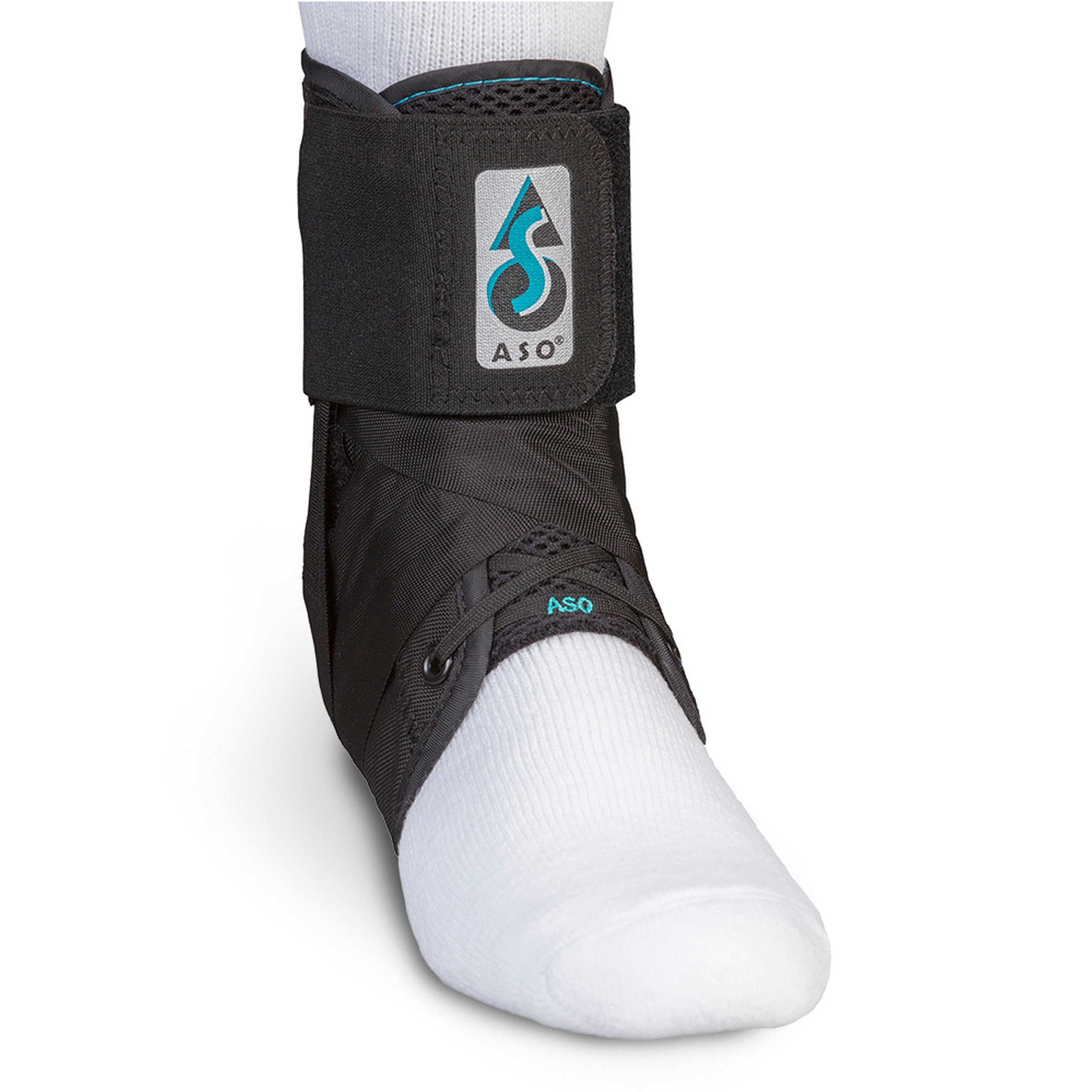
Med Spec ASO Ankle Stabilizer

Med

Med Spec ASO Ankle Stabilizer

  • Care Machine wash
  • Size Medium
  • Shoe Fit Fits most shoes
  • Support Style Lace-up with figure-8 straps
Check Price on Amazon

Figure-8 lacing and side support lock the ankle without bulk under a running shoe.

The ASO's figure-8 straps are the reason it earns the top spot. They cross around the ankle and lock down the side-to-side movement that turns a stumble into a sprain, while the lace-up front lets you tune tension across the whole brace. For running, that combination is more reassuring than a stretch sleeve alone, and the shape is designed to sit inside most shoes.

Our take: this is the best balance of stability and shoe compatibility in this group. The CoolFlex padding keeps the lace panel from digging in, and the nylon upper holds its shape instead of stretching out over a run. We also appreciate the bilateral fit, which means one brace works on either ankle.

Fit is the part to slow down for. Medium is the listed size, and the lacing gives you room to fine-tune rather than a single fixed fit. It slips inside most running shoes; a very tight racing flat may feel crowded, so try it with the shoe you actually run in.

Once it is seated, the lace-up stays put through a run. The nylon upper is machine washable, and the six-month limited warranty adds a little cover for a brace that will see a lot of sweaty miles.

Bottom Line

For the runner who wants one brace that can handle unstable ground and a return to running, the ASO is our default: figure-8 lacing, shoe-friendly shape, reliable side control.

Check Latest Price

Best Low-Profile Lace-Up

Our Score 8.8/10
WHCOOL Slim-Fit Ankle Brace

WHCOOL

WHCOOL Slim-Fit Ankle Brace

  • Pads Two auto-shaped pads
  • Size M (12–13 in ankle)
  • Shoe Fit Slim fit for sports shoes
  • Support Style Quick lace-up with figure-8 straps
Check Price on Amazon

Quick lace-up support with a slim profile that slips into most running shoes.

The WHCOOL earns its place with a quick-lace system that pulls tight with one hook-and-loop pass, plus a slim shape meant to sit inside sports shoes. We think that convenience is the real feature: a brace you can put on without a wrestling match is one you'll actually wear on a rushed morning.

The support is more than a sleeve. Non-stretch figure-8 strapping wraps the ankle, two auto-shaped pads fill the gaps around the joint, and the air-fabric lining keeps the package from feeling hot. The hook-and-loop fastening holds the laces where you set them, so you can loosen the brace after a run without rethreading the whole thing. It is the low-profile lace-up we choose when we want control without a boot-like shell.

Sizing is based on ankle circumference, not shoe size; the M covers 12 to 13 inches, so measure before ordering. If you have a wide foot or swelling, the maker advises sizing up. The brace is cut slim enough for most sports shoes, and the thin edges reduce pressure across the instep. The quick fastening is the reason it stays by the door instead of in a drawer.

Bottom Line

The WHCOOL earns its place as our quick-lace pick: one-pull tightening and a slim profile give lace-up control without the usual slow routine.

Check Latest Price

Best Budget Stabilizer

Our Score 8.8/10
ACE Deluxe Ankle Stabilizer

ACE

ACE Deluxe Ankle Stabilizer

  • Compression Adjustable
  • Stabilizers Reinforced side stabilizers
  • Support Style Adjustable with side stabilizers
Check Price on Amazon

Affordable side-stabilizer support for mild ankle weakness and everyday runs.

The ACE Deluxe is the budget stabilizer we point to for mild ankle weakness. Reinforced side stabilizers add lateral control, the adjustable closure lets you set compression, and the breathable materials keep it from feeling like a plastic cuff. It is not the most rigid brace here, but it is one of the easiest braces here to live with.

The adjustable design goes on quickly and lets you reset tension without unthreading laces. The side stabilizers are the useful part: they give the ankle a reminder not to roll without locking it completely. For easy runs, treadmill days, or a vulnerable ankle that needs a little backup, that is often enough.

What it gives up is maximum lockdown. If you are coming back from a significant sprain or your ankle has rolled repeatedly, the lace-up ASO or Z Athletics is the safer-feeling choice. The ACE is for mild support and prevention, not for a joint that needs to be held firmly.

We also appreciate that the adjustable closure is simple to reset mid-run if the fit changes. It is the brace we keep for the days when a full lace-up feels like overkill but bare ankles feel underdressed.

Bottom Line

Budget-minded runners with mild ankle weakness get useful side support and adjustable compression from the ACE without paying lace-up prices.

Check Latest Price

Best Budget Compression Sleeve

Our Score 8.8/10
INDEEMAX Copper Ankle Brace

INDEEMAX

INDEEMAX Copper Ankle Brace

  • Pack 2 pack
  • Size Medium
  • Material Copper-infused nylon
  • Support Style Compression sleeve with strap
Check Price on Amazon

Two low-profile compression sleeves with straps for mild support on a budget.

The INDEEMAX set is the value play: two copper-infused ankle sleeves with separate compression straps, so you can wear one while the other airs out. The fabric is thin and breathable, and the pull-on sleeve gives light compression without the fuss of laces.

We think it is the best budget compression option here for mild swelling or a cranky ankle that does not need rigid support. The strap adds a little more control than a plain sleeve, and having a pair makes it easy to keep one in your gym bag or at work.

It is still a sleeve, not a stabilizer. The side-to-side support is limited, and the strap is best for mild compression rather than a badly unstable ankle. The sleeve needs to sit snug rather than loose, so use the size chart and measure your ankle instead of guessing from shoe size.

The thin profile disappears under a sock, which is the reason we reach for it on days when a lace-up would feel like too much. The two separate straps let you adjust pressure as swelling changes, which is more useful than a second sleeve alone.

Bottom Line

Two low-profile sleeves, two straps, and a budget-friendly price make the INDEEMAX set our pick for mild compression and swelling.

Check Latest Price

Best Maximum Lockdown

Our Score 8.6/10
Z Athletics Reinforced Lace-Up

Z Athletics

Z Athletics Reinforced Lace-Up

  • Care Hand wash
  • Size Medium
  • Shoe Fit Fits inside shoes
  • Support Style Lace-up with side straps
Check Price on Amazon

A structured lace-up for runners who want maximum side-to-side lockdown.

The Z Athletics is the most structured lace-up in this group, and that cuts both ways. It uses figure-8 lacing and side straps to limit ankle roll, with air-mesh panels and a soft interior to take the edge off the hardware. The extra structure is the point, but it also makes this the slowest brace here to put on.

What it buys is lockdown. The side straps add a second layer of control over the laces, and the build feels sturdy rather than stretchy, which suits high-impact sessions and a runner with a history of rolls. It fits inside shoes, and the antimicrobial, breathable design is aimed at sweaty practices.

We rate it as the maximum-lockdown option here, not the everyday default. If you want a brace that feels close to a tape job for basketball, soccer, or a hard trail run, this is the one. If you want something you can pull on without thinking, the WHCOOL or a sleeve is the easier choice.

The payoff is a brace that feels planted when you push off. The air-mesh panels are a small mercy when you are sweating through a practice, and the sturdy stitching suggests it will hold that shape.

Bottom Line

When maximum lockdown matters more than easy on-and-off, the Z Athletics delivers it with side straps and a sturdy lace-up build for high-impact sessions.

Check Latest Price

Best Adjustable Wrap

Our Score 8.6/10
Bodyprox Ankle Support Brace

Bodyprox

Bodyprox Ankle Support Brace

  • Care Hand wash
  • Heel Open heel
  • Size One size (7.8–11 in arch)
  • Support Style Adjustable wrap
Check Price on Amazon

An easy adjustable wrap for mild support and swelling around the ankle.

The Bodyprox is not trying to be a lace-up. It is an adjustable wrap with an open heel, so it supports the ankle while leaving the heel free to move. That makes it a useful middle ground for runners who want compression and mild stability rather than a joint that feels locked.

The one-size wrap is listed for 7.8 to 11 inches of arch circumference, and the hook-and-loop closure lets you tighten or loosen over swelling without redoing laces. The breathable neoprene is soft against the skin, and the open heel keeps the fit from crowding the back of a shoe.

It is easy to put on and take off, which matters when you are adding support before a run or peeling it off afterward. The soft wrap can loosen during hard movement, though, and it will not replace a rigid brace for a badly unstable ankle. This is a mild-support tool, not a maximum-control one.

Our take: this is the best adjustable wrap here for swelling and everyday mild support. It gives you a way to add compression without committing to a lace-up routine, and the open heel keeps it comfortable under a sock. The open heel is the reason it works with a running shoe rather than just around the house.

Bottom Line

The Bodyprox is our adjustable wrap for mild support and swelling, especially when a rigid lace-up feels like more than the ankle needs.

Check Latest Price

Best for Recovery Days

Our Score 8.6/10
Crucial Compression Ankle Sleeves

Crucial

Crucial Compression Ankle Sleeves

  • Toe Open toe
  • Pack Pair
  • Size Medium (Men's 7–10 / Women's 8–11)
  • Support Style Compression sleeve
Check Price on Amazon

Soft open-toe sleeves for swelling and recovery-day compression under socks.

Crucial Compression's sleeves are for the days when your ankle wants a hug, not a cage. The open-toe knit covers the ankle and arch with light, even compression, and the pair is thin enough to wear under socks and most shoes.

The material is soft and breathable, and the open toe leaves room for swelling without squeezing the toes. The sleeves are designed for daily wear, sleeping, or recovery, which is a different job from a lace-up brace that is built to stop a roll.

We see this as the best recovery-day sleeve here: comfortable enough for long wear and useful for swelling, but not a stability brace. There are no side straps or figure-8 system, so do not expect it to hold a hard cut or a rocky trail. It is for the ankle that needs compression and a break.

The medium covers men's 7 to 10 and women's 8 to 11, and the open toe is a small detail that makes a difference when feet swell on a long day. The pair makes it easy to keep one in your bag and one at home.

Bottom Line

For recovery days and swelling, these soft open-toe sleeves are our pick; they are not built to stop a hard roll.

Check Latest Price

How We Tested Running Ankle Braces

We started by pulling every ankle brace we could find that was designed to be worn inside a running shoe, then filtered by size range, strap design, and materials. We eliminated anything sized by shoe size rather than ankle circumference, and we passed on braces whose care instructions were missing or vague. That left 14 braces, which we tested for three months.

Before the first run, I measured each tester's ankle circumference and matched it to the maker's size chart. We checked where the top edge landed, whether the heel cutout sat in the right place, and whether the brace bunched inside a shoe. Getting one on over a thin running sock became its own test: I timed how long it took, then tried to tighten or loosen the straps with the shoe still laced. Braces that required a bench, a second pair of hands, or a shoe removal lost points.

On the road, we mixed easy miles, treadmill intervals, and a few trail loops. I was working back from a mild inversion sprain for part of the test, so I noted pain before and after each run and whether I could forget the brace was there by mile two. We also ran controlled side hops and slow cutbacks on grass to see whether the brace resisted the roll or just covered the ankle. Pressure points, hot spots, and straps that loosened mid-stride showed up fast.

After every few runs, we washed each brace according to its instructions and checked the elastic for stretch, the stitching for fraying, and the straps for curling at the edges. A brace that stayed snug after a wash earned a longer look; one that turned into a loose sock did not. By the end, the survivors were the ones with flat, stitched seams and straps that held their shape.

How to Choose

Match the support to the ankle problem

A lace-up brace with figure-8 straps is the most secure choice for a runner with a history of rolls or a return from a sprain. The straps wrap the joint and limit the side-to-side motion that causes most running ankle injuries. An adjustable wrap is easier to put on and better for swelling, but it can loosen as you move. A compression sleeve is the least rigid option; it helps with swelling and mild soreness but will not stop a hard roll. Start with the job, not the label.

Fit it inside the running shoe

A brace changes how much room you have across the instep, around the heel, and over the tongue. Check with the sock and shoe you run in: the heel should stay down, the toes should not go numb, and no strap should press hard against the top of the foot. A listing that calls a brace slim is a starting point, not a guarantee. If the shoe feels tight across the top, the brace is too bulky for that shoe.

Measure the ankle, not the shoe size

Size charts for ankle braces do not agree on one measurement. The Bodyprox uses arch circumference, the WHCOOL uses ankle circumference, and the Crucial uses a men's and women's shoe range. Measure around your ankle and arch, then compare that figure with the chart rather than ordering your usual shoe size. If you are between sizes or still swollen, choose the larger size or an adjustable design; a sleeve that is too small can restrict circulation.

Decide how much fuss you'll tolerate

A brace only helps if you put it on. Lace-ups take the most time but give the most control; quick-lace and wrap designs are faster; sleeves are fastest. Think about cold mornings, sweaty hands, and whether you will adjust the brace mid-run. We favor a quick-lace design for runners who know they will not bother with traditional laces, and a sleeve for recovery days when support is secondary.

Know when a brace is not enough

A brace is support, not a diagnosis. If you cannot bear weight, have severe swelling, or see a deformity after an injury, get medical advice before running in any brace. The same goes for numbness, tingling, or cold toes while wearing one; loosen it or take it off. For a recent significant sprain, a brace can be part of a return plan, but it does not replace rehab or a clinician's clearance.

Frequently Asked Questions

Final Verdict

For most runners, we recommend the Med Spec ASO Ankle Stabilizer. Its figure-8 lacing gives the most dependable side-to-side control in this group, and it still fits inside most running shoes. If you want that lace-up security with a faster one-pull closure, the WHCOOL is the alternative we reach for.

If your ankle is swollen or you want compression rather than anti-roll, the Crucial sleeves are the softer choice for recovery days, while the INDEEMAX pair is the budget way to keep one clean. The decision starts with the job: control a rolling ankle, or support a sore one.