Yoga Mat Thickness Guide: Support Without the Wobble
The practical starting point: choose a dense 4–5 mm yoga mat for mixed practice. Go thinner when portability and floor feedback matter most, or choose a dense 5–6 mm mat when pressure at the knees, wrists, or hips is the main problem. Be cautious with very soft 8 mm-plus mats for balance-heavy yoga.
Thickness is not cushioning. Two mats with the same measurement can feel completely different because density, surface construction, and the floor underneath determine how far they compress.
Yoga Mat Thickness by Use
Manufacturers use both millimeters and fractional inches, and the conversions are often rounded. Use the range as a shortlist, then test compression and stability.
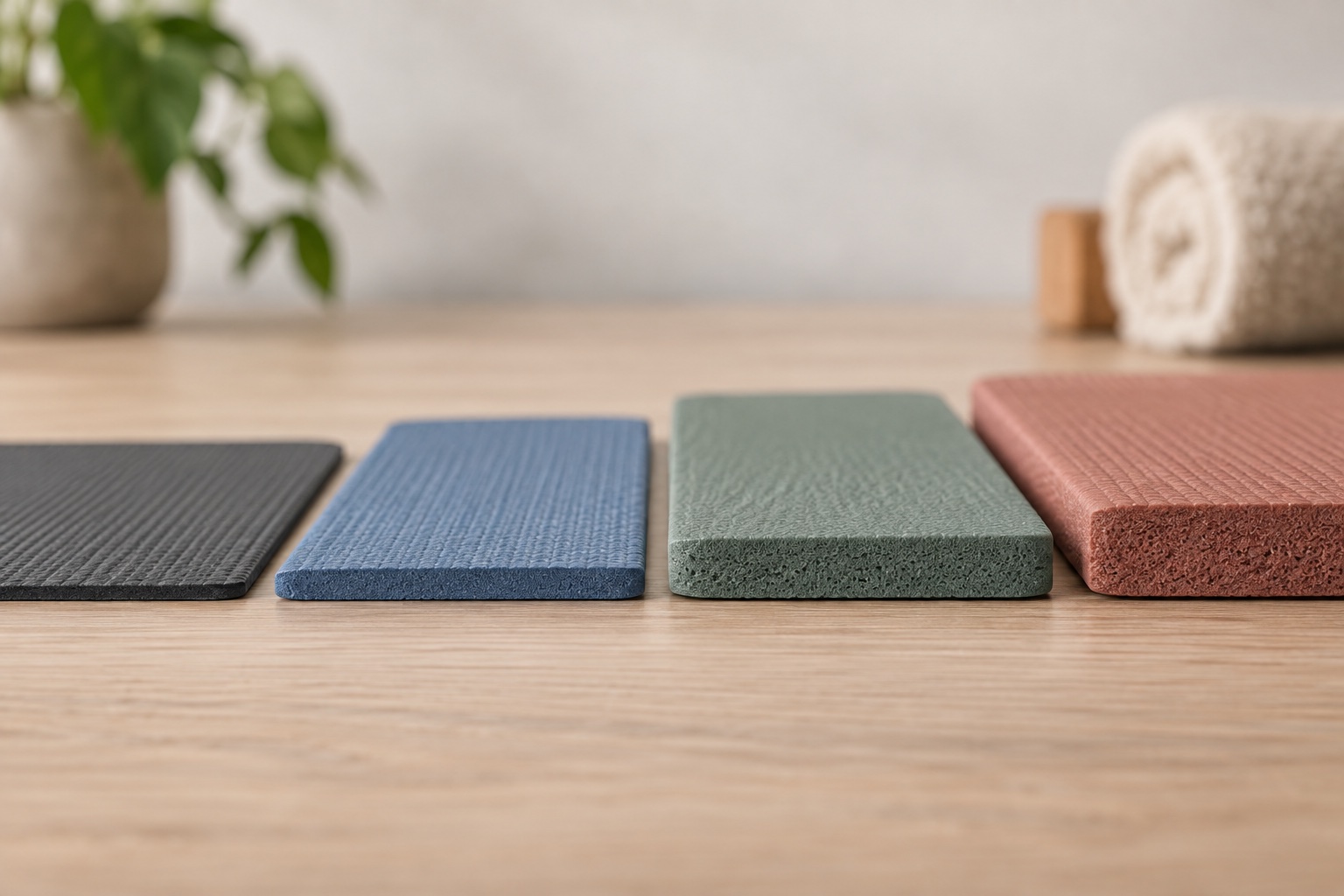
| Thickness | Best use | What to watch |
|---|---|---|
| 1.5–2 mm (about 1/16 in) | Travel mat, folding into luggage, layering over a clean studio mat | Very little pressure relief; floor texture is obvious |
| 3 mm (about 1/8 in) | Firm balance work and light commuting | Can feel harsh on hard floors if the material is dense and thin |
| 4–5 mm (about 3/16 in) | Most mixed home and studio practice | Weight varies widely by density and material |
| 6 mm (about 1/4 in) | Hard floors and users wanting more pressure distribution | Heavier; soft formulas can reduce balance feedback |
| 8 mm and above | Floor exercise, restorative work, or a specific pressure need | Often bulkier and less stable for standing yoga poses |
Why Density Matters More Than It Looks
Press one thumb into the mat, then place the heel of your hand on it as if holding plank. A low-density foam may form a deep crater; a dense mat will deform less and spread force across a larger area. Under a knee, the softer mat can ‘bottom out’ until the joint effectively reaches the floor.
Dense material usually weighs more for the same dimensions. That tradeoff is visible in current product specifications: Manduka lists the 6 mm PRO as a high-density mat around 7.5 pounds, while its 4.7 mm PROlite is designed as a lighter alternative. Do not assume a thinner model is less supportive without testing it.
Use Four Poses to Test the Mat
- Tabletop or low lunge: hold for 30 seconds. Sharp kneecap pressure suggests you need more density, local padding, or a thicker mat.
- Plank: watch whether the hands sink, wrinkle the surface, or slide as pressure increases.
- Tree pose: compare the standing ankle with the same pose on a firm floor. Excessive side-to-side movement can signal too much softness.
- Savasana: check the shoulder blades, spine, and hips after two minutes, not just the first contact.
If only one kneeling pose is uncomfortable, add a folded blanket or knee pad rather than sacrificing stability throughout the practice.
Account for the Floor Underneath
- Concrete or tile: favors a dense 5–6 mm mat if kneeling pressure is high.
- Wood or firm rubber flooring: works well with the 4–5 mm middle range for most people.
- Carpet: already introduces movement. A firmer, thinner mat may be more stable, but the mat can bunch or stretch on plush pile.
- On top of another studio mat: a 1.5–2 mm travel mat adds a personal surface, not full standalone cushioning.
Test on the same type of floor you normally use. A mat that feels stable on a store’s hard surface can feel completely different on home carpet.
Thickness Also Changes the Commute
Thicker and denser mats create a larger roll and often weigh more. Before buying, check the published weight and rolled diameter, then confirm that your strap or bag can support it. A travel mat that folds flat can fit luggage, but repeated folding may not be approved for every material.
If the mat lives at home, weight may be an acceptable price for stability and durability. If you carry it on foot or transit several times a week, set a weight limit first and treat thickness as the second decision. For the full grip, material, and size decision, see how to choose a yoga mat.
Make the Decision in This Order
- Choose the thinnest range that passes your kneeling and floor-pose test.
- Reject any mat that makes balance noticeably less stable.
- Compare weight and rolled size within the surviving range.
- Confirm the surface grip and material suit your sweat level and cleaning routine.
For most shoppers, that process lands at a dense 4–5 mm mat. The exception—not the marketing claim—should justify moving thinner or thicker.
Sources and Manufacturer Guidance
Requirements can vary by product, model, and situation. These primary sources informed this guide; official instructions for your exact product and current authoritative guidance take priority.
Frequently Asked Questions
-
A dense 4 mm mat usually gives more floor feedback and packs smaller; a dense 6 mm mat can reduce pressure on hard floors. The better choice is the thinnest mat that makes kneeling tolerable without making one-leg balance unstable.
-
It may be too soft for standing and balance-heavy practice, though it can work for restorative poses or general floor exercise. Test tree pose and plank before using it for a full yoga sequence.
-
A dense 5–6 mm mat is a reasonable place to start, but compression matters more than the label. A local knee pad can add pressure relief without making the entire surface unstable. Seek medical advice for persistent or worsening pain.
-
Yes, if both layers stay flat and do not slide, but stacking can create a soft, unstable interface. It is most useful when a thin travel mat is placed over a clean, firm studio mat.