What to Wear Running by Temperature: A Layering Starting Point
Use the air temperature to choose a baseline, then adjust for wind, precipitation, humidity, sun, pace, duration, and how easily you run hot or cold. The chart below is a starting point for a healthy adult on a continuous training run—not a safety clearance or a substitute for the forecast.
Wear pieces you can vent, push up, remove, or pack. New York Road Runners recommends adaptable layers because runners warm during the effort while weather can change. In hot conditions, the CDC recommends loose, lightweight, light-colored clothing and stopping activity if you feel faint or weak.
Running Clothing Temperature Chart
| Air temperature | Dry and light-wind starting point | Common removable addition |
|---|---|---|
| 80°F / 27°C and above | Light singlet or short sleeve, lightweight shorts, breathable socks, sun protection | Cap or visor; choose shade and reschedule when heat risk is high |
| 60–79°F / 16–26°C | Singlet or short sleeve with shorts | Thin arm sleeves at the cooler end |
| 45–59°F / 7–15°C | Short or long sleeve; shorts or light tights according to preference | Packable wind layer, light gloves, or headband |
| 30–44°F / -1–6°C | Wicking long sleeve, tights, light gloves, and ear coverage | Wind-resistant shell or thin midlayer |
| 15–29°F / -9–-2°C | Wicking base, insulating or thermal layer, full tights, gloves, and hat | Windproof outer layer and face/neck coverage |
| Below 15°F / -9°C | Full coverage with adjustable insulation and wind protection | Shorter sheltered route, warm backup clothing, or indoor alternative |
Build an Outfit You Can Change Mid-Run
A practical system has a moisture-managing base, optional insulation, and weather protection only when the conditions require it. Use zippers, sleeves, gloves, headbands, and packable shells as controls rather than committing to one bulky garment.
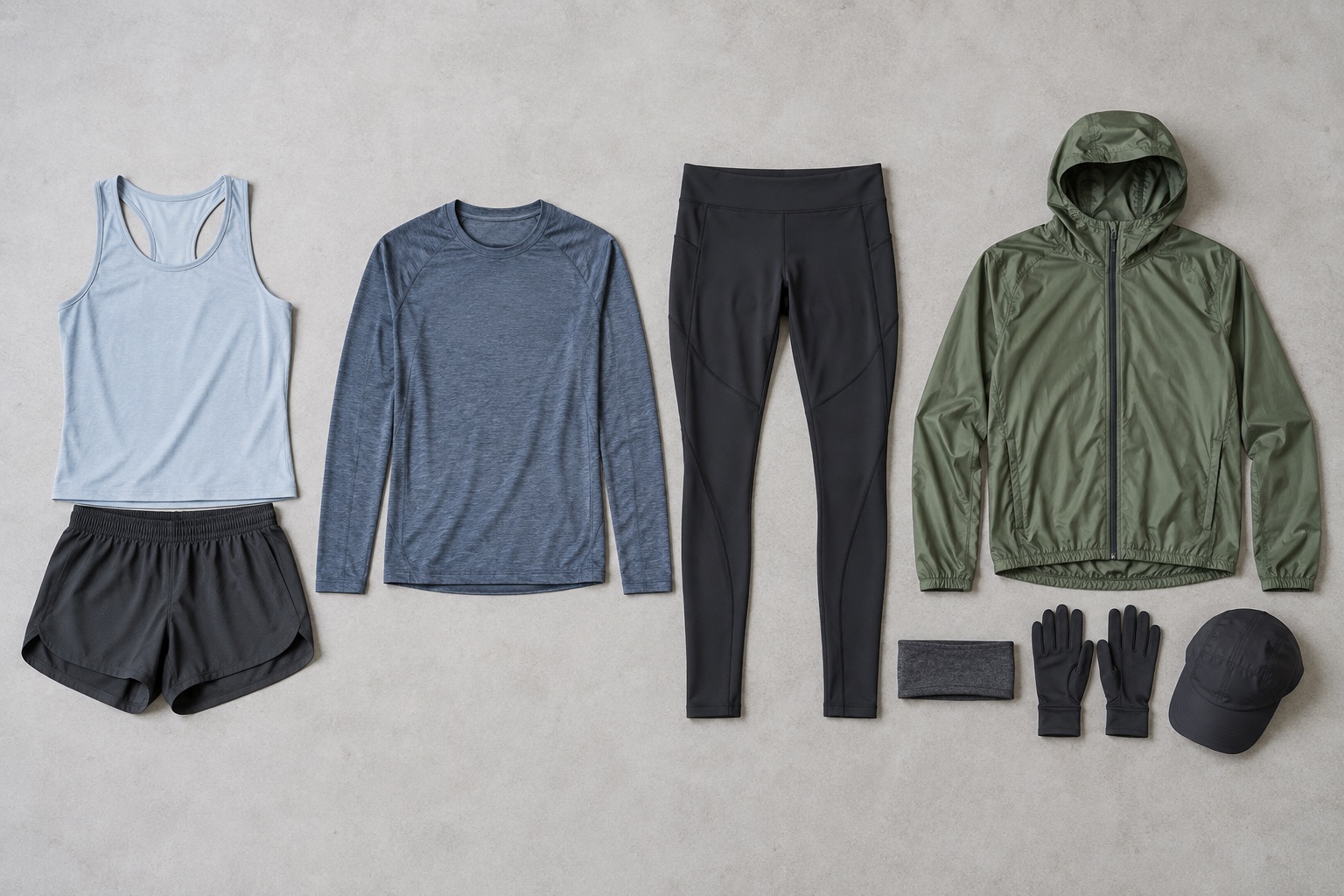
Adjust the Baseline for the Real Forecast
| Condition | Adjustment | Why |
|---|---|---|
| Strong wind | Add a close-fitting wind-resistant outer layer and protect hands/ears sooner | Moving air increases heat loss and can turn a mild temperature into a cold exposure |
| Cold rain or wet snow | Use a suitable waterproof shell, brimmed cap, and warm dry clothing immediately after | Wet insulation and slowing to a walk increase cooling |
| Warm humidity | Remove layers, favor ventilation, shorten or slow the session, and monitor heat symptoms | High humidity limits sweat evaporation |
| Bright sun | Use light colors, sun protection, and a cap; consider an earlier or later run | Radiant heat can make the route hotter than the air reading suggests |
| Intervals or race effort | Start slightly lighter than for easy running, with throwaway-free warm-up layers you can store | Higher intensity produces more metabolic heat |
| Run/walk, injury return, or long stops | Carry more insulation than a continuous-run chart suggests | Walking and stops reduce heat production |
| Remote or exposed route | Carry an emergency layer and keep a shorter exit option | A clothing mistake has greater consequences far from shelter |
Know When Clothing Is Not Enough
Heat: stop, reach a cooler place, and seek help when faintness, weakness, confusion, collapse, or other heat-illness signs appear. Do not try to sweat through worsening symptoms.
Cold: end the run and get to shelter for uncontrollable shivering, confusion, loss of coordination, or numb, pale, waxy skin. Replace wet layers promptly. Cold risk rises when precipitation, wind, fatigue, or a pace reduction removes the heat you expected to produce.
Create Your Own Two-Minute Clothing Log
After each run, record temperature, wind, rain, pace, outfit, and whether you were cold, comfortable, or overheated after 10 minutes and at the finish. Within a few weeks, your own log becomes more useful than a generic chart.
For wet-weather shell selection, continue with our waterproof versus water-resistant running jacket guide.
Sources and Manufacturer Guidance
Requirements can vary by product, model, and situation. These primary sources informed this guide; official instructions for your exact product and current authoritative guidance take priority.
- New York Road Runners: Cold-weather running and adaptable layers
- CDC: Heat and athletes, clothing guidance, and stop conditions
- American College of Sports Medicine: Exercising in hot and cold environments
- ACSM Expert Consensus Statement: Cold-weather exercise and injury prevention
- Sports Medicine: Clothing and thermoregulation during exercise
Frequently Asked Questions
-
Running generates heat, so many runners need less insulation than they would while standing outside. Use the chart as a start and refine it with your pace, weather, and clothing log.
-
Begin by comparing a short or light long sleeve with shorts or light tights. Add a packable wind layer when it is windy or wet, then adjust for pace and personal comfort.
-
A wet cotton layer can stay damp and chill the wearer when pace drops. A moisture-managing base and adjustable outer layers are usually easier to control.
-
It depends on temperature, rain duration, wind, pace, and access to shelter. Warm short rain may call for minimal clothing; cold sustained rain can require a waterproof shell.
-
There is no single air-temperature cutoff for everyone. Use local heat, cold, wind-chill, air-quality, and event guidance plus your health and acclimatization; choose an indoor option when risk cannot be controlled.