How to Keep Cold Plunge Water Clean: A Maintenance System
The short answer: keep cold plunge water clean by running the model-approved circulation and filtration system, testing the water before use, maintaining the sanitizer and pH targets in the exact manual, showering before entry, keeping the tub covered, and draining and deep-cleaning it when chemistry or clarity cannot be restored.
Do not copy a chemical recipe from a different cold plunge. Residential units may use chlorine, bromine, hydrogen peroxide, ozone, UV, or a combined system, and products that are safe in one protocol may be incompatible in another. Never mix sanitizers, oxidizers, acids, or bases, and never add a product that the manufacturer has not approved.
The Four Parts of Clean Plunge Water
- Remove debris: a skimmer, hair catch, and cartridge filter collect hair, lint, skin particles, and dirt.
- Control microorganisms: the approved sanitizer or treatment system reduces microbial growth; a clear-looking tub is not proof that the water is sanitary.
- Keep chemistry in range: pH affects sanitizer performance, comfort, and equipment life.
- Limit new contamination: shower first, keep wounds covered and out of the water, prohibit food and oils, and close the cover when the tub is not in use.
CDC’s residential pool and hot-tub guidance uses pH 7.0–7.8 as a general recreational-water reference, but a cold plunge manufacturer may specify a narrower target or a different sanitizer system. The product manual and treatment label take priority.
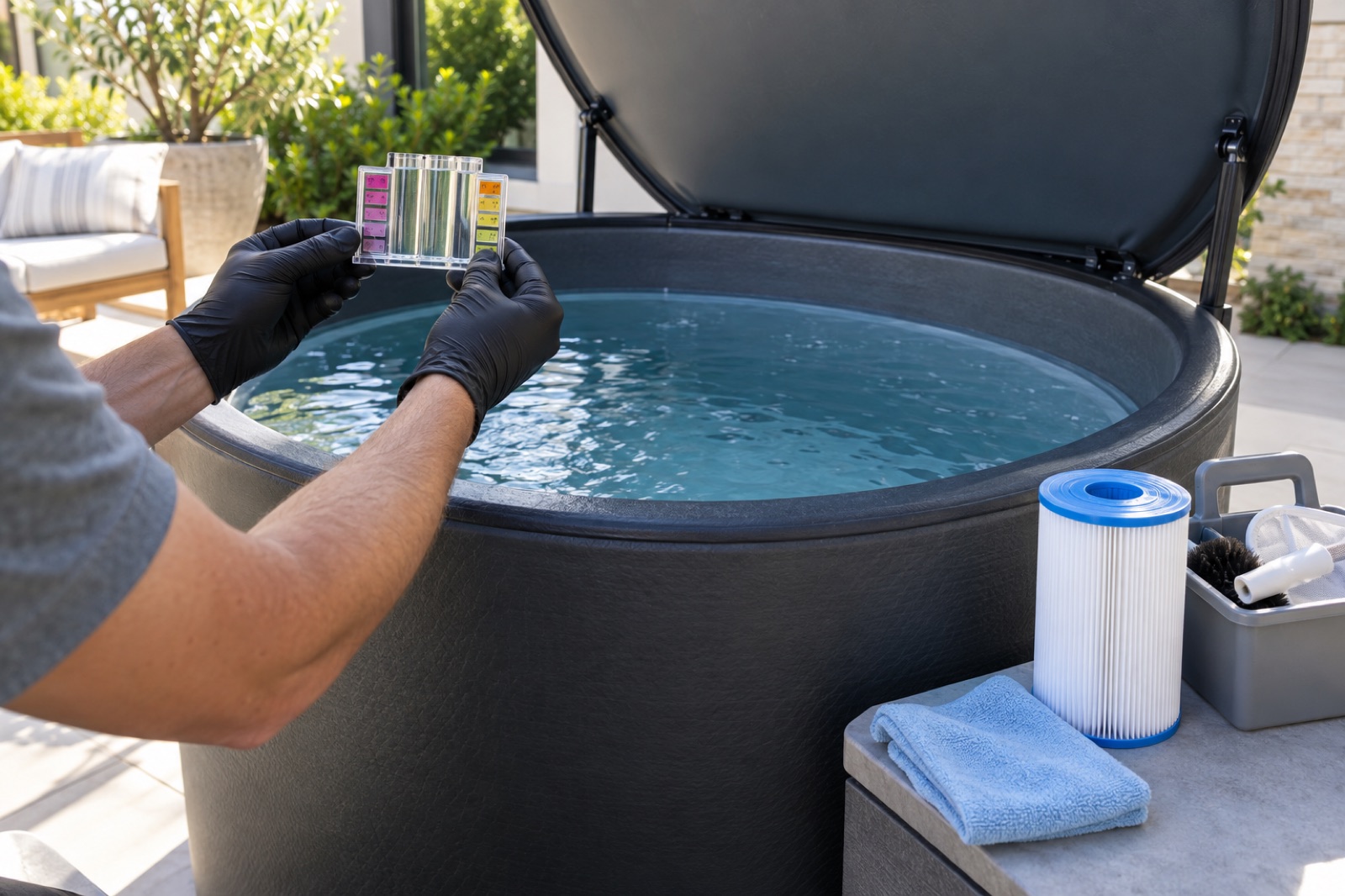
A Practical Cold Plunge Maintenance Schedule
Use this as a checklist, then replace every interval with the one in your model manual. Bather load, outdoor debris, water source, treatment method, and filter size can change the schedule substantially.
| When | Check or do | Act if |
|---|---|---|
| Before each use | Water clarity, odor, surface debris, temperature, flow, and the manual-required sanitizer/pH test | Do not enter if water is cloudy, slimy, strongly odorous, out of range, or not circulating |
| After use | Remove visible debris, wipe the waterline if needed, replace the cover | Oil, cosmetics, or heavy debris remain on the surface |
| Weekly or by pressure/flow signal | Inspect and clean the strainer or filter only as the manual permits | Flow drops, the chiller reports a restriction, or the cartridge remains dirty after approved cleaning |
| At the manual’s replacement interval | Install the exact compatible filter and inspect seals | The cartridge is damaged, collapsed, discolored, or cannot restore normal flow |
| At the manual’s drain interval or sooner | Drain, clean the shell and plumbing by the approved process, rinse, refill, balance, and circulate | Chemistry will not hold, biofilm returns, water remains cloudy, or contamination occurred |
The Test–Filter–Clean Routine
- Read the water-care protocol. Confirm the treatment system, target ranges, compatible test method, and whether the pump must run while dosing.
- Inspect before testing. Look for haze, foam, an oily waterline, suspended debris, slime, unusual color, or weak circulation.
- Test with the specified kit. Use fresh strips, drops, or a DPD kit as directed. CDC notes that DPD testing is generally more accurate than strips for chlorine and pH, but use the method your system supports.
- Correct one variable at a time. Measure carefully, add only an approved product, allow the required circulation time, and retest before use.
- Service the filter safely. Pause or unplug equipment and close valves if the manual requires it. Clean or replace the cartridge, reinstall seals correctly, reopen valves, and purge trapped air if instructed.
- Wipe the shell and waterline. Apply the approved cleaner to a cloth rather than spraying toward jets, controls, or electrical components.
- Restore circulation and verify flow. Check for leaks and error codes before leaving the unit running.
Plunge specifically warns owners of affected models not to operate the system without its filter because unrestricted flow can damage the pump or chiller. Treat that as a model-specific warning and confirm the procedure for your unit.
When to Drain and Replace the Water
A calendar alone cannot tell you whether water is usable. Drain and follow the manufacturer’s deep-clean process when any of these conditions apply:
- Sanitizer or pH repeatedly moves out of range soon after correction.
- The water stays cloudy, foamy, discolored, or strongly odorous after filtration and approved treatment.
- The shell, plumbing, or waterline develops a slippery film that returns after wiping.
- A user enters with heavy oils or lotions, or there is fecal, vomit, blood, or other significant contamination.
- The plunge has been left stagnant with circulation off for an unknown period.
- You are changing to a different treatment protocol and the manufacturer requires a full drain and rinse.
Do not send treated water into a storm drain or landscape by assumption. Follow the chemical label and local wastewater rules for disposal.
Troubleshoot the Symptom, Not Just the Water Color
| Symptom | Likely category | Next check |
|---|---|---|
| Cloudy water | Fine debris, exhausted filter, chemistry out of range, high bather load | Test chemistry; inspect circulation and filter; drain if it does not recover |
| Foam or oily ring | Body products, detergent residue, organic load | Stop use; skim and wipe; follow the approved oxidizing or drain protocol |
| Slippery wall or recurring film | Possible biofilm | Stop use and perform the manufacturer’s full deep-clean process |
| Strong chemical odor | Chemistry imbalance or accumulated byproducts—not proof of extra cleanliness | Test rather than adding more sanitizer blindly |
| Low flow or chiller error | Blocked filter, closed valve, trapped air, debris, or pump problem | Stop the system and follow the exact flow-troubleshooting sequence |
| Scale or chalky residue | Mineral-heavy water or high pH | Check source-water hardness and the manufacturer-approved scale-control method |
Extra Rules for Shared or Commercial Plunges
A home routine is not enough for a gym, studio, rental, team facility, or other public setting. Local health codes may require automatic chemical feed, operator training, written logs, frequent testing, maximum bather loads, and immediate closure when circulation or disinfectant control fails. CDC’s Model Aquatic Health Code is guidance for public aquatic venues, not a substitute for the code adopted in your jurisdiction.
Keep people out of any plunge with unknown chemistry, interrupted circulation, electrical damage, leaking equipment, exposed wiring, or contamination. Have the water system evaluated by the manufacturer or a qualified pool/spa professional; electrical faults require a qualified electrician.
Sources and Manufacturer Guidance
Requirements can vary by product, model, and situation. These primary sources informed this guide; official instructions for your exact product and current authoritative guidance take priority.
Frequently Asked Questions
-
Use the interval in your tub’s water-care manual and change it sooner if chemistry will not stay in range, water remains cloudy or slimy, circulation was interrupted, or significant contamination occurred. There is no universal number of days that fits every system and bather load.
-
Only if the manufacturer supplies a validated non-chemical or single-use protocol for that model. Filtration, ozone, or UV may support water treatment, but they do not justify ignoring the manual’s sanitizer, testing, and replacement requirements.
-
Not by assumption. Use only the exact chlorine product, concentration, and dosing method approved by the plunge manufacturer and printed on the treatment label. Some systems use a different chemistry or materials that can be damaged by the wrong product.
-
Odor can come from body oils, biofilm, exhausted water, chemical imbalance, or the treatment products themselves. Stop using the tub, test the water, inspect the filter and waterline, and follow the deep-clean or drain procedure if the cause is not corrected.
-
Yes. A quick soap-and-water rinse removes sweat, cosmetics, oils, and dirt that consume sanitizer and load the filter.