How to Clean a Gym Bag Without Damaging It
Read the care label before putting a gym bag in a washing machine. Structured panels, waterproof coatings, foam, glued layers, printed graphics, and metal hardware can be damaged by agitation, heat, bleach, or strong solvent cleaners.
For most coated or structured bags, the safest default is to empty, vacuum, spot-test, hand-clean with mild soap and lukewarm water, rinse with a damp cloth, and air-dry completely with every compartment open.
Choose the Cleaning Method
| Bag construction or label | Method | Avoid unless explicitly allowed |
|---|---|---|
| Machine-washable fabric bag | Close hardware, use stated cycle and detergent, follow label drying method | Hotter water, dryer heat, or bleach beyond the label |
| Coated, water-resistant, or waterproof bag | Spot or hand clean with mild additive-free soap | Machine agitation, soaking, solvents, fabric softener |
| Structured base, foam, glued panels, or rigid insert | Surface clean; remove washable inserts if designed to detach | Full immersion or twisting |
| Leather or suede trim | Use the material maker's care process | General laundry soap or soaking |
| Removable washable liner | Wash liner by its own label; clean shell separately | Assuming shell has the same instructions |
| No readable label | Contact the brand; otherwise spot-test and use conservative hand cleaning | Guessing that a washer is safe |
Hand-Cleaning Steps
- Empty every pocket. Remove clothes, shoes, wrappers, lifting chalk, tape, and loose inserts.
- Shake out debris outdoors, then vacuum seams and corners with a low-suction attachment.
- Check for pens, gum, leaking toiletries, battery devices, and sharp objects.
- Mix a small amount of mild additive-free soap with lukewarm water.
- Spot-test an inconspicuous area for color transfer, coating change, or adhesive softening.
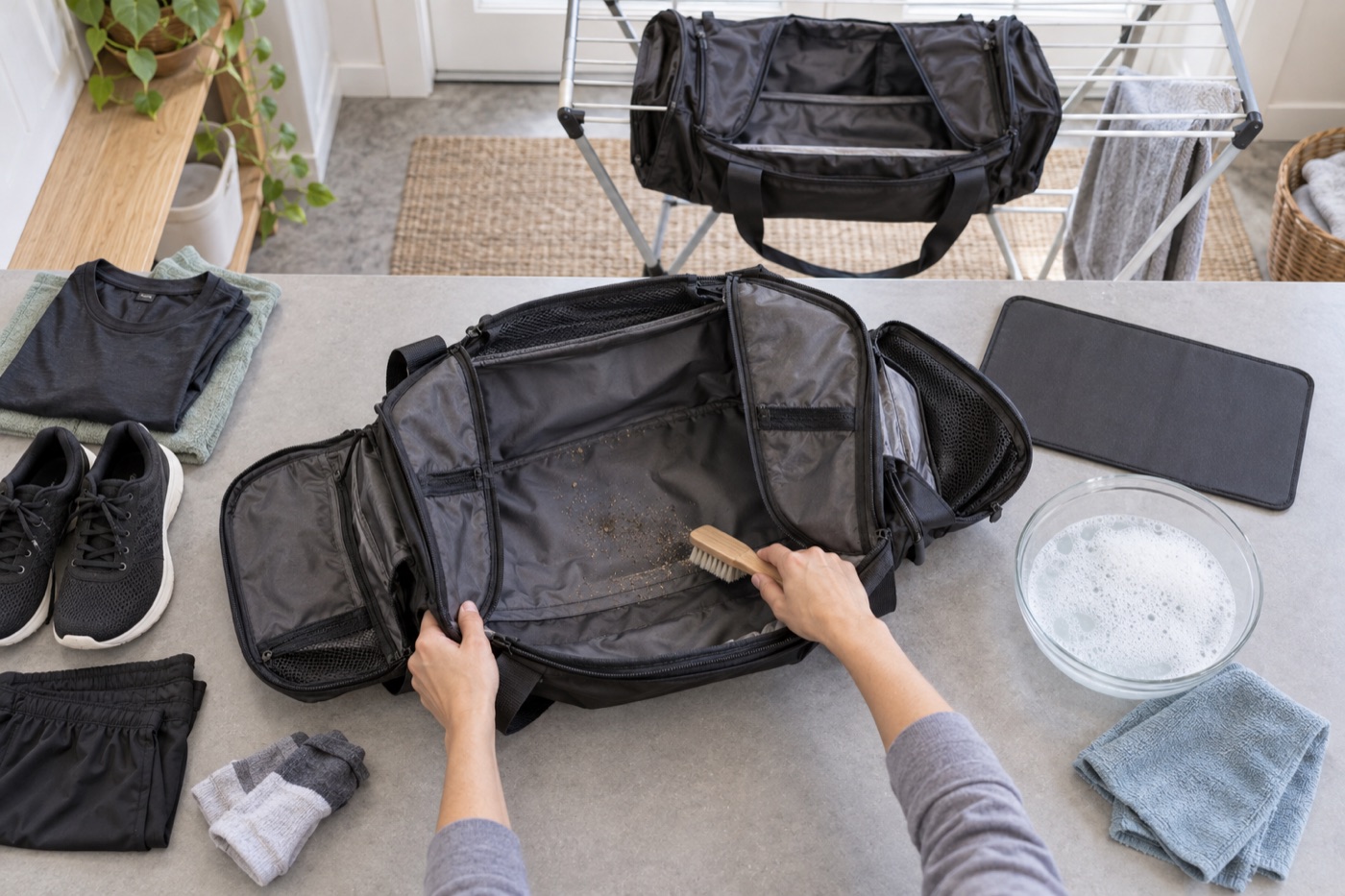
- Use a soft cloth or brush to clean the interior, handles, straps, base, and high-contact seams without saturating padding.
- Remove soap with a separate cloth dampened in clean water.
- Blot excess moisture with a towel. Reshape the bag and open every zipper and pocket.
- Air-dry indoors or in shade with good airflow until seams and padding are fully dry.
Odor Removal Starts With Cleaning and Drying
Fragrance can mask odor without removing sweat, soil, or residue. Clean the source first and dry every layer completely. Wash removable workout clothes and towels separately using their labels, and clean shoes and bottles according to their own materials.
Do not mix cleaners. Bleach, alcohol, enzyme products, disinfectant sprays, vinegar, and deodorizing powders can affect coatings, color, glue, skin, or lungs. Use them only when the bag maker explicitly permits the product and concentration.
Handle Special Contamination Separately
| Problem | Safer action | When to replace or escalate |
|---|---|---|
| Blood or body fluid | Use gloves, isolate the bag, and follow public-health and product-label guidance | Porous padding cannot be cleaned safely or exposure was significant |
| Visible mold | Stop use and check maker guidance; avoid brushing spores indoors | Growth is inside foam, seams, or inaccessible layers |
| Leaking supplement or toiletry | Identify the product, remove dry material safely, then follow both labels | Chemical damaged the coating or identity is unknown |
| Pest contamination | Seal and isolate; use appropriate professional or local guidance | Eggs or infestation reached inaccessible structure |
| Peeling waterproof coating | Clean gently and ask the brand about repair | Coating is sticky, shedding, or no longer functional |
| Persistent odor after full cleaning and drying | Repeat only an approved process and inspect hidden inserts | Odor is embedded in damaged foam or mold is suspected |
Prevent the Next Deep Clean
- Remove damp clothes and towels immediately after every workout.
- Let shoes dry before returning them to a compartment.
- Use a washable wet bag for sweaty items, but empty it the same day.
- Wipe bottle leaks promptly and store caps fully closed.
- Leave the main compartment open between uses in a dry, ventilated place.
- Brush or vacuum chalk and grit before it becomes embedded in seams.
A quick empty-and-dry routine prevents more odor than repeated heavy washing.
Do Not Use the Bag Until It Is Fully Dry
Feel inside seams, strap padding, the base, and insulated bottle pockets—not only the outer fabric. Direct high heat can warp plastic, delaminate coatings, shrink fabric, or weaken glue. Unless the care label permits a dryer, use airflow and time rather than a heater or hair dryer.
Sources and Manufacturer Guidance
Requirements can vary by product, model, and situation. These primary sources informed this guide; official instructions for your exact product and current authoritative guidance take priority.
Frequently Asked Questions
-
Only if its care label explicitly allows it. Structure, foam, coatings, glue, graphics, and hardware make many gym bags unsuitable for machine washing.
-
Remove the contents, clean soil with the label-approved method, rinse away residue, and dry all seams and padding completely. Fragrance alone does not remove the source.
-
Only when the bag maker and disinfectant label both allow it for that material. Strong chemicals can discolor fabric, damage coatings, and irritate skin or lungs.
-
Empty and air it after each use, spot-clean spills promptly, and deep-clean when soiled or odorous. Frequency depends on sweat, use, and whether damp items are contained.