Strength & Weights

Best Wrist Rollers of 2026

A wrist roller is about as simple as gym equipment gets: a handle, a rope, a weight. You roll the weight up, you let it back down, and your forearms decide the rest. What separates a good one from a bad one usually isn't the bar — it's rope length, handle diameter, and whether the thing stays steady once there's 25 pounds swinging underneath it. Get those wrong and you're loading your wrists at a bad angle and irritating your elbows for nothing.

I started rolling because my grip quit before my back did on heavy pulls, and there's now one in my garage and another in my gym bag. Over the past four months, my team and I worked through 14 of them, from cheap plastic sleeves to machined aluminum with knurled handles. The surprise: shorter ropes usually beat long ones, since a swinging plate yanks your wrist sideways mid-roll. The picks below are the ones we kept reaching for after the novelty wore off.

Best Overall

Our Score 9.6/10
FitBeast Wrist Roller

FitBeast

FitBeast Wrist Roller

  • Strap Nylon with 20.4 in extension
  • Handle 25% thicker grip
  • Warranty 5 years
  • Maximum Load 240 lb
Check Price on Amazon

Thick handles and a 240-pound strap make light plates feel productive.

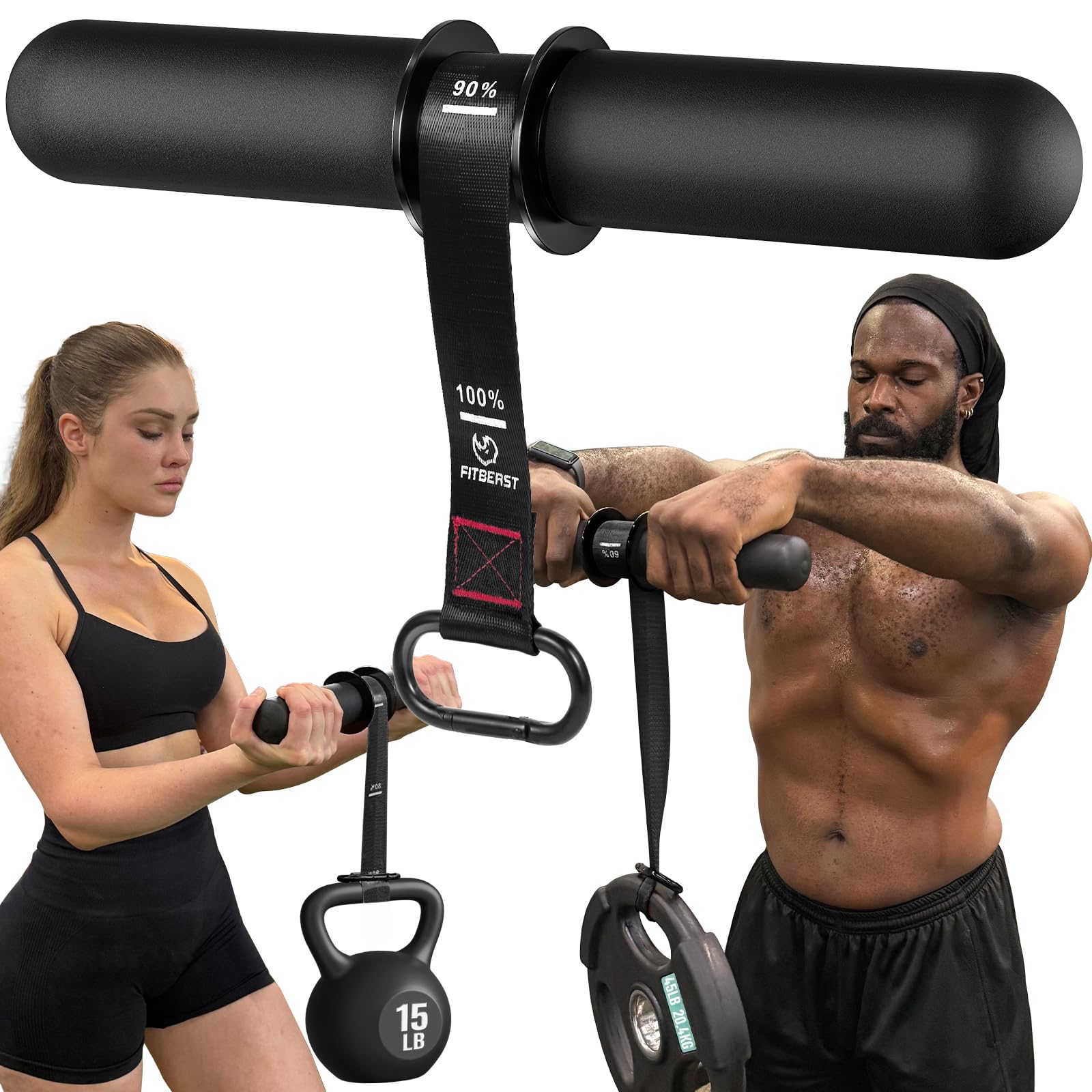
The 240-pound nylon strap is more capacity than most of us need for wrist roller work, and that is exactly why it is our top pick. The weak link should never be the strap, and this one leaves plenty of headroom while the included 20.4-inch extension gives you room to set the plate higher or lower. We liked that right away: you can adjust the setup to your height instead of hunching over the weight. If you already own plates, you can start with a light one and add load as your grip catches up.

The handles are 25% thicker than a standard bar, which changes the exercise more than the load rating does. A light plate feels like a grip exercise, not just a wrist rotation, and the wider diameter keeps your fingers from settling into a lazy half-hold. That is the detail we kept coming back to when comparing it with the thinner rollers here.

The rest of the package is sensible: a five-year warranty, a simple strap setup, and enough length to stand, kneel, or sit between sets without the plate banging your shins. The extension strap also gives enough slack to rest the plate on the floor between sets instead of holding it at shin height, which is a small thing that makes a long workout less annoying.

Bottom Line

We think the FitBeast is the wrist roller most home lifters should buy: thick handles make light plates productive, and the 240-pound strap leaves room to progress.

Check Latest Price

Best Budget

Our Score 9.4/10
Orangelight Wrist Roller

Orangelight

Orangelight Wrist Roller

  • Strap Nylon
  • Handle Cushioned foam
  • Warranty 2 years
  • Plate Fit Standard plates
Check Price on Amazon

A low-cost steel roller that gets beginners rolling without a big commitment.

The Orangelight is the one we hand to someone who wants to try wrist rollers without turning it into a project. The steel bar and nylon strap feel more substantial than the price suggests, and the cushioned grips take the sting out of high-rep sets. For a first roller, that combination is hard to argue with.

The strap mount is the detail that keeps it from being our top pick. It sits on a cross-member rather than flush against the shaft, so the strap can wander instead of winding in a neat stack. We noticed it most with lighter plates, where there is less tension to keep the webbing flat; a heavier plate settles it down, but then you are not using it for the easy sets it is good at.

The two-year guarantee is generous at this end of the market, and the whole thing weighs little enough to keep in a gym bag. At this size, it disappears into a drawer between sessions. It is not the roller for maximum loads or a perfectly straight wind every time, but it is the one we leave out for quick sets between other lifts.

Bottom Line

Our budget pick is the Orangelight: a steel roller with cushioned grips that makes high-rep forearm work comfortable without a big outlay.

Check Latest Price

Best for Comfort

Our Score 9.4/10
Yamyshine Wrist Roller

Yamyshine

Yamyshine Wrist Roller

  • Strap Nylon
  • Handle EVA grip
  • Weight 1.9 lb
  • Plate Fit Standard plates
Check Price on Amazon

EVA handles take the bite out of high-rep forearm sets.

The EVA grips are the reason this one stands out in a crowded budget field. They have a little give without feeling spongy, and the surface stays comfortable through the high-rep sets that make a wrist roller useful in the first place. If your hands are the first thing to quit, this is the handle to try. The grip is the part you notice on the third set, not the first.

The steel pipe and nylon strap are simple and solid. The EVA handle is the comfort story, but the hardware is ordinary in a good way: no tools, no setup, just a plate and the strap. There is no published load rating, which is a real gap if you plan to load heavy; the strap and stitching look capable, but you are working without a number to check against.

It is not the roller for someone chasing a huge pull; it is the one for steady, comfortable volume. We kept it in the rotation for days when the forearms were already tired and we wanted to work without a hard bar biting into our palms.

Bottom Line

Comfort is why we recommend the Yamyshine: EVA handles make high-rep forearm work easier on the hands, with a simple steel build for standard plates.

Check Latest Price

Best For Compact plate loading

Our Score 9.4/10
MuscleForge Wrist Roller

MuscleForge

MuscleForge Wrist Roller

  • Handle Non-slip foam
  • Weight 1.96 lb
  • Plate Fit 25 and 50 mm
  • Maximum Load 130 lb
Check Price on Amazon

The load pin is the first thing we look at on the MuscleForge. It accepts both 25 mm and 50 mm plates, so the same roller works with standard and Olympic weight, and there is no strap to thread through a plate hole. That makes it quicker to change loads than most of the strap rollers here.

The 130-pound rating is a useful middle ground. It is more than the 100-pound budget rollers, less than the FitBeast's 240-pound ceiling, and enough for most home lifters who are not chasing maximum loads. The pin sits close to the bar, so the weight does not swing as widely as it does on a long strap.

The compact body is the bigger advantage: it disappears into a gym bag and does not need a dedicated corner of the room. The load pin is also easier to load one-handed than a strap, which matters when you are already holding a plate.

For a small home setup, that plate-first design is the reason to choose it. We recommend the MuscleForge to someone who already has plates and wants a compact roller that changes weight fast. The pin keeps the plate closer to your body than a long strap does, which makes seated sets less pendulum-like.

Bottom Line

We recommend the MuscleForge for anyone with plates and limited floor space: a 130-pound load pin and compact body make it quick to load and easy to store.

Check Latest Price

Best Premium Pick

Our Score 9.2/10
VikingStrength Wrist Roller

VikingStrength

VikingStrength Wrist Roller

  • Handle Thick grip
  • Weight 2.65 lb
  • Loading Chain system
  • Plate Fit Any weight plate
Check Price on Amazon

A chain-loaded, fat-grip roller for lifters who want gym-grade hardware.

A chain instead of a nylon strap is the first thing you notice, and it changes how the roller feels in use. The chain hangs heavy, loads quickly, and fits any weight plate, so you can move between plates without threading a strap through a hole. It also clinks and swings more than we expected, especially in a low-ceilinged room.

The thick grip is what earns the VikingStrength its place. The fat handle turns even a modest plate into a serious forearm set, and the diameter is the point: your fingers have to work to stay wrapped, which is the reason to choose this over a thinner bar. We found the chain and grip together feel more like gym hardware than a home gadget.

The chain is long enough to crowd a short setup, and the hardware is the part to check before each set. We liked the chain for plate changes, but a strap is tidier if you train in a small room. The VikingStrength is the premium choice for someone who wants a fat grip and does not mind a little hardware fuss. Inspect the chain hook before each set; that single link is carrying the whole plate.

Bottom Line

The VikingStrength is our premium choice for lifters who want a fat grip and chain loading; the chain hardware is the reason to spend more.

Check Latest Price

Best Adjustable Strap

Our Score 9.2/10
AJKPL Wrist Roller

AJKPL

AJKPL Wrist Roller

  • Handle Foam grip
  • Warranty 12 months
  • Maximum Load 100 lb
  • Strap Lengths 43.3 and 51.2 in
Check Price on Amazon

Two strap lengths fit low or high anchors, with a quick-lock buckle.

Two strap lengths do more for this roller than any single feature. The 43.3-inch strap keeps the plate close for low anchors; the 51.2-inch strap gives you room when you are rolling from a higher bar. We liked the short one for seated work, where a long strap tends to swing into your knees.

The quick-lock buckle and dual buckles make the change feel deliberate rather than fiddly, and the alloy-steel core has enough heft to stay put. That flexibility is why it is our adjustable pick. The foam grips are comfortable at first, though they can rotate under a heavier plate; we kept a towel handy and checked the buckle before each set.

The 12-month warranty is shorter than the FitBeast's, and the adjustability is the reason to choose it over a fixed-length roller. The 51.2-inch setting is the one to use from a pull-up rig; the 43.3-inch setting is for everything else. The short strap is also the one to start with if you are learning the motion; it gives you less rope to manage.

Bottom Line

We like the AJKPL for beginners who need one roller to fit a low anchor or a higher bar; the two-strap setup is the reason.

Check Latest Price

Best For Mixed plate value

Our Score 9.2/10
Yes4All Wrist Roller

Yes4All

Yes4All Wrist Roller

  • Strap 52.85 in nylon rope
  • Handle PVC
  • Plate Fit Standard, Olympic, kettlebells, dumbbells
  • Maximum Load 100 lb
Check Price on Amazon

The Yes4All is the roller we reach for when we want to load whatever is closest: standard plates, Olympic plates, a kettlebell, or a dumbbell. The 52.85-inch nylon rope makes that possible, and the rating is enough for most home work. The attachment is simple, and the rope rolls without much fuss.

The PVC handles are the caveat. They get slick when your hands warm up, and the plastic covers can come loose from the metal bar; we kept a towel nearby and found the bare bar underneath still usable if a cover let go. That is not a dealbreaker at this price, but it is the first thing to check when you unbox it.

For a first roller or a spare for a garage gym, the broad plate compatibility is the real draw. It is not the most refined handle here, but the PVC caveat is manageable. What it does well is let you start with the weight you already own. At 16 ounces, it is light enough to hang on a rack hook without dragging the hook down.

Bottom Line

The Yes4All earns its place as our mixed-equipment budget option: it loads plates, kettlebells, or dumbbells, and the long rope makes it versatile.

Check Latest Price

Best For Textured grip

Our Score 9.0/10
DMoose Wrist Roller

DMoose

DMoose Wrist Roller

  • Strap 35 in nylon
  • Handle Textured non-slip
  • Weight 3.15 lb
  • Tension Medium to extra heavy
Check Price on Amazon

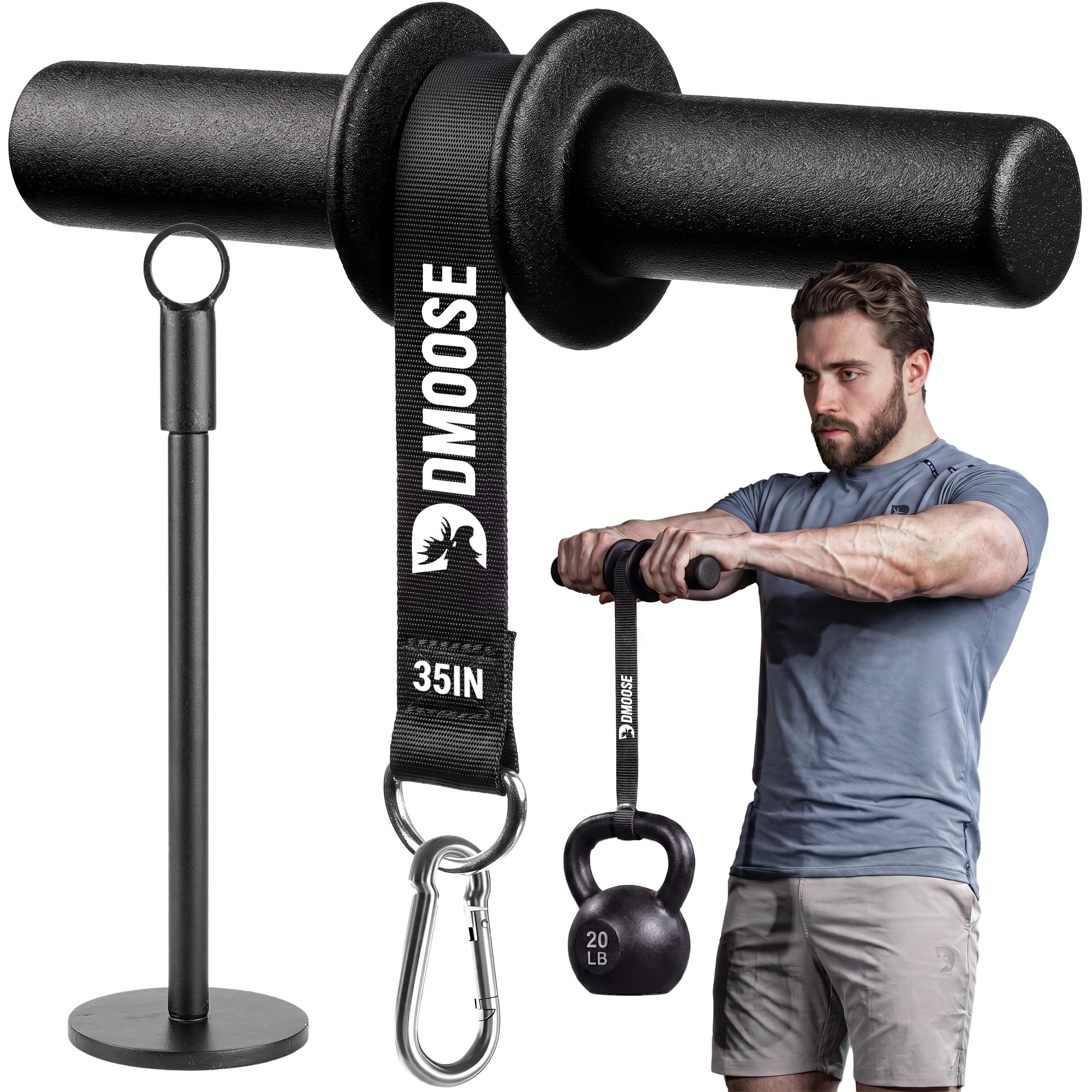
The textured handles are the first thing your hands notice. They have a raised pattern that gives you something to hold onto when your palms get sweaty, and the steel rod underneath feels substantial without being clumsy. That texture is the reason this one is in the premium conversation.

The 35-inch nylon strap is shorter than the long ropes here, and that is a deliberate trade: less swing, less floor drag, and a tighter setup in a crowded gym. It also means you need a plate close to the roller; if you like a long strap that reaches a high anchor, this is not the one.

The kit's second piece is a grooved finger roller, which adds a rehabilitation-style grip element rather than another wrist-rolling station. We liked it as a warm-up, but it is not the reason to pay premium money for the set.

The premium is justified if you want a compact, textured tool, not if you need a long anchor. Short straps have a real advantage in a crowded gym: you spend less time managing loose webbing between sets. The textured grip is also easy to wipe down after a session, which is more than we can say for foam.

Bottom Line

We recommend the DMoose for sweaty hands and tight setups: the textured grip and short strap feel premium, and the compact build suits a crowded gym.

Check Latest Price

How We Tested: Four Months, 14 Wrist Rollers

We started with a list of roughly 40 wrist rollers pulled from retailer listings, lifting forums, and the comment sections under our own forearm-training stories. Anything with a rope so short the plate grazed your knuckles at the top of a roll got cut, as did bars whose own product photos showed flex under load, and anything with a handle too thin to grip without pinching. That filtering left 14, which we bought at full price over four months so no return window was quietly shaping our opinions.

Testing happened where rollers actually live: a garage gym with a plate stack, a commercial gym floor, and a living room during conference calls. We chalked up, loaded between 2.5 and 45 pounds, and rolled to failure three times per session, twice a week. Each rope got measured with a tape and each handle with calipers, and we noted where the grip landed in the hand — a thick handle and a thin one feel like two different exercises by the second set.

Our log had columns for the things you only notice later: whether the rope frayed or glazed at the attachment point after a few hundred rolls, whether the bar wobbled or the plate swung out of plane, and whether anyone's wrists or elbows ached the next morning. We tracked setup annoyance too — whether a roller needed a carabiner, a strap, or a second person to load — because a tool you dread assembling is a tool you skip. Value came last: what each one cost weighed against how it felt in the hand and how it held up.

How to Choose

Start with how the strap hangs

The winding path matters more than the material label. A strap that sits flush with the shaft winds in a tidy stack; one mounted on a cross-member can wander and pull to one side, especially with a light plate. A chain is flexible and fast to load but swings and clinks more than webbing. Long straps reach higher anchors but add swing; short straps and loading pins keep the plate close. Before you buy, picture where you will stand and how far the plate can swing.

If you train in a small room or from a chair, choose a short strap or a load pin. If you use a pull-up rig, a longer strap or an extension is the practical choice.

Handle diameter is the workout

Thick handles increase grip demand, which is why the FitBeast's 25% thicker grip feels harder with the same plate. They are not automatically better: if your hands are small, a fat bar can turn a wrist set into a grip failure. Foam and EVA feel soft on high-rep days but can wear or get slick; a textured grip is easier to trust with sweaty hands, while smooth PVC is the one that gets slick. Choose the grip that matches the limiting factor in your training, not the biggest diameter.

If your grip gives out before your forearms, start with a standard or EVA handle. If you want extra challenge, go thicker.

Match the attachment to your plates

Wrist rollers load in three common ways: a strap or rope threaded through a plate, a chain with a clip, or a loading pin. A 1-inch standard plate and a 2-inch Olympic plate need different hardware; some rollers accept both, while others are built around one. The same goes for kettlebells and dumbbells: a long strap can loop around a handle, but a loading pin cannot. Check the opening of the clip or pin against the plate you actually own.

If you have a mix of standard and Olympic plates, choose a roller that states both; if you use kettlebells, favor a long strap with a secure clip. The Yes4All's long rope is the most flexible of these; the MuscleForge's pin is faster if you only use plates.

Decide how much load and support you need

Load ratings are not a contest, but they tell you where the hardware is designed to stop. A 100-pound roller is fine for most home sets; a 240-pound strap gives you margin and a longer warranty. Some higher-rated models also have sturdier hardware and better grips, though not always. We treat the rating as a ceiling, not a target: choose one with headroom over the weight you can control for a slow set. Warranty matters here because straps, clips, and grips are the parts that wear.

If you are strong or progressing fast, pay for headroom. If you are starting, a 100-pound roller leaves money for plates.

Frequently Asked Questions

Final Verdict

The FitBeast is the wrist roller we recommend to most people because it gets the load path and the handle right: the 240-pound strap leaves room to progress, the thick grip makes light plates work harder, and the five-year warranty backs the whole thing. If you want a chain-loaded tool for a home gym, the VikingStrength is the premium alternative; if you are buying your first roller, the Orangelight keeps the cost down without feeling disposable.