Training Shoes

Best Walking Shoes for Flat Feet of 2026

Flat feet change how a walk feels. With every step, the ankle rolls inward a little further than it should, and by evening it's your arches, shins, or knees filing the complaint. A good walking shoe doesn't try to rebuild your arch — it puts a firm, wide platform under the foot you already have and stops the roll before it starts. That's the whole job, and plenty of shoes marketed as "supportive" quietly fail at it.

I have flat feet and a shelf of abandoned stability shoes to prove it — pairs so rigid that walking felt like clomping around in ski boots. The label on the box tells you almost nothing, by the way; what matters is how the heel is cradled and whether the sole resists twisting under your weight. Over the past eight months, my team and I put 13 pairs through daily miles on sidewalks, treadmills, and grocery-store tile, and the ones we kept reaching for after testing officially ended are the ones below.

Best for Men

Our Score 9.0/10
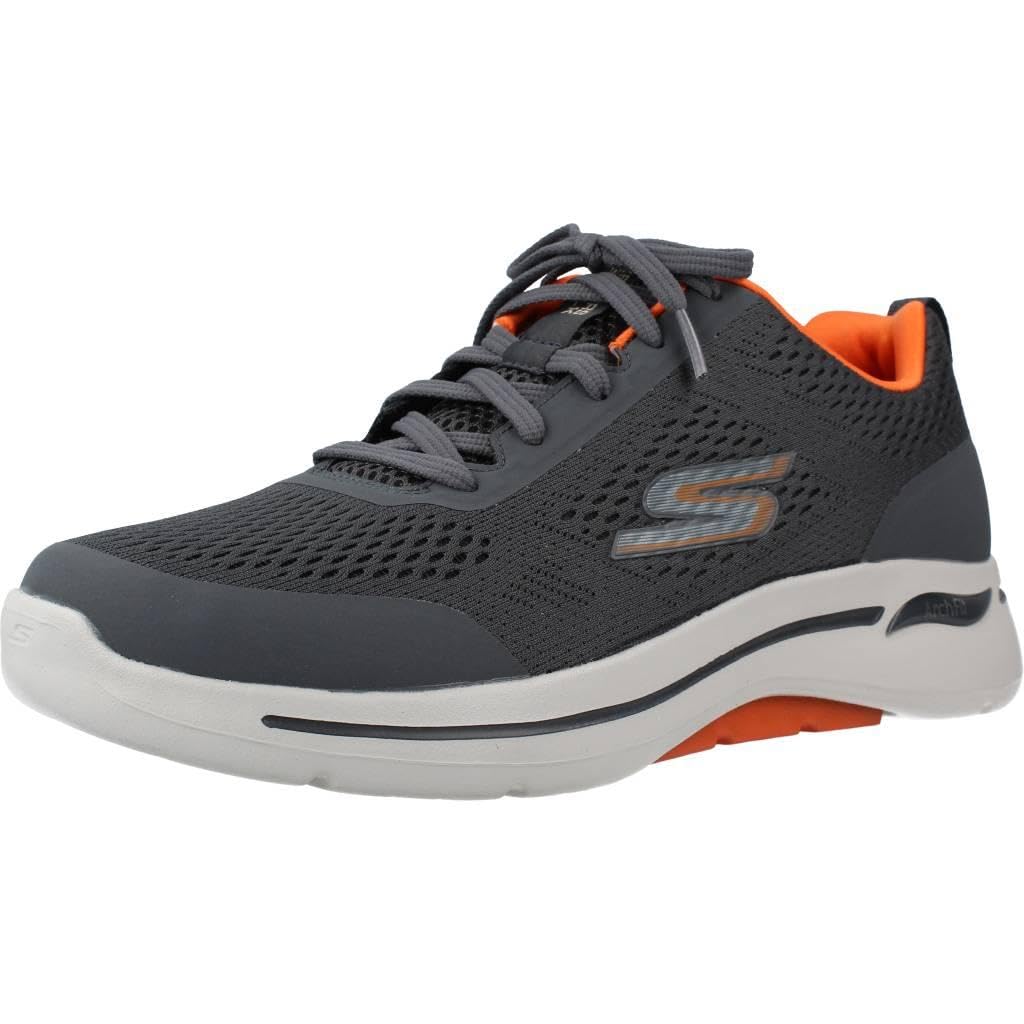
Skechers Men's Go Walk Arch Fit

Skechers

Skechers Men's Go Walk Arch Fit

  • Build Mesh upper, elastic laces
  • Department Men's
  • Arch Support Arch Fit footbed
Check Price on Amazon

A roomy toe box, firm Arch Fit footbed, and laces that stay tied all day.

Men get one entry on this list, and it's a good one. The Go Walk Arch Fit is the roomiest shoe here across the toes, which counts for more than it sounds when a flattened arch has let your foot spread. It comes in wide widths and in large sizes, and the mesh upper breathes on warm afternoons.

What makes it our men's pick is the pairing: that generous fit sitting on top of a firm Arch Fit footbed. Plenty of walking shoes are roomy and plenty are supportive; not many manage both without pressing on the outside of the foot. The elastic laces turned out to matter more than we expected — they hold their tension all day, so the shoe doesn't loosen halfway through a walk and you never stop to re-tie.

Sizing is the catch. This one runs small for some feet, so if you're between sizes or wear thicker socks, go up half a size rather than waiting for it to stretch. Get that right and the lace-up gives you what no slip-on here can: a midfoot you can tighten down when your arch needs steadying rather than just cushioning.

Bottom Line

The obvious buy for a man with flat feet: a genuinely roomy toe box sitting on a firm Arch Fit footbed, with elastic laces that never come untied mid-walk.

Check Latest Price

Best Overall

Our Score 8.8/10
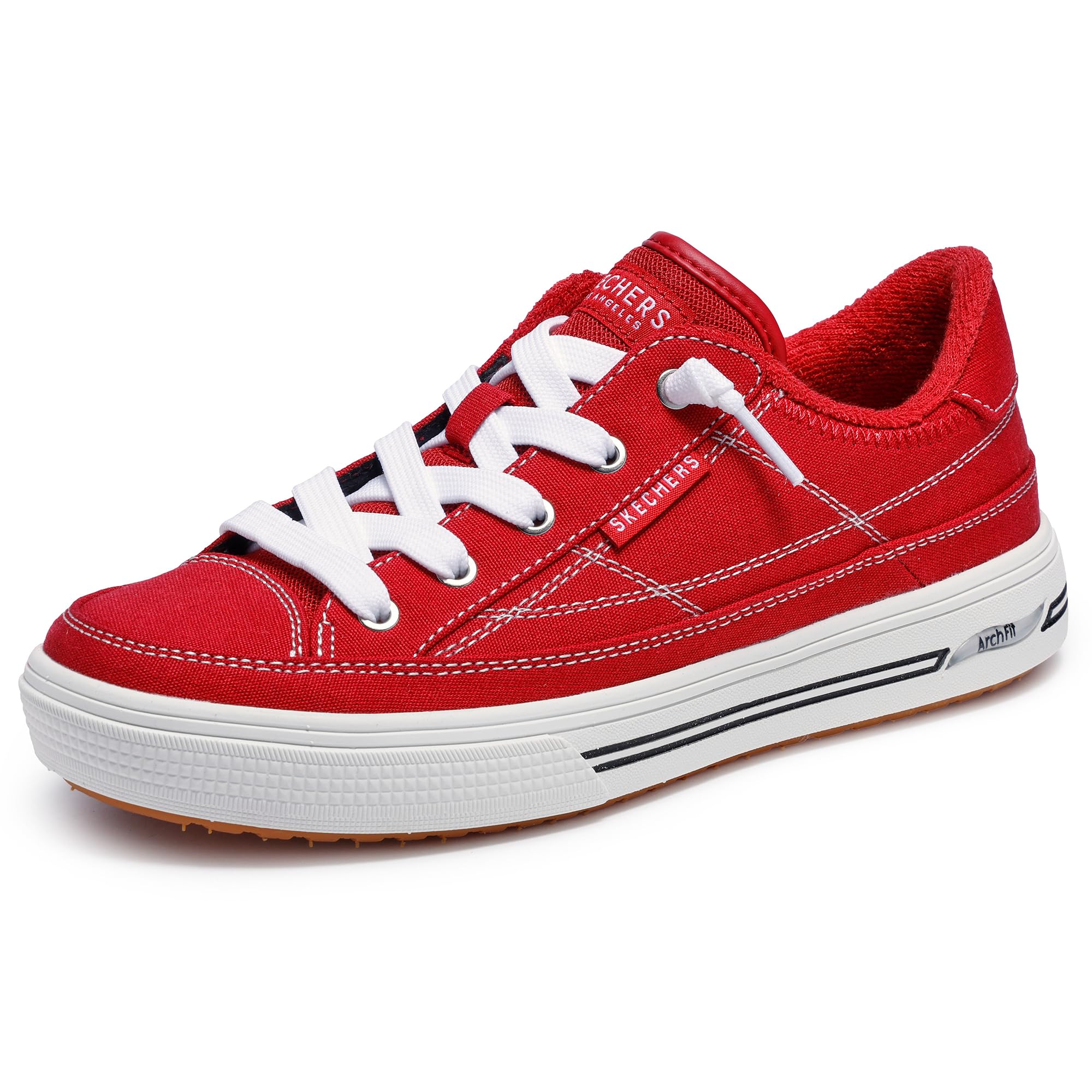
Skechers Arch Fit Arcade Arcata

Skechers

Skechers Arch Fit Arcade Arcata

  • Entry Slip-in with laces
  • Department Women's
  • Arch Support Arch Fit footbed
Check Price on Amazon

A shaped footbed under the midfoot, with slip-in ease and laces to snug.

Skechers builds the Arcata around its Arch Fit footbed, and that's the whole reason it leads this list. A flat arch needs something to press against, and a soft pad under the heel doesn't give it that. The support here sits under the middle of the foot, so your arch has a place to land instead of rolling inward with every step. We noticed it most on longer walks, in the hour when a lesser shoe starts to feel like work.

The slip-in entry is the detail we kept coming back to. You step in, press down, and go — no bending, no re-tying at the door. The laces still earn their place, because they're what you use to snug the shoe across the instep, which is exactly where a flat foot wants the hold. It's the rare hands-free shoe you can tighten.

It also looks like a normal everyday sneaker rather than a piece of equipment, which we appreciate on days when one pair has to cover the commute and the walk. Underfoot it's firmer than a max-cushion shoe, and that's deliberate: the foam you sink into doesn't hold an arch up. If you want a marshmallow ride, this isn't the pair. If you want to cover a few miles and still be comfortable at dinner, it is.

Bottom Line

We point flat-footed walkers here first because the shaped footbed gives the arch somewhere to land, and the slip-in upper with laces lets you dial in heel hold.

Check Latest Price

Best for Orthotics

Our Score 8.6/10
ALLSWIFIT Slip-On Walking Shoe

ALLSWIFIT

ALLSWIFIT Slip-On Walking Shoe

  • Closure Hands-free slip-on
  • Footbed Deep enough for orthotics
  • Department Women's
Check Price on Amazon

Hands-free entry and a footbed deep enough for your own orthotics.

Two things stand out about the ALLSWIFIT, and both are about getting the shoe on. It's a hands-free slip-on — step in and the heel settles without a fight — and the footbed is deep enough to take a custom orthotic without pushing your heel up out of the shoe. If you already walk in inserts, that combination is the reason to look here, and it's the least expensive pair on this list.

Underfoot it's soft and light, which is pleasant on long pavement walks and makes the pair easy to pack. It's soft the way a cushioned sneaker is soft, though, not firm the way a stability shoe is firm. A flat arch that rolls inward gets less resistance here than it does from the Skechers Arch Fit models, and we say that plainly: this is the pair for a mild flat foot or an added orthotic, not for a foot that needs correcting.

Give them a few days before you judge the ride. The sole arrives stiff and loosens over the first week or so of wear, so break them in around the house rather than on the morning of a long walk. After that they're an uncomplicated shoe for errands, dog walks and travel — the kind of pair you stop thinking about, which is the nicest thing you can say about a walking shoe.

Bottom Line

The pair to buy if you walk in your own orthotics or want to spend the least: deep, hands-free and light, though it cushions rather than corrects a flat arch.

Check Latest Price

Best For Cushion-first walkers

Our Score 8.6/10
NORTIV 8 Walking Shoe

NORTIV

NORTIV 8 Walking Shoe

  • Closure Adjustable lacing
  • Cushioning Plush, soft underfoot
  • Department Women's
Check Price on Amazon

Of the four shoes here, this is the one whose case rests least on flat feet. The NORTIV 8 sells itself on cushioning and looks, and it is genuinely comfortable for a long shift on your feet. Where it's thin is exactly where a flat-footed walker needs thickness: there's no shaped footbed doing work under the midfoot, so the ride stays soft rather than supported.

Soft has a cost further along. A deep, plush platform lets the foot move inside the shoe, and the heel here can slide up and down on a walk when the fit isn't exact. Grip is inconsistent too — fine on pavement, less sure on slick floors — so treat them as a street shoe rather than one for a wet cafeteria or a rainy sidewalk.

None of that makes it a bad shoe. It's the most style-forward pair in this group, and for mild flat feet on errands and standing shifts it does the job. But this is premium money for a shoe with no arch story, and the Arch Fit Arcata gives you the same everyday looks with real support under the middle of the foot — that's the trade we make every time.

Bottom Line

Buy it for plush comfort and good looks on mild flat feet, not for arch support — this one cushions a foot rather than steadying it.

Check Latest Price

How We Tested 13 Pairs of Walking Shoes for Flat Feet

We started with spec sheets instead of marketing copy. Any shoe making a real claim to support flat feet had to show a wide, stable base, a heel counter that sprang back when we squeezed it, and a midsole that resisted twisting end to end — plus it had to come in wide sizing, since a flat foot spilling over a narrow platform ends up worse off than before. That filter left 13 pairs, from budget-friendly to splurge, and we bought every one at full price.

Each pair logged at least 20 miles over eight months: early dog walks, treadmill sessions, laps around the grocery store, one long airport concourse, and a theme-park day that turned into 11 miles. We noted where we felt pressure — under the arch, at the ball of the foot, along the outside edge of the heel — and whether the arch support felt like a gentle shelf or a golf ball taped under the foot. Comfort was judged at mile one against mile fifteen, not on the first step out of the box.

Fit got its own pass. We tried each shoe in our usual size and, where offered, a half size up, wearing the socks we'd actually walk in, and recorded heel slip on inclines and toes crowding on downhills. For sizing, we also checked whether a wide width delivered genuine room across the forefoot or just extra volume everywhere. Ease of use came down to small things: whether we could step in one-handed without crushing the heel collar, and whether the laces were still tied after two miles.

At the 50-mile mark we flipped every pair over and looked at tread wear under the ball and the outer heel edge, then checked the uppers for creasing and the heel counters for softening — that's where quality shows first. Traction was tested on wet pavement, a painted crosswalk after rain, smooth lobby marble, and a wooden ramp. For appearance, we wore each pair with jeans and with straight-leg trousers and asked the blunt question: does this read as a gym shoe or something you'd wear to lunch?

How to Choose

Where the Support Actually Sits

Two shoes can both claim arch support and behave nothing alike. A shaped footbed, the approach in the Skechers Arch Fit models here, puts a contoured surface under the middle of the foot so the arch has somewhere to rest. A flat insole with a little foam at the edge doesn't do that, however thick it looks.

Test before you commit: press a thumb hard into the arch area of the insole and see whether the shape holds, then grip the shoe at both ends and twist it. A shoe that folds easily through the middle won't steady a flat foot over a long walk, whatever the listing promises.

Toe Room, Heel Hold, and the Size You Order

Flat feet often spread, so the toe box earns its keep. You want toes that splay without pressing on the little toe, and a heel that sits locked without pinching — room at the front and slop at the back is the combination to avoid. Sizing swings across this category: some models run large, others narrow, and one is generous enough across the toes for a broad foot.

Try shoes on at the end of the day, when feet are at their largest, and keep the packaging until you've walked a block indoors. A pair you can't exchange is a pair you'll talk yourself into keeping.

Slip-On Ease or Laced Lockdown

Hands-free entry is a genuine convenience, especially if bending to tie laces is uncomfortable. But the midfoot is where a shoe either holds a flat foot or doesn't, and laces let you tighten across the instep in a way a stretch slip-on can't. A slip-in with laces, like our top pick, splits the difference: step in, then snug.

If you go fully laceless, walk a few minutes before committing. A heel that lifts in the store will lift on the pavement, and a heel that lifts is a shoe your foot fights all day.

Walking in Your Own Orthotics

If you wear custom inserts, the shoe's job changes: it needs depth more than it needs its own arch. Pull the factory insole out and stand your orthotic inside — if your heel rides above the collar or the insert bunches at the toe, the shoe is too shallow and no amount of loosening the laces will fix it.

The ALLSWIFIT here is the deepest of these, which is why we point orthotics wearers toward it despite its softer ride.

Frequently Asked Questions

Final Verdict

The Skechers Arch Fit Arcade Arcata is the pair we recommend first: a shaped footbed under the midfoot, slip-in ease, and laces to snug down when your heel needs holding. Shopping for a man, the Go Walk Arch Fit is the equivalent, roomier across the toes and lockable through the middle.

And if you walk in your own orthotics, or want to spend the least, the ALLSWIFIT takes an insert deeper than anything else here.