Training Shoes

Best Volleyball Shoes of 2026

A volleyball shoe has one job almost nothing else in your gym bag has to do: hold you steady while you jump, land, and change direction on a floor that gives back nothing. Cushioning is the easy part. The hard part is getting enough of it under the forefoot without feeling like you're playing on a mattress, and finding an outsole that still grips a dusty court in the third game, not just the first. Get both right and you stop thinking about your feet entirely, which is the whole point.

Fit is where most people get this wrong. Volleyball shoes don't break in like running shoes; a stiff toe box that pinches in the store is usually still pinching two months later, and a half size too long means your heel lifts on every approach. I've spent the past eight months putting 12 pairs through open gyms, league nights, and weekend tournaments with my team, and the ones that held up all had room up front without slip in the heel. The picks below are the pairs we kept reaching for, and the ones that still looked new at the end.

Best Cushioning and Stability

Our Score 9.4/10
Mizuno Wave Dimension

Mizuno

Mizuno Wave Dimension

  • Cut Low-top
  • Fit True to size
  • Court Indoor
Check Price on Amazon

A wide, planted base for hitters who land hard and change direction.

Well under the flagship Mizuno's price, the Wave Dimension gives up less than you'd expect. It's a low-cut court shoe with a wide, planted base — closer in feel to a basketball shoe than to a running shoe — and it's the pair here that felt steadiest when we changed direction hard off one foot.

The fit is the friendliest in the guide. It ran true to size for us, the toe box has room without feeling sloppy, and the heel sits deep enough that the shoe doesn't slip when you push off. Cushioning is generous without turning vague: you still get a read on the floor, which matters when the ball is already coming down and you have to move before you've decided where.

So where does it land? For the player who wants one pair to cover club practice, league night and the occasional open gym, this is the shoe that earns its place — it does most of what the premium pair does, with more forgiveness in the toe box. The thing to watch is wear at the front, where this shoe ages first, particularly on a rough multi-purpose floor. On clean wood it's the most well-rounded shoe in this set.

Bottom Line

The most balanced shoe here — stable enough for hard lateral stops, cushioned enough for a night of jumping, and cheaper than the flagship.

Check Latest Price

Best Overall

Our Score 9.2/10
ASICS Gel-Rocket 11

ASICS

ASICS Gel-Rocket 11

  • Cut Low-top
  • Fit Narrow; wide feet size up
  • Court Indoor
Check Price on Amazon

Light, grippy and locked-in — the pair we start most players in.

For most players, the search ends here. The Gel-Rocket 11 is light enough that you stop noticing it after a few rallies, and the upper wraps the midfoot closely enough that your foot doesn't skate across the footbed when you push off to block. On a clean gym floor the outsole grabs and releases the way a court shoe should — a short, sharp stop with no slide at the end of it.

What surprised us is how little it gives up to shoes that cost noticeably more. The arch support is real rather than nominal, the upper breathes through a long night in a warm gym, and there's enough depth inside for a full-length orthotic without crowding the toes. The ride is firm rather than plush — you feel the floor, which is exactly what you want when a ball is coming down and you have to move — and it has stayed comfortable rather than going sloppy in the heel.

If there's a catch, it's underfoot: a heavy jumper will notice the firm forefoot by the third game of a long night. What you get in return is a shoe that never feels vague when you change direction, and an upper that cleans up with a damp cloth after a session on a dusty floor — a small thing that stops being small around midseason.

Bottom Line

Our pick for most players: light, grippy and locked-in through a lateral stop, for less than almost anything else here.

Check Latest Price

Best Ankle Support

Our Score 9.2/10
Nike Zoom HyperAce 2

Nike

Nike Zoom HyperAce 2

  • Cut Low-top
  • Fit Runs small; size up
  • Court Indoor
Check Price on Amazon

Low-cut speed with a heel cage that keeps the foot from swimming.

Low-cut doesn't have to mean loose, and the HyperAce 2 is the shoe here that proves it. The collar sits below the ankle bone, yet the heel and midfoot are caged tightly enough that the foot stays put when you come down off one leg. The support comes from containment rather than height, which is why it doesn't feel like a compromise.

We take it over the other mid-priced picks for a fast, on-your-toes game. The forefoot is low and firm, and the shoe puts you up on the balls of your feet — exactly where you want to be for a quick approach or a dig. Traction is the other thing we noticed: on a clean floor it bites and lets go without sticking, so a hard stop doesn't turn into a stumble.

The sizing is the part to get right: this shoe is cut short, so most players want a half size up, and a wide foot will still feel it across the toes. Above the ankle there's nothing here, so if you've rolled one or play in a brace, the mid-cut adidas below offers coverage this doesn't. One small thing we appreciated — the laces are long enough to double-knot and stay knotted, which sounds trivial until you're re-tying a shoe mid-match.

Bottom Line

Our pick for players who want to feel fast and low to the floor, with enough containment that the ankle doesn't swim.

Check Latest Price

Best for Competitive Play

Our Score 9.0/10
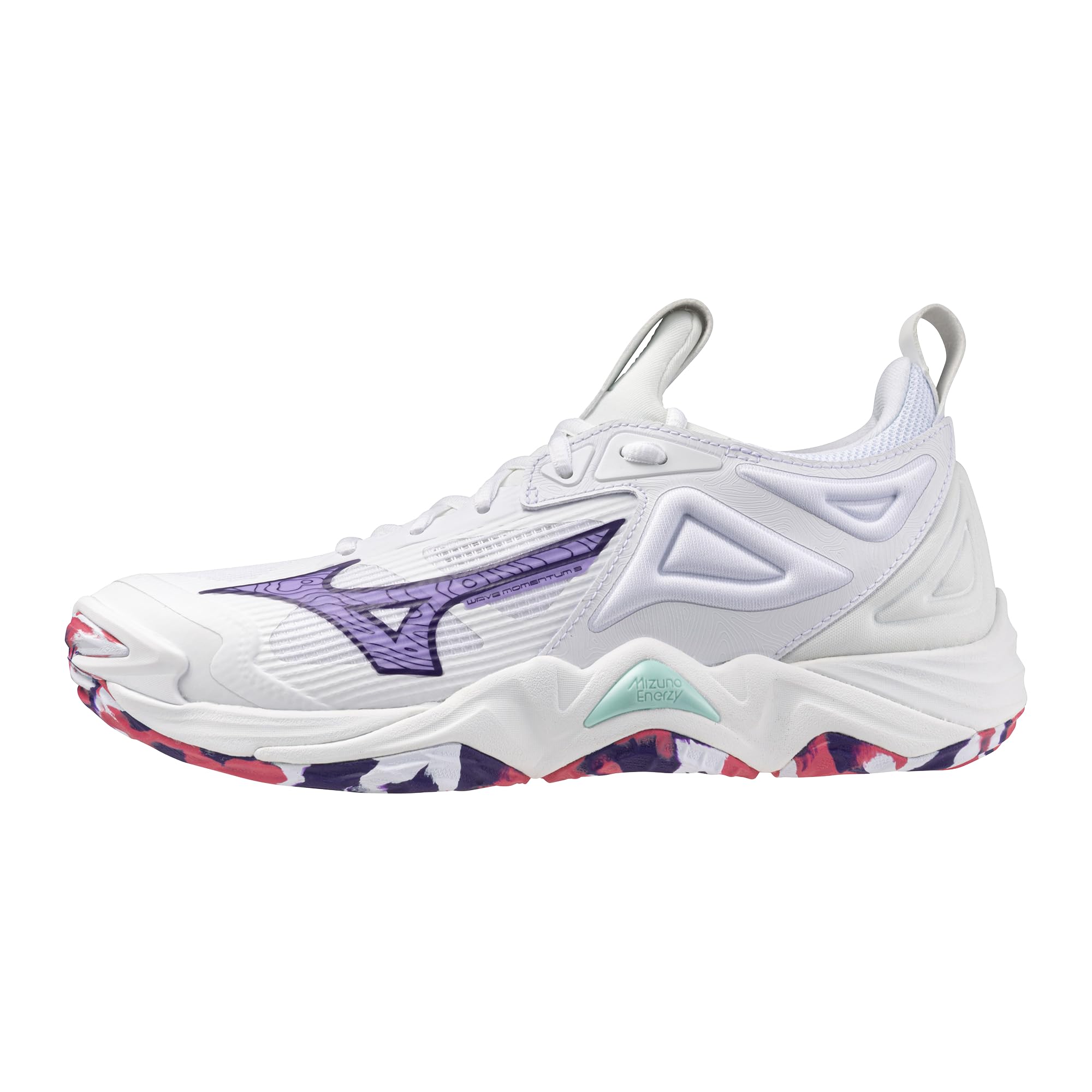
Mizuno Wave Momentum 3

Mizuno

Mizuno Wave Momentum 3

  • Cut Low-top
  • Fit Runs small; size up
  • Court Indoor
Check Price on Amazon

Cushioning that lasts a long night and a toe that survives serve drag.

If volleyball takes up four or five nights of your week, the Wave Momentum 3 is the pair we point players to first. It's the priciest shoe in the guide, and it's the one where we stopped thinking about that once we were playing. The outsole is sticky from the first session — no scuffing-in period, no sliding on a clean floor — and the collar sits close around the ankle without needing to be broken in, snug enough that a slim ankle brace still fits under it.

What we noticed most was how little the shoe moved under us. Mizuno cuts this one close through the midfoot and the heel, and after the first session we stopped adjusting the laces mid-drill. The cushioning is the real reason to pay: repeated approach jumps land softly, and the forefoot still felt springy at the end of a long night rather than bottoming out.

The toe is the other argument. Players who drag a foot on the serve chew through the front of a shoe quickly, and this is the pair here where that area has held up best — the bumper is intact and the sole still has its edge. If you play once a week, the Gel-Rocket 11 does the job for far less money; if you're training seriously, this is the one we replace like for like.

Bottom Line

For players on court several nights a week, this is where the money goes: cushioning that lasts a long night and a toe that survives serve drag.

Check Latest Price

Best Men's Fit

Our Score 9.0/10
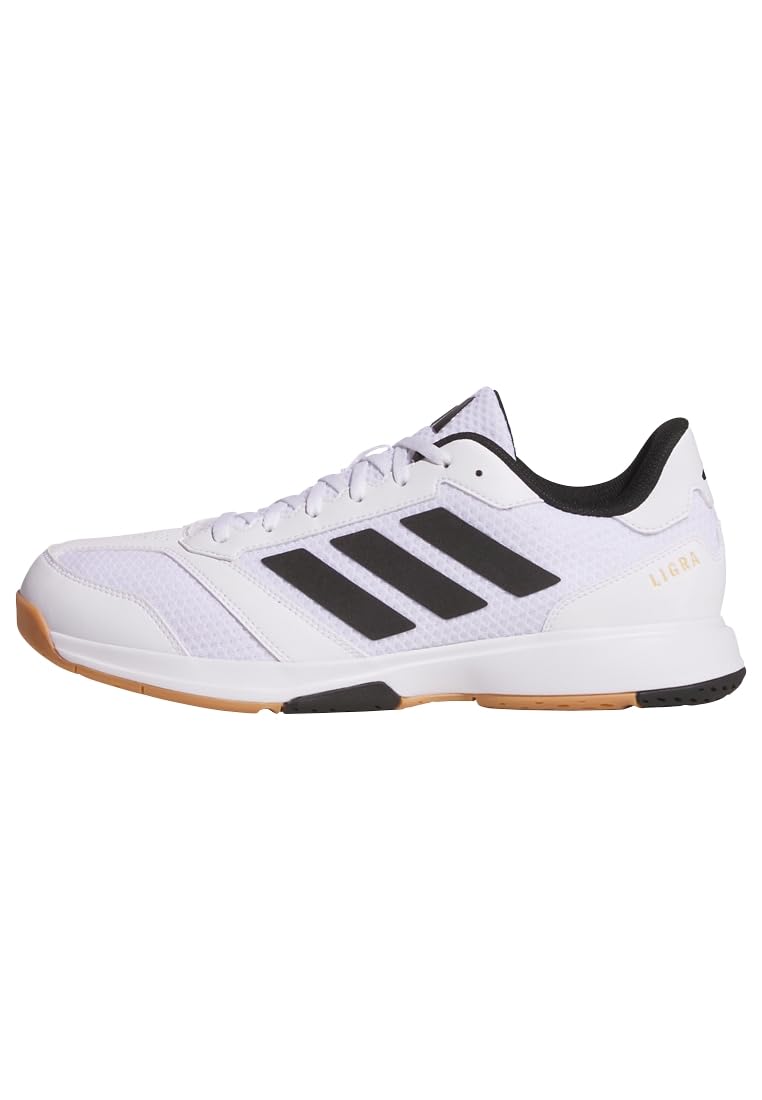
adidas Ligra 8

adidas

adidas Ligra 8

  • Cut Low-top
  • Fit Men's sizing
  • Court Indoor
Check Price on Amazon

A light, clean men's court shoe that doubles as an everyday sneaker.

If you're shopping a men's volleyball shoe, this is the only pair in the guide cut on a men's last, and it's one of the cheapest. The first thing we noticed is how little there is to notice: it's light, nothing about the upper fights the shape of your foot, and it didn't need a break-in before we were comfortable moving in it. For a first or second pair, that's most of the job done.

The materials feel sturdier than the price suggests, and the plain colorways are clean enough to wear off the court — one of the few shoes here you wouldn't feel odd in with jeans. On the floor it's neutral rather than dramatic: no springy plate, no aggressive collar, just a flat, grippy sole and a fit that stays put through a long session.

What you give up is the specialized feel of the two Mizunos. There's no cushioning story here, and if you're jumping hard four nights a week you'll want more shoe under the forefoot. For a recreational or league player — or a teenager who will outgrow them before they wear out — it's a lot of shoe for the money. Women can wear this one too, sizing down about a size and a half from their usual women's size.

Bottom Line

The only men's-specific shoe here, and a smart first pair: light, comfortable out of the box, and inexpensive to replace.

Check Latest Price

Best For Ankle coverage

Our Score 9.0/10
adidas Crazyflight 6 Mid

adidas

adidas Crazyflight 6 Mid

  • Cut Mid-top
  • Fit Runs half a size small
  • Court Indoor
Check Price on Amazon

The collar on the Crazyflight 6 Mid rises just above the ankle bones, and that's the reason to consider it over the low-cut shoes here. For anyone who has rolled an ankle or plays in a brace, the extra wrap is reassuring — the shoe feels planted side to side rather than tippy at the edges.

It's also the least expensive pair in the guide, and that's worth saying plainly, because the price doesn't read as a warning. The padding around the heel and tongue is generous, the shoe is light, and the upper has a solidity that entry-level court shoes often don't. The colorways match a uniform without shouting about it.

Where we land: this is the pick when ankle coverage is the priority and the budget is tight, and it makes a good beginner's shoe besides. The mid-cut takes a session or two to get used to if you've only played in low-cut shoes, and it isn't the pair we choose for a college-level training block. For high school, rec league, or a parent buying a first pair, it makes a lot of sense.

Bottom Line

The most affordable route to coverage over the ankle: a supportive mid-cut court shoe that feels better made than its price.

Check Latest Price

How We Tested 12 Pairs of Volleyball Shoes

We started with the brands that build volleyball-specific shoes rather than cross-trainers, then filtered by outsole material, court type, available widths, and price. Anything that came in a single unisex size run with no width options got cut early, and so did anything we couldn't get in a tester's actual size. That left 12 pairs.

Those 12 pairs went through eight months of real play: three open-gym nights a week, a full league season, and two weekend tournaments, split between a waxed hardwood high school gym and a synthetic club court. Testers ranged from a men's 6 to a 13, with flat feet, high arches, wide forefeet, and one freshly cleared ankle.

Before the first session we traced every tester's foot and checked it against each brand's size chart, which is how we learned that three of the 12 run a half size long. During play we watched for heel lift during shuffles, whether the forefoot bottomed out on landings, and whether anyone felt arch pressure in hour two. We logged break-in time and hot spots over the first week. For durability, we photographed each outsole at week one and week eight, focusing on toe drag from approaches and dives and on whether the midsole creased or packed out. Fit, comfort, appearance, and value got settled last, once we knew which pairs still felt good.

How to Choose

Why Court Shoes Beat Running Shoes

The sole is the whole argument. Volleyball shoes use a flat, tacky rubber outsole with pivot points under the ball of the foot, which bites into sealed wood or synthetic flooring and releases cleanly when you twist. Running shoes have deep, directional tread designed to roll you forward on pavement; on a gym floor that tread rides on top of the surface instead of gripping it, and many facilities require non-marking soles anyway.

If you play more than a couple of times a month, buy the court shoe. Even the least expensive pair here will outplay a running shoe on a gym floor, and a marked-up floor is a quick way to upset the person who runs the gym.

Low-Cut or Mid-Cut

A low-cut collar leaves the ankle free and suits players who want to move fast and feel the floor. A mid-cut rises just above the ankle bones and adds a band of coverage that some players find reassuring after a roll or while wearing a brace. A collar is not a brace and won't prevent every ankle injury, so pick on comfort and confidence rather than assuming height equals protection.

In this set, the adidas Crazyflight 6 Mid is the mid-cut option. The Nike Zoom HyperAce 2 shows how much containment a low-cut shoe can still deliver, which is worth knowing if you like the freedom of a low collar.

Fit and Sizing

Volleyball shoes are cut narrow, and a lot of them run short — this is where most unhappy purchases are born. Try them on late in the day with the socks you actually play in, and if you're between sizes or have a wide forefoot, go up half a size. The ASICS Gel-Rocket 11 and the Nike Zoom HyperAce 2 both make ordering your street size a mistake.

You want the heel locked down and about a thumbnail's width in front of the longest toe. If you wear an orthotic, check that the insole lifts out before you commit, because a shoe that fits fine with the stock footbed can turn tight once you add one.

Cushioning, Weight, and Where the Money Goes

Budget shoes are firmer and lighter. Premium shoes put more material under the forefoot and a tougher bumper on the toe, which matters most if you jump a lot, play on a hard floor, or train several times a week. A player on court twice a week is usually better served by a light, grippy shoe replaced each season than by stretching a flagship pair across two years.

If you drag a foot on your serve, read the toe first. That's the area that fails earliest on any court shoe, and it's the one place where spending more genuinely buys you a longer life.

Frequently Asked Questions

Final Verdict

The ASICS Gel-Rocket 11 is the pair we recommend to most players: it grips, it holds the foot still through a lateral stop, and it costs less than almost anything else here. Start there if you're new, playing a couple of nights a week, or buying for a teenager who will need another pair next season.

If you're on court four or five nights a week, the Mizuno Wave Momentum 3 is worth the step up — the cushioning lasts longer and the toe survives serve drag. Players who want a stable, forgiving base without flagship money should put the Mizuno Wave Dimension on their shortlist instead.