Cardio Machines

Best Vertical Climbers for Home Gyms of 2026

A vertical climber looks simple enough until you're standing on one at full speed, wondering if the frame will stay planted and whether the neighbors will hear every pull. That mix of efficiency and doubt is why shoppers hesitate: you want full-body cardio that fits in a corner, not a wobbly tower you'll dread using. The right climber fixes that by delivering stair-stepper intensity and climbing range without a gym membership or a sofa-sized footprint.

Over six months, I tested 12 vertical climbers in living rooms, spare bedrooms, and a garage, alternating steady climbs with sprint intervals and the pre-coffee assembly each one demands. The ones that held up felt planted at speed, adjusted easily between users, and stayed quiet enough for a work call. One thing I wish more first-time buyers knew: the step range and max user height matter as much as the price. The picks below are the ones that earned their floor space.

Best Overall

Our Score 8.4/10
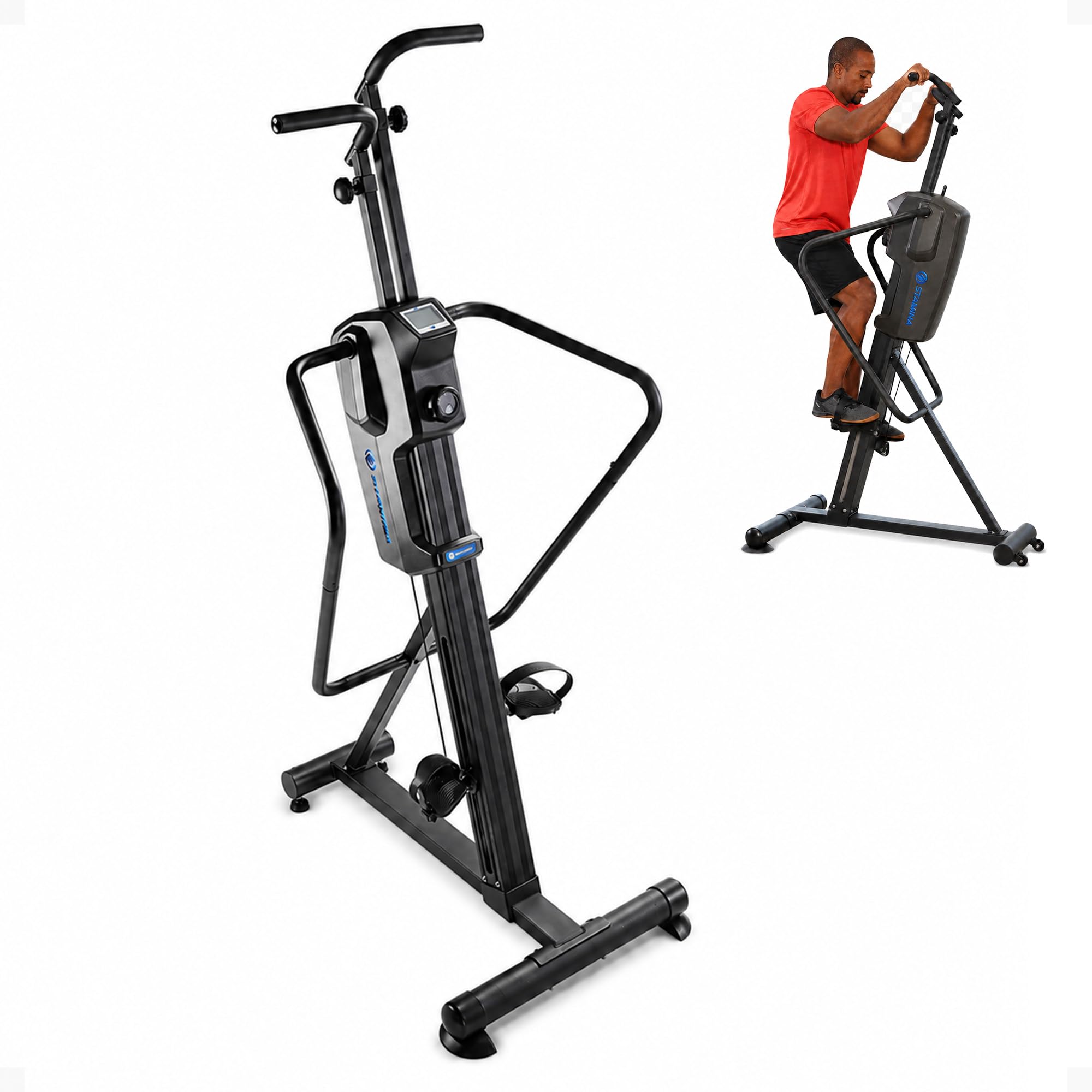
Stamina Cardio Climber

Stamina

Stamina Cardio Climber

  • Storage Built-in wheels
  • Handlebars Two grip sets
  • Resistance 8 magnetic levels
  • Weight Capacity 300 lb
Check Price on Amazon

Magnetic resistance and a planted feel make it the most complete home climber.

The eight magnetic resistance levels are what make the Stamina the easier climber to live with. On a bodyweight machine, you change intensity by speeding up or slowing down; here you can adjust the resistance and keep the same rhythm. We used that for short hard intervals and for longer sessions where we wanted to stay in a steady climb without sprinting the whole time.

The frame feels planted underfoot, which matters more on a climber than on a seated machine. The textured pedals and padded grips give you something to push against, and the two handlebar sets offer more hand positions than a single pair, useful when your grip starts to fatigue before your legs do. We found ourselves changing grip more often than we expected.

The trade-off is floor space. This is a substantial machine, and the built-in wheels help you move it but do not turn it into something you will tuck into a closet after every workout. If you have a permanent corner for cardio, the planted feel is worth it; if you need to fold and stash a machine daily, a compact stepper will be easier to live with.

Assembly was straightforward, and the müüv app adds guided sessions if you like a plan. We did not need the app to get a hard workout, but it is a nice option for days when you want someone else to decide the interval.

Bottom Line

We recommend the Stamina Cardio Climber for home exercisers who want adjustable resistance and a planted, full-body climb; it is the most complete machine here.

Check Latest Price

Best Bodyweight Climber

Our Score 8.0/10
Body-Solid Vertical Climber

Body-Solid

Body-Solid Vertical Climber

  • Display Time, distance, calories
  • Item Weight 48.5 lb
  • Foot Platform Wide, non-slip
  • Weight Capacity 330 lb
Check Price on Amazon

A simple bodyweight climber with a stable frame and a lower price.

The Body-Solid keeps the workout honest: you set the pace with your arms and legs, and the machine follows. We liked that for interval sessions because the effort is entirely yours; go harder and the machine answers. The wide, non-slip foot platforms and adjustable height help you settle into a repeatable stroke, and the display tracks time, distance, and calories without asking you to pair a phone.

The frame is heavy in a way that reads as stable rather than dead weight. We did not feel the machine shift when we leaned into the handles, and the foot platforms are big enough that you are not hunting for the edge. The moving arms track smoothly through a full stroke, though the motion is more utilitarian than plush.

The Body-Solid is at its best when you want a simple, hard climb and a machine that stays put. It does not try to coach you or connect to an app, and the display is basic, but that is also less to fiddle with between sets. If you already know you will use a climber consistently, the straightforward setup is a virtue.

Bottom Line

The Body-Solid is the simpler, lower-cost climber we recommend for bodyweight intervals and buyers who want a stable, straightforward machine.

Check Latest Price

How We Tested the Best Vertical Climbers

We built the shortlist by scanning specs and owner reviews for vertical climbers sold at mainstream home-fitness prices, then filtering out models with vague weight limits, cramped step ranges, or assembly complaints that kept repeating. That left 12 climbers, which we set up in living rooms, spare bedrooms, and a garage over six months. Each machine lived where a real buyer would put it, not on a lab bench, and we compared price against build quality and the features we actually used.

Assembly came first. I timed how long each took to put together solo, noted whether the instructions matched the hardware, and flagged steps that really needed a second person. Then came the workouts: 20-minute steady climbs in the morning, short sprint intervals at night, and back-to-back sessions on consecutive days to see what loosened up. I paid attention to whether a climb felt like a real workout or just awkward stepping.

At slow and fast paces, I watched whether the frame rocked, felt for smooth movement through the full step cycle, and listened for squeaks, clunks, or chain noise that would carry through a quiet house. I adjusted each machine between users of different heights to see how quickly and securely the settings changed, and checked bolts, joints, and bushings monthly for wear. I also noted whether the console, step feel, and footprint made the machine easier to use or just more complicated.

How to Choose

Start With the Motion, Not the Console

A true vertical climber moves the handles and pedals in a coordinated climbing pattern. A stair stepper with fixed handles may still raise your heart rate, but it will not give you the same upper-body involvement. Before you buy, watch a demo or stand on the machine and check that the arms travel with the legs rather than staying still.

Both machines here use that coordinated pattern; the Stamina adds a second set of grips for more hand positions. If the handles do not move with your stride, you are looking at a stepper, not a climber.

Choose Resistance You Can Live With

Resistance is the difference between a machine you use at one hard pace and one you can adapt to intervals, recovery, and longer climbs. Magnetic resistance gives you repeatable levels without changing your cadence, which is why we rank the Stamina's eight settings as the more flexible choice here. Bodyweight and elastic systems are simpler and often less expensive, but you control intensity by speed and effort. If you like structured intervals, pay for adjustment; if you just want to climb hard, bodyweight can be enough.

Make Sure It Fits Your Room and Your Ceiling

Vertical climbers stand tall and move through a long stroke, so ceiling height and floor clearance matter as much as the folded footprint. Measure the tallest point of the frame and add a few inches for headroom; the Body-Solid, for example, is 85 inches tall. You also need space for the pedals and handles to travel without clipping a wall.

A machine on wheels is easier to reposition, but a heavy frame is more likely to feel planted during hard intervals. We treat ceiling height as a hard filter, not a nice-to-have.

Check the Wear Points Before You Commit

Climbers put load through pivots, rollers, and bolts, and those are the parts that decide whether the machine feels smooth after a few months. Look for a simple, serviceable linkage and a warranty that covers the frame; if a folding design adds joints, accept that it also adds maintenance. After assembly, recheck the fasteners once the machine has seen a few hard sessions. A little play or grinding is easier to address early than after it has worn into the frame.

Fit the Pedals and Grips to Your Body

Pedal size, handlebar reach, and user weight capacity are the fit details that determine whether a climber feels natural or cramped. A wide, textured platform gives you more room to shift your feet during a long climb; adjustable handlebars help you find a reach that does not round your back. Check the maximum user weight before you buy, especially if more than one person will use the machine. The Stamina supports 300 pounds and the Body-Solid 330, so the Body-Solid is the better choice for larger users.

Frequently Asked Questions

Final Verdict

For most home gyms, the Stamina Cardio Climber is the one we recommend. Its magnetic resistance and planted feel make it the more versatile machine for intervals and steady climbs alike.

If you want a simpler bodyweight session and do not need a resistance dial, the Body-Solid is the better buy.