Activewear

Best Swim Jammers of 2026

The wrong pair of swim jammers announces itself halfway through a workout: a waistband that rolls, a seam that chafes, fabric that turns transparent when you push off the wall. The right pair mostly disappears—until you realize you've stopped thinking about it. That's the standard I used when my team and I started sorting through this category, because swim jammers are not complicated, but the details matter: how the cut sits at the hip, whether the drawstring actually holds, how the fabric behaves after a month of chlorine. A good pair fixes all of that: it stays put through turns, dries without clinging, and keeps its shape and color long enough to feel worth the money.

We put 14 pairs through four months of lap swimming, drill sets, and the less glamorous routine of rinsing them in the locker-room sink and hauling them home damp. Sizing was the first filter—some charts run small, and a few pairs only made sense after we tried a second size. After that, we watched for fabric thickness that stayed opaque when wet, seams that didn't rub, and colors that didn't fade into a sad pastel by week six. The picks below are the ones that held up.

Best Overall

Our Score 9.0/10
Speedo Endurance+ Solid Jammer

Speedo

Speedo Endurance+ Solid Jammer

  • Care Hand wash only
  • Fabric 50% polyester, 50% PBT
  • Closure Drawstring
  • Garment Weight 3.2 oz
Check Price on Amazon

Chlorine-proof Endurance+ fabric that holds its compression season after season.

Fabric is where a jammer is won or lost, and this one is built around Endurance+, a 50/50 polyester and PBT blend that Speedo rates at 20 times the chlorine life of conventional swimwear. That figure is the manufacturer's rather than ours, but the logic behind it is what we look for: chlorine is the thing that turns a snug suit into a baggy one, and a fabric that resists it keeps its compression instead of stretching out by midsummer. That's why this sits at the top of our list.

The fit backs it up. Four-way stretch pulls the suit tight through the thigh without the waistband digging in, and the drawstring actually holds, so there's no hiking things up at the wall between sets. The listed weight is 3.2 ounces, which is about as little as a suit can add to a swim bag, and the low rise sits where most swimmers expect a jammer to sit.

Sizing is the one thing to get right, and it's where a lot of buyers go wrong. This suit runs small: order one size up from your street waist, and two if you sit between sizes or you're fuller through the hips and thighs. Buy your true size and you'll spend the first month feeling every seam. Sized properly, it's a suit you forget about in the water, which is the highest compliment a training jammer can earn.

Bottom Line

We tell anyone who swims laps more than once a week to start here: the chlorine-resistant fabric keeps its compression, and the only real task is ordering a size up.

Check Latest Price

Best for Daily Lap Swimming

Our Score 9.0/10
TYR Durafast One Jammer

TYR

TYR Durafast One Jammer

  • Cut Compressive lap-swim jammer
  • Fabric 100% polyester
  • Style Number SLAP7A
Check Price on Amazon

Our pick for four or five swims a week, with color that survives chlorine.

Where the Speedo leans on a stretch blend, the Durafast One goes the other way: 100% polyester, a fabric that shrugs off chlorine and holds its color. Suits built this way are the ones that come out of a season of daily laps still looking like swimwear rather than a stretched-out shadow of it.

We reach for this one when a suit is going to be worn hard and put away wet. The cut is compressive through the thigh, the drawstring cinches easily and stays cinched, and the liner does its job without bunching. The trade-off is a leg band with very little give: if you're thick through the thigh, go up two sizes rather than one, because that opening will not stretch to meet you.

Sizing overall runs small, the same story as nearly every jammer here, so start a size above your street waist. What you don't get is softness. This is a firmer, more structured fabric than a nylon blend, and it won't drape against the skin the way a stretchier suit does. None of that matters much once you're swimming; what matters at the wall is that the suit is still tight.

Bottom Line

For a suit that lives in a pool bag and gets worn four or five times a week, this is the one we hand over: firm, colorfast, and slow to give up.

Check Latest Price

Best Value

Our Score 9.0/10
MY KILOMETRE Solid Jammer

MY KILOMETRE

MY KILOMETRE Solid Jammer

  • Cut Long racing and training leg
  • Style Solid
  • Model Number Swim-01
Check Price on Amazon

A two-suit rotation on a budget, with tidy seams and a sharp solid color.

Among the men's suits in this guide, this is the least expensive, and it's the one we point to when a swimmer wants a rotation without treating jammers as an investment portfolio.

The build is better than the price suggests. The solid colorways look sharp, the seams are tidy, and the material has a sleek, slightly structured feel that reads as swimwear rather than underwear. It sits close without being restrictive, and the waist stays where you set it through a set of 100s.

Two things to know before you order. Sizing runs small, so take at least one size up from your street waist and two if you're near the top of a size band. And the leg runs shorter than the longer-cut jammers here, which is a matter of taste rather than a fault — fine for training, less flattering if you're tall. Treat it as the second suit in a rotation rather than the only one you own, and it does its job well.

Bottom Line

The value pick for men who want two or three practice suits without spending like it's championship season — just order up and don't expect it to stay crisp forever.

Check Latest Price

Best for Coverage

Our Score 9.0/10
baleaf Chlorine-Resistant Jammer

baleaf

baleaf Chlorine-Resistant Jammer

  • Cut Athletic swim jammer
  • Department Men
  • Chlorine Resistance Chlorine-resistant
Check Price on Amazon

A thicker knit for comfort and opacity, not for chasing a personal best.

Thickness is the first thing you notice. The knit here has real body to it, heavier than most suits in this guide and lined with a second layer across the front, and that single choice decides who this suit is for.

We like it for the swimmer who wants coverage more than a stopwatch. The thick knit stays opaque when you climb out of the pool, it doesn't cling in a way that makes you self-conscious, and it holds the waist through a long set of laps. The double front is where a lot of that confidence comes from. What it isn't is a race suit: the cut and the substantial fabric are built for comfort, not for chasing a personal best.

Size up. A 30-inch street waist takes a 32 here, and the fabric has less give than a thin polyester jammer, so don't count on it stretching into shape. Recreational lap swimmers, aqua-fit regulars, and anyone who has felt over-exposed in a thin suit will get their money's worth, and it will still be a serviceable suit long after a flimsier one has gone sheer.

Bottom Line

We like this for the swimmer who wants to feel covered and comfortable in the water rather than fast — thick, opaque, and honest about what it is.

Check Latest Price

Best for Race Day

Our Score 9.0/10
ARENA Powerskin ST Next

ARENA

ARENA Powerskin ST Next

  • Cut Competition jammer
  • Suit Type Racing tech suit
  • Department Men
Check Price on Amazon

A competition tech suit built for the block, not for daily practice.

This is not the suit you train in. The Powerskin ST Next is a racing tech suit: engineered compression, a construction built to hold your hips high for the length of a race, and a price that puts it in a different bracket from everything else here. It's the one pick in this guide that might take a little time off a personal best, and the one with almost no role in your weekly practice.

Getting into it takes two hands and a couple of minutes, which is the point — the snugness is where the speed comes from, and it eases once you're in. Be deliberate with the drawstring on those first pulls; the fabric has plenty of stretch, the cord doesn't.

Sizing is a racing cut, so it should feel almost too tight standing on the block, and the chart is the only thing worth trusting here. Keep it for meets and it earns its place in the suit bag; wear it to practice twice a week and you'll be buying the same suit again long before the times come down.

Bottom Line

This is a meet suit, and a good one — buy it if you race and keep it out of practice, because nothing about it is built for daily chlorine.

Check Latest Price

Best for Young Swimmers

Our Score 8.8/10
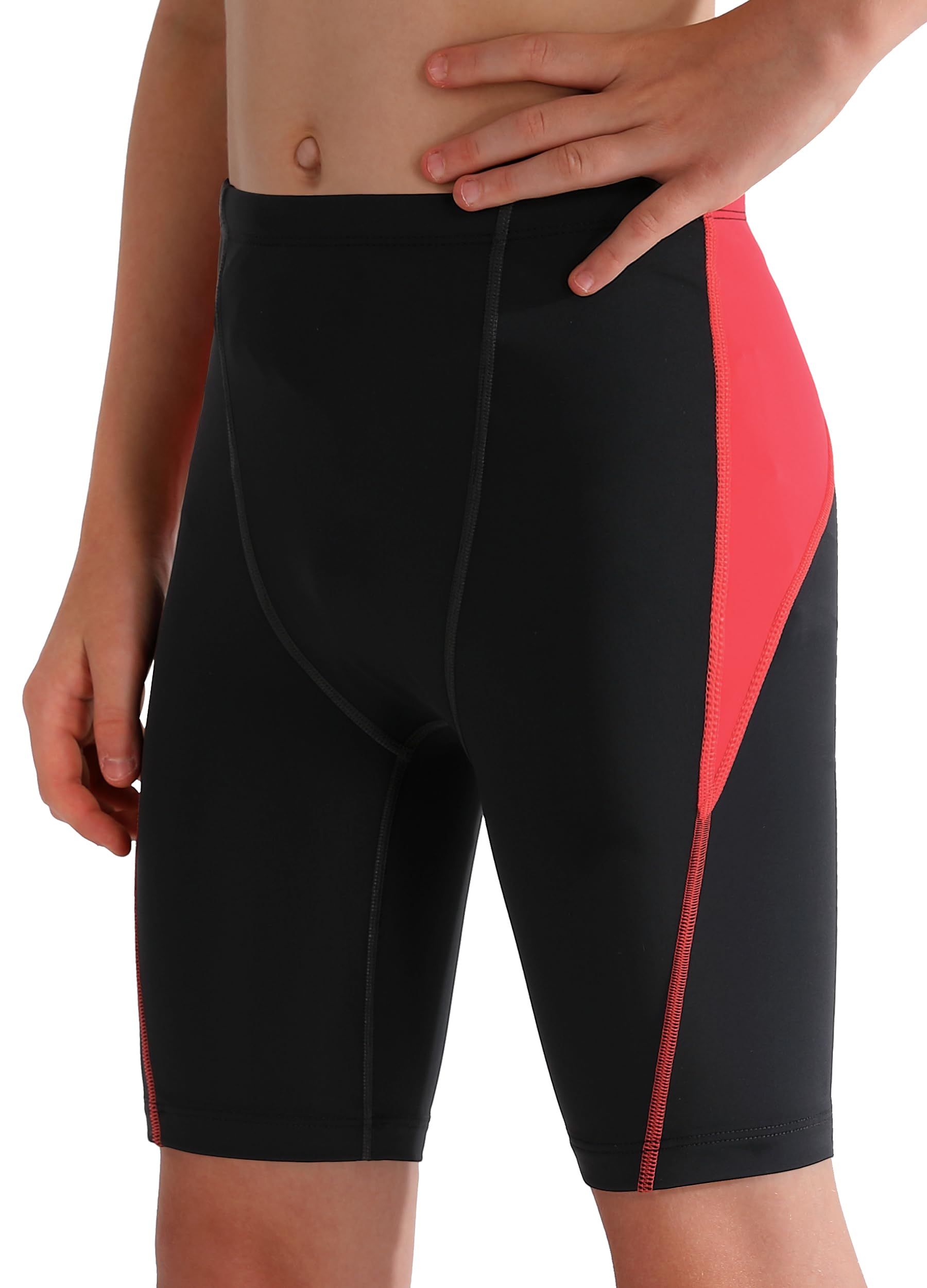
DEVOROPA Boys Swim Jammer

DEVOROPA

DEVOROPA Boys Swim Jammer

  • Suit Type Competitive swim team jammer
  • Department Boys
  • Fit Options Slim, standard, husky
Check Price on Amazon

Slim, standard, and husky fits for kids who live at the pool.

Youth jammers usually come in one shape and hope for the best. This one comes in slim, standard, and husky fits, which is the most useful thing about it — a stocky 10-year-old and a wiry one shouldn't be wearing the same cut, and that range is why it earns a place here.

It behaves in the water, too. The waistband holds through turns and starts, the leg doesn't ride up, and the fabric is soft enough that a kid new to jammers won't spend his first week complaining about chafing. Comfortable and stays put is most of what a young swimmer needs from a practice suit.

Sizing is the part to get right: order one size up from the chart, and if your swimmer sits between sizes, take the larger. A jammer that's too big defeats the point as surely as one that's too tight — it rides up and holds water — so check the fit before the first meet rather than after.

For a kid who will outgrow the suit before it wears out, the trade is easy to take: the fit is right, the price sits at the low end of this guide, and the comfort is where this one earns its keep. Parents buying for a summer league should start here rather than with a pricier suit the swimmer will be out of by August.

Bottom Line

Our pick for kids' swim teams because it comes in slim, standard, and husky fits — comfort and a waistband that stays put matter more than color at that age.

Check Latest Price

Best For Kids' practice backup

Our Score 8.8/10
MIVEI Boys Swim Jammer

MIVEI

MIVEI Boys Swim Jammer

  • Suit Type Team training trunk
  • Department Boys
  • Chlorine Resistance Chlorine-resistant
Check Price on Amazon

At the bottom of the price range, this is the suit you buy when your swimmer needs a second practice jammer because the first one is still damp in the bag.

It fits well enough, with a little room to spare, and the waistband stays put through turns and starts. The colors come out of the package bright and the fabric feels fine against the skin, which matters more than parents like to admit when the swimmer in question has strong opinions about what he wears to practice.

The wildcard is sizing: some of these run true and some run large enough that a child needs two sizes down from his usual, so order one and try it on before the tags come off. Beyond that, this is a practice suit with a practice suit's lifespan — comfortable, decent-looking, and something you'll end up replacing. At the low end of this guide, that's a fair thing to buy.

Bottom Line

A reasonable second practice suit for a young swimmer when the first one is still wet, as long as you check the fit before the tags come off.

Check Latest Price

Best For Casual lap swimming

Our Score 8.6/10
Fiteng Men's Swim Jammer

Fiteng

Fiteng Men's Swim Jammer

  • Cut Jammer
  • Suit Type Competitive swim team suit
  • Department Men
Check Price on Amazon

Color is where this one disappoints first. The suits look good out of the package and tired a few weeks in, and the dye doesn't just soften — the fabric takes on that faded, inside-out look. For a backup suit that lives in a pool bag, that's a cost of doing business; for the suit you wear to every practice, it's a reason to look elsewhere.

Fit is a moving target. The waist can run large on a trimmer build, so order true to your measurement rather than sizing up out of habit, and treat the drawstring as the thing keeping the suit on rather than a detail.

Value is the counterweight. It's one of the least expensive men's suits here, it's comfortable for lap swimming, and the material feels better than the price when it's new. If you want something to knock around in for a season of casual laps, that's enough.

So the question is what you're buying it for. As a spare for the pool bag, a travel suit, or a first jammer for a teenager who is still growing, it's a sensible buy — inexpensive enough that the fading doesn't sting. As the suit you wear four mornings a week for a year, it isn't; the Speedo Endurance+ and the TYR both ask more and both hold their shape longer.

Bottom Line

Fine as a spare or a teenager's first jammer, since the fading doesn't sting at this price — but not the suit we pick for a year of serious laps.

Check Latest Price

How We Tested 14 Pairs of Swim Jammers

We started by building a shortlist from swim specialty shops, team suppliers, and a few direct-to-consumer labels, then filtered by size range, fabric composition, and whether the suit had a lined front and a functional drawcord. Price mattered, but only as part of value—we wanted pairs that made sense for regular lap swimmers, not just racers. From that pool, we tested 14 pairs over four months.

Each pair went into rotation with a group of swimmers across different body types and weekly yardage. We wore them for morning laps, kick sets, flip-turn drills, and a handful of open-water sessions, plus the unglamorous stuff: sitting on pool deck, rinsing them in the sink, and leaving them damp in a gym bag overnight. We had testers order their usual size and, when the chart was ambiguous, a second size up or down.

Fit and sizing came first. We checked whether the waistband gaped during a streamline, whether the legs rode up during flutter kick, and whether the drawstring stayed tied through a set. For fabric, we felt thickness dry and wet, held soaked pairs up to the light to check for sheerness, and noted whether the material felt restrictive on deck or in the water. To judge durability and color, we kept a rinse-and-wash log and compared older pairs with fresh ones every couple of weeks, looking at seam stitching, elastic recovery, and fading. We also considered design details—waistband height, seam placement, and whether darker colors stayed dark—and weighed all of it against how many sessions each pair stayed comfortable, opaque, and secure.

How to Choose

Size From Your Waist, Not Your Jeans

A jammer size has almost nothing to do with the number on your trousers. Nearly every men's suit here runs small, and the compression that makes a jammer useful is exactly what makes a too-small one miserable to wear. Measure your waist properly, match it to the maker's chart, then go up one size — two if you sit between sizes or you're thick through the thigh.

The same rule applies to kids, which is why the youth suits with slim, standard, and husky options earn their place. If the suit fights you getting it on the first time, it's the wrong size, not a suit you'll break in.

Fabric Decides How Long It Lasts

Chlorine is the enemy. It breaks down elastane, which is why a soft, stretchy suit can go baggy and see-through inside a season. Polyester and PBT blends — the Endurance+ in our top pick, the polyester in the TYR — resist that breakdown and hold their color, at the cost of some softness and give.

Nylon blends feel better against the skin and cost less; expect to replace them sooner. If you're in the water three or more times a week, fabric is the part worth paying for, because it's the part that decides whether the suit still fits in March.

Practice Suit or Race Suit?

These are two different products with confusingly similar names. A training jammer is built to survive chlorine and daily wear; a tech suit like the Arena Powerskin ST Next is built to compress and hold your hips high for the minutes you're on the block.

Wearing a tech suit to practice wastes it, since chlorine and repeated pulls are exactly what it isn't designed for. Racing in a thick, coverage-minded practice jammer wastes the taper instead. Buy both only if you actually race; otherwise, buy the practice suit and put the difference toward entries.

Details You'll Notice in the Water

Three things separate a suit you forget about from one you're hitching up at every wall. The drawstring: a cord that cinches flat and stays tight beats one you retie after every push-off. The leg band: it should sit flat and stay put without cutting in. And the liner: a double layer across the front keeps a suit opaque when wet, which matters more as the fabric ages.

One warning about the word compressive. In a listing it describes how a suit fits when it's new, not whether it still fits that way after a few months of chlorinated water.

Frequently Asked Questions

Final Verdict

Buy the Speedo Endurance+ Solid. It's the best combination here of chlorine-proof fabric, a genuinely compressive fit that holds its shape, and a price that sits in the middle of this field rather than at the top of it — and it's the suit we point to for anyone swimming laps two or three times a week or more.

Two exceptions worth knowing. If your suit lives in a pool bag and gets worn four or five times a week, the TYR Durafast One is the tougher buy, with color that stays put. And if you're tapering for a meet, the Arena Powerskin ST Next is the only suit here built for the block.