Cardio Machines

Best Rowing Machines of 2026

A rowing machine is one motion repeated: you drive with the legs, lean back, and finish with the arms, and the resistance unit you're pulling against decides how that motion feels. Air flywheels get louder the harder you go, magnetic ones stay quiet enough for a shared wall, and water tanks are the ones guests comment on. What a rower actually fixes is simpler than any of that — a full-body, low-impact workout in the corner of a room, done in 20 minutes before dinner.

I've had one parked in a spare bedroom for two years, so I know the real question isn't the spec sheet — it's whether you'll climb on it in February. My team assembled and rowed seven machines over eight months, and the ones worth keeping felt smooth at an easy pace, not just at a sprint. Measure your floor with the rail extended before you buy; almost every listing quotes the folded footprint. The picks below are the ones we kept getting back onto.

Best Overall

Our Score 9.8/10
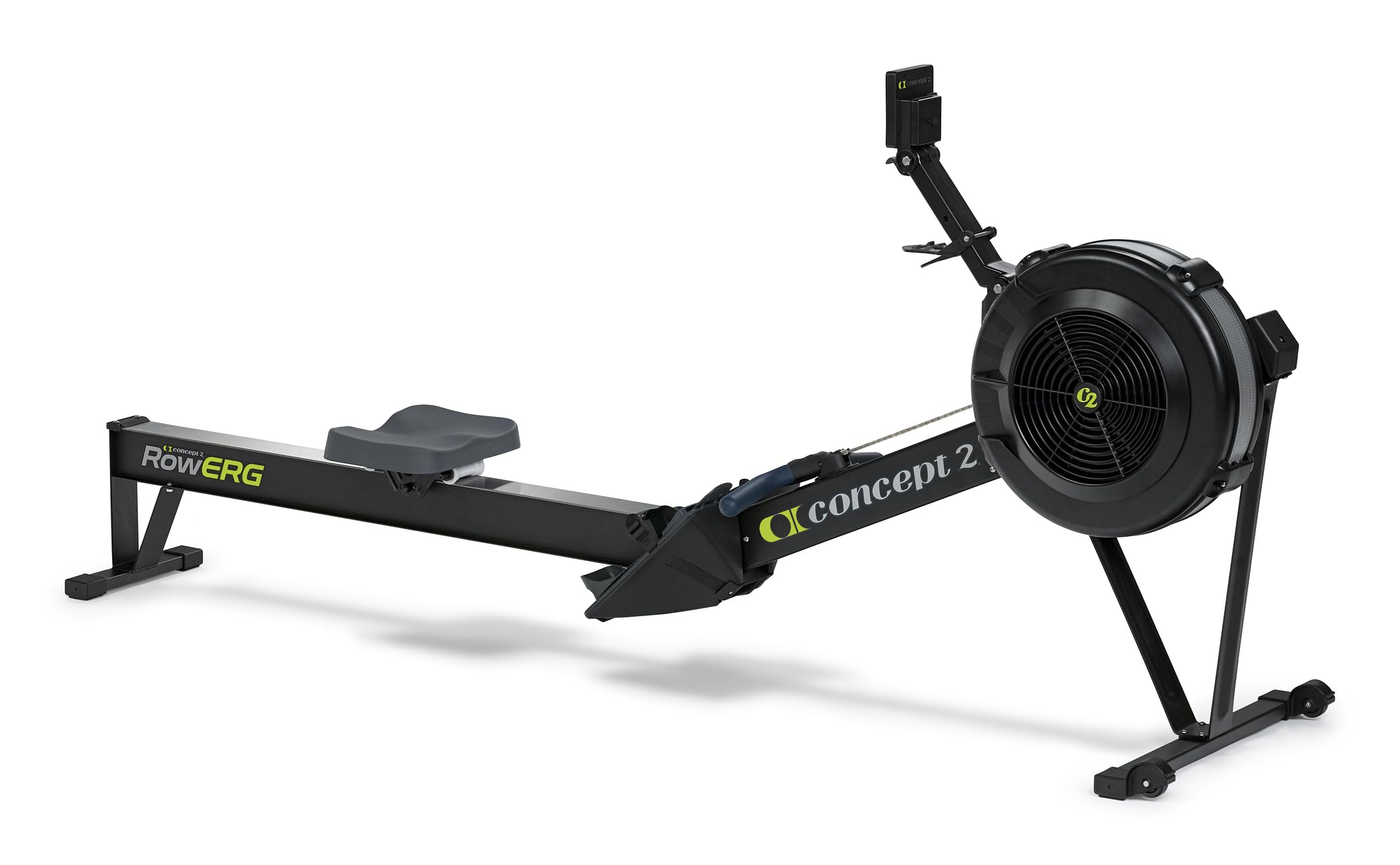
Concept2 RowErg

Concept2

Concept2 RowErg

  • Monitor PM5 with Bluetooth and ANT+
  • Resistance Air, damper-adjusted
  • Item Weight 57.3 lb
  • Maximum User Weight 500.4 lb
Check Price on Amazon

The gym standard: effort-linked air resistance, a superb monitor, and it splits for storage.

There's a good chance you've already rowed on one of these at a gym, and that recognition is the point: the RowErg is the machine everything else gets compared with. It's the one we recommend if the budget stretches that far, because the resistance never lies to you. There's no dial between you and the flywheel — pull harder and the fan loads up, ease off and it lets you go — so a session feels like rowing rather than pedaling.

The Performance Monitor 5 is the other half of the case. It reports pace per 500 meters, watts, and calories, and it talks to heart-rate straps and training apps over Bluetooth and ANT+, so the numbers mean something beyond the level you picked on a dial. We paid close attention to the monitor because it's the part that turns a machine into a plan, and this is the most useful one on the page.

Storage is a two-piece split on caster wheels: quick enough that a hallway works if you don't mind moving it each session, though the rail is long and you'll want to measure before you give it a wall. The frame is rated to 227 kilograms, the footrests and handle suit most hands without adjusting, and the damper is the only control you touch. Of everything here, this felt the most solid under a hard pull.

You are paying a lot for that. The two- and five-year warranty is the most generous cover in this group, and the machine has earned its reputation on years of daily use in gyms that don't coddle anything. If the price is the blocker, the RS3 and the Q1S both cost a fraction and both will get you fit — but nothing else here gives you a number to chase quite this honestly.

Bottom Line

It's the machine the gyms use, and the one we recommend when the budget reaches: effort-linked air resistance, a monitor worth training against, and the most solid frame here.

Check Latest Price

Best Water Rower

Our Score 9.6/10
YOSUDA Water Rower

YOSUDA

YOSUDA Water Rower

  • Frame 30 mm FSC-certified beech
  • Storage Folds 180 degrees
  • Resistance Water, 22-liter tank
  • Maximum User Weight 400 lb
Check Price on Amazon

Water resistance that builds with effort inside a folding beech frame you'll leave on display.

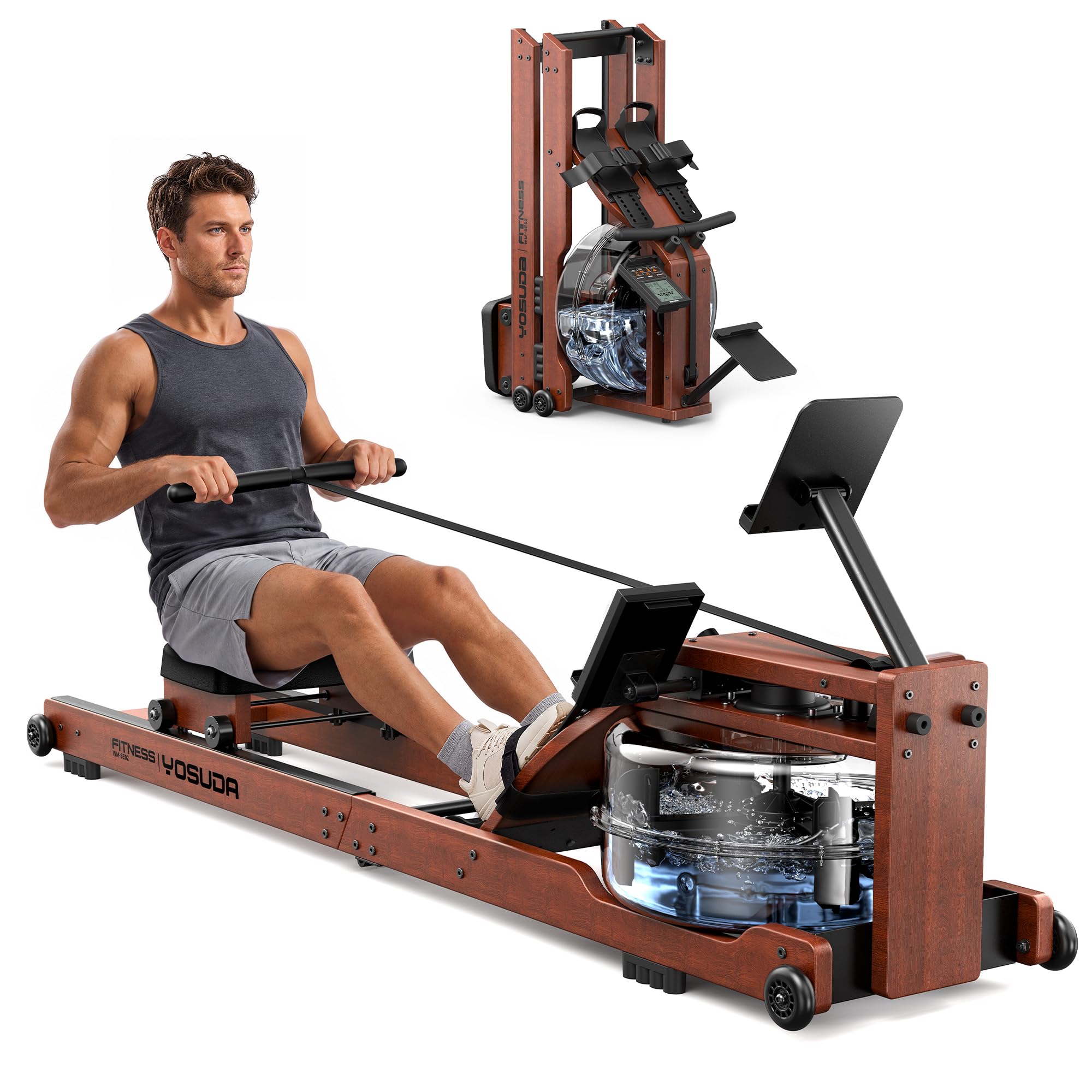
Fill the tank and this stops looking like gym equipment. The frame is beech, the tank holds 22 liters, and every stroke moves water you can hear in a way that makes twenty minutes pass faster. It's also the most honest resistance in this group after the Concept2: the harder you drive, the more the four-blade paddle fights back.

The numbers back up the looks. Thirty-millimeter FSC-certified beech carries a 400-pound rating, and YOSUDA says the machine fits rowers up to 6'6", which covers bigger and taller bodies than most of the magnetic machines here. It folds through 180 degrees and rolls on built-in wheels, so something 73.6 inches long in use can stand in a corner between sessions. The monitor tracks distance, time, strokes, and calories and pairs with Kinomap, Apple Health, or Google Fit.

It's the best-looking machine in this group by some distance, and looks matter more here than they should: a rower you're happy to leave out in the living room is a rower you'll use on a Tuesday night. The water is the experience and the wood is the reason it doesn't get hidden away — and the magnetic machines, for all their convenience, can't match either.

Bottom Line

Our pick if you want a rower you won't hide away: water resistance that builds with effort, in a folding wood frame that looks like furniture.

Check Latest Price

Best for Rowing Form

Our Score 9.4/10
Merach RS3

Merach

Merach RS3

  • Dimensions 60"D x 28.3"W x 29.5"H
  • Resistance 16-level magnetic
  • Item Weight 58 lb
  • Maximum User Weight 350 lb
Check Price on Amazon

Arms swing outward for a fuller, more instructive stroke than any other magnetic rower here.

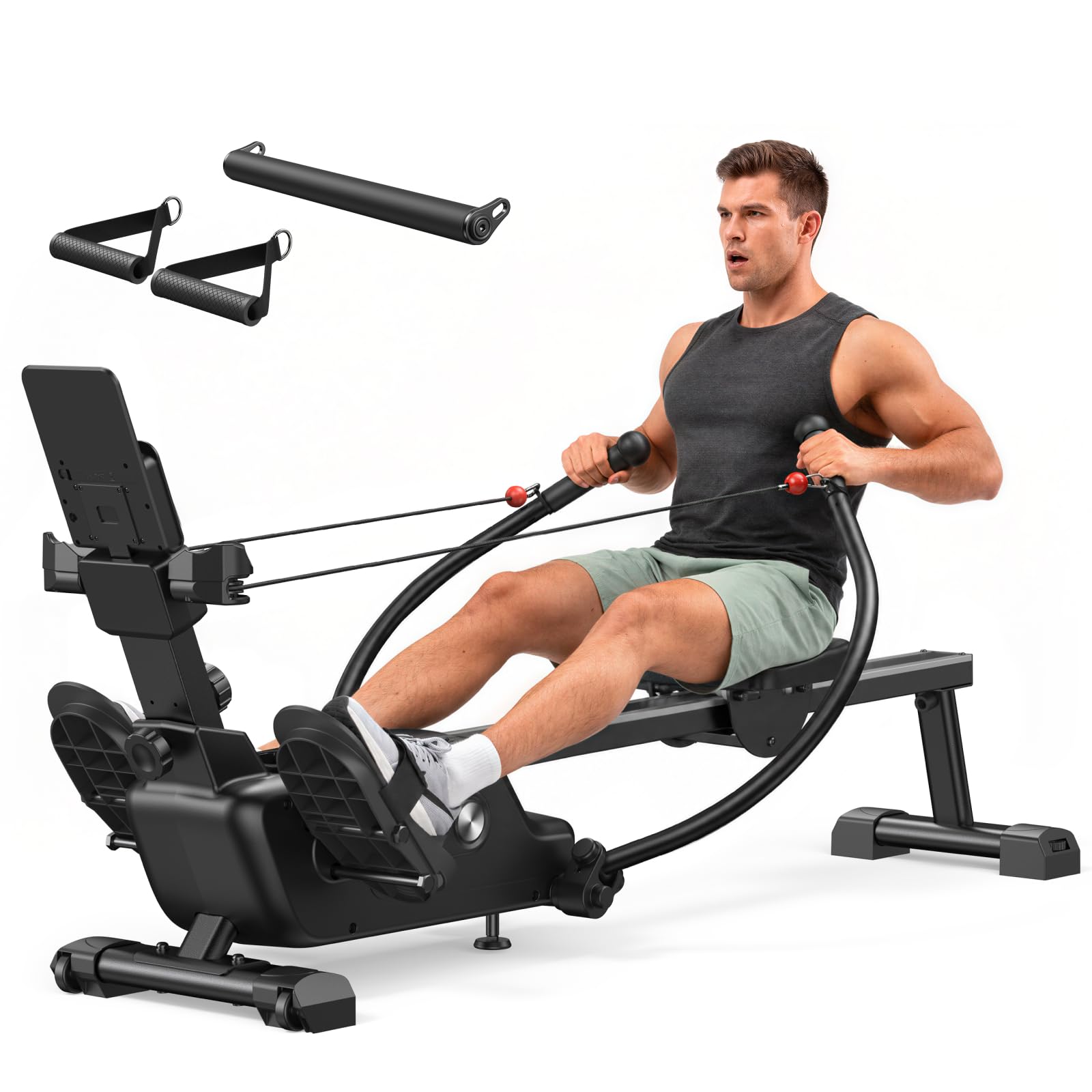
Most magnetic rowers pull the handle straight back into your ribs. The RS3 swings each arm outward through a 120-degree arc instead, so the finish opens across your chest the way a sculling stroke does. It's the only machine here that changes the shape of the movement rather than just the load, and it's why we kept coming back to it whenever we wanted to work on form.

We think it earns its place as the best magnetic rower here for anyone learning the stroke. You can pull both arms together, alternate them, or work one side at a time, which turns a cardio machine into something closer to a strength tool; the 16 levels run quiet and smooth, and Merach rates the top at 80 pounds of resistance. The steel frame carries a 350-pound rating and the rail glides without a knock.

The console is a plain LCD that wants decent light, so most of what you'll use is the Merach app and its guided rows. Worth knowing before you buy, since the screen is the cheapest part of any rower and the easiest to replace with a tablet. At this price the stroke is what you're paying for, and it's worth more than a brighter display.

Bottom Line

We recommend it to anyone who wants to learn a real stroke — the outward arm arc and 16 quiet levels make it the most instructive machine here.

Check Latest Price

Best For Taller rowers

Our Score 9.0/10
YOSUDA H-185

YOSUDA

YOSUDA H-185

  • Rail 50.2-inch slide rail
  • Resistance 16-level magnetic
  • Item Weight 54 lb
  • Maximum User Weight 350 lb
Check Price on Amazon

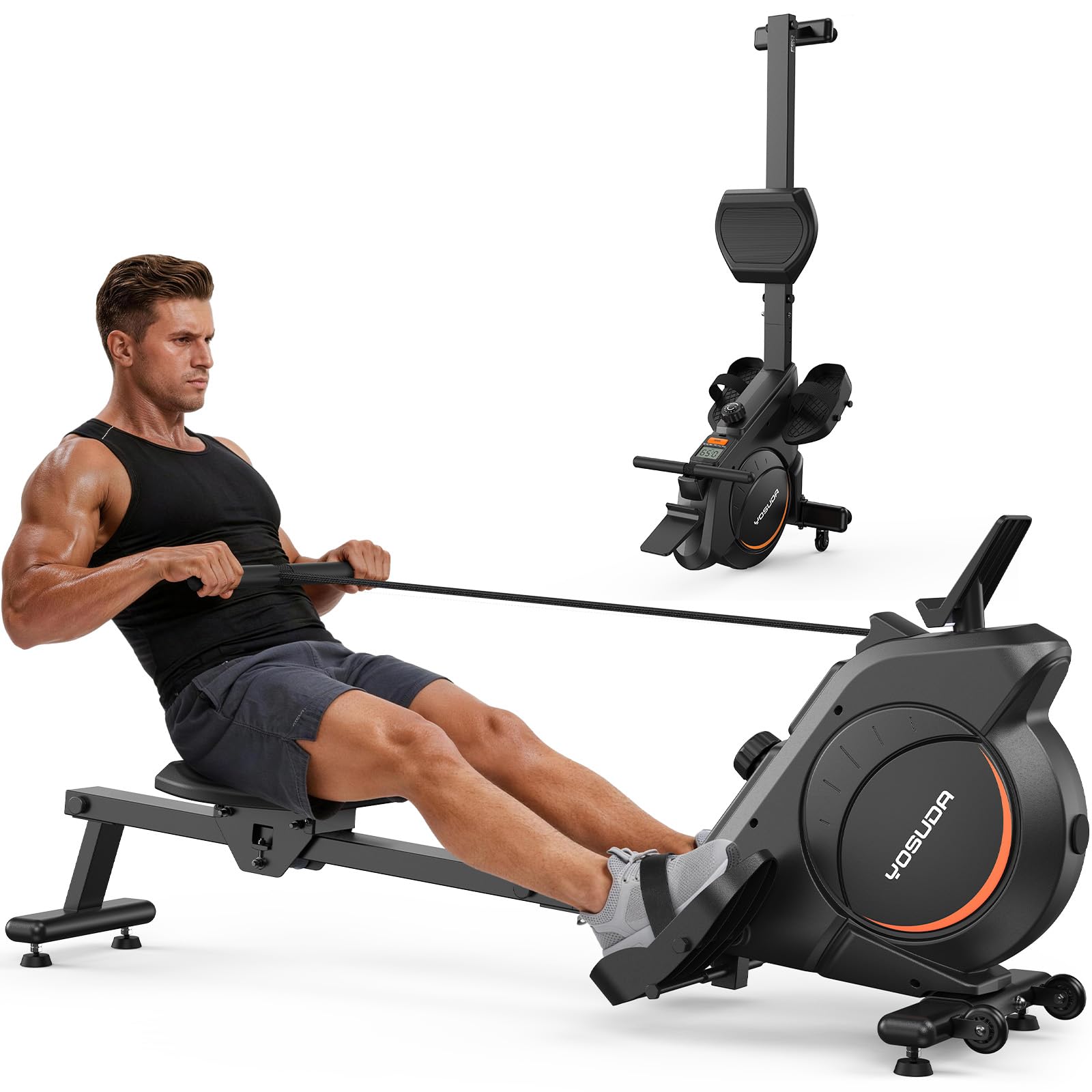
The H-185's slide rail runs 50.2 inches and YOSUDA rates the machine for rowers up to 6'3". If compact rowers have left you feeling folded up at the finish, that travel is the number worth checking before anything else on the spec sheet.

It's a mono-rail design — one beam with the seat riding on top — in a 350-pound steel frame, with 16 magnetic levels and a console set at eye level so you're not craning to read it. At 54 pounds it's stable without being a two-person move, and the row itself came across smooth and quiet in our sessions.

Storage is upright against a wall, which is the difference between a rower that lives in the room and one that lives in the way. Assembly is straightforward — the rail and the flywheel housing are the two big pieces and the rest bolts on — and the wheels let you reposition it once it's built.

What gives us pause is the long haul rather than the first month. The tensioner and the seat rollers are the parts that decide whether a mono-rail rower still glides in three years, and they're the first place a machine at this price shows its age. Buy it for the fit, look the moving parts over when it arrives, and it's a lot of rower for the money.

Bottom Line

For taller rowers on a midrange budget, this is the fit: 50.2 inches of rail travel, a quiet magnetic drive, and a console you can actually read.

Check Latest Price

Best for Small Spaces

Our Score 8.8/10
Sunny Compact Hydraulic Rower

Sunny

Sunny Compact Hydraulic Rower

  • Dimensions 58.1"D x 20.1"W x 24.8"H
  • Resistance 12-level hydraulic
  • Item Weight 22.4 lb
  • Maximum User Weight 300 lb
Check Price on Amazon

22.4 pounds and 58 inches long — small enough to carry, store, and actually use.

At 22.4 pounds, this is the only machine here one person can carry upstairs without a plan. It's 58.1 inches long and 20.1 wide, light enough to move between rooms one-handed, and small enough to stand out of the way between sessions. That portability is the whole argument for us: if a rower has to be put away to fit your apartment, this is the one that actually gets put away.

The resistance comes from hydraulic cylinders rather than a flywheel, and it behaves differently. Each arm pulls against its own cylinder, so the two sides work independently and any imbalance shows up; the load arrives partway into the pull instead of building through it. The inclined rail is a smart piece of compensation, using your body weight on the drive so the legs do more than the arms suggest.

Twelve levels are plenty for the sessions this machine suits, and it stays quiet enough to share a wall with a bedroom. The honest limit is hydraulic behavior over a long row: the cylinders warm and soften, so a twenty-minute session gets easier rather than harder and you finish by turning the knob up. For fifteen minutes before work that never comes up — and that's the session this rower is built for.

Bottom Line

If a rower has to be carried and put away to fit your apartment, this 22.4-pound machine is the one that actually gets used.

Check Latest Price

Best Value Magnetic Rower

Our Score 8.8/10
Merach Q1S

Merach

Merach Q1S

  • Rail Dual slide rail
  • Resistance 16-level magnetic
  • Item Weight 42 lb
  • Maximum User Weight 350 lb
Check Price on Amazon

Quiet, smooth, half-hour assembly, and the best value in this guide for a first rower.

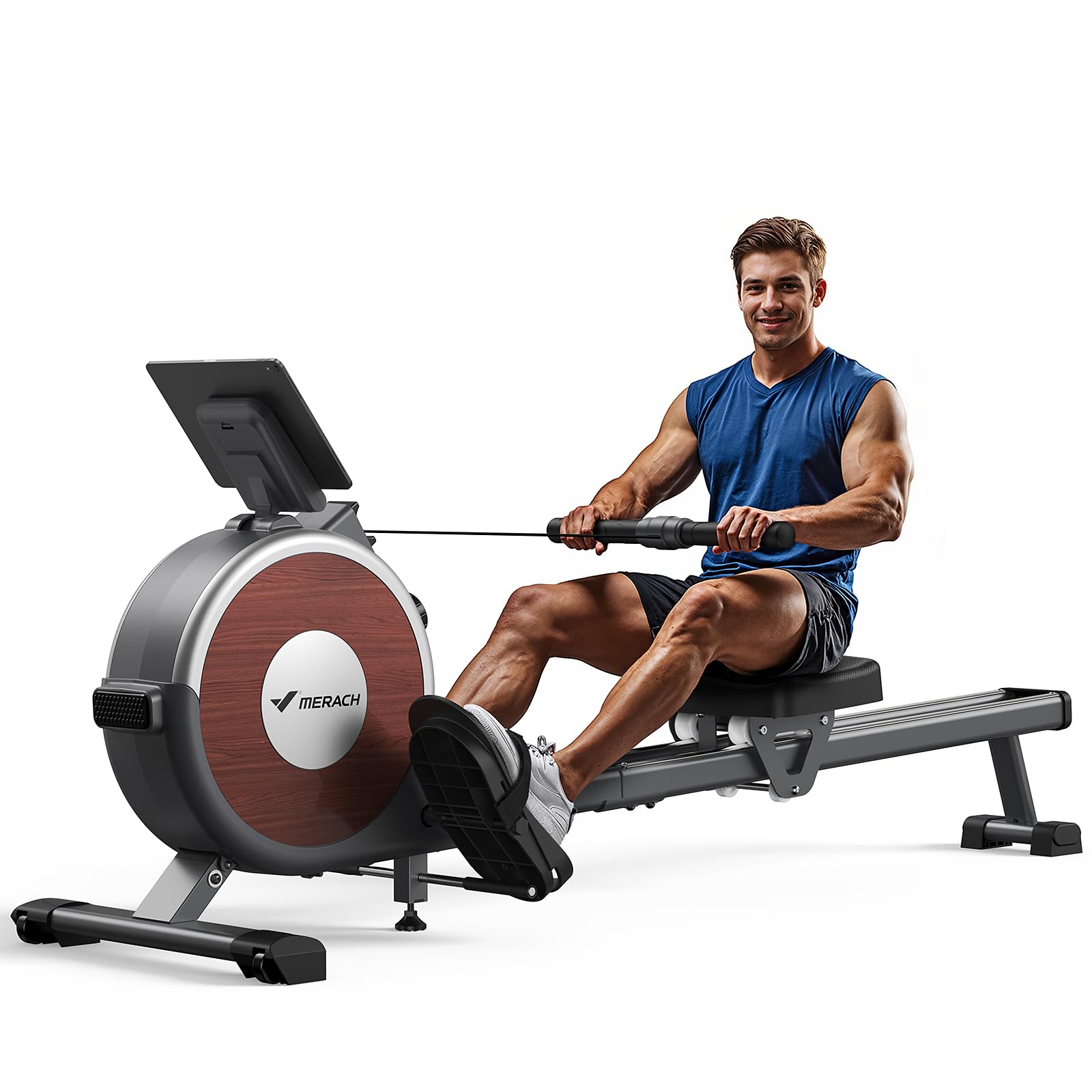
The Q1S sits near the bottom of the price range in this group and doesn't behave like it: a steel frame rated to 350 pounds, two slide rails rather than one, and a seat that glides without the sideways wobble we associate with single-rail machines. For a first rower, that's the difference between a machine that feels like equipment and one that feels like a toy.

Assembly is where cheap rowers usually fall down, and it's where this one is strongest. It arrives partly built, and with the setup video the job runs about half an hour; the wheels and the 42-pound body make it easy to push into a corner afterwards. The 16 levels are changed with a dial, and the whole thing runs quiet enough that a podcast doesn't need headphones.

The catch is at the top of the resistance range. Sixteen levels sounds like a lot and feels like plenty at the easy end — fine for intervals, warm-ups, and anyone easing back into exercise. Strong, experienced rowers will live on the highest setting and still want more, and they should put the extra money into the RS3. Everyone else gets a genuinely smooth, quiet stroke for a lot less than the midrange machines here.

The console covers distance, time, calories, strokes, and speed, and Merach's app adds guided rows plus a Kinomap connection if you want company while you work. Neither is why you buy it, but both mean you're not rowing blind on day one. Everything else about this machine behaves like something that costs more than it does.

Bottom Line

The best value here for a first rower: quiet, smooth, quick to assemble, and built like a machine that costs more.

Check Latest Price

Best For Folding away

Our Score 8.8/10
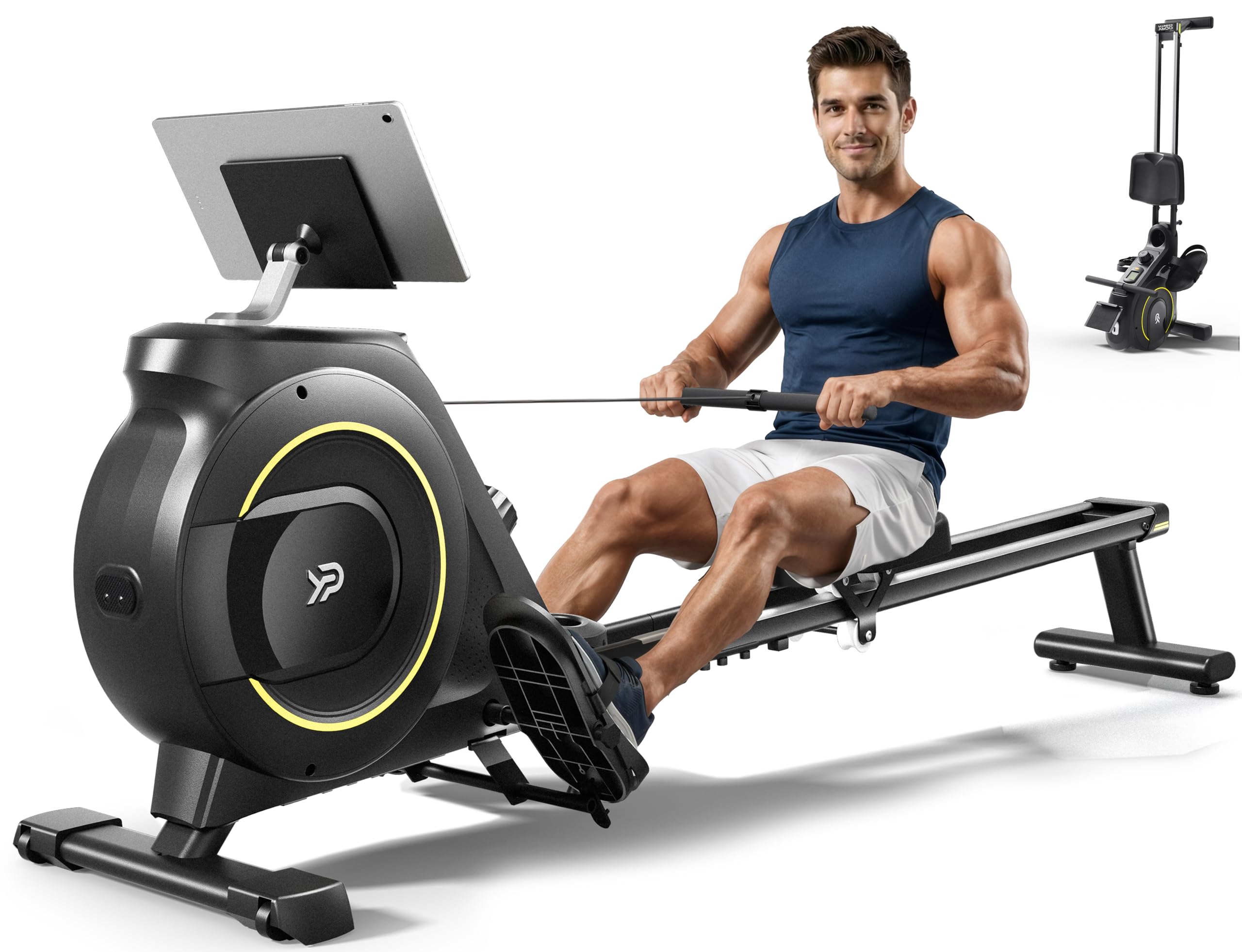
YPOO RM930

YPOO

YPOO RM930

  • Rail 46-inch dual slide
  • Dimensions 65"D x 17.7"W x 23.6"H
  • Resistance 16-level magnetic
  • Maximum User Weight 350 lb
Check Price on Amazon

YPOO quotes 2.9 square feet for the RM930, and that figure is doing real work: it's a folding magnetic rower built to disappear, with a 46-inch dual slide rail, 16 quiet levels, and a 350-pound frame. In use it's 65 inches long, so it still wants a clear stretch of floor while you row — the small number is about what it takes up afterward.

We think it's the pick for anyone whose rower has to share a room with a bed or a desk. The 46-inch rail is one of the shortest here, though, and taller rowers lose part of the finish; if you're much over six feet, the YOSUDA H-185's 50.2 inches suits you better. For everyone else, folding it away and forgetting about it is worth more than another inch of travel.

Bottom Line

It earns its spot where floor space is the whole problem: a quiet magnetic rower that folds into 2.9 square feet and rolls out of the way.

Check Latest Price

Best For Bigger rowers

Our Score 8.8/10
Dripex Magnetic Rower

Dripex

Dripex Magnetic Rower

  • Dimensions 63.4"D x 16.5"W x 24"H
  • Resistance 16-level magnetic
  • Item Weight 46 lb
  • Maximum User Weight 360 lb
Check Price on Amazon

Dripex rates this frame to 360 pounds, more than any other budget-priced machine here, and it's narrow — 16.5 inches across, the slimmest in this group — so it parks along a wall without eating the room. Sixteen magnetic levels, a dual slide rail, a 46-pound body, and an LCD covering time, distance, calories, and stroke count round out a familiar package.

It rows smoothly enough for steady sessions, and the resistance tops out where a strong pull starts wanting more, so if you're already fit the RS3 is the better buy. What it does do is hold still: the 46-pound body keeps it from walking across the floor mid-stroke, and it stands upright between sessions.

It's the right budget machine for a heavier rower, and that's a narrower recommendation than it sounds. Below this price you're looking at frames rated to 300 or 350 pounds, and above it you're paying for resistance you may not need yet. If the last rower you tried flexed under you, start here.

Bottom Line

The budget machine we point bigger rowers toward, thanks to a 360-pound rating and a slim frame that tucks against a wall.

Check Latest Price

How We Chose and Tested the Rowing Machines

We started with the specs that actually eliminate machines: max user weight, footprint with the rail extended, resistance type, and warranty length, then cut anything that couldn't be reasonably shipped or serviced. That left seven rowers, which we assembled ourselves — one person, a wrench, and a stopwatch — noting whether the hardware came sorted, whether the instructions matched the parts in the box, and how long it took to get from flat crate to first stroke. Two took under 45 minutes; one took most of an afternoon.

Each machine got rowed at least three times a week for eight months, in sessions from a 10-minute warm-up to a 35-minute piece, plus interval work at the highest resistance it offered. We paid attention to where the pull got heavy: a good machine loads smoothly through the leg drive, while a cheap one catches halfway through and jerks the handle back. We also rowed within earshot of someone on a phone call to hear how much noise carried, and checked the monitor's stroke rate and distance against a chest strap and a stopwatch.

After every session we wiped the rail down and looked for rust at the seat rollers, checked the foot straps for stretch, and listened for new creaks in the frame. Monitors were judged on whether they made us want to row again — a few had programs and app pairing we actually used, others were a number and nothing else. Ease of use came down to small things: whether it folded and rolled away without a second person, whether the seat height worked for a 5-foot-2 tester as well as a 6-foot-1 one, and how much floor it ate when stored. At the end we weighed what each machine cost against its frame, its resistance, and the parts that wore out first.

How to Choose

Start with the resistance, not the screen

Magnetic rowers run a flywheel past magnets: quiet, adjustable in 12 or 16 steps, and gentler at the top of the range than a fan or a tank will ever be. Air resistance, as on the Concept2, builds the harder you pull and gets loud with it. Water sits between the two — effort-linked, quieter than air, and costlier than either. Hydraulic cylinders are the cheapest and most compact way in, and each arm works against its own cylinder.

Our rule is simple: if you've rowed before and want to train hard, air or water. If the machine lives in a bedroom or above a neighbor, buy magnetic.

Match the rail to your height

The seat only travels as far as the beam under it allows, so a short rail cuts the finish off every stroke, and taller rowers feel it immediately. The compact machines here list rails around 46 inches; the ones built for taller users list 50.2, and the Concept2 runs far longer again. Over six feet, shop from the long end.

Don't confuse rail length with overall length, either. The resistance housing and front legs add most of a foot to the machine's listed size, which is why two rowers the same length can feel completely different under a tall body.

Measure the floor, not the folded size

A folding rower still needs its full length while you're on it, and the number that matters is the one in use: 58 to 65 inches on the compact machines here, and 73.6 on the water rower. Add about two feet behind the machine for your leg drive and the space to step off before you decide whether it has a permanent spot or a rollout.

A rubber mat under the frame is worth the small outlay — it stops the machine creeping on hardwood and keeps the seat rollers from marking the floor.

Decide how much noise your household will tolerate

Air is the loud one. The fan has to move air, and on the Concept2 you'll hear it through a wall, which is fine in a garage and less fine in a one-bedroom apartment at six in the morning. Magnetic and water machines are quiet enough that what you notice is the strap and the seat rollers rather than the resistance unit.

If noise is your binding constraint, choose magnetic and stop reading. If you have a basement, buy the machine you actually want.

Put the money into the drive, not the display

The parts that decide whether a rower still feels good in three years are the resistance unit, the rail, and the seat rollers. The console is the cheapest component on the machine and the easiest to improve — a tablet and a holder beat most built-in screens.

Warranties tell you where the maker expects trouble: three-year frame cover on a Sunny, one year on several of the budget machines, two and five years on the Concept2. Spend accordingly.

Frequently Asked Questions

Final Verdict

The Concept2 RowErg is the best rowing machine we rowed on, and the one we recommend whenever the budget reaches: effort-linked air resistance, a monitor that makes training measurable, and a frame that will outlast the room it sits in.

If it doesn't reach, the Merach RS3 is the stronger choice for anyone who wants to learn a proper stroke, and the Merach Q1S is the machine to start on if you're still deciding whether rowing will stick.