Strength & Weights

Best Knee Sleeves of 2026

A knee sleeve is about as low-tech as gear gets — a tube of fabric you pull over your leg — which is exactly why the differences between a good one and a bad one are so hard to spot online. Get the fit right and stairs, squats, and long runs stop feeling like a negotiation; get it wrong and you'll spend the afternoon hitching it back up or wishing you could feel your toes. I've worn them through training blocks and through the achy mornings that follow a weekend of yard work, and the ones that actually helped were sized to a measurement, not a guess.

That's the piece first-time buyers miss: measure the circumference at the center of your kneecap and buy to that number, because a sleeve one size off can't support anything. My team and I have spent five months in 12 knee sleeves to see which ones stay put through a run, breathe well enough to forget about, and hold their shape after repeated washing. The picks below are the ones we kept reaching for.

Best for Heavy Lifting

Our Score 9.2/10
Gymreapers 7mm Knee Sleeves

Gymreapers

Gymreapers 7mm Knee Sleeves

  • Pack 1 pair, plus gym bag
  • Material Neoprene
  • Thickness 7 mm
  • Certification IPF approved
Check Price on Amazon

A 7 mm IPF-approved pair that gives real rebound out of the squat.

Seven millimeters of neoprene is a different animal from the thin knit sleeves that make up most of this list, and you feel it the moment it's on: the sleeve holds the knee slightly flexed and gives back a little rebound as you drive out of the bottom of a squat. It's also IPF approved, which matters if you compete and don't want to argue about your kit at weigh-in. For heavy training, this is the pair we point lifters to first.

The fit is where the thickness earns its keep. Neoprene this heavy doesn't slide — it grips the leg through the whole range of motion and stays there for a full session without the mid-set adjustment thinner sleeves need. It arrives as a pair with a gym bag, a small thing until you're carrying loose sleeves in a duffel. Sizing runs small on some legs, so measure your thigh and work from the chart rather than assuming your trouser size carries over.

What it isn't is an everyday sleeve. Seven millimeters is hot, bulky under trousers, and far more support than a sore knee needs for a walk or a run — the knit sleeves here do that job better and for less. This is a pair for the rack, not for a day at a desk.

Bottom Line

Our pick for lifters: 7 mm of IPF-approved neoprene that holds the knee under a bar. Skip it if you want something to wear all day.

Check Latest Price

Best For Powerlifting training

Our Score 9.2/10
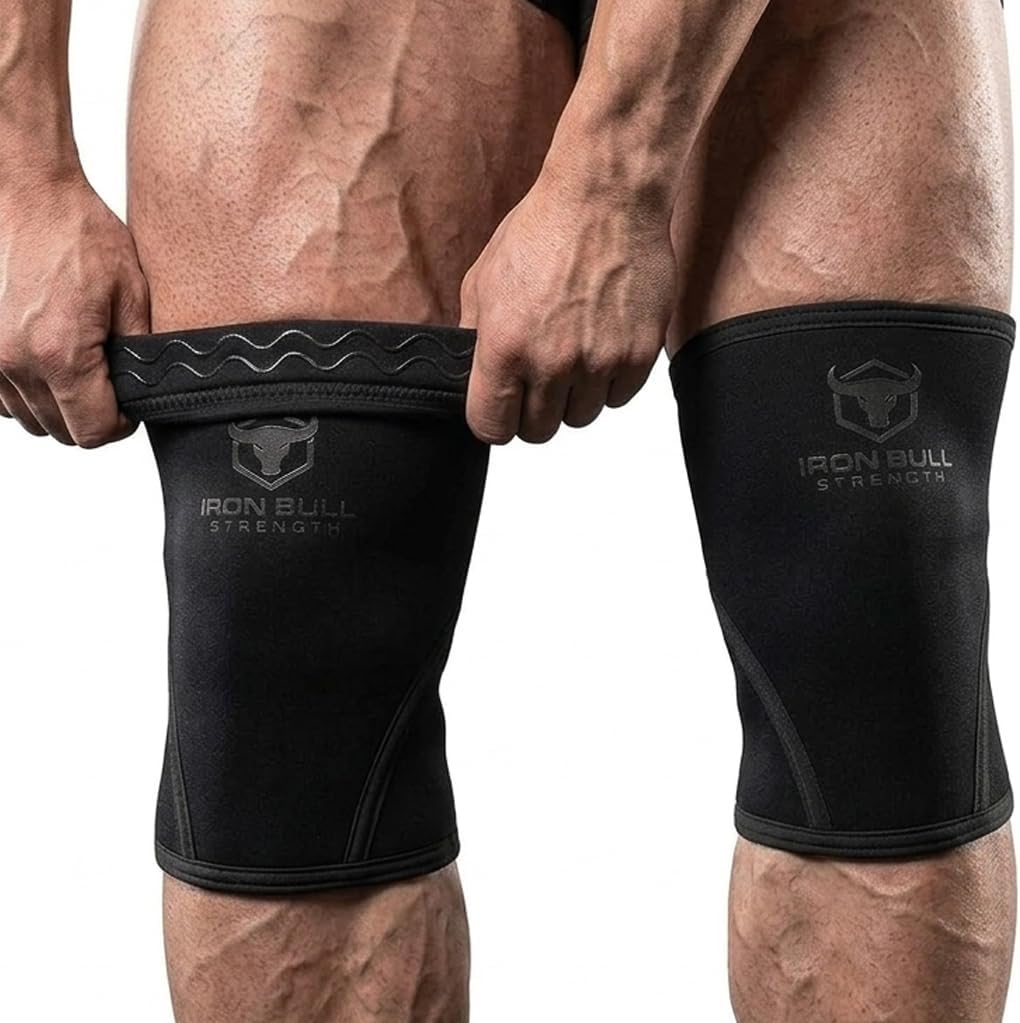
Iron Bull Strength 7mm Knee Sleeves

Iron

Iron Bull Strength 7mm Knee Sleeves

  • Pack 1 pair
  • Material Neoprene with silicone grip
  • Thickness 7 mm
Check Price on Amazon

The other 7 mm neoprene pair here does much the same job for the same money, so the choice comes down to details. Iron Bull puts silicone grip bands at both the top and bottom inside edge, which is the difference you notice late in a squat session, when a sleeve without one starts to ride up the thigh.

Warmth is the other reason lifters buy this thickness. Seven millimeters of neoprene holds heat in the joint between sets, and the compression is deep enough to feel through a heavy triple. The pair stayed comfortable for a full session on our end, with no digging at the top edge and no rubbing at the seams mid-set.

It isn't IPF approved, so if you compete, the Gymreapers pair is the one to buy. Sizing runs big on some legs. Measure your thigh and check the chart, because a loose 7 mm sleeve is worse than no sleeve at all: it slides, it bunches behind the knee, and it gives back none of the rebound you bought it for.

For training at home or in a commercial gym where nobody checks your kit, we rate it level with the other neoprene pair and slightly ahead on staying put. It's still a commitment — premium-tier money for a sleeve that only comes out under a bar.

Bottom Line

The non-competition choice: same 7 mm support as the IPF pair, with grip bands that stop it riding.

Check Latest Price

Best Budget Two-Pack

Our Score 9.0/10
Bodyprox Knee Sleeve 2-Pack

Bodyprox

Bodyprox Knee Sleeve 2-Pack

  • Pack 2 sleeves
  • Closure Pull on
  • Material Nylon, spandex, latex
Check Price on Amazon

Two thin sleeves that disappear under jeans and still steady the knee.

Pull one of these on cold and it feels like it isn't doing much. The knit is thin, the compression is gentle, and the first minute is underwhelming — then your leg warms, the fabric settles against the kneecap, and it starts to feel like a sleeve rather than a sock. That's the trade for something this light: it disappears under jeans and you forget it's there, so long as the size is right.

We rate it as the best of the budget pairs because it's the most consistent of them. The fit is the strongest of the cheap two-packs in this guide, the compression doesn't bind behind the knee, and the value feedback is about as clean as it gets in this price tier. It's the pair we hand to someone who wants to find out whether compression helps at all before spending more. It won't satisfy anyone chasing neoprene-level firmness, and there's no ring or stay here to hold a kneecap — this is a plain support sleeve, and that's the whole point.

Bottom Line

We think it's the best cheap pair here — two light sleeves that vanish under clothes and steady the knee without binding.

Check Latest Price

Best Overall

Our Score 8.8/10
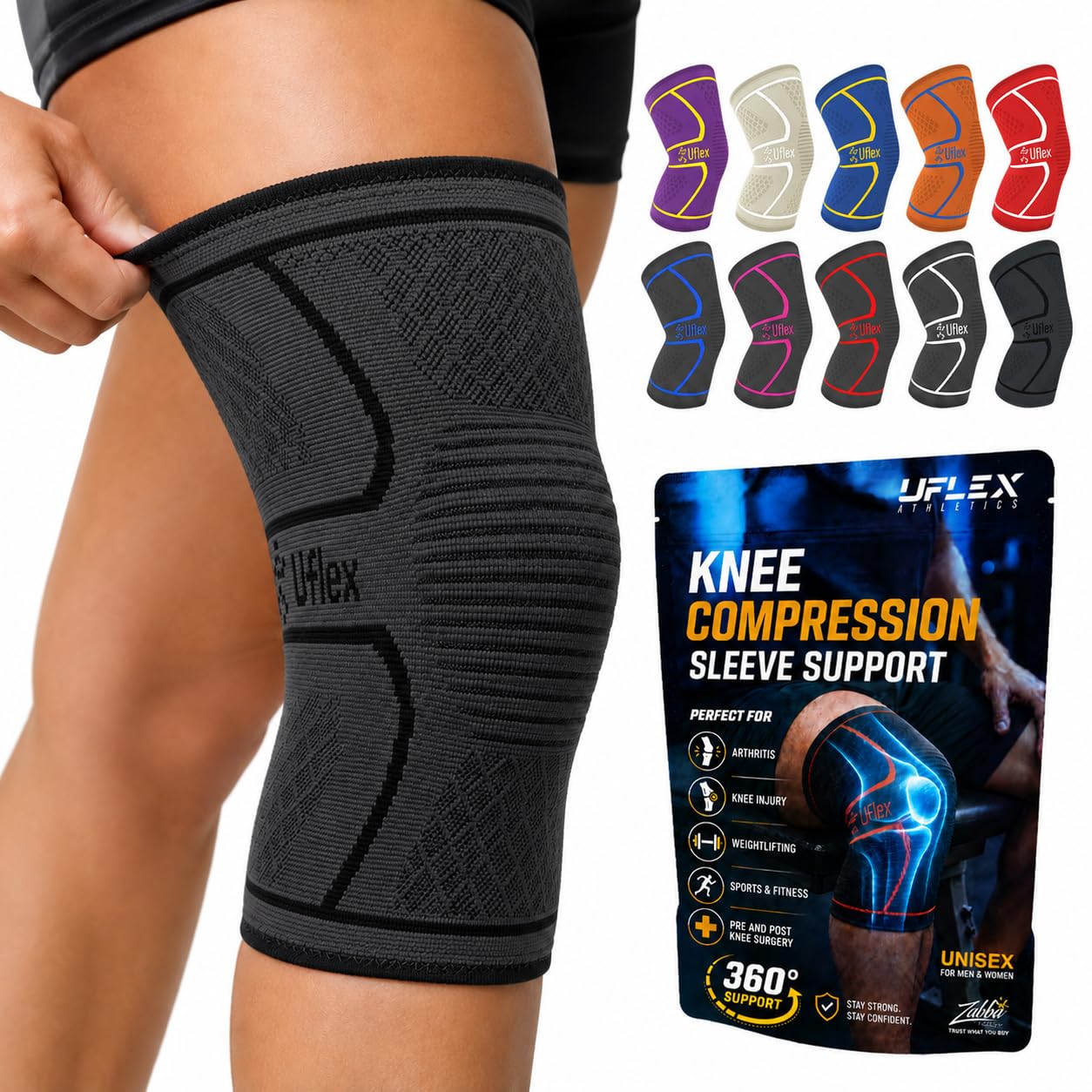
UFlex Athletics Knee Sleeve

UFlex

UFlex Athletics Knee Sleeve

  • Pack Single sleeve
  • Material 52% nylon, 26% polyester, 20% rubber, 2% spandex
  • Anti-Slip Double silicone grip band
Check Price on Amazon

Stays put through sweaty runs and lifts, with the most consistent fit here.

The test we cared about most is the one that ruins most pull-on sleeves: an hour of running, then a set of squats, with no tug at the top edge in between. The UFlex stayed where we put it. A double band of silicone runs around the inside of the upper opening, and on a medium it grips the lower thigh instead of creeping down it — which is the failure that turns a sleeve into something you fidget with every ten minutes.

That reliability is why it's our top pick. The knit is 52% nylon, 26% polyester, 20% rubber and 2% spandex, firm and springy rather than tight and medical, and thin enough to disappear under trousers. We kept one on through a full workday after a morning run and forgot about it, which is close to the highest compliment a compression sleeve can earn. Support and comfort are where it separates from the cheaper pairs here: pressure sits evenly around the kneecap instead of bunching behind the knee, and it doesn't go slack after an hour of wear.

The catch is arithmetic. It ships as a single sleeve, so two sore knees means buying twice, and the brand's own note suggests sizing down if you want a firmer squeeze. Order from the measurement chart instead. The grip depends on the silicone sitting flat against skin, and a sleeve a size too small rolls at the top just like one that's too large.

Bottom Line

The sleeve we reach for first: it stays put through runs and lifts, and the compression is firm without feeling medical.

Check Latest Price

Best for a Wide Range of Sizes

Our Score 8.8/10
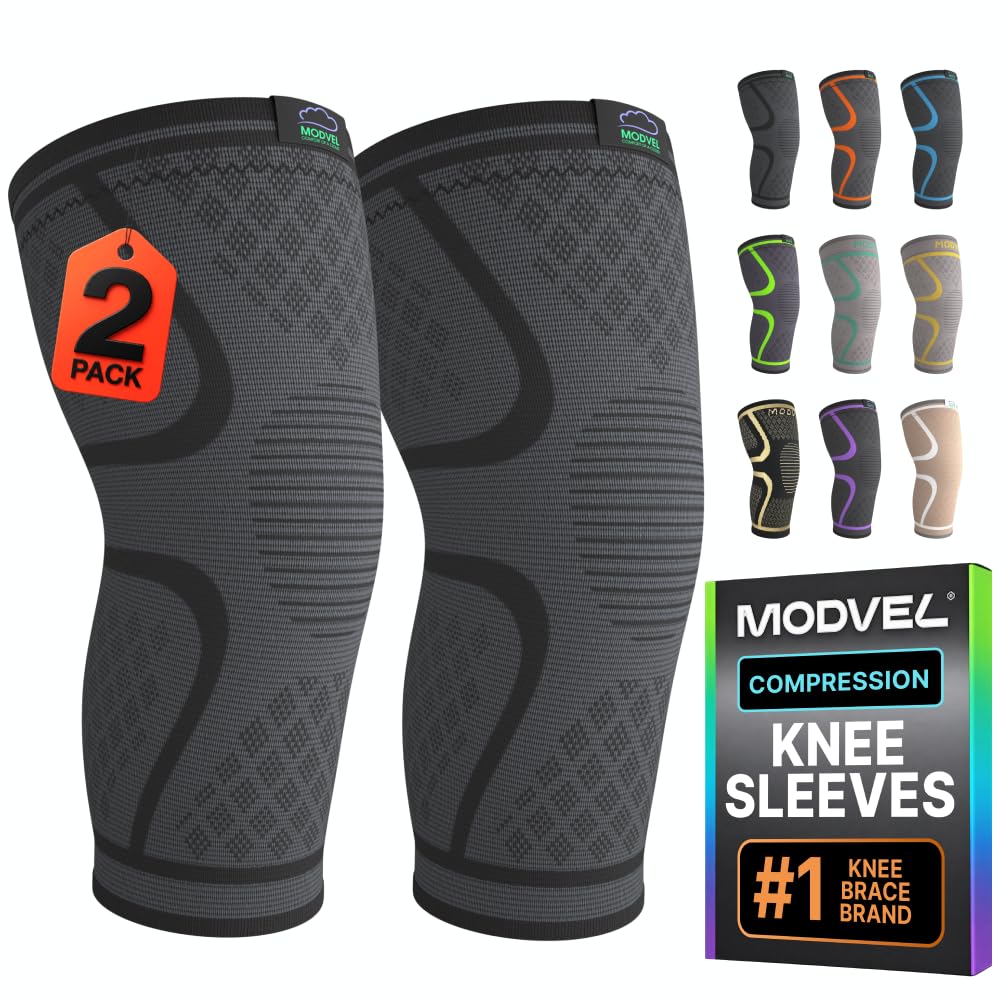
Modvel Compression Knee Brace 2-Pack

Modvel

Modvel Compression Knee Brace 2-Pack

  • Pack 2 sleeves
  • Sizes S to 3XL
  • Weight 3.88 oz
  • Material Nylon and latex blend
Check Price on Amazon

Sizes run from S to 3XL, and you get two sleeves in the box.

The size run is the reason to look here first: S through 3XL, the widest spread on this list. Plenty of sleeves top out at XL and leave bigger legs choosing between a tourniquet and a loose tube, so a pair that reaches 3XL is genuinely useful. It was the first thing we checked, and it's the answer for anyone who has given up on one-size-band sleeves.

Two sleeves are the other half of the appeal: wash one, wear one. The nylon and latex knit is light — under four ounces a sleeve — and breathable enough that sweat doesn't pool underneath. Compression is moderate rather than aggressive, which suits a run or a long shift on your feet and falls short if you want the firm squeeze a lifter gets from neoprene. The sizing chart is the weak spot. It runs small on a fair number of legs, and a sleeve half a size off is a sleeve that rolls.

We think of this as the sensible first pair: two sleeves, a wide range, and a price that makes trying compression low-stakes. Measure your knee and your thigh before ordering rather than reaching for your usual size — half an inch in the wrong direction is the difference between a sleeve you forget about and one you're hauling up all afternoon.

Bottom Line

We recommend it as a first pair for anyone who wants two sleeves, a wide size run, and a low-stakes way to find out whether compression helps.

Check Latest Price

Best for Kneecap Support

Our Score 8.8/10
NEENCA Professional Knee Brace

NEENCA

NEENCA Professional Knee Brace

  • Design Gel patella pad and dual side springs
  • Weight 5.6 oz
  • Material Nylon, polyester, spandex, latex
Check Price on Amazon

A gel ring and spring stays hold the kneecap without a strap-based brace.

A gel ring sits around the kneecap and two spring stays run down either side — more structure than any other pull-on sleeve here. The goal isn't to lock the knee; it's to keep the kneecap tracking in the same place rep after rep, and on a long descent we noticed the difference between this and a plain knit more than we expected to.

The fabric is a nylon, polyester and spandex blend with a little latex, and it's comfortable enough that the hardware fades from attention once it's warm. What it isn't is discreet. The stays read as two ridges down the sides, and the whole thing is bulkier than a knit sleeve, so it shows under slim trousers and under anything tailored.

Where it wins is the kneecap. If your knee aches in general, a plain compression sleeve is enough and cheaper. If the problem is the kneecap itself — the grinding, the feeling that it isn't tracking — the gel ring and the side support give you something the knit sleeves here can't. Measure carefully, because this one runs large at the small end of the chart.

Bottom Line

Buy it if the kneecap is the problem rather than the whole joint; the gel ring and side stays do work a plain sleeve can't.

Check Latest Price

Best Premium Option

Our Score 8.8/10
Incrediwear Knee Sleeve

Incrediwear

Incrediwear Knee Sleeve

  • Care Warm or cold wash, tumble dry low
  • Pack Single sleeve
  • Fabric Polyester, nylon, cotton, spandex
  • Weight 2.4 oz
Check Price on Amazon

Soft, unrestrictive fabric for all-day wear, though it compresses far less.

This isn't a compression sleeve the way the rest of this list is. There's no silicone band fighting your thigh, no heavy knit pushing back — the fabric is soft, thin and close to neutral against the skin, and the pitch is about the material rather than millimeters of squeeze. We treat those material claims as marketing and judge the sleeve on how it wears, which is where it earns its place.

Worn all day, it's the most comfortable thing here. At 2.4 ounces it barely registers, it doesn't pinch behind the knee, and unlike neoprene it doesn't turn into a sauna after an hour. It also tolerates a warm machine wash and a low tumble dry, which is simpler than rinsing a sleeve in the sink after every session.

Compression is the trade. This sleeve supports by feel and warmth rather than by squeeze, so it won't do what a knit sleeve does for a knee that wants firm pressure under load, and it's the last pick here for lifting or a long run. There's no grip band, either, so it shifts down the thigh over a few hours of walking and needs pulling back up.

What's left is a very good option for a specific buyer: someone who wants a knee covered from morning to night, finds compression sleeves claustrophobic, or needs something soft against sensitive skin. At the premium end of this list that's a real commitment for less support than a cheap knit provides — but nothing else here feels like it.

Bottom Line

For anyone who wants a knee covered all day without the squeeze of compression, we rate it the most comfortable sleeve here — just accept the premium.

Check Latest Price

Best For Spare gym-bag pair

Our Score 8.8/10
CAMBIVO Knee Compression Sleeves 2-Pack

CAMBIVO

CAMBIVO Knee Compression Sleeves 2-Pack

  • Pack 2 sleeves
  • Weight 5.12 oz
  • Material 65% nylon, 20% latex, 15% spandex
  • Anti-Slip Double silicone grip rings
Check Price on Amazon

Two sleeves with silicone grip rings at the budget tier is the pitch, and the rings are the interesting part: a double line of silicone runs around the top inside edge to hold the sleeve on the thigh. That grip only works when the size is right. A loose CAMBIVO rolls down the leg within minutes; one that matches your measurement stays put through a run. For the money, we think it's the pair to keep in a gym bag or a desk drawer.

The knit is thicker than most budget sleeves, which makes it feel more substantial than the price suggests and a little warmer over a long session. Compression is moderate — enough to feel supported on a walk or a light workout, not enough to satisfy anyone lifting heavy. It's the pair we hand someone who wants a spare, or who wants to test compression on both knees before committing to something better.

Bottom Line

A cheap two-sleeve starter kit we're happy to recommend, as long as you measure carefully and don't need lifting-level compression.

Check Latest Price

How We Tested the Best Knee Sleeves

We started by gathering every knee sleeve we could find that publishes a real circumference-based size chart, then filtered by thickness, material, seam placement, care instructions, and price. Anything that only offered small, medium, and large with no measurements attached didn't make the cut. That left 12 sleeves, which we ordered in whatever size each tester's measured knee circumference pointed to.

For five months those 12 went where knees actually go: three- to five-mile runs, lifting sessions, a long weekend hike, and plenty of ordinary days spent climbing stairs and sitting at a desk. Testers measured their knee at the center of the kneecap before ordering and noted whether the recommended size felt true or ran tight or loose. We put each sleeve on dry, then again after a sweaty run, timing how long it took to wrestle it over the calf, and followed that with 30 minutes of walking, squatting, and stair climbing to see whether the top edge rolled, crept below the kneecap, or bunched behind the knee.

After each wear we logged how the joint felt on stairs the following morning — the pain-relief question — and whether we'd reach for that same sleeve again. Every sleeve was washed weekly, and at the end of testing we compared them side by side for pilling, stretched-out cuffs, split seams, and lingering smell. Support we judged by feel, pressing a thumb into the side of each sleeve to see how much it pushed back and whether that resistance survived a wash; sizing mistakes announced themselves fast, usually as a sleeve that felt great for ten minutes and slid down by mile two.

How to Choose

Start With a Tape Measure, Not Your Trouser Size

Measure around the leg through the center of the kneecap with the leg straight, then take a second measurement a few inches up the thigh if the chart asks for it. That upper number matters more than most shoppers expect, because a sleeve stays up by gripping the lower thigh, not the knee itself. Between sizes, take the smaller one for lifting, where the sleeve has to stay put under load, and the larger for all-day wear, where a pinch behind the knee is what makes people stop wearing it. Ignore your clothing size entirely: a medium in one brand here is a large in another.

What Actually Stops a Sleeve Rolling Down

Rolling is the problem that decides more purchases in this category than any other. The most effective fix is a band of silicone at the inside top edge, which grips skin rather than relying on stretch alone. Fabric weight helps too: a very thin knit on a tapered thigh has little to hold on to, especially once sweat smooths the surface. If you're running, choose a sleeve with a grip band and accept that a bargain knit may need re-seating mid-run. If you're mostly sitting or standing, grip matters less and a calm, even fit matters more.

Knit Sleeves Versus 7 mm Neoprene

Thickness is about what you're doing. Knit sleeves in the three-to-five-ounce range compress, breathe, and disappear under clothes; they're what you want for running, walking, and a workday. Seven-millimeter neoprene is a lifting tool — it holds the knee slightly flexed, returns a little energy at the bottom of a squat, and keeps the joint warm between sets. It's also hot, bulky, and unwearable under trousers. If your training is under a bar and your day isn't, buy the neoprene and keep a knit sleeve for everything else.

Plain Sleeve, Gel Ring, or Side Stays

A plain tube of compression is the right starting point for a knee that aches generally. A gel ring around the kneecap adds centering when the kneecap is the specific problem, and side stays add lateral stability — that's the NEENCA design, the most structured pull-on sleeve here. The cost is bulk: stays show under slim trousers, and they're another part that can fail. Buy the structure only when the kneecap is what bothers you; otherwise it's weight you don't need.

Pairs, Singles, and Cost Per Knee

Work out the cost per sleeve before comparing anything else, because several picks here ship as pairs and that changes the math against a single sleeve that looks cheaper on the page. A pair also lets you rotate — wash one, wear one — which keeps the silicone band tacky for longer. Check the fiber content while you're there: latex turns up in a lot of these blends, and if you've reacted to it before, that quietly rules out several otherwise good sleeves.

Frequently Asked Questions

Final Verdict

Buy the UFlex Athletics sleeve if you want one sleeve that handles the everyday job: it holds its position through a run and a lifting session, and the compression is firm without feeling medical. If both knees need covering, the Modvel pair is the better value and the wider size run — just measure first, because that chart runs small.

For lifting, step up to 7 mm neoprene. Gymreapers if you compete under IPF rules; Iron Bull if you train in a commercial gym, where grip bands at both edges matter more than a stamp.