Tech & Wearables

Best Heart Rate Monitor Armbands, Tested of 2026

Chest straps are still the accuracy gold standard, but most of us would rather not wrestle with a cold, chafing band before a 6 a.m. run. Armbands solve that tradeoff: an optical sensor sits on your upper arm, where it's less likely to get thrown off by wrist motion, and you forget it's there until you check your phone. A good one gives you heart rate data you can trust during intervals, steady rides, and sweaty classes — without the fuss.

I've worn heart rate monitors for years, and the strap is only half the story; the app, battery, and Bluetooth connection matter just as much. We tested 12 armbands over eight months, wearing them through treadmill intervals, outdoor rides, rowing, and HIIT classes, plus a few overnight sleeps. The best ones paired quickly, held a charge through a week of training, and stayed put when the workout got ugly. Comfort and connectivity separate the contenders fastest — the picks below are the ones that got both right.

Best for Bike Computers and Watches

Our Score 8.6/10
Wahoo TICKR FIT

Wahoo

Wahoo TICKR FIT

  • Weight 1.6 oz
  • Wireless Bluetooth and ANT+
  • Battery Life 35 hours
  • Included Bands Small and large
Check Price on Amazon

A status light and both radios make pairing a head unit or watch obvious.

Bottom Line

Buy it if your sessions run through a bike computer or a watch as well as a phone — the status light and dual radios make pairing obvious, and the fit is the most flexible here.

Check Latest Price

Best Overall

Our Score 8.4/10
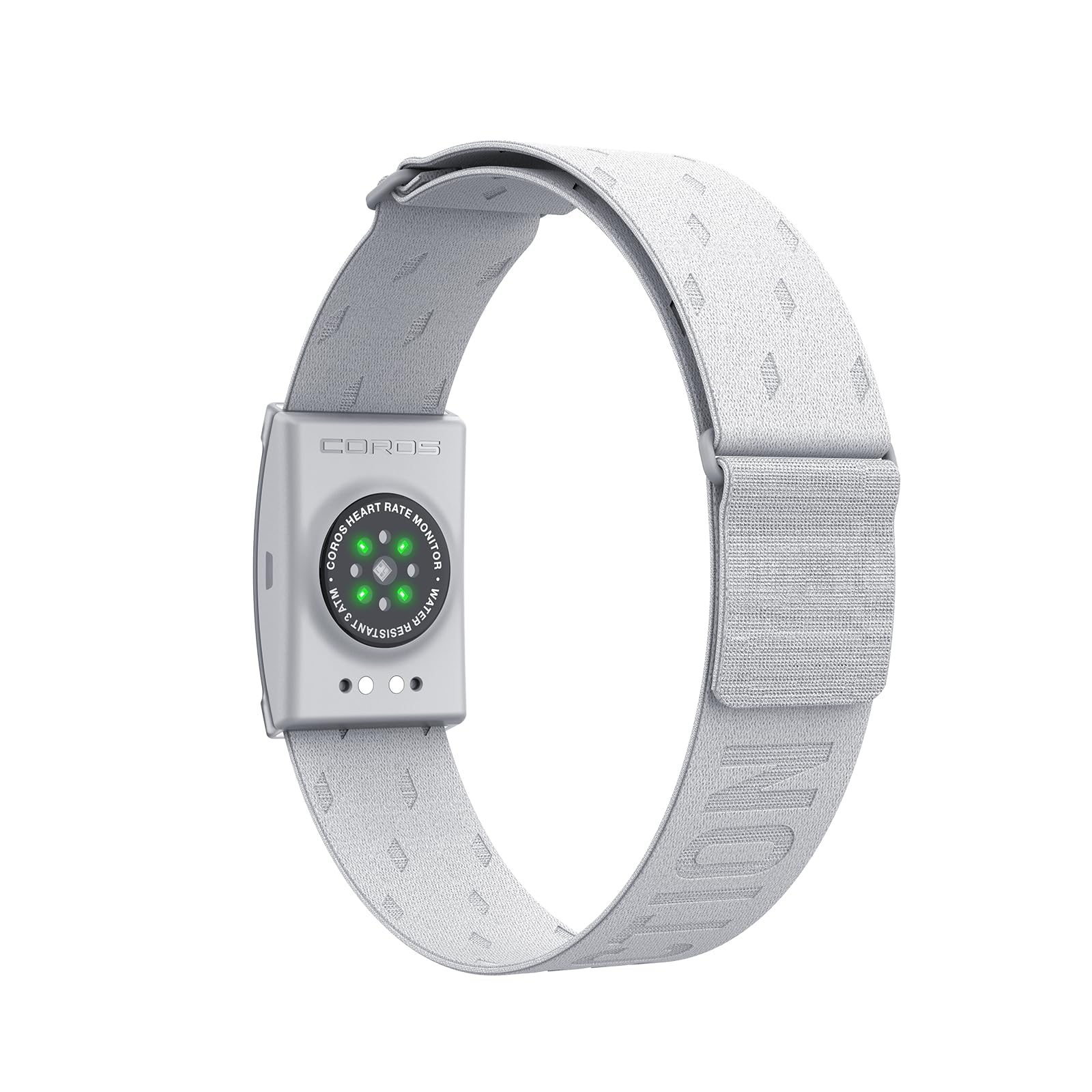
COROS Heart Rate Monitor

COROS

COROS Heart Rate Monitor

  • Warranty 2 years
  • Wireless Bluetooth and ANT+
  • Battery Life 38 hours
  • Simultaneous Pairing Up to 3 devices
Check Price on Amazon

Pairs with three devices at once and stays comfortable through long sessions.

Bottom Line

Our pick if you train with more than one device: it pairs with three at once, the fabric band stays comfortable for long sessions, and the two-year warranty beats everything here.

Check Latest Price

Best Budget

Our Score 8.2/10
COOSPO HW706

COOSPO

COOSPO HW706

  • Warranty 12 months
  • Wireless Bluetooth 4.0 and ANT+
  • Sensor Weight 0.6 oz
  • Water Resistance IP67
Check Price on Amazon

Fast Peloton and gym pairing, IP67 sealing, and the lowest price of our main picks.

Bottom Line

The one to get if the Peloton or the treadmill is your main gym: it pairs fast, seals against sweat, and covers both radios for the least money of our main picks.

Check Latest Price

Best For Zone training

Our Score 8.0/10
COOSPO HW9

COOSPO

COOSPO HW9

  • Wireless Bluetooth 5.0 and ANT+
  • Sensor Weight 0.35 oz
  • Included Bands Two arm straps
  • Heart Rate Zones 5-color LED indicator
Check Price on Amazon

Bottom Line

Worth the step up if you train to zones and don't want to look at a phone — the light on your arm tells you where you are at a glance.

Check Latest Price

Best For Light travel spare

Our Score 8.0/10
moofit HW401

moofit

moofit HW401

  • Wireless Bluetooth and ANT+
  • Battery Life 20+ hours
  • Sensor Weight 0.27 oz
  • Water Resistance IP67
Check Price on Amazon

Bottom Line

A sensible second sensor or travel spare: it's the lightest thing here, seals against sweat, and asks very little of your wallet.

Check Latest Price

How We Tested Heart Rate Monitor Armbands

We started by researching the armbands that show up most often in running and cycling forums, then narrowed the list to models with Bluetooth and ANT+ broadcasting, water resistance ratings, and app compatibility across iOS and Android. Price mattered, but we didn't set a ceiling; we wanted a mix of budget and premium options. That left us with 12 units, which we tested over eight months.

Testing happened where the product actually lives: on sweaty interval runs, on a bike trainer, in rowing sessions, and during HIIT classes. For accuracy, we wore each armband alongside a chest strap and compared heart rate readings at rest, during steady efforts, and through sprint intervals. For connectivity, we paired each unit to both an iPhone and an Android phone, then walked 20 feet away from the phone to see if the signal dropped. We also logged battery percentage before and after 90-minute sessions, and timed how long it took to put on and start a workout from a cold start.

Comfort got judged over full workdays and overnight sleeps, not just workouts; we noted whether the strap left marks, slipped, or needed constant readjustment. Durability meant tugging and twisting the strap after every wash, and checking the sensor housing for sweat intrusion after repeated sessions. Versatility came down to whether we could use the same armband for running, cycling, rowing, and strength work without swapping apps or re-pairing. The armbands that survived all of it — and still gave consistent readings — earned a spot in the list.

How to Choose

Check the Radios Before the Specs

Bluetooth and ANT+ do different jobs. Phones and tablets speak Bluetooth; gym machines, bike computers and many sports watches use ANT+, so a sensor with only one radio will leave something out of the loop. Dual-band is standard in this group and it's the first thing we check.

Then count connections. If you want your watch recording while the treadmill or bike display shows your effort, you need a sensor that holds two links at once. The COROS holds three, which is the most here.

Fit Is Where Accuracy Comes From

An optical sensor reads blood flow through the skin, so it needs steady skin contact to give you a clean number. A band that slides, or sits over a bone rather than muscle, produces a reading that lags or wanders. Upper arm and forearm both work; snug without leaving a mark after an hour is about right.

Check the band against your arm before ordering. The large band supplied with the COROS covers 9.4 to 16.9 inches, and the Wahoo ships two sizes. Put the sensor on a few minutes before you start so it settles before the hard part.

Battery Life and Charging Habits

Stated runtime in this group runs from about 20 hours to 38, which is the difference between charging weekly and charging every couple of weeks. A sensor that dies mid-session is worse than a plainer one that doesn't, so be honest about how often you'll remember.

Look at the connector too. A magnetic cable seats more easily than a clip, and charging contacts are one of the parts that fails on cheaper units. Charge after every few sessions rather than waiting for the warning light.

Treat It as a Wear Item

These sensors live in sweat, get stretched over an arm and get thrown in a gym bag, and the band usually gives out before the electronics do. Warranty length is therefore a genuine specification rather than fine print: the COROS carries two years, and most of the rest carry one.

Buy from a seller with a straightforward return window, and use the warranty in the first few months rather than buying a replacement. A sensor that stops holding a charge early is a claim, not a cost.

Frequently Asked Questions

Final Verdict

The COROS is the armband we point most people to. It removes the two things that make optical sensors annoying — starting them and pairing them — and it does it with a fabric band you can rinse and a two-year warranty nothing else here matches. You pay for that, and for three sessions a week it's worth it.

If you ride with a bike computer and want a light confirming the connection, the Wahoo is the better fit. If the Peloton or the treadmill is your whole gym, start with the COOSPO HW706 instead: it does the same core job for a lot less.