Outerwear & Layers

Best Cycling Vests of 2026

The last few miles home in fading light are when a cycling vest stops being a nice-to-have. I was rolling back from a loop one evening in a dark jersey when a driver edged out of a driveway and looked straight through me. That is what a vest fixes: a layer you can add at the top of a climb or peel off at a stoplight, bright enough to matter and light enough to forget in a jersey pocket.

Visibility is the headline, but a vest earns its place on everything else: a cut that doesn't flap on a descent, reflective panels where headlights actually land, and fabric light enough to justify carrying it. Over eight months my team and I rode twelve of them through dawn commutes, wet evenings, and weekend rides, and the gaps showed up fast — one became a parachute above 20 mph, and two light-up models dimmed before the ride ended. Daylight brightness is not the same as being seen at dusk, and the vests below are the ones that understood the difference.

Best Overall

Our Score 9.6/10
Noxgear Tracer2

Noxgear

Noxgear Tracer2

  • Weight 6.5 oz
  • Closure Front quick-clip buckle
  • Visibility 360° illumination + reflectors
  • Light Colors 8 color options
Check Price on Amazon

360-degree light and reflectors in a 6.5-ounce vest that adjusts over layers.

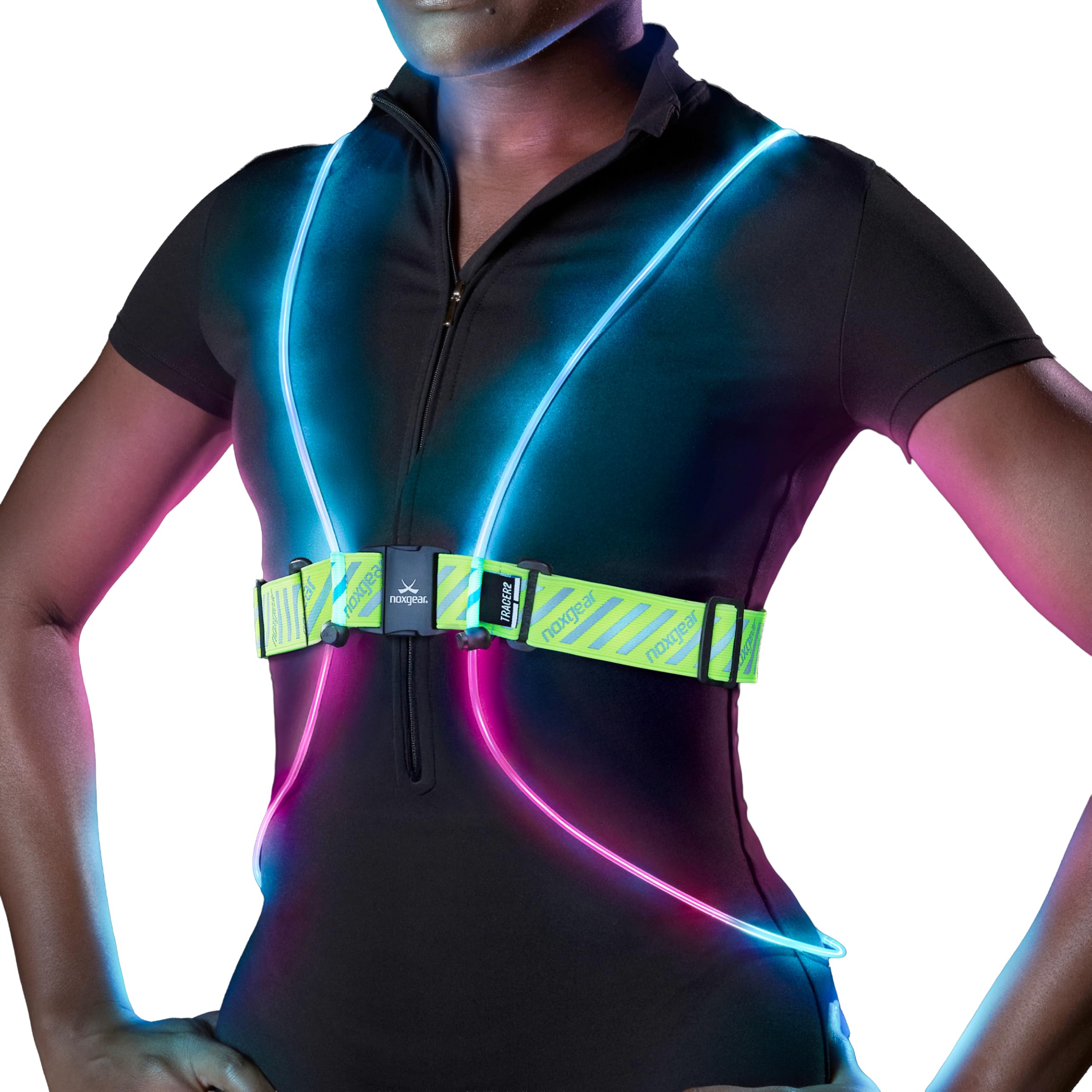
The Tracer2 is the vest we reach for first because its fiber-optic strands and reflectors wrap the whole torso, not just the front. On a bike, that matters: a driver approaching from a side street or passing closely gets a moving outline of you, not a small blinking patch. At 6.5 ounces, it disappears on a ride, and the front quick-clip buckle makes it easy to throw on over a jersey or a winter shell. We also like that the eight color options and several flash settings let you choose a steady white or yellow for dusk, or something louder for a group ride.

The elastic mesh and adjustable straps stayed put in our riding, and the fit range is generous enough to layer without fighting the vest. The rear coverage is the detail we noticed most in traffic: it gives the driver behind something to lock onto before the pass. The utility pocket is small, but it holds a key or a card, and the sleeveless cut leaves your arms free. This is a visibility layer, not a headlight, so pair it with a bike light on unlit roads. For regular night riding, we think the coverage and build are worth it; if you want a simple no-battery layer, the GoxRunx is the smarter spend.

Bottom Line

For the rider who wants to be seen from every angle, we recommend the Tracer2 for its 360-degree lighting, light 6.5-ounce build, and adjustable fit.

Check Latest Price

Best No-Battery Option

Our Score 9.0/10
GoxRunx Reflective Vest

GoxRunx

GoxRunx Reflective Vest

  • Pocket Zippered front
  • Weight 3.53 oz
  • Included Arm bands
  • Reflective Silver strips
Check Price on Amazon

Lightweight silver reflectors and arm bands for riders who skip charging.

The GoxRunx is the pick for riders who do not want another battery to charge. It is a silver reflective vest with a zippered front pocket and a pair of reflective arm bands, and at 3.53 ounces it is the lightest option here. Throw it over a jersey or a winter shell and you have passive visibility that never needs a cable. The front pocket is big enough for a phone or a key, which is more than most vests this simple offer.

The fit runs large, so we suggest sizing down if you want the vest to stay centered rather than hang loose. The vest is light enough to forget on a warm ride, and the front pocket is big enough for a phone and a key. We like that the pocket zips, so a phone does not bounce out when you stand on the pedals. That is the kind of low-effort layer you can keep with you for a changing forecast.

For daylight commuting, a group ride at dusk, or a backup layer in a pack, we like the GoxRunx for its low weight and no-charge simplicity. It is a passive layer, so it depends on headlights; pair it with your bike lights and use the arm bands for turns. It is not the one we choose for a dark road with fast traffic; that is where the Noxgear's active 360-degree lighting earns its price. But if you already run strong lights and want a light reflective layer, this is the vest we keep in the bag.

Bottom Line

We keep the GoxRunx for riders who want a no-battery reflective layer that adds almost no weight and includes arm bands for signaling.

Check Latest Price

Best for Lighting the Road

Our Score 8.8/10
ISEYOU Running Light

ISEYOU

ISEYOU Running Light

  • Runtime 16 hours
  • Waist Range 31–51 in.
  • Light Output 500 lumens
  • Water Resistance IPX4
Check Price on Amazon

A 500-lumen front beam and reflective straps for unlit paths and early starts.

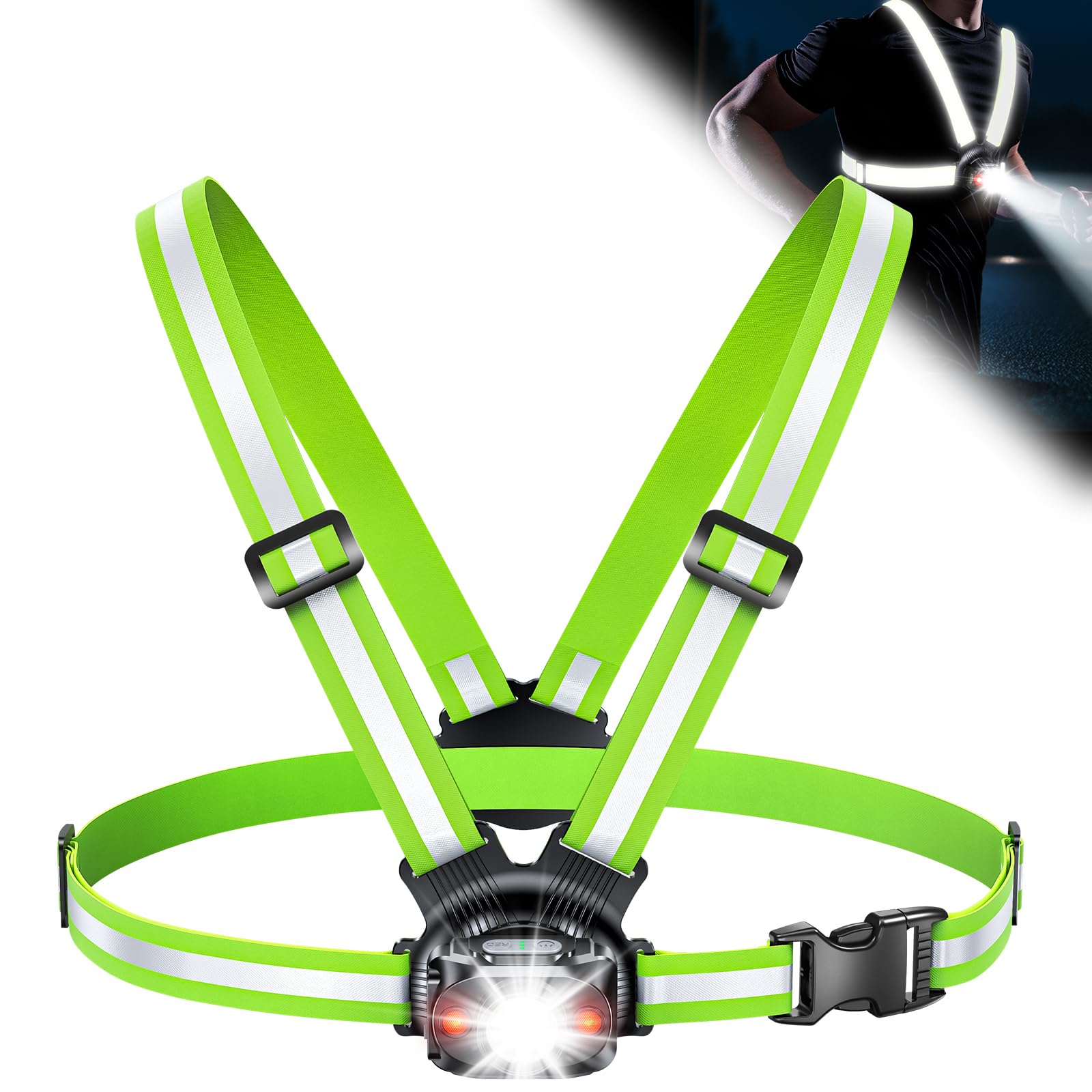
The ISEYOU is a chest-light harness rather than a full vest, and that is the point: a 500-lumen front lamp sits above the chest, tilts through 45 degrees, and throws a beam far enough to pick out pavement edges and potholes. The reflective straps wrap over the shoulders and around the waist, so you get a rear reflective presence as well. We found the tilt useful for dropping the beam away from oncoming drivers, and the IPX4 rating means sweat and road spray are not an immediate problem. The waist strap adjusts from 31 to 51 inches, which covers a jersey or a bulky winter jacket.

For cycling, this is the one we choose when the route is dark and the bike light is weak or absent. It is not a full vest, so the reflective coverage is concentrated in the straps, and the Noxgear gives a broader 360-degree outline. We treat the ISEYOU as a front-light supplement, not a replacement for a bike headlight. The beam is bright enough that we keep it aimed low on shared paths; on a dark road, the extra light is the reason to choose this over a passive vest.

Bottom Line

We recommend the ISEYOU when your route is dark and you need a front beam to see the pavement, not just a vest to be seen.

Check Latest Price

Best Two-Pack

Our Score 8.8/10
Zacro LED Vest

Zacro

Zacro LED Vest

  • Pack 2 vests
  • Modes 3 modes
  • Waist Range 26–49 in.
  • Light Colors 5 colors
Check Price on Amazon

Two rechargeable LED vests with five colors and a wide waist range.

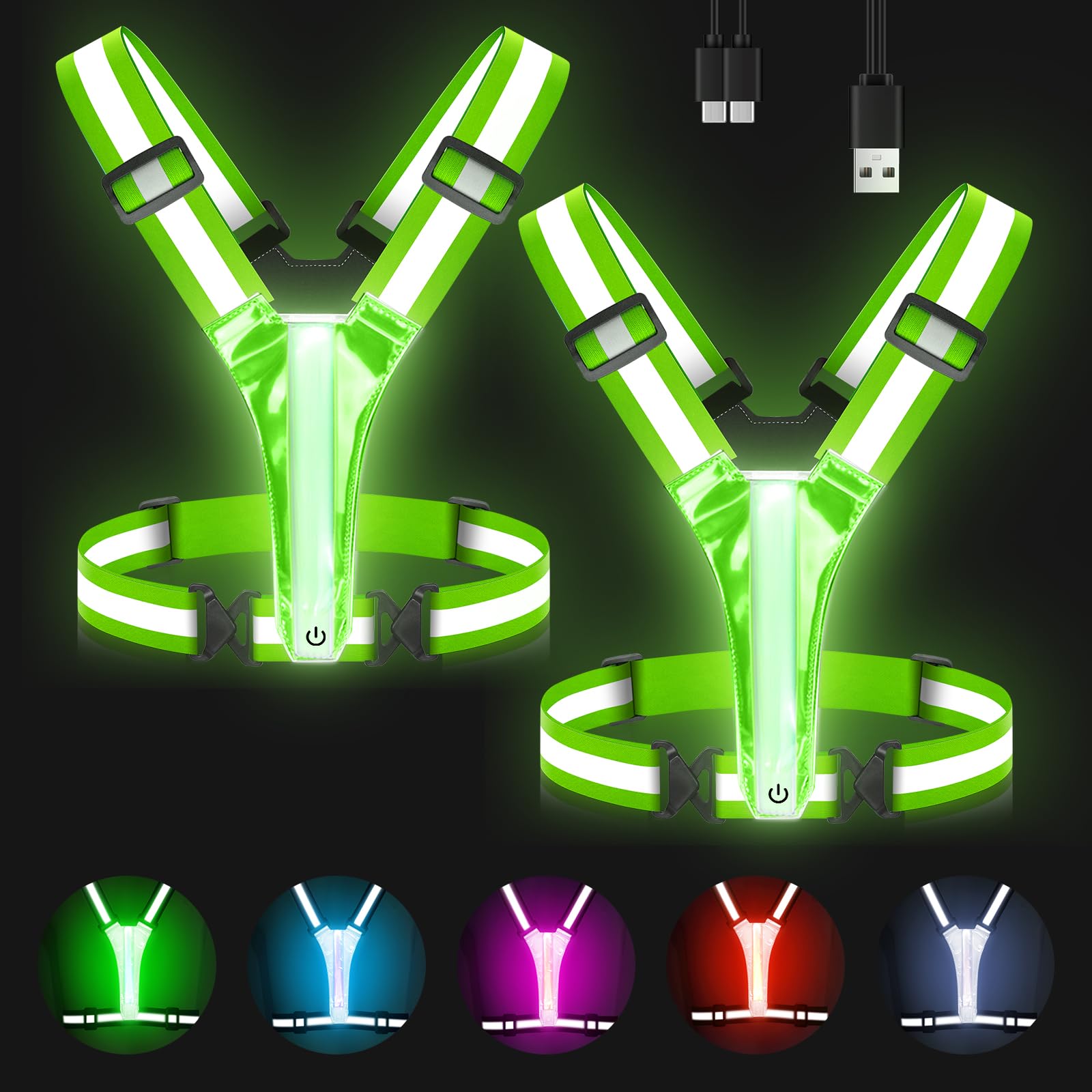
The Zacro is the practical answer if you ride with a partner or want a second vest for a family member. You get two rechargeable vests in one pack, each with five colors and three modes, and the dual USB-C ports let you charge both light bars at once. The waist range is generous, the shoulder straps adjust from 16 to 24 inches, and a 50-minute charge is quick enough for a lunchtime top-up. We think the two-pack is the reason to choose it: the lighting is bright and the color options are fun, but the coverage is not as polished as the Noxgear's 360-degree wrap.

The fit is the part to watch. The shoulder straps can slip off a narrow shoulder, especially over a smooth shell, and the excess strap tails need tucking. We tightened the waist and wore it over a fitted jersey, which kept it centered on our rides. The two-pack makes sense for occasional night rides and shared use; if you need a single vest with the most polished 360-degree coverage, the Noxgear is the better buy. For a pair of commuters who want active lighting without the biggest outlay, this is the set we hand over.

Bottom Line

We like the Zacro for riding partners and families who want two active vests without a premium outlay.

Check Latest Price

Best Budget Active Vest

Our Score 8.6/10
SAWNZC LED Vest

SAWNZC LED

SAWNZC LED Vest

  • Weight 4.8 oz
  • Visibility Up to 1,000 ft
  • Waist Range 25–45 in.
  • Light Colors 5 colors
Check Price on Amazon

Active front-and-rear LEDs for very little money, with five color choices.

The SAWNZC is the vest we point to when someone wants active lighting without spending much. It has LEDs front and rear, reflective strips across the body, five colors, and three modes, and the whole thing weighs 4.8 ounces. The waist and shoulder straps adjust over a jersey or a light jacket, and the dual USB-C cable charges both light bars at once. The listing claims visibility up to 1,000 feet; in practice, the front and rear bars give a clear bright signature without adding much bulk.

The SAWNZC earns its place on price and light output. We like it as a second vest or a first step into active visibility, and the five colors make it easy to match a group's kit. It is a budget vest, and we treat it that way: a bright layer for shorter commutes and occasional dark rides. If you want the most polished 360-degree coverage, the Noxgear is the upgrade. The straps stayed put once we set them snugly, and the vest packs small enough to leave in a commuting bag.

Bottom Line

We point budget-minded commuters to the SAWNZC for its bright front-and-rear LEDs and low weight at the lowest price here.

Check Latest Price

Best For Spare passive vest

Our Score 8.6/10
TCCFCCT Reflective Vest

TCCFCCT

TCCFCCT Reflective Vest

  • Size One size
  • Pocket Large inner
  • Battery None required
  • Reflective Mesh + strips
Check Price on Amazon

The TCCFCCT is the cheapest way into a reflective cycling layer, and it is refreshingly simple: a polyester mesh vest with reflective strips across the shoulders, chest, back, and waist, a large inner pocket, and no batteries to charge. It folds flat, so it can live in a commuting bag or a car trunk. The mesh is breathable, and the bright yellow shell is easy to spot in daylight.

The one-size cut is the main thing to check. On a smaller rider it can hang loose, and we found it could twist to one side during a ride; on a larger rider the same cut may feel restrictive at the hips and waist. Adjust the Velcro over the layers you actually wear, and keep the vest snug at the waist before you trust it at speed. The large inner pocket is genuinely useful for a phone or keys, and the lack of electronics means there is nothing to recharge or break.

For a spare vest, a loaner, or a daylight commute where you already have bike lights, the TCCFCCT is a sensible cheap layer. It is not the one we choose for a fast road at night; the Noxgear and ISEYOU both give you more active presence. But if you want a no-battery vest that disappears into a bag until you need it, this is the one we keep around.

Bottom Line

We see the TCCFCCT as a cheap spare or daylight layer: a simple mesh vest with a useful pocket and no charging to worry about.

Check Latest Price

How We Tested the Best Cycling Vests

We started with more than 40 vests sold in the U.S. and narrowed the field by reading specs and customer reviews: fabric weight, claimed packability, where the reflective material sits, and price. Twelve made the cut, and we rode them for eight months, rotating them through the same routes so each vest saw comparable conditions.

Most of the real testing happened on a six-mile commute ridden at dawn and again at dusk, in drizzle, wind, and one memorably cold week. Weekends meant longer rides where we layered each vest over a jersey and a base layer, and every one got weighed on a kitchen scale, then stuffed into a center jersey pocket to see how small it actually packed and how wrinkled it came out.

On the bike we watched for shoulders lifting and hems riding up, and we deliberately descended past 25 mph to see which vests snapped tight and which ballooned. We sized up and down within each brand to check that the listed fit matched reality, and we worked every zipper and pocket with winter gloves on. Durability came last: five washes apiece, then a close look at seams, taped reflectives, and pilling.

For the vests with integrated lights, we timed each on its brightest setting until it died, recharged it, and repeated the run in the rain to see whether output dropped off. We judged visibility itself from a driver's seat, following each vest at 50, 100, and 200 feet and noting when the rider's shape became obvious rather than just a bright blur.

How to Choose

Active Light or Passive Reflectivity

Reflective fabric only works when a light hits it, so a passive vest is at its best in daylight or when a car's headlights are already on you. An LED vest adds its own light for dawn, dusk, and unlit roads, which is why we recommend active lighting for anyone riding before sunrise or after dark. The trade-off is charging and another battery to manage. If you already run strong bike lights and want a light layer, the GoxRunx is enough; if you want the vest to do more of the work, start with an active model like the Noxgear or SAWNZC.

Fit Over the Layers You Actually Wear

Measure your chest and waist over the jacket you ride in, not over a T-shirt. A vest that fits a jersey can be too tight over a winter shell, and one that fits a parka can flap when you switch to summer kit. Look for separate shoulder and waist adjustment, and check that the straps sit on your shoulders rather than sliding outward. The Zacro's 26-to-49-inch waist range covers a lot of layering, while the SAWNZC's 25-to-45-inch range is similar; the one-size TCCFCCT is the one to try on with care. A quick shake of the shoulders should tell you whether the vest will stay centered.

Battery Life and Charging Routines

Runtime claims are usually measured on the lowest steady setting, so a vest that promises 16 hours may give you far less on high. Match the number to your longest regular ride, then add a margin for the cold, which is when you are most likely to use the light. USB-C charging is now the norm, and dual ports on the Zacro and SAWNZC let you charge both light bars at once. A 50-minute charge is convenient, but a battery that stops accepting a charge is the failure that matters most, because the vest becomes a passive layer. Buy from a maker with a warranty if you plan to ride daily.

Weather, Weight, and Breathability

Cycling generates heat, so a vest that blocks wind or traps sweat will be the one you leave at home. Mesh and elastic straps breathe better than solid panels, and weights in this group run from about 3.5 to 9 ounces. For rain, look for an IPX4 rating on the electronics; the ISEYOU carries that, while the passive vests have no electronics to protect. A light vest is easier to carry as a backup, but a little more structure can keep the light bars from flopping when you ride. Choose breathability first for summer commuting, and weather protection first for a rainy winter route.

Frequently Asked Questions

Final Verdict

For most riders, the Noxgear Tracer2 is the vest we recommend: its 360-degree lighting and reflectors wrap your torso, it weighs 6.5 ounces, and it adjusts over a jersey or winter shell. It is the premium pick, and that is the trade-off we accept for the broadest coverage and the most polished fit.

If your route is unlit and you want a beam to see the pavement, choose the ISEYOU Running Light. If you ride with a partner, the Zacro two-pack is the better value. The GoxRunx and TCCFCCT are for no-battery riders with strong bike lights.