Nutrition & Supplements

Best Caffeine Pills for Workouts of 2026

A caffeine pill is either a clean pre-workout shortcut or a fast ticket to the jitters—there's rarely much in between. I learned that before an early gym session, when a dose that looked reasonable left me wired and vaguely regretful. What a good one fixes is simple: predictable energy before a workout without brewing, sipping, or sloshing coffee around in your stomach. It should be easy to dose, easy on digestion, and priced like a supplement, not a luxury.

Over four months, my team and I worked through 14 formulas, from plain caffeine to blends with B vitamins and electrolytes. We checked stated caffeine content against the serving size on the label, watched whether energy arrived smoothly or all at once, and noted when anyone felt edgy or queasy before a session. The best delivered steady focus, no stomach drama, and a per-serving cost that made sense for regular use. Taste mattered more than I expected—chalky tablets and bitter capsules are hard to swallow at 6 a.m., literally. The picks below are the ones we'd keep in a gym bag.

Best Low-Dose Option

Our Score 9.2/10
Jet-Alert 100 mg

Jet-Alert

Jet-Alert 100 mg

  • Form Tablet
  • Fast Acting Yes
  • Tablet Count 120
  • Caffeine Per Tablet 100 mg
Check Price on Amazon

A small 100 mg tablet that lets you start low and add another.

Jet-Alert keeps the dose at 100 mg and the tablet small, a combination that gets overlooked in a category full of 200 mg caplets. The tablet is easy to swallow and sold in a 120-count bottle. For a first caffeine pill or a low-tolerance day, that is a more sensible starting point than a full-strength tablet.

We like the control it gives you. One tablet is a modest 100 mg; two get you to the same place as a standard pre-workout pill, but you can stop at one if you are testing tolerance or already had coffee. It is also the easiest pill here to take with water on the way to an early session, because there is no large capsule to get down.

If you are a low-to-moderate caffeine user, the 100 mg tablet is the point, not a compromise. It lets you build the dose instead of guessing at half a pill, and the small size makes it easy to keep a few in a bag or desk drawer. That is a different job from a single full-strength tablet, and it is one this bottle does well.

Bottom Line

Jet-Alert is our low-dose pick for anyone who wants a small 100 mg tablet and the freedom to add a second rather than commit to 200 mg.

Check Latest Price

Best for Splitting Doses

Our Score 9.2/10
NoDoz 200 mg

NoDoz

NoDoz 200 mg

  • Added Sugar None
  • Caplet Count 120
  • Caffeine Equivalent About 2 cups of coffee
  • Caffeine Per Caplet 200 mg
Check Price on Amazon

A scored 200 mg caplet you can break for a smaller dose.

The score line down the middle of each NoDoz caplet is the detail that earns it a place here. A 200 mg caplet that can be broken into roughly 100 mg gives you two doses in one pill, which is useful when your training day changes or you want to start lower without buying a second bottle.

NoDoz has been around for decades, and the formula is as plain as it gets: 200 mg caffeine, no sugar, no calories, no extra ingredients. The 120-caplet bottle is smaller than the bulk caffeine capsules here but still substantial, and the caplet is easy to swallow.

The caplet format is also familiar and easy to live with. There is no powder, no softgel, and no need to measure; you break it on the score line when you want the lower dose and take it whole when you do not. That makes it a practical travel or desk-drawer pill as well as a pre-workout one.

We recommend NoDoz for the lifter whose dose changes with the day. It is the most flexible single bottle here, and the 200 mg caplet is strong enough for a hard session when taken whole. That flexibility is why it earns a spot over a plain 200 mg tablet with no score line.

Bottom Line

NoDoz is our flexible pick: a 200 mg caplet with a score line, so you can take a full pre-workout dose or break it for a lighter day.

Check Latest Price

Best Overall

Our Score 9.0/10
ProLab Caffeine 200 mg

ProLab

ProLab Caffeine 200 mg

  • Added Sugar None
  • Tablet Count 300
  • Artificial Colors None
  • Caffeine Per Tablet 200 mg
Check Price on Amazon

A precise 200 mg tablet with a 300-count supply for everyday pre-workout use.

A pre-workout caffeine pill has one job: give you a dose you can plan around. ProLab does that with 200 mg per tablet and a 300-count bottle, which is why it is our top pick for workout use. There is no drink to mix, no sugar or calories, and no long ingredient list to read before an early session. You take a tablet with water and get on with the warm-up.

What we appreciate most is the discipline of the formula. The 200 mg dose sits in the same range as many pre-workout products, but without the beta-alanine, citrulline, or sweeteners that can complicate timing or stomach comfort. That makes ProLab easy to stack with your own coffee or pre-workout, provided you count the total caffeine. A tablet also travels better than a tub of powder: no scoop, no spill, no half-finished shaker bottle in the car.

The 300-tablet bottle is the other practical advantage: it covers a long training stretch without a reorder, and the tablets are easy to keep in a bag or desk drawer. For a regular pre-workout user who wants one dependable dose, ProLab is the least fussy way to get it.

Bottom Line

ProLab is our top pick because it turns pre-workout caffeine into one precise 200 mg tablet, with a long supply and no extra formula to decode.

Check Latest Price

Best for Focus Without Jitters

Our Score 9.0/10
Sports Research L-Theanine + Caffeine

Sports

Sports Research L-Theanine + Caffeine

  • Softgel Count 60
  • Caffeine Source PurCaf organic green coffee beans
  • Caffeine Per Softgel 100 mg
  • L-Theanine Per Softgel 200 mg
Check Price on Amazon

100 mg caffeine with 200 mg L-theanine for calm, focused energy.

Sports Research pairs 100 mg of caffeine with 200 mg of L-theanine, a 1:2 ratio that puts the calming amino acid well ahead of the stimulant. That is a different proposition from a standard 200 mg pre-workout tablet, and it is why this softgel is our pick for focus without the jittery edge. The caffeine comes from organic green coffee beans through PurCaf, and the softgel carries coconut MCT oil.

We like it for sessions where you want to be sharp rather than wired: a technical lift, a long skill block, or a morning when you are already running on coffee. The 100 mg caffeine dose gives you room to add a second softgel or account for the coffee you already drank, though the label's serving is one softgel. The L-theanine is the part that earns the space in the gym bag, because it takes the rough edges off without turning the dose into a sedative.

This is not the softgel for someone who wants a 200 mg hit from a single pill; it is built around a lower, more controlled caffeine dose. It suits the lifter who has learned that a big caffeine number is not the same as a good session. For that buyer, the L-theanine is not a bonus; it is the reason to choose this bottle.

Bottom Line

Sports Research is our pick when you want 100 mg of caffeine with a 200 mg L-theanine buffer, giving you a calmer, more focused route into a workout.

Check Latest Price

Best Bulk Value

Our Score 9.0/10
Nutricost Caffeine 200 mg

Nutricost

Nutricost Caffeine 200 mg

  • Dietary Non-GMO, gluten-free, sugar-free
  • Capsule Count 500
  • Daily Maximum 2 capsules in 24 hours
  • Caffeine Per Capsule 200 mg
Check Price on Amazon

500 capsules of straightforward 200 mg caffeine at a bulk price.

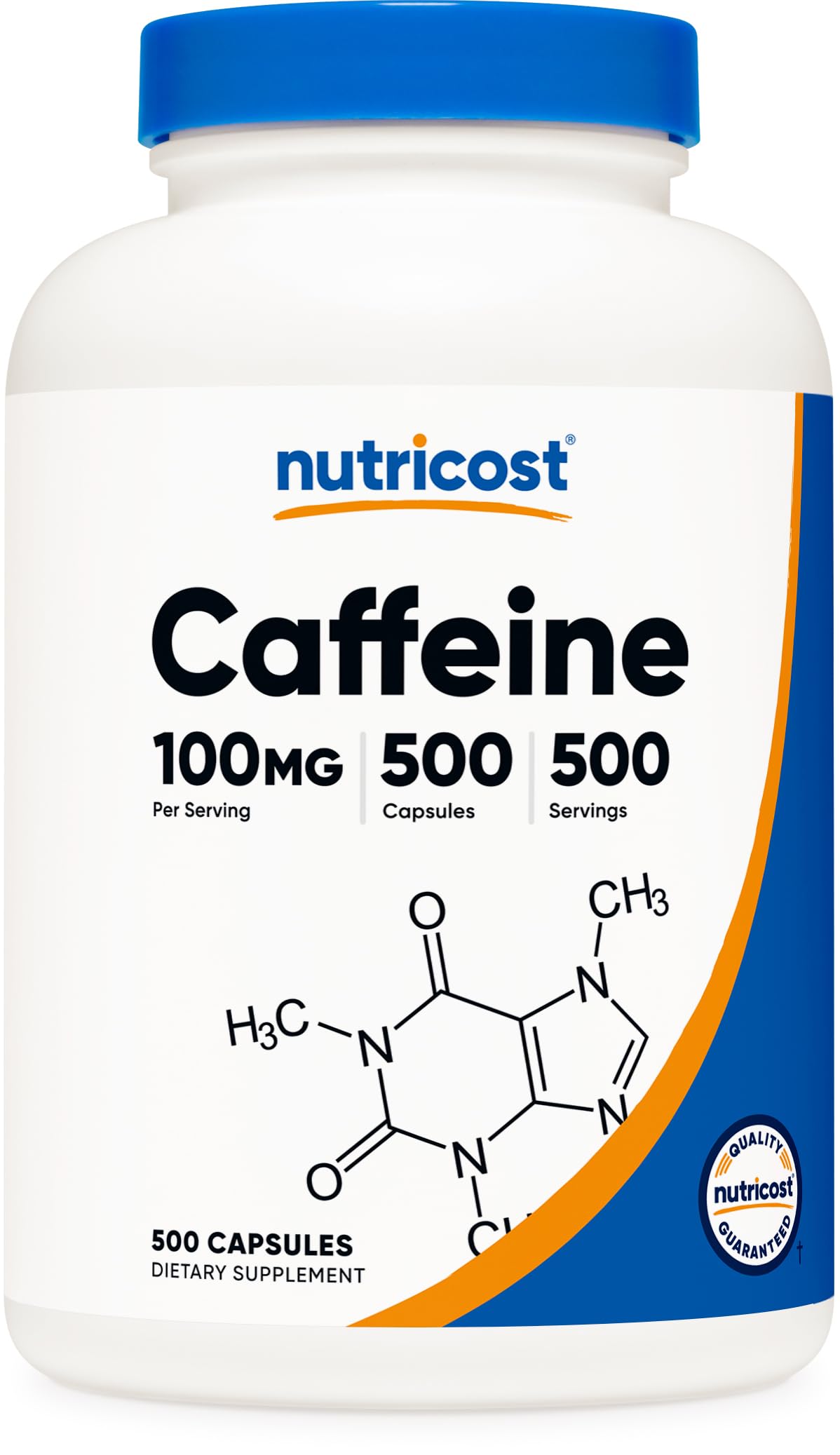
The 500-capsule bottle is the reason to look at Nutricost. At 200 mg per capsule, it turns a daily pre-workout habit into a supply that lasts, and it does so without sugar, calories, or a long list of extras. If you already know your dose and do not need a scored tablet, this is the bulk option we recommend.

Each capsule is straightforward: 200 mg caffeine, non-GMO, gluten-free, and made in an NSF-certified, GMP-compliant facility. The label caps use at two capsules in 24 hours, so the serving size is not a suggestion to double up casually. A capsule also travels cleanly in a gym bag, with no powder or shaker to deal with.

Against ProLab, the trade is capsule versus tablet and a larger bottle; against the 100 mg Nutricost, it is twice the dose in the same format. We see the 200 mg bottle as the better default for regular pre-workout use, while the 100 mg version makes more sense for people who want to build their dose through the day.

Bottom Line

Nutricost is our bulk-value pick: 500 capsules of straightforward 200 mg caffeine, with no sugar, calories, or extra formula to pay for.

Check Latest Price

Best For Bulk low-dose

Our Score 9.0/10
Nutricost Caffeine 100 mg

Nutricost

Nutricost Caffeine 100 mg

  • Dietary Non-GMO, gluten-free
  • Testing Third-party tested
  • Capsule Count 500
  • Caffeine Per Capsule 100 mg
Check Price on Amazon

Nutricost's 100 mg capsule is the lower-dose sibling of its 200 mg bottle, and the appeal is the same: 500 capsules, a simple formula, and a dose you can repeat without thinking. The difference is that one capsule is half the caffeine, so you can take one in the morning and another before training without automatically starting at 200 mg.

Each capsule delivers 100 mg caffeine, is non-GMO and gluten-free, and is third-party tested according to the label. That makes it a useful bulk option for people who want to spread caffeine across the day or who find 200 mg too sharp for a single dose. It is also a better fit than a 200 mg capsule for a first pre-workout experiment, because you can stop at one.

The 100 mg step is the point. It lets you build a day around one capsule in the morning and one before training, or stay at a single capsule on a lighter day. That is a different rhythm from a single 200 mg tablet, and for some lifters it is a better one.

We see it as the bulk low-dose pick: a long supply, a gentle starting point, and enough capsules to experiment with timing. If you want a scored tablet or a single 200 mg hit, this is not that product; the rest of the list covers those jobs.

Bottom Line

Nutricost's 100 mg bottle is our bulk low-dose pick, with 500 capsules that let you build caffeine around your training instead of starting at a full 200 mg.

Check Latest Price

Best Sustained-Release

Our Score 8.8/10
Genius Caffeine Sustained-Release

Genius

Genius Caffeine Sustained-Release

  • Delivery Sustained-release microencapsulated
  • Capsule Count 100
  • Caffeine Per Capsule 100 mg
Check Price on Amazon

Microencapsulated 100 mg caffeine releases gradually for steady energy.

Genius takes a different route from the tablets: each capsule holds 100 mg of microencapsulated caffeine designed to release gradually instead of landing all at once. That makes it less of a pre-workout jolt and more of a long-session or long-workday tool. The bottle has 100 capsules, so one capsule is one serving.

The useful difference is timing. A standard 200 mg tablet can be perfect for a focused lift and then leave you flat by mid-afternoon; Genius is built to stretch 100 mg across a longer window. That makes it a better fit for a long training block, a double session, or a workday that ends with a workout than for a max-effort set you want to attack ten minutes after swallowing a pill. The 100-capsule bottle is also easy to keep in a desk drawer or gym bag, which suits the way it is meant to be used.

We reach for Genius when the goal is staying level rather than getting a sharp kick before the first set. It is the best sustained-release option in this group, and the 100 mg capsule is easy to combine with a morning coffee if you want a little more total caffeine. If you are chasing a pre-workout surge, ProLab is the more direct choice, but for a long day that includes training, the gradual approach is easier to live with.

Bottom Line

Genius is our sustained-release pick for lifters who want a steady 100 mg of caffeine through a long session rather than a sharp pre-workout spike.

Check Latest Price

Best High-Dose Focus Blend

Our Score 8.6/10
SmarterVitamins Caffeine + L-Theanine

SmarterVitamins

SmarterVitamins Caffeine + L-Theanine

  • Oil Base Coconut MCT oil
  • Softgel Count 50
  • Caffeine Per Softgel 200 mg
  • L-Theanine Per Softgel 100 mg
Check Price on Amazon

200 mg caffeine plus 100 mg L-theanine in a softgel for hard sessions.

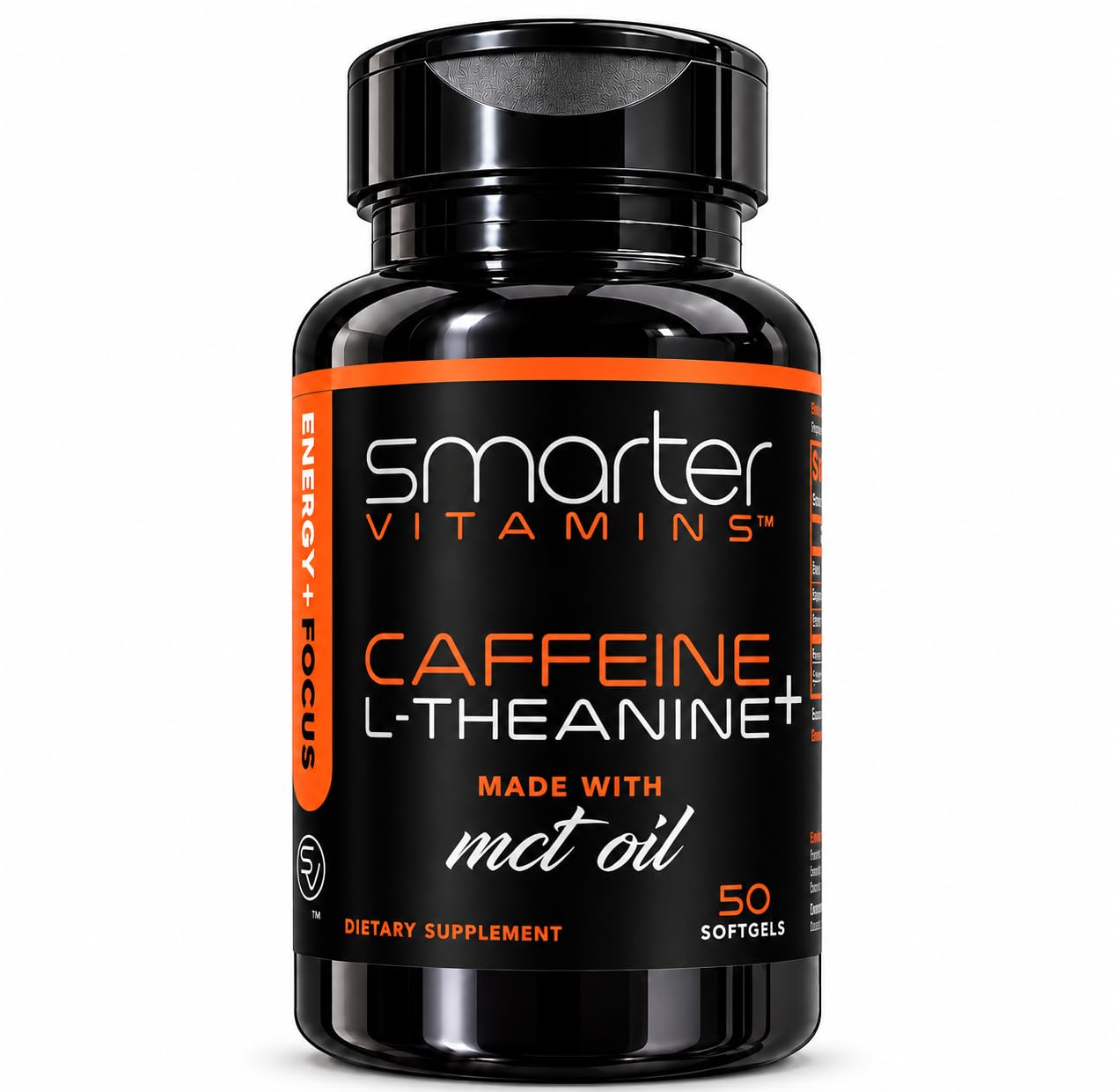
SmarterVitamins puts a full 200 mg of caffeine and 100 mg of L-theanine in each softgel, a 2:1 caffeine-to-theanine ratio. That is the mirror image of the Sports Research softgel, and the distinction matters: this one is for the lifter who wants a standard pre-workout dose with a little smoothing, not a low-dose focus product.

The softgel uses coconut MCT oil as the carrier, and the formula is non-GMO, gluten-free, and third-party tested with no fillers, artificial colors, preservatives, or soy. In practice, that makes it a more complete pre-workout pill than a bare caffeine tablet: you get the 200 mg you came for, plus the theanine that takes the edge off.

Where it separates from ProLab is the feel. ProLab is the clean, straightforward 200 mg; SmarterVitamins is the same dose with a calmer landing. We see that as useful for high-effort sessions, particularly if 200 mg alone tends to make you tense or scatterbrained. If you have already decided that a 200 mg caffeine plus theanine softgel is what you want, this is the version we recommend.

Bottom Line

SmarterVitamins is our pick when you want a full 200 mg pre-workout dose with 100 mg of L-theanine to smooth the edges.

Check Latest Price

How We Tested Caffeine Pills for Workouts

I started by pulling every caffeine pill I could find from mainstream supplement retailers and filtering out anything that didn't list caffeine per serving, hid the dose in a proprietary blend, or required a dose that seemed out of step with a normal pre-workout routine. That left 14 formulas, which my team and I used over four months. We divided the retail price by the number of servings and by the caffeine per serving, so value wasn't just a gut feeling.

Most of the testing happened where these pills actually get used: on a kitchen counter at 5:45 a.m. before a lift, in a gym bag before a lunchtime session, and on weekends before a longer run or ride. I took each formula 30 to 45 minutes before training, on both empty and lightly fed stomachs, and logged when the energy showed up, whether it arrived in a smooth ramp or a sudden spike, and whether my hands shook or my jaw tightened during warm-ups. I also noted the crash—or lack of one—and any headache, queasiness, or reflux that followed.

Because dosage and taste are where caffeine pills get annoying, I paid attention to score lines, capsule size, and whether a product was easy to split without crumbling. I swallowed each with water as directed and noted chalky aftertaste or bitterness when a tablet was meant to be chewed or dissolved. Across the four months, the ones that held up delivered steady focus through the last set, sat easily on my stomach, and cost less per effective dose than the fussier options.

How to Choose

Start With Dose, Not Hype

The first decision is how much caffeine you want in one swallow. A 200 mg tablet is the standard pre-workout unit, but it is a full dose, especially if you already drink coffee. A 100 mg tablet or capsule lets you start lower and take a second only if you need it. We prefer 100 mg products when dose changes from day to day; a 200 mg capsule is all-or-nothing. If you have never used caffeine pills, start at 100 mg before a hard session and judge from there.

Choose Fast or Sustained Release

A standard tablet or capsule is built to deliver caffeine in one go, which suits the 20 to 30 minutes before a lift. A sustained-release capsule spreads the dose over a longer window, so it is better for a long session, a double workout, or a workday that ends in the gym. We reach for a standard tablet when we want a clear start and a sustained capsule when we want to stay level. Neither is more effective; they fit different schedules.

Decide Whether L-Theanine Belongs

L-theanine is the amino acid paired with caffeine in many focus blends. The ratio matters more than the presence of the ingredient: 100 mg caffeine with 200 mg L-theanine is a low-stimulant, calm-focus formula, while 200 mg caffeine with 100 mg L-theanine is a full pre-workout dose with a smoother edge. If caffeine tends to make you tense, choose more theanine than caffeine. If you want a standard 200 mg hit with a little buffer, the 2:1 caffeine-to-theanine version makes more sense.

Look at Format and Flexibility

Tablets, capsules, and softgels are not interchangeable in daily use. A scored tablet can be snapped for a rough half-dose; a capsule usually cannot. Small tablets are easier for people who dislike large pills, while softgels can carry oil-based ingredients such as MCT. If your dose changes often, buy a scored tablet or a 100 mg product rather than a 200 mg capsule. If you want a single fixed dose, a capsule is the simplest format.

Check the Label and the Total Day

Caffeine pills are concentrated, so the label is the starting point, not a suggestion. Check the caffeine per serving, the maximum daily dose, and whether the product has been third-party tested. Then count the coffee, tea, energy drinks, and pre-workout you already had; a 200 mg pill on top of a large coffee can push you past a comfortable total. We avoid stacking caffeine products and keep late-day doses off the schedule when sleep matters.

Frequently Asked Questions

Final Verdict

ProLab earns our default recommendation because 200 mg per tablet, a 300-count bottle, and a clean formula make pre-workout caffeine easy to repeat. If 200 mg is too much, Jet-Alert's 100 mg tablet is the gentler starting point; if jitters are the issue, Sports Research's 100 mg caffeine with 200 mg L-theanine softgel is the better fit. For a full 200 mg dose with theanine, choose SmarterVitamins.