Accessories

Best Blister Pads of 2026

A blister pad has one job, and it usually gets handed that job at the worst possible moment — mile six, mid-stride, when a hot spot has already turned into a wince. A good one lifts pressure off the sore spot and stays glued through sweat, socks, and eight more miles; a bad one balls up inside your shoe and takes a layer of skin with it. What separates the two is rarely price. It's the adhesive, the size of the opening, and whether the edges are thin enough to disappear under a sock.

I've taped and padded my way through enough training cycles to be picky. Over four months, my team and I put 16 blister pads through real blisters — popped ones, intact ones, the raw ones that sting in the shower — on long runs, weekend hikes, and two miserable weeks of breaking in new boots. The pad that survives a full day is worth more than three that don't, and that's the bar the picks below had to clear.

Best Overall

Our Score 9.2/10
Compeed Blisters Mixed Pack

Compeed

Compeed Blisters Mixed Pack

  • Edge Tapered, translucent
  • Pack Mixed pack
  • Material Hydrocolloid active gel
  • Cushioning Deep cushioning
Check Price on Amazon

Tapered edges flex with your heel, so the pad stays put instead of rolling up.

Peeling starts at the edge. Every pad in this guide claims it stays put, and the ones that fail do it the same way: a blunt corner catches a sock, rolls, and takes the rest with it. Compeed is the pad we reached for when a heel had to survive a full day, because the rim is skived down to a thin, translucent edge that flexes with the foot instead of standing off it.

Underneath is a proper hydrocolloid gel pad, thick enough to take weight off a hot spot rather than just cover it, and the mixed pack carries more than one size, so a toe doesn't end up with a heel-sized rectangle folded over it. The translucent border blends into skin as well, which matters under a heel or a loafer where a beige dressing is not the look.

One thing worth knowing: the white bubble that forms under the pad is the dressing absorbing fluid, not a blister getting worse, and it should be left alone rather than drained. When the pad does come off, peel it back along the skin rather than pulling straight up, which is the difference between a clean removal and a fresh raw patch. For a long walking day, this is the one we packed.

Bottom Line

We think Compeed is the blister pad to buy first: the tapered edge stays flat through a full day in shoes, and the mixed pack covers more than one spot.

Check Latest Price

Best for Multi-Day Wear

Our Score 9.2/10
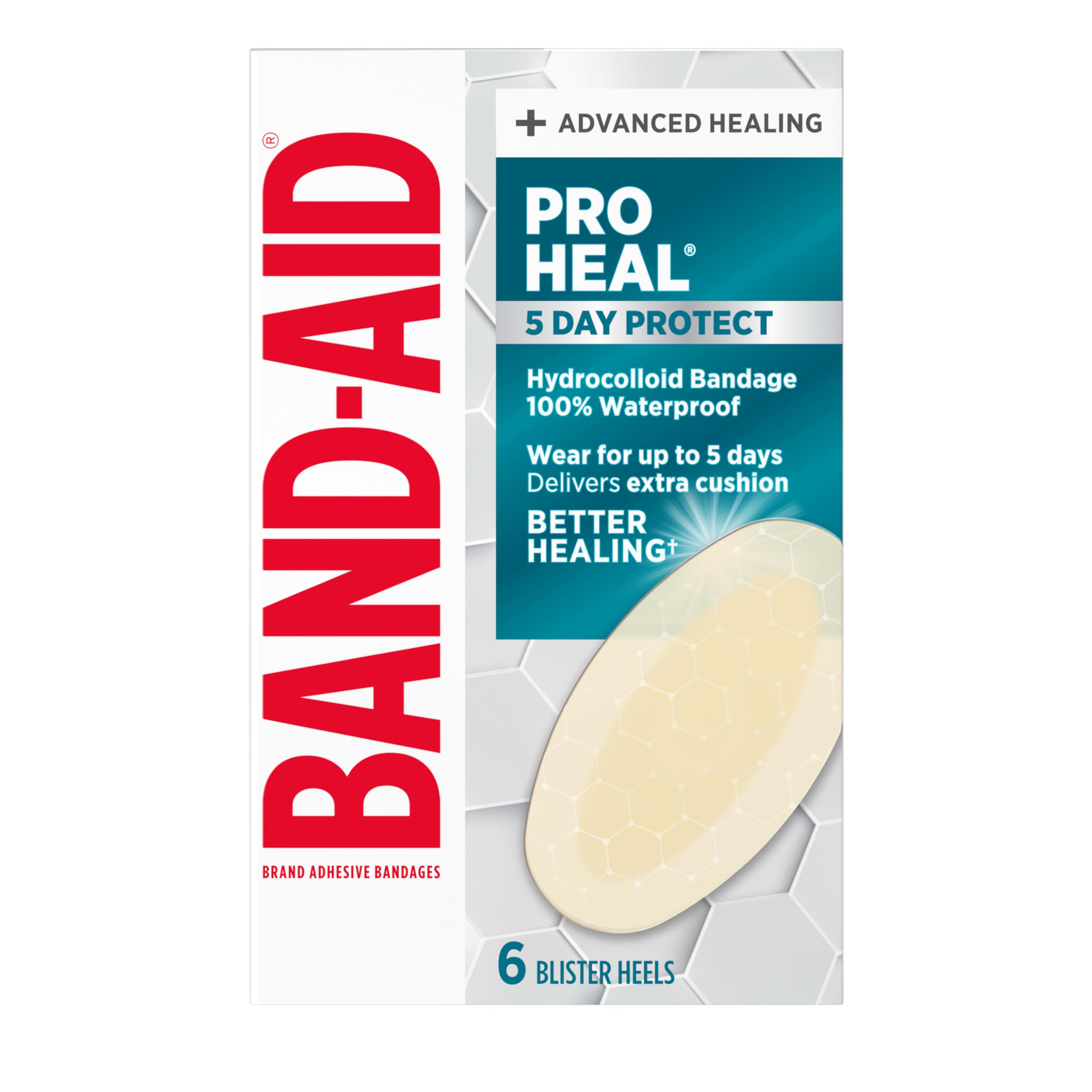
Band-Aid Pro Heal Hydrocolloid Bandages

Band-Aid

Band-Aid Pro Heal Hydrocolloid Bandages

  • Count 6 bandages
  • Material Hydrocolloid
  • Wear Time Up to 5 days
  • Waterproof 100% waterproof
Check Price on Amazon

A thin, waterproof film that shrugs off showers and disappears under dress shoes.

Five days is the claim on the box, and it's the reason to look at these at all. Pro Heal pads are hydrocolloid, fully waterproof, and designed to be left in place through handwashing and showers, so there's no re-taping after every wash and no swapping a pad in the middle of a trip.

The film is thin, closer to a second skin than to the cushioned gel pads most of this list is built from. Under a dress shoe or a snug heel that's an advantage: nothing bulky rubs the inside of the shoe, and nothing shows through a stocking. On a blister that's already raised, there's not much between it and the shoe, which is the trade you make for the low profile.

What we appreciated most is how well it stays sealed in water. Most pads here survive a shower; this one kept its grip through a hand-wash and a wet sock change on the same afternoon. We keep a box in a gym bag and another in a hiking pack, and it's the pad we hand someone with a raw spot and a long day ahead.

Bottom Line

Buy these for a blister you want sealed and forgotten under a real shoe; few pads here sit flatter.

Check Latest Price

Best For Travel kits

Our Score 9.2/10
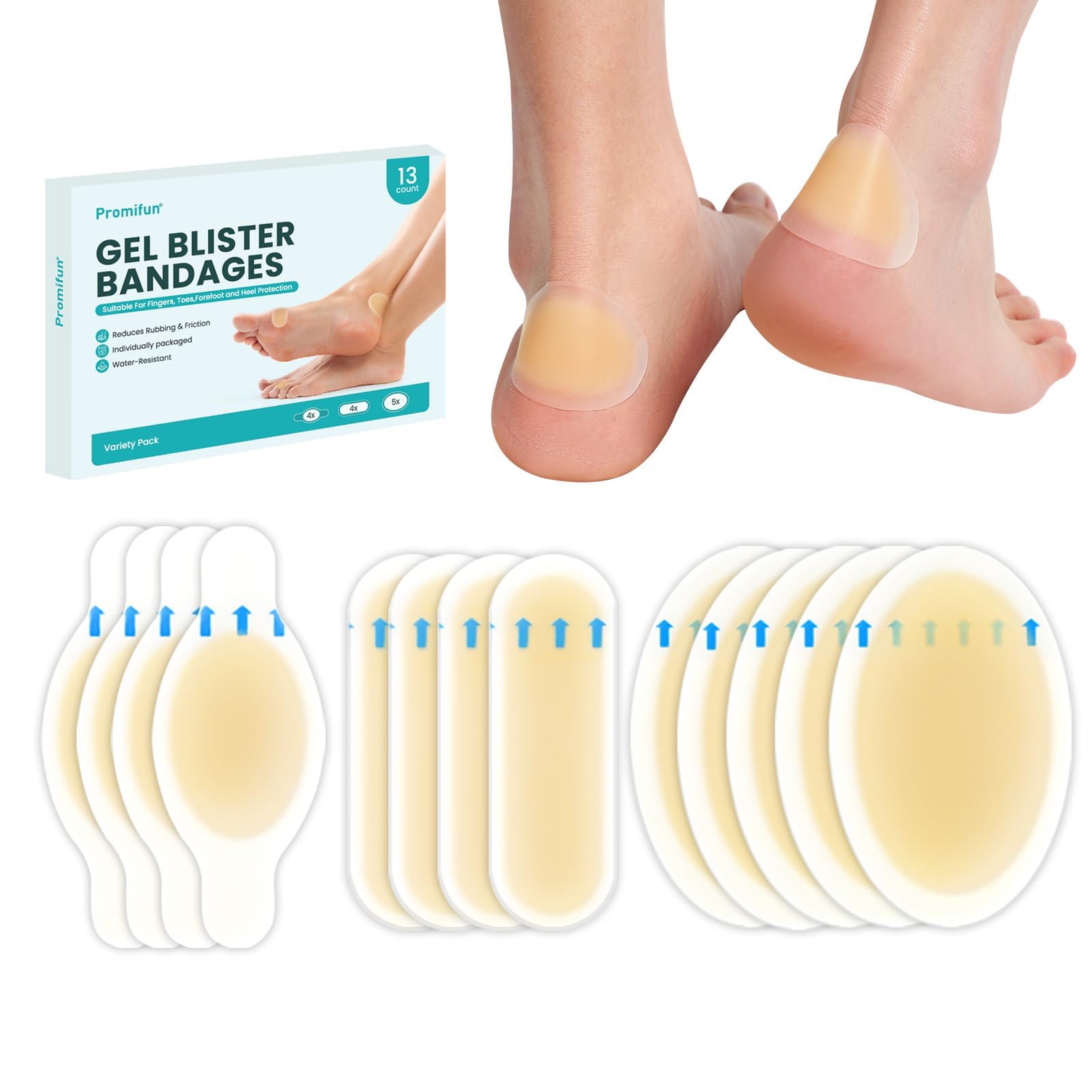
Promifun Hydrocolloid Blister Bandages

Promifun

Promifun Hydrocolloid Blister Bandages

  • Count 13 bandages
  • Shapes 4 shapes and sizes
  • Material Hydrocolloid
  • Water Resistance Waterproof seal
Check Price on Amazon

The pack that earns its place in a suitcase is this one: 13 hydrocolloid pads in four shapes, waterproof, and cheap enough that handing a few to a friend doesn't sting. It's what we tuck into a toiletry bag before a trip with a lot of walking in it.

We used the small shapes most, around toes and the outer edge of a little toe, where a heel pad bunches inside a shoe. The seal held through a warm day of sightseeing, though on a genuinely sweaty foot the edges crept within a few hours and the pad wanted changing before dinner.

Where it gives ground to the top pick is depth: this one seals more convincingly than it pillows, so a blister that's already raised feels the shoe sooner than it does under Compeed. For a weekend or a city break that's the right trade. For a multi-week trek where every pad has to count, the pad we pack is Compeed.

Bottom Line

Promifun is the pack we tuck in a suitcase: four shapes, a waterproof seal, and a price that makes sharing easy.

Check Latest Price

Best For Dancers and teams

Our Score 9.2/10
2nd Skin Dressing Squares

2nd

2nd Skin Dressing Squares

  • Size 1 inch squares
  • Count 200 squares
  • Format Non-stick gel squares
  • Material 95% water gel
Check Price on Amazon

These aren't bandages. 2nd Skin squares are 1-inch pads of 95 percent water gel, cool, faintly tacky, and with no adhesive backing of their own, so they need tape or a bandage over the top to stay anywhere. Plan for that and they're the most soothing thing on this list.

On a hot spot or a fresh blister the gel is immediately cooling, and unlike a hydrocolloid pad there's no tacky film pulling at the sore spot when it comes off. The squares stack easily over a tender toe, which is why they turn up in dance bags.

The 200-count box is the real argument. Dancers, runners, and anyone taping toes before a long day can treat these as consumables: one per toe, changed whenever they dry out, with no agonizing over whether a pad is too precious to waste. They also work as a cushion under tape anywhere a strap rubs.

For one heel blister and a pair of shoes, a self-adhesive hydrocolloid pad is the simpler tool. This box earns its spot in a studio bag or a team kit, where volume and cooling matter more than sticking power and somebody always has tape.

Bottom Line

For a studio bag or a team kit, these 200 cooling gel squares soothe on contact and ask for tape.

Check Latest Price

Best Budget

Our Score 9.0/10
Amazon Basics Extreme Hydrocolloid Bandages

Amazon Basics

Amazon Basics Extreme Hydrocolloid Bandages

  • Size 1.65 x 2.67 inches
  • Count 10 bandages
  • Shape Heel
  • Material Hydrocolloid gel
Check Price on Amazon

Cheap, heel-shaped hydrocolloid pads that grip hard enough to break in new shoes.

The cheapest pads here are also the most single-minded: one heel shape, ten to a box, nothing to distract you. If heels are where your shoes attack, that's less a limitation than a straight answer.

We liked these for breaking in new shoes. The 1.65-by-2.67-inch shape covers the whole back of a heel without trimming, and the gel flexes with the shoe rather than tenting up in the middle. The adhesive is aggressive enough to hold on a sweaty heel, though it leaves residue on socks and doesn't come away quietly.

One thing to know before you commit: if your skin reacts to adhesives, try a single pad at home before you take a box on a trip. Otherwise this is the pad to keep in the car and the desk drawer, where a heel rub shows up without warning.

Bottom Line

Our budget pick for heel rub: a heel-shaped hydrocolloid pad that grips hard and costs less than anything else here.

Check Latest Price

Best Variety Pack

Our Score 8.8/10
Dr. Frederick's Better Blister Bandages

Dr.

Dr. Frederick's Better Blister Bandages

  • Wear Water-resistant, multi-day
  • Count 12 bandages
  • Shapes Heel, toe, and spot
  • Material Hydrocolloid gel
Check Price on Amazon

Three shapes in one box, so the right pad is already in your bag.

A toe rub and a heel rub want different shapes, and which one you're dealing with usually becomes clear only after the shoe comes off. That's the case for this box: 12 hydrocolloid bandages split across heel, toe, and spot shapes, latex-free, water-resistant, and packed flat enough to live in a bag without claiming a pocket.

Cushioning is the strongest thing about them. The gel sits thick enough that a blister stops announcing itself with every step, and the spot shapes fit a little toe without trimming. We got the most use out of the heel shapes in boots and the small ones on toes, which is exactly the split a three-shape pack exists for.

Adhesion is the least consistent part. On a cool, dry day these sat tight from morning to night; on a hot one, the edge lifted well before the pad had finished its job. The fix is boring and it works: clean, bone-dry skin, no lotion, a few seconds of palm warmth on the pad, and ten minutes before the sock goes on.

Bottom Line

For a blister that could be anywhere, we recommend this three-shape pack: the cushioning is real and the right pad is already in the box.

Check Latest Price

Best For Stocking up

Our Score 8.8/10
Welnove Gel Blister Bandages

Welnove

Welnove Gel Blister Bandages

  • Count 30 bandages
  • Shapes 6 shapes and sizes
  • Material Hydrocolloid gel
  • Water Resistance Waterproof
Check Price on Amazon

Thirty pads in six shapes is a supply, not a sample. For anyone who goes through blister pads steadily, one on a hot spot before a run and a fresh one after a shower, this works out to the lowest cost per pad of the variety packs here.

The shapes are genuinely different rather than six variations on a circle: small ones sit on toes without bunching, wider ones wrap a heel, and the soft gel is comfortable enough to forget under a sock. Cushioning was the surprise, since it feels more substantial than the price suggests.

The edges are where the value shows its limits. On a cool, dry day these held fine; on a hot one, the rim started to lift and the pad began to roll. That makes the box a stash rather than a long-haul solution: excellent in a gym bag or a locker where you can swap one at lunch, a gamble on a twenty-mile day.

Bottom Line

We stock the gym bag from this box: 30 pads, six shapes, and the lowest cost per pad here.

Check Latest Price

How We Tested: Real Blisters, Long Days, and Stubborn Adhesive

We started with more than 40 pads sold in drugstores, running shops, and online, then sorted them by construction — foam donuts, hydrocolloid squares, gel cushions — and by whether each came in more than one size, since a single-size pad fails anyone whose blister is bigger than a pencil eraser. Pads that only made sense in a giant multipack got set aside. Sixteen earned a spot.

Each one went on a real body. We applied pads to hot spots before runs and to fully formed blisters after long, sweaty hikes, then wore them in the same socks for the rest of the day, through a shower, and overnight. We checked whether a pad slid on the first step, whether edges lifted once things got damp, and what the skin looked like after we peeled it off — a red ring where the adhesive had been counted against a pad even if it never budged.

For blisters that had already popped or drained, we watched whether the pad wicked fluid away or let it pool and soften the glue, and whether the cushioning still felt firm when we pressed a thumb into it. We tried every size on a range of blister shapes and tallied how many pads one day of wear actually used up, because a pad that lasts from morning to night is the only kind worth carrying on a long trail.

How to Choose

Why pads lift at the edges

Almost every blister pad fails the same way: the rim lifts, grit gets under it, and the whole thing rolls. A blunt-cut edge catches on a sock; pads with a tapered or skived rim, like our top pick, flex with the foot instead of standing off it. Skin prep does the rest, so clean and dry the area, skip lotion or sunscreen under the pad, and warm the adhesive with your palm for a few seconds before the sock goes on.

One trap worth knowing: don't cut a hydrocolloid pad down to size. Slicing it opens the sealed gel layer and leaves a fresh raw edge that lifts within minutes. Choose a smaller shape instead, or keep a mixed pack so the right size exists.

Film or gel: how much cushion you need

Blister pads sit on a spectrum. At one end is a thin hydrocolloid film, which seals a raw spot and disappears under a dress shoe but does very little to pad a raised blister. At the other is a thick gel cushion that takes pressure off but can rub inside a tight shoe.

Press gently on the pad once it's applied. If you can still feel the blister, you need more pad; if the shoe suddenly feels tight over it, you need less. Match the pad to the shoe as much as to the blister, and keep one thin film and one thick gel option in the bag.

Match the shape to the spot

Heel blisters want the long, curved pads that wrap the back of the heel. Toe blisters want something short and narrow that won't fold inside the shoe. Small spot shapes cover the side of a foot or the outer edge of a little toe.

A mixed pack covers a trip where you don't know what you'll get, while a single-shape box suits a problem you have already identified. The trap is folding a heel pad onto a toe: the crease becomes a ridge, and the ridge rubs a brand-new blister next to the old one.

What waterproof really means

A waterproof pad keeps water out; it doesn't keep sweat out. Sweat comes from under the pad, and it is what defeats the adhesive on a hot day, so treat waterproofing as shower-and-rain insurance rather than a promise for a humid afternoon.

If a pad has been soaked through, change it rather than pressing it back down. Once the adhesive has released it won't reseal, and a pad that has been re-stuck is the one that ends up bunched in your sock.

How many pads to buy

Count blister-days, not boxes. A six-count is a purse or gym-bag supply; a 30-count is a season. Cost per pad varies more than the box price suggests, and a big box of one shape you never use is the most expensive thing here.

Our rule: carry two shapes and enough pads to change one mid-day. That usually means a mixed pack in the travel bag and a larger single-shape box at home for the spot your shoes always find.

Frequently Asked Questions

Final Verdict

Compeed is the pad we recommend first. The tapered edge stays flat where other pads roll, the gel takes real pressure off a hot spot, and the mixed pack covers a heel and a toe without a second purchase.

If the blister is already raised and painful, Dr. Frederick's three-shape box puts more gel between it and your shoe. And if you're stocking a studio or a team kit, 2nd Skin's water-gel squares are the better buy, as long as there's tape in the bag.