Training Shoes

Best Basketball Shoes of 2026

Every basketball shoe promises the same three things — grip the floor, cushion the landing, look good doing it — and most break that promise somewhere. The pair that squeaks beautifully on a clean gym floor can go bald on your driveway by mid-summer, and cushioning so plush can leave you feeling like you're cutting through sand. What you actually want is a shoe that holds traction when you plant, supports your foot on a hard cut, and still feels fine in the third quarter.

My team and I spent six months with 14 pairs — rec-league games, open runs, and far too much driveway one-on-one — timing the break-in, checking how each one fit on the very first wear, and seeing what the outsoles looked like after outdoor sessions. Fit is the part nobody warns you about: a shoe half a size off will annoy you no matter how good the cushioning is. The picks below earned their spot on comfort, support, traction, and durability, with value and how they held up cosmetically after a season of scuffs factored in.

Best Budget

Our Score 9.2/10
adidas Own The Game 3.0

adidas

adidas Own The Game 3.0

  • Cut Mid top
  • Outsole Non-slip
  • Toe Box Wide
Check Price on Amazon

Roomy toe box and steady mid-top support make it the budget choice for wide feet.

Cheapest shoe in this group, and for a lot of players that will be the whole argument. The Own The Game 3.0 is also the roomiest in the toe: the forefoot has genuine width, so your toes spread on a landing instead of curling over each other, which is rare in a shoe at this end of the list.

We recommend it for anyone with wide feet who does not want to spend much to find out whether they like playing in basketball shoes at all. What you get is a mid-top that does the basics properly: a non-slip outsole that grips indoor courts, a collar that steadies the ankle without locking it, and colors loud enough to find your teammate across two courts.

Give them three or four sessions before you judge them. The synthetic upper arrives stiff, and the first hour feels like wearing a new pair of boots; once it warms up and creases where your foot flexes, the shoe settles into something far more comfortable. Skip that adjustment and you will convince yourself you ordered the wrong size.

What it will not do is feel plush. There is support and stability here, not a soft ride, and a heavy player who wants deep cushioning should look at the PEAK instead. As a first pair, a backup pair, or the shoes that live in the car for pickup games, they do exactly what they should.

Bottom Line

If your feet are wide and your budget is tight, this is the pair: a roomy, stable mid-top that covers the basics properly.

Check Latest Price

Best For One-pair wear

Our Score 9.2/10
Nike Air Visi Pro VI Nubuck

Nike

Nike Air Visi Pro VI Nubuck

  • Use Court and everyday
  • Upper Nubuck
  • Support Arch support
Check Price on Amazon

Nubuck is the whole personality of this shoe. It holds its shape, takes a scuff without showing it, and gives the Air Visi Pro VI a look that reads as deliberate rather than retro. It is also soft against the foot from the first wear, which is most of why the shoe feels broken in before you have played in it.

We keep it on the list because it is comfortable immediately, with no hot spots at the collar, and because it is one of the few shoes here you can wear to the gym and then out afterwards without looking like you are still in uniform. For a player who wants one pair to do everything, that flexibility is worth more than a technical feature.

Support comes through the arch and the collar rather than a stiff chassis, and the shoe feels planted rather than quick, which suits a bigger player or a half-court game more than a guard's footwork. It is not the lightest or the most technical shoe in the lineup, and it does not try to be.

Compared with the specialist shoes here, it gives up a little speed and a lot of fuss, and what it gives back is a pair you never have to think about.

Bottom Line

A comfortable, well-made classic for players who want one pair that works on court and off, and do not mind a little upkeep.

Check Latest Price

Best For Court and gym

Our Score 9.2/10
PUMA All-Pro Nitro Skybreak

PUMA

PUMA All-Pro Nitro Skybreak

  • Use Court and gym
  • Sizing Mens
  • Weight 2.43 lb
Check Price on Amazon

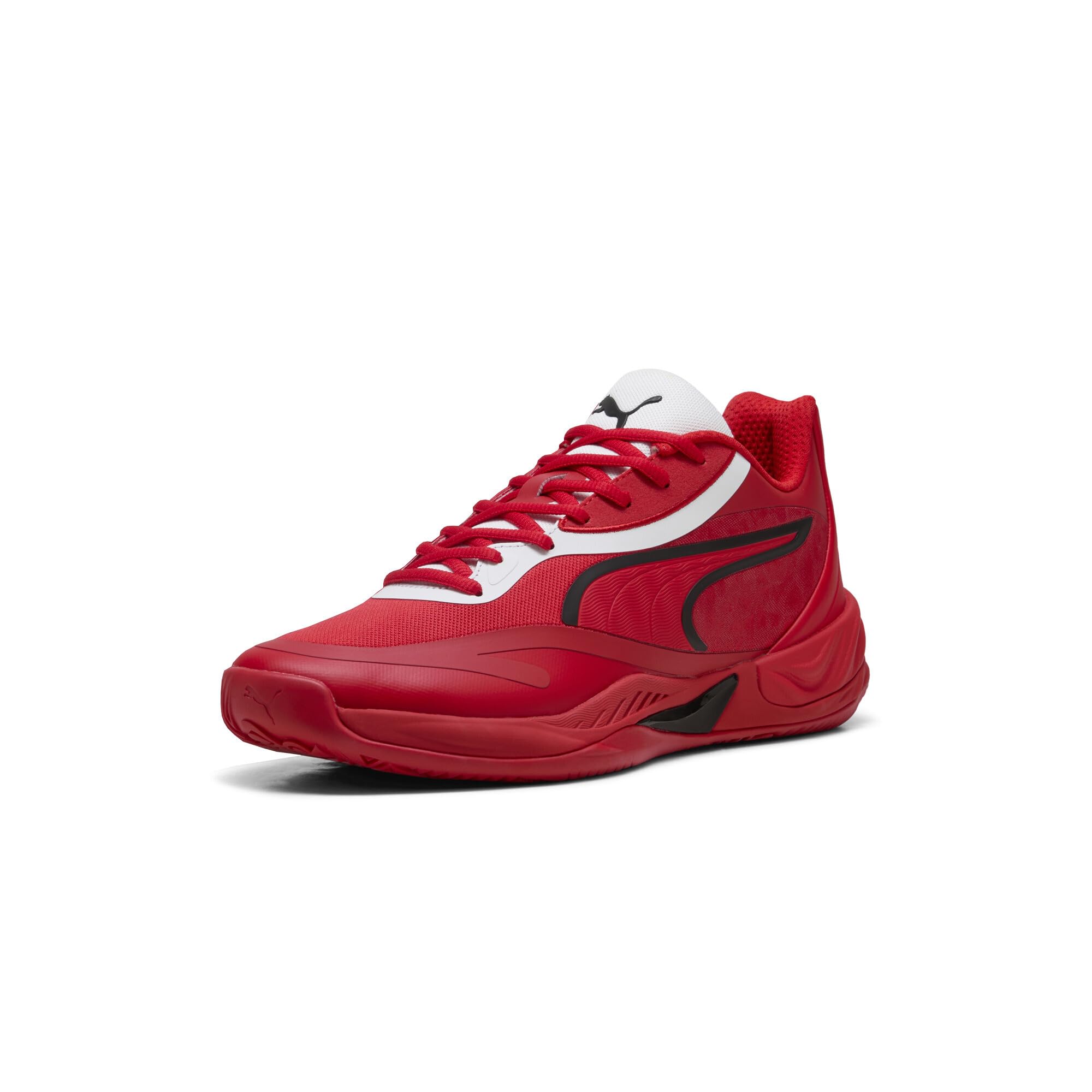
We expected the All-Pro Nitro Skybreak to be the look-at-me shoe of the group and not much else. It turned out to be one of the most comfortable pairs here: soft underfoot from the first lace-up, light on the foot, and easy around the collar instead of needing a week to settle in.

It also covers more ground than a basketball shoe usually does. The same pair works for a gym session, a pickup game and the walk home afterwards, and the styling means it does not look out of place once you have left the court. That range is why it stays in the roundup even though it does not lead on any single performance measure.

Our take is that it is the best-looking shoe here and one of the most comfortable, and it holds its own on court without pretending to be a specialist's shoe. If you want one pair for a game, a workout and a night out, this is the one we point to.

What we cannot tell you yet is how it behaves over a full season. It is a newer design, and we have not seen enough worn-out pairs to make a call on longevity, so buy it for the comfort and the look and treat durability as an open question.

Bottom Line

The comfortable, good-looking option: a light shoe for players who want one pair for the court, the gym and everywhere after.

Check Latest Price

Best Overall

Our Score 9.0/10
PEAK Streetball Master

PEAK

PEAK Streetball Master

  • Cut High top
  • Court Indoor and outdoor
  • Upper Breathable
  • Cushioning Cushioned midsole
Check Price on Amazon

Grippy, supportive and comfortable without a break-in, our pick for outdoor courts.

The Streetball Master is the shoe we hand to most players first, because it is built for the court rather than the hallway. The collar rises high over the ankle, the upper breathes, and there is enough cushioning underfoot to absorb repeated landings on concrete. For anyone whose games happen outdoors, it makes the fewest compromises of anything in this group.

Grip is what earns it the top spot. The outsole bites on dusty gym floors and holds on asphalt, which is the difference between a hard cut and a slip. Ankle support is the other half of the story: the high collar and padded heel keep the foot from rolling without turning the shoe into a cast, and players who want arch support generally find enough of it here.

Comfort out of the box is better than the price suggests. Most pairs do not need a break-in, though the collar can rub for a session or two before it softens. Sizing is the thing to plan around: the same shoe reads large to some feet and narrow to others, so buy from a seller with easy returns and try them on a hard floor with the tags still attached before you commit.

Small details hold up too. The laces are flat, long enough to double-knot, and they stay tied through a full run of games, which sounds like nothing until the first time you have to stop and retie during a fast break.

Bottom Line

Our default pick for most players: a supportive, grippy high-top that suits outdoor courts and does not need a break-in.

Check Latest Price

Best for Regular Hard Use

Our Score 9.0/10
Under Armour Lockdown 7

Under Armour

Under Armour Lockdown 7

  • Fit Snug
  • Upper Leather
  • Sizing Unisex adult
Check Price on Amazon

A sturdy leather shoe that keeps its shape through a long season of regular play.

Set the Lockdown 7 next to the Streetball Master and it feels like a work boot: leather instead of mesh, a snugger wrap through the midfoot, and a shape that holds rather than conforms. That is the point. Of everything here, this is the shoe we trust to still be wearable at the end of a long season of pickup on rough concrete.

Fit needs a decision from you. The Lockdown runs a touch small and the leather does not give much in the first week, so players between sizes should go up half. Get that right and the heel sits deep in the collar, the midfoot locks down, and the ankle feels held on landings without the shoe fighting your footwork.

Quick guards will find it dull. The upper flexes less than a mesh shoe and it will not feel as light as the Precision 7 or the PEAK. If your game is built on changing direction at speed, that matters; if it is built on positioning, rebounding and defending, it does not.

A lot of inexpensive shoes go floppy at the collar within a season. This one holds its structure, and that is the entire reason it is here.

Bottom Line

The durable choice: a snug leather shoe that keeps its shape through a long season, best for players who value support over speed.

Check Latest Price

Best for Quick Guards

Our Score 9.0/10
Nike Precision 7

Nike

Nike Precision 7

  • Build Lightweight
  • Sizing Unisex adult
  • Outsole High-grip
Check Price on Amazon

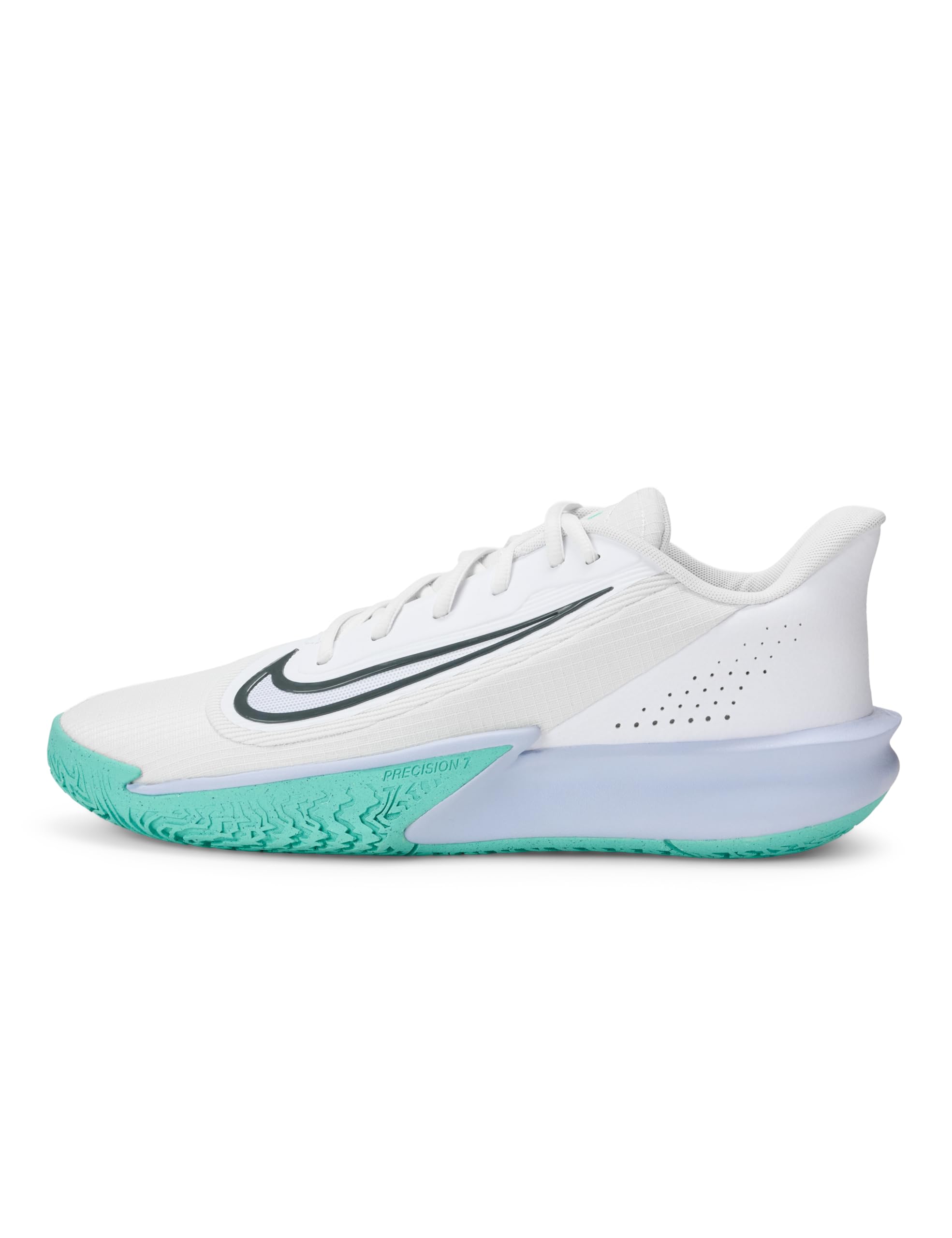
Light, grippy and locked-in for guards who win games with footwork.

Quick guards, start here. The Precision 7 is built light and plays light: it moves with your foot instead of lagging behind it on a cut, and there is nothing around the ankle to slow the shoe down. If your game is footwork first, this suits you better than any of the high-tops in this group.

Grip is excellent on a clean court, and it stays planted when you stop hard instead of skating through the last inch of a closeout. The heel sits deep and does not wander, which is the support a guard actually uses, containment rather than a tall cuff. Cushioning lasts a full game, though it is adequate rather than plush.

Our verdict is that it is the best pure guard shoe here, with an asterisk. It is the most expensive pick in the group, and what you are paying for is a light, direct feel rather than more shoe. The PEAK gives you more coverage and more cushioning for less money, so only pay the premium if the weight is the point for you.

Bottom Line

Our pick for guards who live on footwork: a light, grippy shoe that keeps the heel locked and lets you cut first.

Check Latest Price

What We Put These Shoes Through

We started with a shortlist of about 40 pairs pulled from spec sheets, team catalogs, and the models that kept showing up at open runs, then cut it down by price, size availability (including whether wide sizes actually existed), and whether a shoe was built for indoor or outdoor courts. That left 14 pairs, which we rotated through six months of play: rec-league games, pickup runs, and a lot of driveway one-on-one.

Every pair saw at least two indoor sessions on a dusty gym floor and two outdoor sessions on concrete. For traction, we noted whether the sole squeaked and held on a hard cut, and how often we had to wipe it between possessions. For support, we watched for rollover on lateral cuts and had our testers with cranky ankles push through defensive slides. Comfort was logged from the first wear — break-in time, hot spots, blisters, and whether the cushioning still felt right an hour in.

Fit and sizing caused the most argument. Testers with wide feet and narrow feet tried the same size in every model, and we noted where a shoe pinched the toe box or slipped at the heel. Durability came down to the outsole: we checked the tread at the pivot point after each outdoor session and photographed the wear. We tracked scuffs and creasing too, then asked ourselves at the end whether each pair was still worth what it cost.

How to Choose

Start With the Court, Not the Shoe

Where you play decides more than any other single factor. A soft, tacky outsole built for clean hardwood grips beautifully and then wears smooth in a few weeks on asphalt, while a harder outdoor compound gives up a little bite in exchange for a much longer life. If most of your runs are outside, buy for the outsole and accept a slightly firmer first step; if you play indoors, chase maximum grip.

This is the split that shapes our list. The PEAK Streetball Master is built for the outdoor end of that trade, while the lighter, softer court shoes here reward a clean gym floor. Be honest about where your games actually happen, not where you wish they did.

Fit First, Then Everything Else

A basketball shoe needs a locked heel and roughly a thumb's width in front of your longest toe; if either is missing, no amount of cushioning will save the fit. Sizing runs inconsistently across this group, with some models a half size small, some a full size small, and a few that read large to one foot and narrow to another.

Try new pairs at home with the socks you play in, on a hard floor, with the tags still attached, and buy from a seller with an easy exchange. A wide forefoot is worth prioritising over brand loyalty: a roomy toe box you can feel beats a specification you cannot.

Cut, Cushioning and Real Support

A high collar covers the ankle; it does not stabilise it by itself. What holds you is a deep heel counter, a snug midfoot and a wide, stable base, which is why a well-built mid-top can feel more supportive than a loose high-top. Judge the heel hold first and the collar height second.

Cushioning is the other trade. More foam softens landings but blunts the court feel quick guards rely on, and less foam gives you a direct ride at the cost of impact protection. Heavier players and anyone playing on concrete should lean toward cushioning; smaller, quicker players can lean toward feel.

Expect Wear and Plan for It

Longevity is the least predictable thing about basketball shoes. Toe drag, concrete and daily play all take a toll, and two players in the same model can get very different seasons out of it. Rotating two pairs spreads the wear and lets each one dry out between sessions.

Replace a shoe when the tread at the pivot point goes smooth or the upper starts separating from the sole. A bald outsole is how ankles get turned, and no insole swap fixes a sole that has stopped gripping.

Frequently Asked Questions

Final Verdict

The PEAK Streetball Master is the pair we recommend first. It grips on the surfaces most people actually play on, supports the ankle without needing a break-in, and costs less than the specialist shoes it outperforms for everyday use.

If your feet are wide, the adidas Own The Game 3.0 gets you on court for less and gives your toes room to spread. If your game is quick and built on footwork, the Nike Precision 7 is worth the extra spend, provided your feet are average width.