Training Shoes

Best Barefoot Training Shoes for the Gym of 2026

Barefoot shoes promise something simple and slightly uncomfortable: less shoe, more foot. You feel the ground in a way a cushioned trainer never allows, and most people's calves file a complaint within the first week. What you get back is a toe box wide enough for your toes to spread, a sole that bends where your foot bends, and a lighter ride under the bar. If your feet feel cramped by the end of a workout, that's the fix.

I've worn barefoot shoes for lifting and walking for a few years, and my team has now spent nine months in 12 pairs, from barely-there slip-ons to slightly beefier all-rounders. Something no one tells a first-time buyer: ignore the size you wear in other sneakers and measure your foot instead, because sizing swings wildly between brands. Looks matter more than you'd expect, too, and the best of them are the ones you'd wear out of the gym without a second thought. There's a pair below for the lifter and for the walker.

Best Overall

Our Score 8.6/10
Oranginer Barefoot Cross-Trainer

Oranginer

Oranginer Barefoot Cross-Trainer

  • Use Cross-training
  • Design Minimalist
  • Toe Box Big toe box
  • Listed Weight 8 oz
Check Price on Amazon

A light, flat cross-trainer with a big toe box and an accessible price.

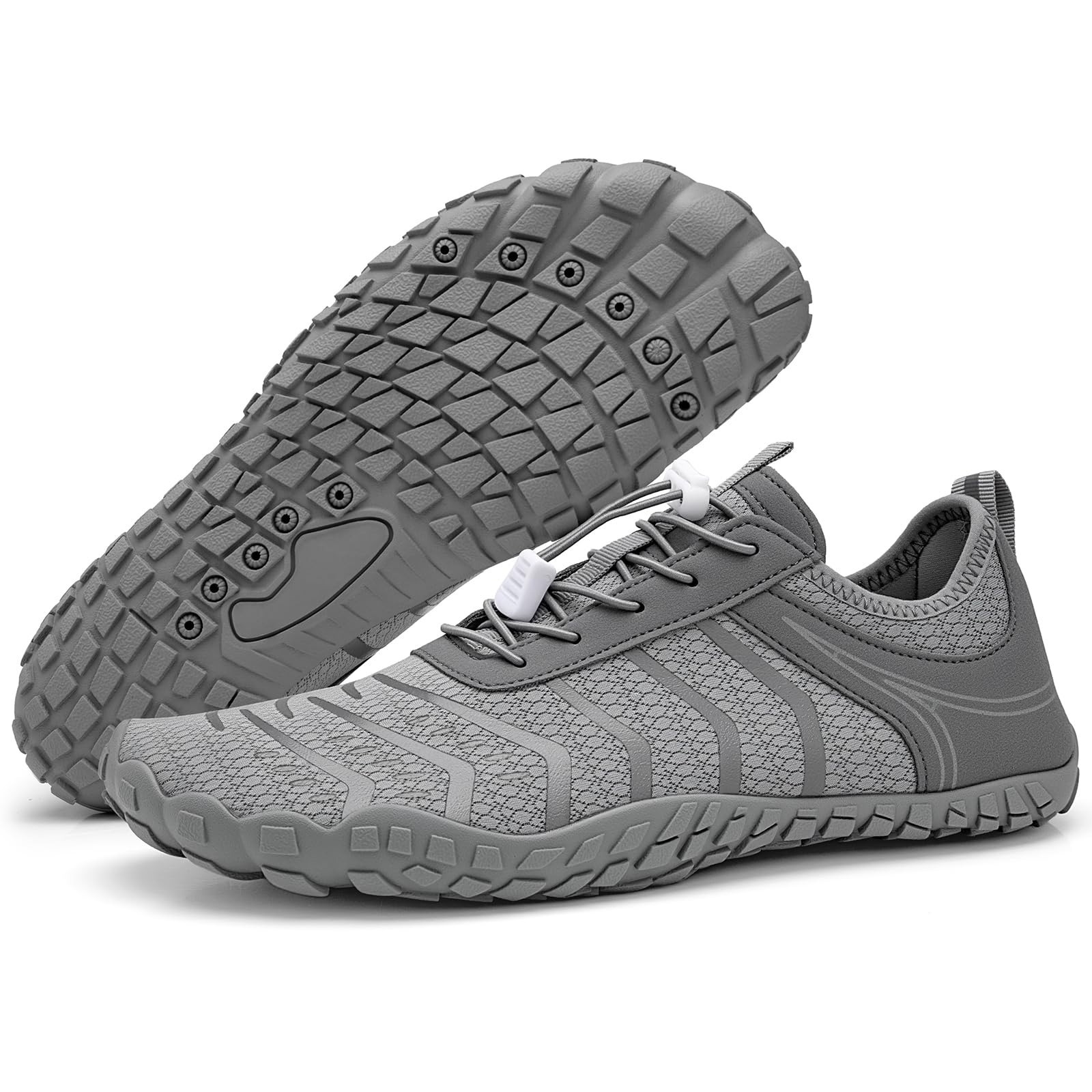
The big toe box and flat, minimalist platform are the two things that make the Oranginer a gym shoe rather than a lifestyle barefoot sneaker. Its toe box gives your toes room to spread, and the low platform keeps you close to the floor for squats, deadlifts, and kettlebell work. At a listed 8 ounces, it is light enough for conditioning without feeling like a sock with a sole.

That combination is why we recommend it first for most gym training. What separates it from the Xero is the dedicated cross-training shape and a more accessible price. We also give it credit for flexibility: the shoe bends with your foot during lunges and bodyweight circuits, so it does not fight you between lifts. The flat feel is the point, not a compromise; if you want cushioning underfoot, this is the wrong category. The simple upper and laces let you snug the midfoot without crushing the toes, which is the balance we want in a wide barefoot trainer.

We treat it as a gym shoe, not a do-everything shoe. It is happiest indoors or on a gym floor, and it is not the pair we choose for long pavement walks. For the reader who wants one affordable barefoot trainer for lifting and functional work, it is the easy answer. It is the pair we hand a new barefoot lifter first, and the one we keep coming back to for a simple strength session.

Bottom Line

For most gym training, we pick the Oranginer first: a big toe box, a flat 8-ounce platform, and a price that undercuts the premium option.

Check Latest Price

Best Upgrade

Our Score 8.6/10
Xero Shoes Prio

Xero

Xero Shoes Prio

  • Model PRM
  • Design Barefoot sneaker
  • Department Men's
  • Package Weight 1.5 lb
Check Price on Amazon

A more polished barefoot sneaker for lifters who mix in short runs and everyday wear.

A step-up price buys a more polished upper and a more versatile feel than the budget picks here. The Prio is still a barefoot sneaker at heart, with a flat platform and a shape that looks more like a normal gym shoe than a niche minimal shoe. We like that it does not force you to choose between training and the walk to the car.

On the gym floor, the Prio is at its best when the session moves. It has enough structure for lifting and enough flex for cardio, which is why it sits near the top of this set for versatility. The toe box gives toes room to spread, though the fit is not universal; if your feet are on the wide side, try before you commit. The upper is comfortable without feeling sloppy, and the laces stay put through a circuit.

The price is the obvious hurdle. What you get for it is the most polished upper and the most versatile feel in this group, which matters if you want one shoe for lifting, short runs, and everyday wear. It is not the value pick, but it is the one we reach for when the session is mixed. If you want a pure lifting shoe, the Oranginer makes more sense; if you want a shoe that can do a little more, the Prio earns the step up.

Bottom Line

The Prio is our upgrade pick for lifters who mix in short runs: the most polished upper and versatile feel in this group.

Check Latest Price

Best For Budget gym

Our Score 8.6/10
MIFAWA Barefoot Water Shoe

MIFAWA

MIFAWA Barefoot Water Shoe

  • Drop Zero drop
  • Design Water shoe
  • Toe Box Wide toe box
  • Department Men's
Check Price on Amazon

The MIFAWA is a water shoe first, and that shapes everything about it. It is one of the least expensive pairs here, very light, and built with the kind of thin sole and wide toe box that makes barefoot training feel natural. The shape takes up little space in a gym bag, and the price makes it an easy backup pair.

We like it for a gym bag and light travel, but the outsole is the catch. On a dry gym floor it is fine for lifting and bodyweight work; wet smooth surfaces are where it loses confidence. Despite the water-shoe styling, there are no drainage holes, so a soaked session is not its strength. Keep it for dry gym floors and the occasional wet-foot errand rather than a true water workout.

For the reader who wants a very inexpensive backup pair for lifting and travel, it earns its place. The thin sole and light build make it easy to pack, and the wide toe box gives your toes room without much structure around them. We just don't make it the only shoe in a training bag; it is a crossover, not a running shoe or a dedicated trainer.

Bottom Line

We see the MIFAWA as a cheap, light crossover for dry gym sessions and wet use, not as a dedicated running or long-walk shoe.

Check Latest Price

Best For Easy-on casual

Our Score 8.6/10
EWUHA Barefoot Wide-Toe Shoe

EWUHA

EWUHA Barefoot Wide-Toe Shoe

  • Use Walking, hiking, gym
  • Design Minimalist
  • Toe Box Wide toe box
  • Department Women's
Check Price on Amazon

If you want a barefoot shoe you can kick on and off without touching the laces, the EWUHA is the one in this group that makes that easy. The elastic drawstring and toggle let you snug the fit quickly, and the toggle adjusts each side independently, which helps if one foot is wider than the other. The light build is comfortable for around-the-house wear and light training. We like that adjustability for anyone who wants a minimal shoe without a production before every set.

It is not a dedicated trainer. The listing puts it in walking and hiking territory, and we treat it as a casual minimalist shoe that can handle easy bodyweight work, not heavy lifting or lateral drills. For a gym-focused buyer, the Oranginer or Xero is the better tool. The thin sole gives you a tactile walk, and the soft upper makes it an easy shoe to leave by the door.

The shoe is a good choice for a beginner who wants to try minimal footwear without spending much, or for a second pair to wear between sessions. It is also the pair we reach for when we want something quick for errands. The simple upper and color options make it look more like a casual sneaker than a piece of gym equipment. It is the easiest pair here to live with, as long as your training stays light.

Bottom Line

Our easy-on budget choice is the EWUHA, a low-cost minimalist shoe for light gym work and casual wear, especially if you want an adjustable fit without laces.

Check Latest Price

How We Tested Barefoot Training Shoes

We started with the barefoot and zero-drop trainers that kept surfacing in reviews and on gym floors, then cut the list down using specs we could verify before a single box arrived: a heel-to-toe drop of zero, a stack height thin enough that you can still feel a seam in the floor, a toe box wide enough for toes to splay, and a listed weight low enough to matter once the shoe was on. That left 12 pairs, worn over nine months.

Fit and sizing came first. We measured every tester's foot length and width on paper, matched those numbers to each brand's chart, and noted who had to size up, size down, or send a pair back, then checked whether the widest part of the shoe actually landed at the widest part of the foot. Each pair went through the same week: three lifting sessions on a rubber gym floor, daily dog walks on concrete, a handful of errands, and one weekend trip where it had to pack flat in a duffel.

Traction we judged by feel and by near-misses, running lateral shuffles on a smooth gym floor, a wet rubber track, and a sloped concrete ramp, noting which soles slid. For durability, we watched the outsole under the big toe and at the heel after the full nine months, and folded each shoe in half to see whether the sole creased cleanly or cracked at the flex point. Walking comfort showed up the morning after long days, as heel and arch soreness or the lack of it. We also wore each pair with jeans and to coffee to see whether we'd reach for it outside the gym, and weighed price against how much tread was left.

How to Choose

Start With the Toe Box

Toe room is the first thing we check, because a barefoot shoe that pinches the toes is just a thin-soled shoe. Width at the ball matters, but so does the shape at the end: a boxy toe area lets your toes spread, while a taper can crowd them even when the length is right. Stand and measure your longer foot, leave about a thumb's width at the end, and size up rather than waiting for the upper to stretch. The Oranginer's big toe box is why it leads our list, but even a roomy shoe needs the right length.

Match the Sole to the Session

Thin and flat is the starting point, not the whole decision. A low, stable platform helps you drive through the floor on squats and deadlifts; a little flex lets your foot bend on lunges and bodyweight work. Zero-drop shoes also change how your calves and Achilles work, so build up wear time instead of making a barefoot pair your first choice for a long training day. If your gym work is mostly lifting, put stability first. If it is mostly classes and cardio, prioritise flexibility and a snug midfoot.

Check Grip and Longevity

Outsole grip matters more than tread depth in a gym. Smooth rubber floors, turf, and wet locker-room tile ask different things of a sole, and a minimalist shoe has less material to hide behind. Look for a compound that feels tacky rather than hard, and test it on the surface you train on before you trust it. Durability is the other half: thin soles and knit uppers can wear through, and sole separation is a recurring risk in this category. If you train five days a week, spend more on the outsole or accept a shorter replacement cycle.

Choose a Trainer or a Crossover

A dedicated trainer is the simpler buy if the gym is where the shoe lives. The Oranginer is built around cross-training, and the Xero Prio is the more polished option for mixed sessions. Crossovers make sense when you want one pair for the gym, travel, and wet use: the MIFAWA is a water-shoe shape with a barefoot sole, while the EWUHA is an easy-on casual shoe that can handle light bodyweight work. We don't expect a crossover to lift as well as a dedicated trainer, and we don't ask it to.

Set a Realistic Budget

Price buys refinement more than basic function in this category. The least expensive pairs here can still give you a flat sole and a roomy toe box; what you give up is often upper quality, outsole life, or fit consistency. We put fit and outsole first, then pay for the upper. A premium barefoot sneaker is worth it if you want one shoe for lifting and short runs, but a budget trainer is the smarter first pair if you are still learning what your feet like.

Frequently Asked Questions

Final Verdict

For most gym training, we pick the Oranginer first. It gives you the wide toe box and flat, light platform that make barefoot lifting feel natural, and it does it for less than the premium option.

If your training includes short runs and you want a more polished shoe for mixed sessions, the Xero Prio is the step-up. If your training stays light and you want an easy-on pair, the EWUHA is a sensible cheap second shoe. Buy for the work you do most.