Accessories

Best Backpacks for Rucking of 2026

Rucking packs have one job: move weight without punishing your shoulders, lower back, or zippers. That sounds simple until you load 30 pounds and walk a few miles. The wrong pack turns a workout into a chiropractor appointment; the right one keeps the load close, straps quiet, and compartments usable. The details that matter are unglamorous—construction, build quality, real storage capacity, and a size that fits your frame.

I've carried gym bags with plates wrapped in towels and purpose-built rucking packs, and the gap shows up fast. Over the past six months, my team and I tested 12 backpacks, loading each with 20- and 30-pound plates for weekly walks, stair repeats, and grocery runs. We noted whether the weight sat on the hips or dug into the shoulders, whether the main compartment swallowed a plate and layers without bulging, and whether the zippers still felt solid after repeated overstuffing. The best packs earned their price through construction and durability; the rest were a reminder that value isn't the same as cheap.

Best Premium Compact

Our Score 9.6/10
5.11 Rush 12 2.0

5.11

5.11 Rush 12 2.0

  • Pockets 8 pockets
  • Capacity 24 liters
  • Material 1050D nylon
  • Laptop Sleeve Fits 15 inches
Check Price on Amazon

Premium 24L pack in 1050D nylon for light rucks and daily carry.

The Rush 12 2.0 is the premium compact option: 24 liters, 1050D nylon, and a level of construction that feels closer to duty gear than to a budget tactical pack. The fabric is the thickest here, and the reinforced shoulder straps and contoured yoke are built for daily loading and unloading rather than occasional use.

The 24L body is small for a ruck, but it is not a token daypack. The main compartment and multiple pockets hold a laptop, layers, and a plate, and the fleece-lined pocket is a nice touch for glasses or a phone. The MOLLE field and 5.11 Tier System let you add pouches without changing the pack, which is the kind of modularity that keeps a small bag useful.

We choose this when you want one tough pack for light rucks and everyday carry, and you are willing to pay for materials that should outlast the budget options. It is not the pack for heavy plate loads: the 24L volume fills quickly once you add a shell and water. For a compact ruck or a go-bag that doubles as a work pack, it is the best-built option here.

Bottom Line

For a premium compact ruck, we recommend the Rush 12 2.0: 1050D nylon and reinforced straps make it the toughest small pack here, though 24L is not for heavy plates.

Check Latest Price

Best Budget with Waist Belt

Our Score 9.4/10
REEBOW GEAR 40L Tactical Backpack

REEBOW GEAR 40L

REEBOW GEAR 40L Tactical Backpack

  • Capacity 40 liters
  • Hydration Hydration compatible
  • Waist Belt Waist belt included
  • Empty Weight 2.9 lb
Check Price on Amazon

A 40L budget pack with a waist belt, hydration sleeve, and MOLLE webbing.

At the budget end, the REEBOW gets the basics right: 40 liters, a waist belt, hydration compatibility, and a MOLLE field for adding pouches. The size is the sweet spot for a plate plus layers, and the waist belt gives you a way to take weight off your shoulders that many packs at this price leave out.

We choose it when the budget is fixed and the load is moderate. The 600x600-density fabric and double stitching are adequate for gym-floor rucks and weekend carry, but the price buys a capable layout rather than premium hardware. The main compartment is a simple open space, with side and front compression straps to keep a plate from sliding. The MOLLE webbing runs across the body, so you can add a pouch for a phone or tools without digging into the main bag.

The 2.9-pound empty weight is reasonable for a 40L pack, and the ventilated back panel helps on warm walks. The water-resistant fabric can wet through in sustained rain, so line the main compartment with a dry bag. For a first ruck or a spare pack that lives in the truck, that is a fair trade.

Bottom Line

The REEBOW is our budget pick when you want a waist belt: it carries 40L with hydration and MOLLE, though the zippers and strap attachments need care.

Check Latest Price

Best Budget 45L

Our Score 9.4/10
QT&QY 45L Tactical Backpack

QT&QY 45L Tactical

QT&QY 45L Tactical Backpack

  • Frame Internal frame
  • Capacity 45 liters
  • Material 900D polyester
  • Empty Weight 3 lb
Check Price on Amazon

Budget 45L carry with an internal frame and a tough 900D shell.

The QT&QY is the budget 45L pick that gives a ruck some structure. It is built as an internal-frame pack, and the 900D polyester shell is reinforced and double-stitched at the stress points—two details that matter more than a long feature list when you are loading a pack with a plate. The five-compartment layout keeps a water bottle, layers, and tools from becoming one deep cavity, and the MOLLE webbing lets you add a pouch without buying a bigger pack.

We take it over a floppier 45L bag for a moderate ruck, but the harness is the limit: this is a pack for loads you can manage on your shoulders. The zippers are another watch point, so keep the load reasonable and check the sliders before a long carry. The 3-pound empty weight is reasonable for the volume, and the padded shoulder straps and mesh back panel are shaped for longer walks. A dry bag is sensible in wet weather, since the 900D shell is water-resistant rather than a sealed waterproof design.

Bottom Line

We pick the QT&QY for budget 45L carry because the internal-frame structure and 900D shell handle moderate loads, but the harness is shoulder-only.

Check Latest Price

Best for Multi-Day Loads

Our Score 9.4/10
Mardingtop 75L Internal Frame

Mardingtop

Mardingtop 75L Internal Frame

  • Capacity 75 liters
  • Material 600D polyester
  • Rain Cover Included
  • Empty Weight 4.5 lb
Check Price on Amazon

A 75L internal-frame hauler with a rain cover for multi-day trips.

The 75L Mardingtop is the volume play: an internal-frame pack with 600D polyester, YKK zippers, a 3L hydration sleeve, and a rain cover in the box. That combination is aimed at multi-day trips rather than a quick fitness ruck, and the frame gives a loaded pack more structure than the daypack-style tactical bags here.

We pick it when the ruck is really a camping or expedition carry and you need to move a sleeping bag, tent, and food along with weight. The harness uses chest straps to cope with the weight, and the padded back panel is shaped for long days. Six pockets and six zippered compartments keep a tent, stove, and food from turning into a single shovelled load. The 75L body can tempt you into overloading it, and the harness is overkill for a 30-minute ruck. For day rucks, the 28L Mardingtop is easier to live with; for long trips, this one earns the space.

Bottom Line

We recommend the 75L Mardingtop for multi-day trips: it has the volume, internal frame, and rain cover, but its empty weight is a commitment.

Check Latest Price

Best For Light 45L

Our Score 9.4/10
LHI 45L Tactical Backpack

LHI 45L Tactical

LHI 45L Tactical Backpack

  • Capacity 45 liters
  • Material 900 oxford nylon
  • Empty Weight 2.87 lb
  • Water Resistance Water-repellent
Check Price on Amazon

The LHI is a 45L tactical pack that stays relatively light: 1.3 kg empty, 900 oxford nylon, and a water-repellent finish. That is a useful combination if you want the volume for a plate and layers without adding a lot of pack weight before you start.

The layout is practical rather than stripped: seven pockets, a bottle holder that takes a 750ml bottle, a laptop sleeve, and MOLLE webbing on the outside. The shoulder straps adjust widely, which helps if you are broader through the chest, and the back panel is padded for longer walks. The main compartment has two large zippered sections, and there is a dedicated document sleeve against the back. It is the kind of pack that can do a ruck, a commute, and a weekend bag without looking out of place.

We choose it when you want a 45L ruck that feels lighter on the scale and has sturdier zippers than the cheapest tactical bags. The catch is load transfer, which matters once the plate gets heavy. Keep the weight moderate and it is a versatile, good-value 45L.

Bottom Line

We choose the LHI when you want a lighter 45L ruck with a water-repellent shell and sturdier zippers than the cheapest packs, and you can live without a waist belt.

Check Latest Price

Best For Light day rucks

Our Score 9.4/10
Wotony 30L Tactical Backpack

Wotony 30L Tactical

Wotony 30L Tactical Backpack

  • Capacity 30 liters
  • Material 900D fabric
  • Empty Weight 1.8 lb
  • Water Resistance Waterproof
Check Price on Amazon

The Wotony 30L is the light day-ruck option: 30 liters, 1.8 pounds empty, and a 900D fabric with a waterproof rating. That low empty weight is the point—you notice it when the pack is on your back for an hour or more, especially if you are adding a plate.

The layout is more commuter than expedition: seven pockets, a padded sleeve that fits a 13-inch device, and a main compartment that swallows a jacket, water, and tools. The MOLLE webbing and patch area give it the tactical look, and the side pockets are useful for a bottle. It is not a pack you buy for a 50-pound load, but it is easy to live with.

We found the 30L size lands in a useful middle: big enough for a plate and layers, small enough that you do not fill it with things you do not need. The waterproof fabric is a real advantage on wet grass and drizzle, though we still use a dry bag for anything that cannot get damp.

We pick it for short rucks, travel, and everyday carry where a heavy frame and a big harness are overkill. The missing piece is load transfer, so keep the plate weight modest. As a light, weather-ready 30L, it is the easiest pack here to carry when the ruck is only part of the day.

Bottom Line

We recommend the Wotony 30L for short, wet-weather rucks and travel: it is light, waterproof, and easy to carry, but it leaves the plate weight on your shoulders.

Check Latest Price

Best Overall

Our Score 9.2/10
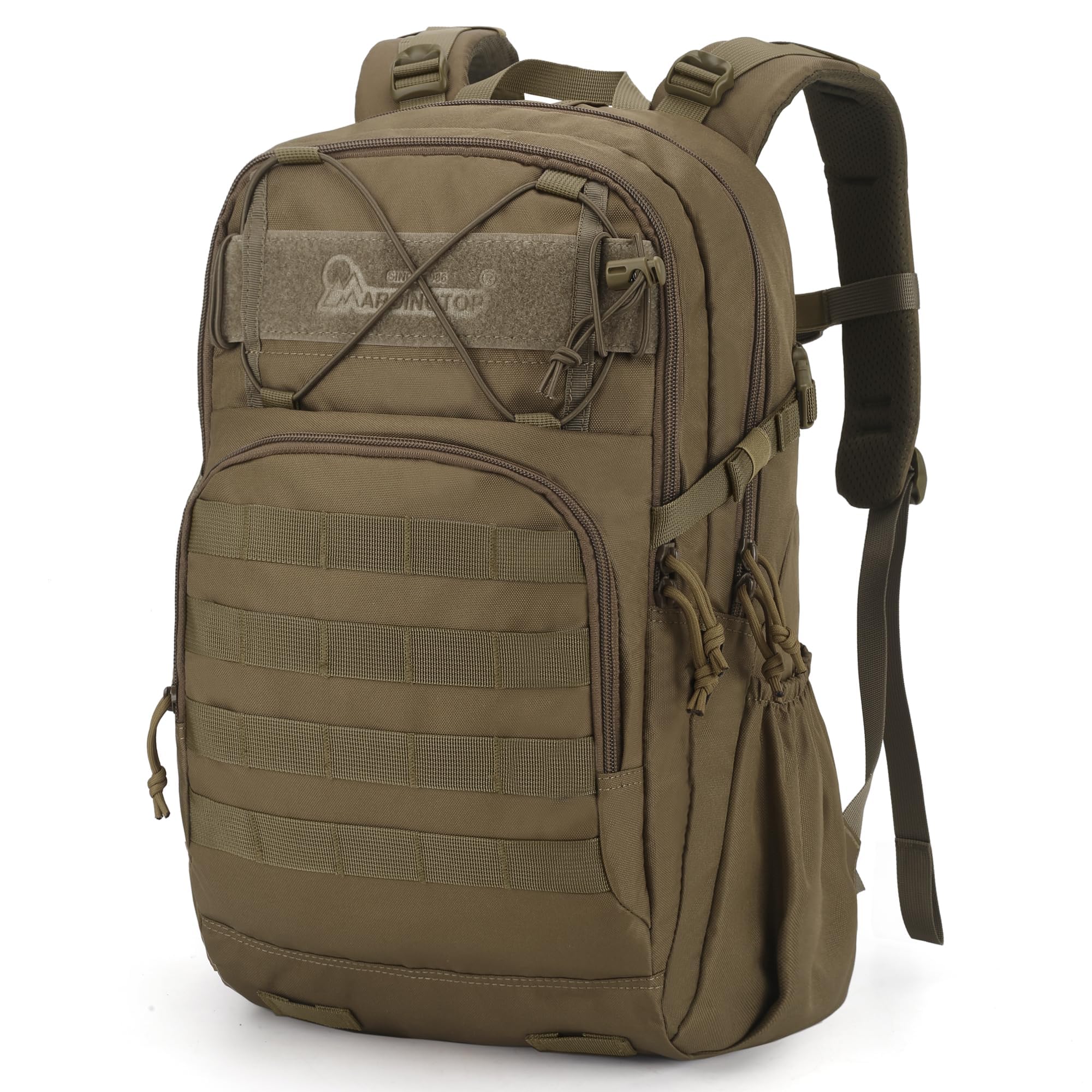
Mardingtop 28L Tactical Backpack

Mardingtop 28L Tactical

Mardingtop 28L Tactical Backpack

  • Zippers YKK zippers
  • Capacity 28 liters
  • Material 600D polyester
  • Waist Belt Adjustable waist belt
Check Price on Amazon

The day-ruck default: waist belt, YKK zippers, and 28L for a plate and layers.

The 28-liter Mardingtop is the pack we reach for when the ruck is the point of the walk rather than an overnight expedition. The adjustable waist belt is the decisive part: it lets you settle the load on your hips instead of hanging it all from your shoulders, and that changes how a weighted carry feels after the first mile. The YKK zippers matter just as much in this category, where cheap sliders are the usual failure point.

The 600D polyester body is not the thickest fabric here—the 5.11 uses 1050D nylon—but it is dense enough for daily use, and the 28L main compartment swallows a plate, a shell, water, and a few tools without turning into a duffel. We like the dedicated hydration sleeve for a 2.5L bladder; routing the hose out the top keeps the drink within reach without unzipping the pack.

What it is not is a wet-weather pack. The listing calls it not water resistant, so a rain cover or dry bag is part of the kit, not an optional extra. And if your ruck includes a tent and sleeping bag, the 28L volume runs out fast; that is the point where the bigger Mardingtop makes more sense. For day rucks and fitness carries, though, the combination of waist belt, YKK hardware, and usable size is the one we keep coming back to.

Bottom Line

We recommend the Mardingtop 28L as the default rucking pack: the waist belt carries the load, the YKK zippers should outlast budget hardware, and 28L fits a plate plus layers.

Check Latest Price

Best For Large budget loads

Our Score 9.0/10
Kookoomia 50L Tactical Backpack

Kookoomia 50L Tactical

Kookoomia 50L Tactical Backpack

  • Capacity 50 liters
  • Material Polyester
  • Empty Weight 3.1 lb
  • Water Resistance Water resistant
Check Price on Amazon

The Kookoomia 50L is for the ruck where volume matters more than a race-ready weight: 50 liters, 3.1 pounds, and a water-resistant polyester shell. It is large enough to take a plate, a change of clothes, and a day's food without cramming, and the compression straps keep the load from ballooning when it is not full.

The organization is generous: seven pockets, a ventilated back panel, padded shoulder straps, and MOLLE webbing across the body. The main compartment is a big open space, which is useful for a plate or a bulky jacket, while the side pockets handle a bottle. It is a pack that works as a travel bag and a ruck, which is part of its appeal.

The hardware is the question mark. We check the strap stitching and the main zipper before loading it heavy, and keep the load within what the harness can handle. The 3.1-pound body is not built like the premium packs here, and the strap construction is the reason it sits below the top picks.

We choose it when you need 50L on a budget and want a pack that can double as a travel hauler. It is not the first choice for a heavy plate ruck; the Mardingtop 28L and REEBOW are safer defaults. For bulky, moderate loads, it is a lot of capacity for the money.

Bottom Line

We choose the Kookoomia when you need 50L on a budget for bulky, moderate loads; its strap and zipper hardware are not up to heavy rucking.

Check Latest Price

How We Chose and Tested These Rucking Packs

We started by pulling together a shortlist of 12 packs from brands that publish load ratings and replacement-part support, then filtered out anything with a pattern of zipper complaints or a harness that only came in one torso size. We also ruled out packs whose stated capacity looked generous until you accounted for an internal plate sleeve.

For six months, we loaded each pack with 20- and 30-pound plates and used them on the same weekly three-mile route, on stair repeats, and on weekend grocery runs. We swapped packs among testers of different heights and noted where the load sat: high on the shoulders, locked into the hips, or shifting side to side. To judge capacity and storage, we packed each one with a plate, a one-liter bottle, a shell, and a pair of shoes, then checked whether the main compartment closed without strain and whether the front pocket still held keys and a phone.

Construction and quality got the hands-on treatment: we checked stitching at strap anchors, tugged at haul loops, and looked at base fabric after dragging each bag in and out of a truck bed and across a garage floor. For zipper quality and durability, we overstuffed each pocket and ran the zippers around every corner, then opened and closed them repeatedly while the bag was fully loaded. We also compared what each pack included—hip belt, sternum strap, plate sleeve—against its price to decide whether it was genuinely good value or just cheap.

How to Choose

Load Transfer Comes First

A rucking pack earns its keep through the waist belt, not the pocket count. The belt should wrap around your hip bones and take the downward pull, while the shoulder straps steady the load. A frame or a firm back panel helps, but it cannot replace a belt that fits. If a pack has no waist belt, treat it as a light-load option only. The Mardingtop 28L is the clearest example here of a day pack built around that priority. Before you buy, put weight in the pack and tighten the belt; if the load still hangs from your shoulders, the fit is wrong.

Match Capacity to the Ruck

For a fitness ruck with a plate, water, and a shell, 24 to 30 liters is enough for many people, though a 28L pack fills quickly once you add bulky layers. Step up to 40 to 50 liters when you want a change of clothes, food, or a larger plate. A 70- or 75-liter pack is for multi-day trips, not a quick walk. Bigger is not automatically better: the empty weight rises and the pack can encourage overloading. We choose the smallest volume that holds your actual kit.

Inspect the Hardware

Zippers, strap attachments, and stitching are where budget tactical packs cut corners, and those are exactly the parts that fail under load. We look for YKK zippers, double stitching at stress points, and reinforced shoulder attachments. Fabric helps too: 600D polyester is a sensible daily minimum, while 900D and 1050D nylon are heavier and more abrasion-resistant. None of that guarantees a pack will last, but it gives you a better starting point. Open and close every zipper before you load the pack.

Plan for Water and Hydration

Water-resistant fabric is not the same as waterproof. A pack rated water-resistant will handle drizzle and damp grass, but seams and zippers can let water through in sustained rain. Add a rain cover or line the main compartment with a dry bag, especially if you carry a phone or dry layers. A hydration sleeve is useful for rucking because it keeps water accessible without stopping; check the bladder size and hose routing before you buy.

Fit the Harness and Secure the Plate

Torso length matters more than height, so adjust the shoulder straps and waist belt with the pack loaded. The belt should sit on your hip bones, and the shoulder straps should curve around your chest without digging. A plate belongs high and close to your back, secured so it cannot slide; a low plate pulls you backward and makes the belt work harder. Test the loaded pack on a short walk before a long one. If the load shifts or the belt rides up, change the fit or the pack.

Frequently Asked Questions

Final Verdict

Start with the Mardingtop 28L. It has what a rucking pack needs: an adjustable waist belt, YKK zippers, a 28L body for a plate and layers, and a hydration sleeve. If you need more volume, the QT&QY 45L is the budget step up, and the Mardingtop 75L is the multi-day choice. The 5.11 Rush 12 2.0 is the premium compact pick when durability matters more than load capacity. For most ruckers, the 28L is the one to buy first.